Blue Dragons Invade Spanish Beaches

Blue Dragons Invade Spanish Beaches in 2025, causing concern for both tourists and locals as several popular coastal areas faced temporary closures. These unusual sea creatures, scientifically known as Glaucus atlanticus, appeared in surprising numbers along Spain’s Mediterranean coast, marking one of the most striking marine events of recent years. Their sudden presence has been linked to rising sea temperatures, leaving scientists, beachgoers, and authorities grappling with its ecological and social consequences.
Thank you for reading this post, don't forget to subscribe!What Are Blue Dragons?
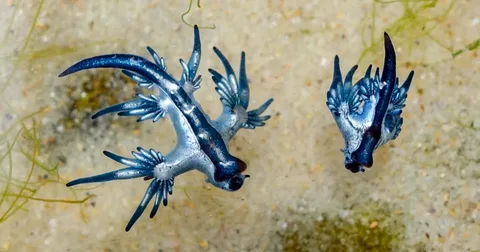
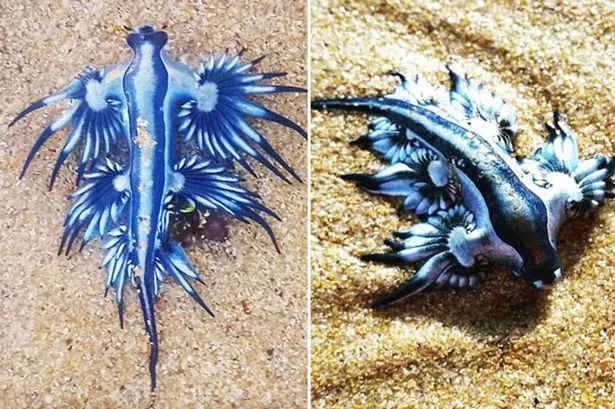
Blue dragons are not mythical creatures but fascinating sea slugs that measure just about four centimetres in length. Despite their small size, they are visually captivating, with a bright blue dorsal side and a silvery white underside. This dual-colour camouflage helps them survive in open waters: the blue merges with the sea when viewed from above, while the white blends with sunlight when seen from below.
Unlike most sea slugs that live on the seabed, blue dragons float upside down on the ocean’s surface. They achieve this buoyancy by trapping an air bubble in their stomach. This unique adaptation makes them both mysterious and beautiful to observe, though their appearance is accompanied by a hidden danger.
Feeding Habits and Defence Mechanism of Blue Dragons Invade Spanish Beaches
The diet of blue dragons sets them apart from other marine organisms. They feed on some of the ocean’s most venomous creatures, including the Portuguese man o’ war and other siphonophores. What makes them extraordinary is that they do not simply digest their prey’s stinging cells. Instead, they harvest and store these stinging cells in finger-like appendages on their own bodies.
This process turns them into even more dangerous creatures. Their sting can be stronger than the original jellyfish or siphonophores they consume. For humans, a sting from a blue dragon is not fatal, but it causes intense pain, swelling, redness, nausea, and sometimes vomiting. Their dazzling colours act as a warning signal in nature—don’t touch.
Why Are They Appearing in Spain?
Blue dragons are typically found in the warmer waters of the Pacific, Atlantic, and Indian Oceans. Until recently, their presence in the Mediterranean was rare and considered accidental. However, in 2025, their sudden surge along Spain’s Mediterranean coast drew attention from marine scientists.
Experts point to rising sea temperatures as the primary reason behind this unusual migration. The Mediterranean Sea has been warming faster than many of the world’s oceans. Warmer waters bring in more jellyfish populations, which are the main food source for blue dragons. With a reliable food supply and suitable environmental conditions, these sea slugs have expanded their range into Spanish waters.
Impact on Tourism and Safety from Blue Dragons Invade Spanish Beaches
Spain’s beaches are a major attraction for millions of tourists each year. The arrival of blue dragons posed an unexpected threat to this vital industry. Several beaches, including Guardamar del Segura, La Línea de la Concepción, and Lanzarote, were forced to close temporarily to prevent sting-related accidents.
Authorities issued warnings, urging swimmers and beachgoers to stay cautious and avoid touching these creatures. Police and local governments highlighted the risks, stressing that despite their harmless appearance, blue dragons are far from safe to handle. For many locals and tourists, the closures were a disappointment, yet public safety remained the top priority.
Safety Measures and Public Awareness about Blue Dragons Invade Spanish Beaches
The colourful appearance of blue dragons might tempt people to pick them up or take them home as souvenirs, but such actions are highly dangerous. Authorities and environmental groups launched awareness campaigns across Spain’s coastal towns to educate the public about these sea slugs.
Safety advice remains simple but crucial: admire from a distance. Whether in the water or washed ashore, blue dragons should not be touched. Even dead ones can still deliver painful stings through their stored venomous cells. The bright blue hues of these creatures are nature’s own warning sign, and respecting that warning is the best precaution.
Ecological Significance and Climate Change Link
While their arrival has caused short-term disruptions, the presence of blue dragons in Spain is also a wake-up call about broader ecological changes. Their migration into Mediterranean waters reflects the influence of climate change on marine ecosystems. Rising sea temperatures do not just impact a single species but alter entire food chains and biodiversity patterns.
The increase of jellyfish populations, followed by the expansion of predators like blue dragons, is evidence of how warming oceans reshape marine life. Scientists view this as an indicator of ongoing ecological shifts that may intensify in the coming decades. Monitoring such changes provides valuable insights into the health of the Mediterranean and the impacts of climate change on marine ecosystems globally.
Conclusion
The arrival of blue dragons on Spanish beaches has amazed marine enthusiasts but raised safety concerns for tourists. Their sudden presence reflects rising sea temperatures and shifting marine life. While beautiful, they remind us of the need for caution and respect for the sea. As climate change continues, such unusual encounters may become increasingly common.