CCUS Emissions Cut Plan Gets ₹20,000 Crore Boost in Union Budget 2026

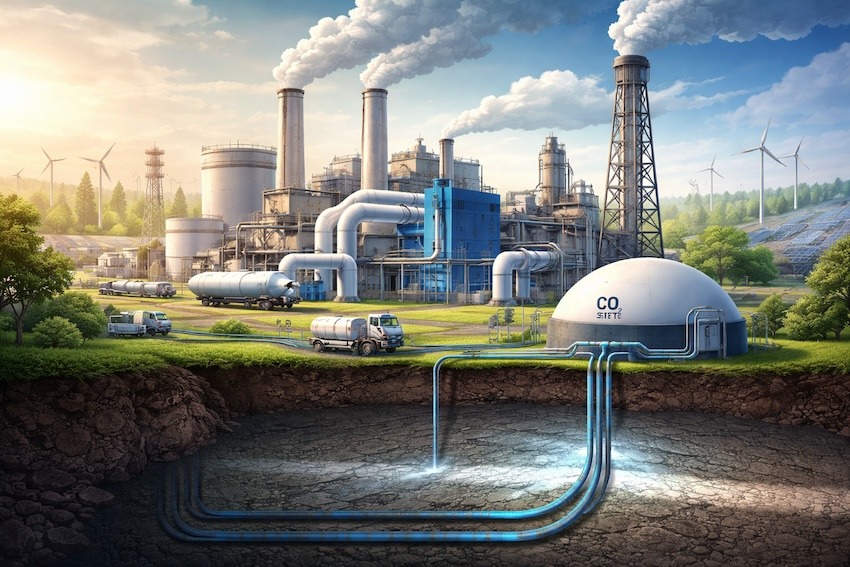
CCUS Emissions Cut Plan has emerged as a central feature of India’s climate and industrial policy after the Union Budget 2026 proposed a major public investment to speed up carbon capture utilisation and storage technologies. Union Finance Minister Nirmala Sitharaman announced an outlay of ₹20,000 crore over the next five years, aimed at reducing emissions from some of the country’s most polluting industries. The move signals a strong push by the government to tackle industrial carbon emissions while supporting economic growth and energy security.
Thank you for reading this post, don't forget to subscribe!This funding is aligned with the national CCUS roadmap launched in December 2025, which laid out a long-term vision for deploying carbon capture technologies across the country. By placing CCUS at the heart of its climate strategy, India is acknowledging that renewable energy alone may not be enough to decarbonise all sectors.
Big Push for Hard-to-Abate Industries
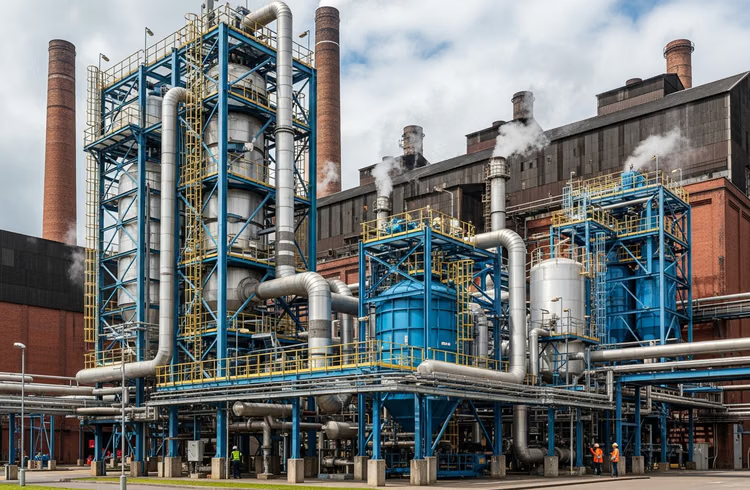
The new funding will mainly support CCUS deployment in five key sectors: power generation, steel, cement, refineries, and chemicals. These industries are often described as “hard-to-abate” because their production processes release large amounts of carbon dioxide that are difficult to eliminate through electrification or renewable energy alone.
For example, cement manufacturing releases CO₂ not only from burning fuel but also from chemical reactions during production. Similarly, steelmaking relies heavily on coal and coke as both fuel and raw material. CCUS offers a way to capture these emissions before they enter the atmosphere and either store them underground or reuse them in other industrial processes.
According to experts, industrial activity accounts for around 30 to 35 per cent of India’s total carbon emissions. This makes industrial decarbonisation a critical part of meeting national and international climate goals.
Supporting the National CCUS Roadmap
The CCUS Emissions Cut Plan builds directly on the national roadmap introduced in late 2025. That roadmap focused on increasing technology readiness, identifying storage locations, and creating a supportive policy and regulatory environment.
The newly announced budget allocation will help move from planning to large-scale implementation. It is expected to fund pilot projects, demonstration plants, and early commercial facilities. Over time, these projects can lower technology costs, improve efficiency, and build local expertise.
Government officials have indicated that public funding will also be used to attract private investment. By sharing early-stage risks, the government hopes to encourage companies to invest in CCUS infrastructure and innovation.
Enabling Blue Hydrogen and Clean Industry
One of the major advantages of CCUS is its role in enabling blue hydrogen production. Blue hydrogen is produced from natural gas, with the carbon emissions captured and stored rather than released. This form of hydrogen can be used as a cleaner fuel or feedstock in industries such as steel, fertilisers, and chemicals.
In sectors where direct electrification is difficult, hydrogen can partially replace coal or gas, reducing overall emissions. CCUS makes this transition possible while green hydrogen production from renewable electricity continues to scale up.
By linking CCUS with hydrogen development, the government is creating a more flexible and practical pathway to industrial decarbonisation.
India’s Large Carbon Storage Potential
India is believed to have around 600 billion tonnes of geological carbon dioxide storage capacity. Potential storage sites include depleted oil and gas fields, deep saline aquifers, and unmineable coal seams.
This large storage potential is seen as a strategic national asset. It means that captured carbon dioxide can be stored safely underground for long periods, supporting large-scale CCUS deployment.
Early policy work in this area has already been carried out, including collaboration between NITI Aayog and industry stakeholders to design India’s first CCUS policy framework. The new budget funding is expected to accelerate this work and move it closer to on-the-ground action.

Balancing Climate Goals and Economic Growth
The CCUS Emissions Cut Plan reflects the government’s effort to balance environmental responsibility with economic development. India is still expanding its industrial base to meet domestic demand and support job creation. At the same time, it has committed to lowering the carbon intensity of its economy and achieving net-zero emissions by 2070.
By focusing on large industrial emitters, the government aims to achieve meaningful emissions reductions without slowing growth. CCUS is being positioned as a complement to renewable energy, energy efficiency, and other clean technologies.
Over the next five years, the success of this initiative will depend on clear regulations, strong public–private partnerships, and steady technology progress. If implemented effectively, the programme could place India among the global leaders in carbon capture deployment and set the foundation for a cleaner industrial future.