





Chhattisgarh Blackbuck Revival: A Remarkable Conservation Success Story

The Chhattisgarh Blackbuck Revival stands as one of India’s most inspiring wildlife restoration efforts, symbolizing the state’s growing commitment to ecological balance and biodiversity protection. After nearly five decades of local extinction, the graceful blackbuck (Antilope cervicapra) has made a triumphant return to Chhattisgarh’s landscapes, thanks to the sustained efforts of the Forest Department and conservation experts. The revival project, launched in 2018, has not only reintroduced the species but also revitalized the state’s grassland ecosystem, offering a model for future wildlife recovery programmes.
Thank you for reading this post, don't forget to subscribe!Chhattisgarh Blackbuck Revival and the Story of Extinction
The Chhattisgarh Blackbuck Revival journey traces back to the early 20th century when blackbucks roamed freely across India’s dry grasslands and scrub forests. In Chhattisgarh, these elegant antelopes were once a common sight in open terrains. However, by the 1970s, they had vanished from the region due to habitat destruction, unregulated hunting, and agricultural expansion.
Open grasslands, essential for blackbucks, were rapidly converted into farmlands and settlements, depriving the species of grazing areas and safety from predators. Poaching for their meat and hides further accelerated their decline. The ecological imbalance caused by their disappearance also impacted other species that shared similar habitats, highlighting the interconnectedness of grassland ecosystems.
Reintroduction Programme at Barnawapara
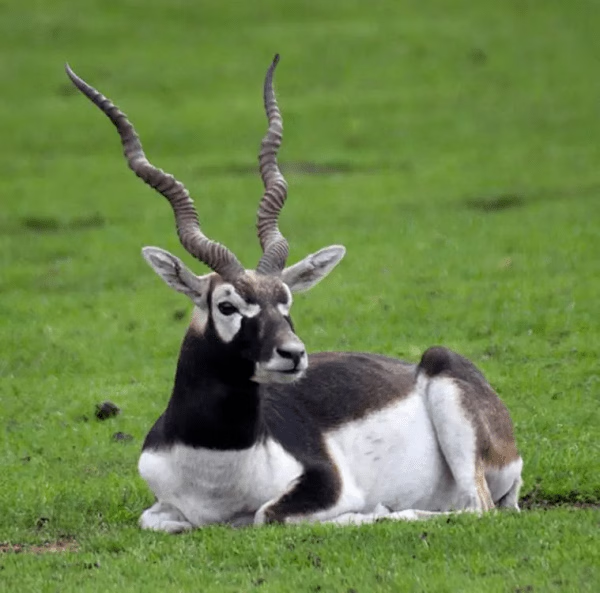
The turning point came in 2018, when the Chhattisgarh Forest Department launched an ambitious reintroduction project under the Chhattisgarh Blackbuck Revival initiative at the Barnawapara Wildlife Sanctuary. This sanctuary, known for its diverse fauna and semi-arid terrain, was selected as the ideal site due to its resemblance to the species’ native habitat.
A total of 77 blackbucks were translocated from the National Zoological Park, New Delhi, and Kanan Pendari Zoo, Bilaspur. To ensure their smooth transition, the animals were initially kept in large acclimatization enclosures equipped with shade, waterholes, and grass patches. The aim was to help them adapt to local climatic and ecological conditions before their release into the wild.
This careful planning reflected the department’s emphasis on minimizing stress and increasing survival rates among the relocated animals. Within months, the blackbucks began displaying natural grazing and breeding behaviors, signaling positive adaptation to their new surroundings.
Conservation Measures and Overcoming Challenges
The Chhattisgarh Blackbuck Revival project was not without challenges. In the early phase, a pneumonia outbreak led to the loss of several animals. The Forest Department responded swiftly by redesigning the enclosures with improved drainage systems, adding sand layers for dryness, and strengthening veterinary support.
A dedicated conservation team was established to oversee health monitoring, nutrition management, and surveillance. This team ensured regular medical check-ups, provision of mineral supplements, and habitat management. Strict anti-poaching measures were also enforced through patrols and community vigilance, reducing threats to the newly reintroduced population.
These corrective measures not only stabilized the blackbuck population but also built resilience within the conservation system.
Habitat Restoration under the Chhattisgarh Blackbuck Revival Project
For the Chhattisgarh Blackbuck Revival to succeed, suitable habitat restoration was crucial. Blackbucks thrive in open grasslands with sparse tree cover, which allow them to spot predators from a distance. The Forest Department launched an extensive habitat management campaign, removing invasive weeds like Lantana camara and promoting the growth of native grass species such as Rampur grass and Dicanthium annulatum.
Additionally, water bodies and salt licks were created to support the animals’ hydration and mineral intake needs. Advanced monitoring tools like camera traps, GPS tagging, and watchtowers were introduced to track population movement and detect any signs of danger.
The participation of local villagers played a vital role. Awareness campaigns educated communities about the ecological and tourism benefits of blackbuck conservation. Over time, villagers began assisting in grassland management and reporting suspicious activities, turning them into active custodians of wildlife.
Present Status and Future Prospects
As of 2025, the Chhattisgarh Blackbuck Revival has recorded encouraging results. The Barnawapara Wildlife Sanctuary now houses around 190 blackbucks, out of which 100 have been released into the wild, while others remain in controlled environments awaiting full release.
The growing population has demonstrated strong adaptability, breeding naturally and expanding their grazing range. The Forest Department has identified additional sites for replication, notably the Gomardha Wildlife Sanctuary in Raigarh district, known for its expansive open grassland ecosystem. Plans are underway to introduce blackbucks there using the same scientific and community-based model.
This success is also inspiring neighboring states to explore rewilding programs for other locally extinct species, showcasing Chhattisgarh as a leader in wildlife revival efforts.
Chhattisgarh Blackbuck Revival and Ecological Significance
Beyond the recovery of a single species, the Chhattisgarh Blackbuck Revival has had a profound ecological impact. The restoration of grasslands has benefited several bird species such as peafowls, partridges, and larks, which rely on similar habitats. Herbivory patterns introduced by blackbucks have promoted natural grass regeneration, reducing the dominance of invasive shrubs.
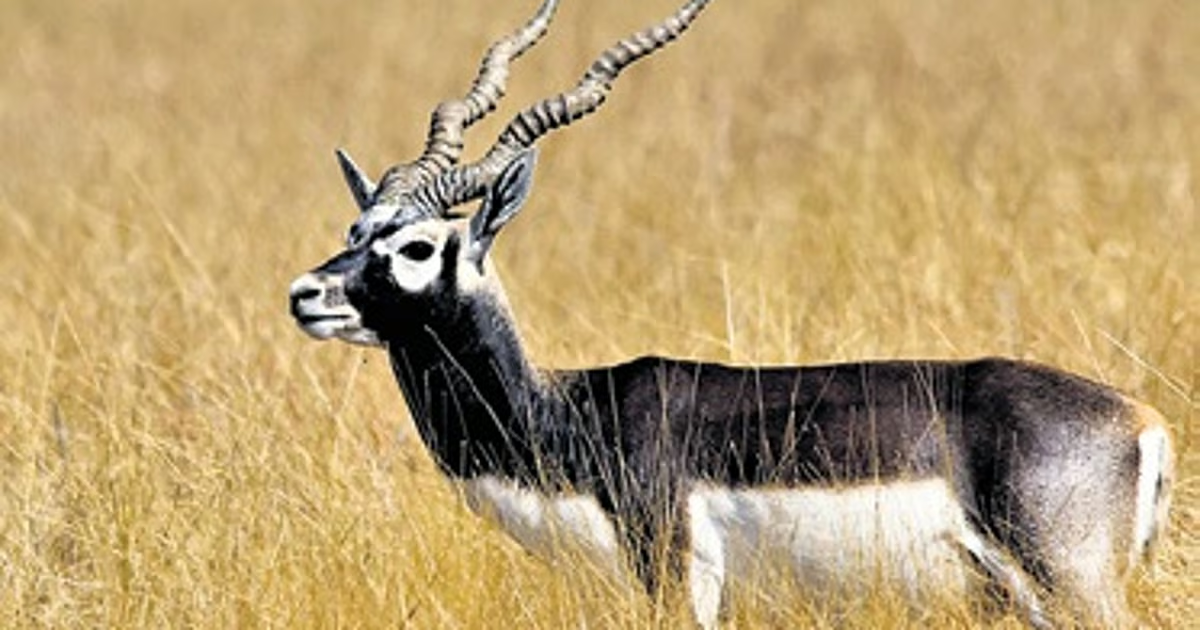
Moreover, blackbuck presence is expected to boost eco-tourism in the region. Wildlife enthusiasts and photographers are increasingly drawn to Barnawapara, creating opportunities for local communities to earn livelihoods through sustainable tourism. This intertwining of conservation and community development marks a shift towards inclusive environmental governance.
Way Forward for Chhattisgarh Blackbuck Revival
The Chhattisgarh Blackbuck Revival project underscores the importance of long-term commitment to wildlife conservation. Moving forward, experts recommend expanding habitat corridors between sanctuaries, ensuring genetic diversity through exchange programs, and continuous community engagement.
Integrating modern technology such as drone-based surveillance, AI-driven population monitoring, and real-time reporting systems can further strengthen protection measures. Additionally, educational initiatives in nearby schools can nurture conservation awareness among younger generations.
The revival of the blackbuck in Chhattisgarh is more than just a species recovery it represents a victory for persistence, collaboration, and respect for nature.





