China Undersea Tunnel Train Project to Link Dalian and Yantai

China Undersea Tunnel Train is gaining global attention as China plans a 120-kilometre high-speed rail tunnel under the Bohai Strait. This ambitious project aims to connect the coastal cities of Dalian and Yantai in just 40 minutes, transforming travel in the region.
Thank you for reading this post, don't forget to subscribe!China Undersea Tunnel Train High-Speed Rail Vision
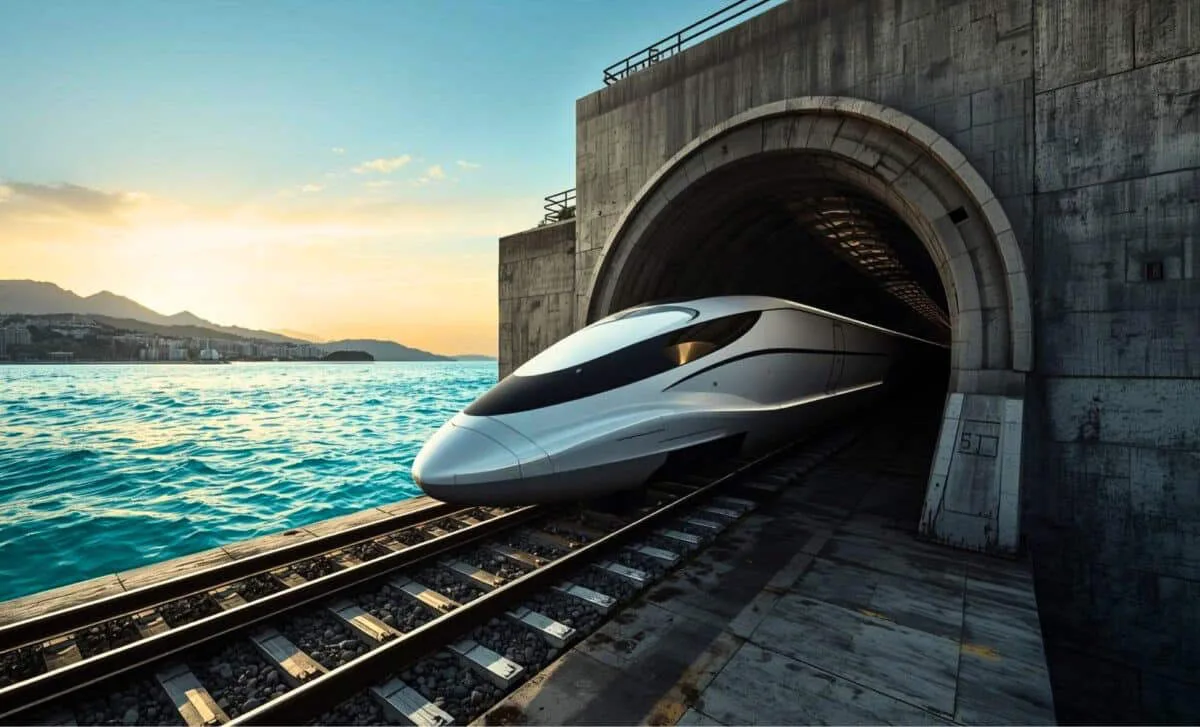
The proposed tunnel will run beneath the Bohai Strait, linking Liaoning and Shandong provinces. Trains are expected to travel at speeds above 250 km/h, making the journey much faster than current ferry routes or long road detours. This modern rail link could save several hours of travel time for passengers.
China Undersea Tunnel Train Boosts Connectivity
This project will connect Dalian, an important industrial port city, with Yantai, a key hub in Shandong’s maritime economy. The fixed rail connection will replace ferry transport, improving both passenger travel and cargo movement. It will also support stronger economic growth across the Bohai Rim region and better integrate northern China’s transport network.
China Undersea Tunnel Train Engineering Challenges
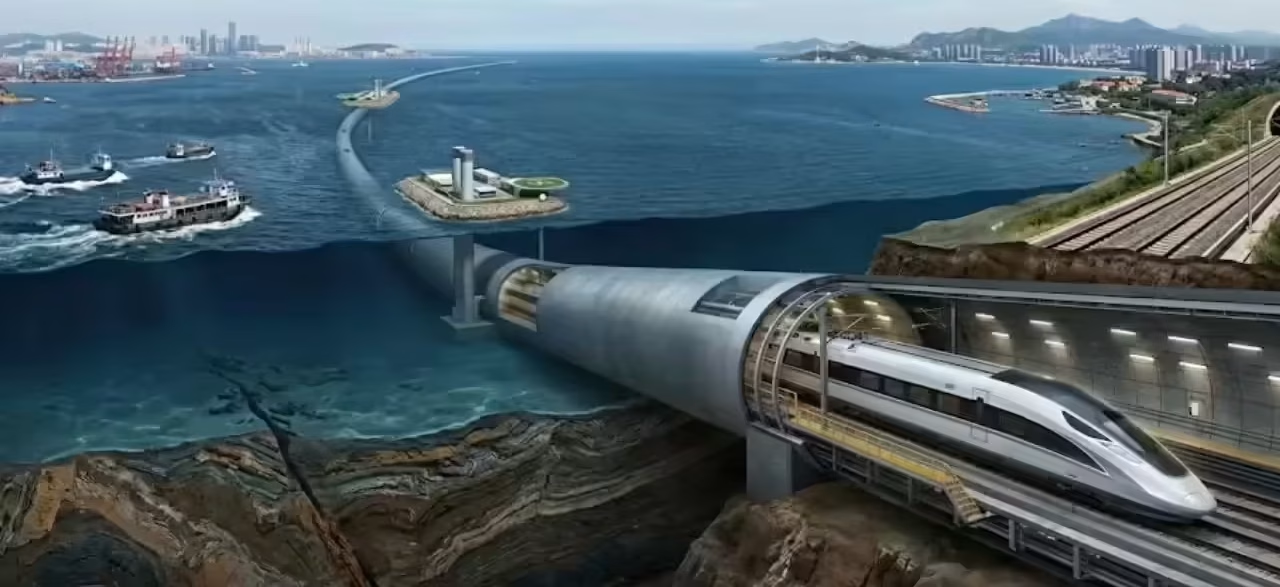
Building such a long undersea tunnel is not easy. Engineers must deal with difficult seabed conditions, fault lines, and earthquake risks. The plan includes artificial islands and vertical shafts to help with ventilation, emergency exits, and construction work. Safety systems will also be designed to handle environmental challenges like sea ice and heavy ship traffic.
China Undersea Tunnel Train Global Significance
If completed, this tunnel could become one of the longest undersea rail tunnels in the world, similar to the Channel Tunnel between the UK and France. It highlights China’s growing expertise in large-scale infrastructure and advanced rail technology.
China Undersea Tunnel Train Project Status
The project is currently under feasibility study. Experts are examining environmental impact, route planning, and overall cost, which could reach hundreds of billions of yuan. Once approved, it will mark a major step in modern transport development.