

S8000 Banderol Missile: Russia Expands New Cruise Weapon

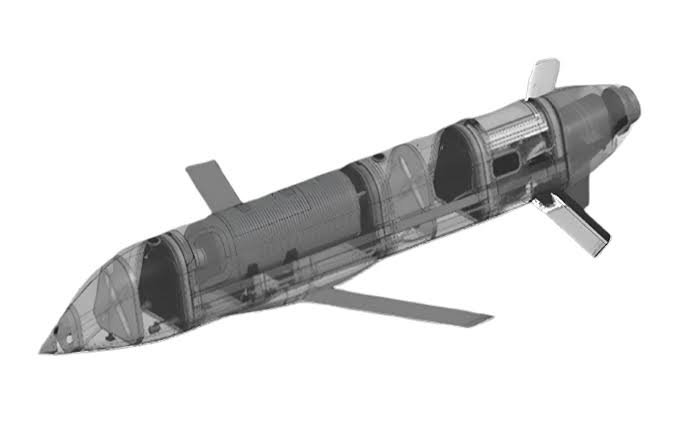
S8000 Banderol Missile has become one of the latest military developments from Russia after the country officially acknowledged the weapon in July 2026. The missile is designed as a lightweight and relatively low-cost cruise missile for long-range attacks. Within a few weeks of its public confirmation, reports suggested that testing had been completed and serial production had already started. The development reflects Russia’s continued effort to improve its long-range strike systems during the ongoing conflict in Ukraine while introducing new launch options for different combat situations.
Thank you for reading this post, don't forget to subscribe!Official Introduction and Production
Russia first publicly mentioned the S8000 Banderol Missile through state media on 12 July 2026. Soon after, reports indicated that the missile had successfully completed its testing phase. By the end of July, it was said to have entered serial production, although officials did not reveal how many missiles had been produced.
The design has also continued to change from earlier versions that appeared during 2025. Defence observers believe Russia has been improving the missile’s performance, making it more suitable for different military missions.

Designed for Long-Range Precision Strikes
The S8000 Banderol Missile is built to attack fixed targets located far from the launch point. Military reports have linked the missile to attacks on important infrastructure such as ports, logistics centers, warehouses, and food storage facilities.
Like many modern cruise missiles, it is designed to fly at a relatively low altitude. Flying close to the ground can make detection more difficult and allows the missile to reach its target with greater accuracy.
Multiple Launch Platforms Increase Flexibility
One of the major features of the S8000 Banderol Missile is its ability to be launched from different platforms.
The missile was first connected with the Orion unmanned aerial vehicle, which is known in Russian service as the Inokhodets drone. This drone is capable of carrying precision-guided weapons while operating over long distances.
Later reports in July 2026 suggested that the missile was also launched from Mi-28 attack helicopters. Images circulating online also showed what appeared to be a Banderol-type missile mounted on a compact mobile ground launcher in Crimea. Although these reports attracted international attention, Russian authorities and the manufacturer Kronstadt had not officially confirmed the full operational deployment or production numbers by early August 2026.
Technical Features of the Missile
The S8000 Banderol Missile is powered by a commercially available Swiwin turbojet engine produced in China. This engine provides the speed and endurance needed for long-range flight.
The missile carries an OFBCh-150 high-explosive fragmentation warhead containing approximately 49.5 kilograms of explosive material. Such warheads are designed to damage structures and equipment over a wider area after detonation.
Different sources have reported different estimates for the missile’s maximum range. Ukrainian military intelligence has estimated a range of around 350 to 400 kilometres, while some other reports suggest it may reach up to 500 kilometres depending on mission conditions and payload.
Foreign Components Used in Construction
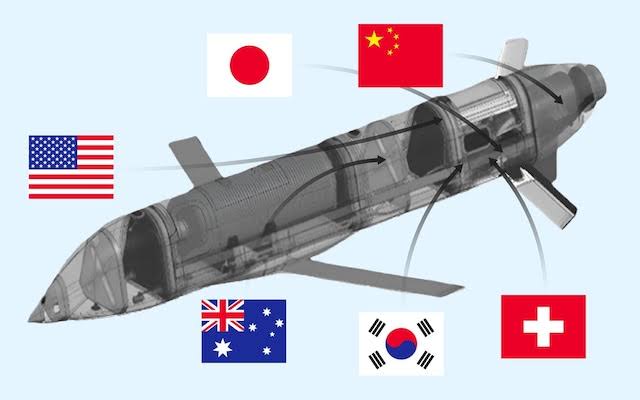
Reports have also indicated that the missile contains electronic parts manufactured outside Russia. Components are believed to come from companies based in the United States, Switzerland, Japan, China, and South Korea.
The use of imported electronics has attracted attention because international sanctions have aimed to limit Russia’s access to advanced technology. Analysts continue to monitor how such components are being obtained and integrated into new weapon systems.
Growing Role in the Russia-Ukraine Conflict
The appearance of the S8000 Banderol Missile comes at a time when long-range missile and drone attacks remain an important part of the Russia-Ukraine conflict. Both sides continue to invest in new strike systems, air defence technologies, and electronic warfare capabilities.
The addition of a lightweight cruise missile that can be launched from drones, helicopters, and possibly ground vehicles provides greater operational flexibility. Military experts are closely watching future deployments to understand how frequently the missile is used and how it may influence battlefield operations in the coming months.
Cruise Missiles in Modern Warfare
Cruise missiles remain an important part of modern military strategy because they can strike targets with high precision from long distances. They are commonly launched from aircraft, ships, submarines, or ground-based launchers depending on the mission.
Modern cruise missiles differ in size, range, guidance systems, and warhead types. Many countries continue to develop new cruise missile technologies to improve accuracy, increase survivability, and expand launch options. The S8000 Banderol Missile represents another example of this continuing trend in military technology.