
Glioblastoma Brain Cancer: Understanding the Disease Behind Sophie Kinsella’s Death

Glioblastoma brain cancer has come into public focus after the death of well-known writer Sophie Kinsella at the age of 55. Her passing has brought renewed attention to this highly aggressive and fast-moving form of brain cancer that affects thousands of people worldwide each year. Diagnosed in 2022, she lived with the illness for several years, showing both the strength required to face it and the serious challenges linked to this disease. Glioblastoma brain cancer is known for its rapid growth, complex nature, and limited treatment success, making it one of the most feared brain tumours.
Thank you for reading this post, don't forget to subscribe!Understanding Glioblastoma Brain Cancer
Glioblastoma brain cancer, also known as glioblastoma multiforme, begins in special support cells of the brain called astrocytes. These cells normally help protect and nourish nerve cells. In glioblastoma, these astrocytes start growing out of control and form a tumour that spreads quickly into nearby brain tissue. Unlike many other cancers, this tumour does not stay in one clear area. Instead, it sends tiny branches into healthy brain regions, which makes it extremely hard to remove completely.
Medical experts consider glioblastoma brain cancer the most aggressive type of glioma. It grows faster than most other brain tumours and affects vital brain functions in a short period of time. Because the brain controls movement, speech, memory, emotions, and basic body functions, even a small tumour can cause serious problems.
How Common Is Glioblastoma Brain Cancer
Glioblastoma brain cancer accounts for nearly half of all cancerous brain tumours. Across the world, it is responsible for around 200,000 deaths every year. In the United States alone, more than 13,000 new cases are reported annually. In the United Kingdom, about 3,200 people are diagnosed with this disease each year.
The illness mostly affects adults, especially those between the ages of 45 and 75. While it can appear in younger people, the risk increases with age. Men are slightly more likely to develop glioblastoma brain cancer than women, though the reasons for this difference are still being studied.
Symptoms That Appear Quickly
One of the most troubling aspects of glioblastoma brain cancer is how quickly symptoms can develop. Since the tumour grows fast and presses on sensitive parts of the brain, changes may happen within weeks or months. The exact symptoms depend on where the tumour is located.
Common signs include frequent or severe headaches that do not improve with usual pain relief. Many people experience nausea or vomiting, especially in the morning. Memory problems and difficulty thinking clearly are also common, as the tumour interferes with normal brain activity.
Some patients develop seizures, even if they have never had them before. Others may notice blurred or double vision, trouble speaking, or weakness in the arms or legs. Personality changes, mood swings, and unusual behavior can also occur, which can be confusing and distressing for both patients and their families.
Causes and Risk Factors
The exact cause of glioblastoma brain cancer is still not fully understood. Researchers believe it develops due to changes in DNA that cause brain cells to grow without control. These changes are usually not inherited and occur randomly over time.
Certain factors may increase the risk. Previous exposure to radiation, especially to the head during childhood, is one of the strongest known risks. Contact with harmful chemicals used in industries such as pesticides, oil refining, and synthetic rubber production has also been linked to a higher chance of developing this cancer.
In rare cases, inherited genetic conditions such as Li-Fraumeni syndrome and Turcot syndrome are associated with glioblastoma brain cancer. However, most people diagnosed do not have a family history of brain tumours.
Diagnosis and Daily Impact
Diagnosing glioblastoma brain cancer usually involves brain scans such as MRI or CT imaging, followed by a biopsy to confirm the tumour type. Once diagnosed, life often changes rapidly. Patients may need help with daily activities, depending on how the tumour affects their brain functions.
Speech therapy, physical therapy, and emotional support often become part of everyday life. Families also face emotional and practical challenges, as the disease can progress quickly and require constant care. The experience of living with glioblastoma brain cancer is not only physical but deeply emotional for everyone involved.
Treatment Options and Challenges
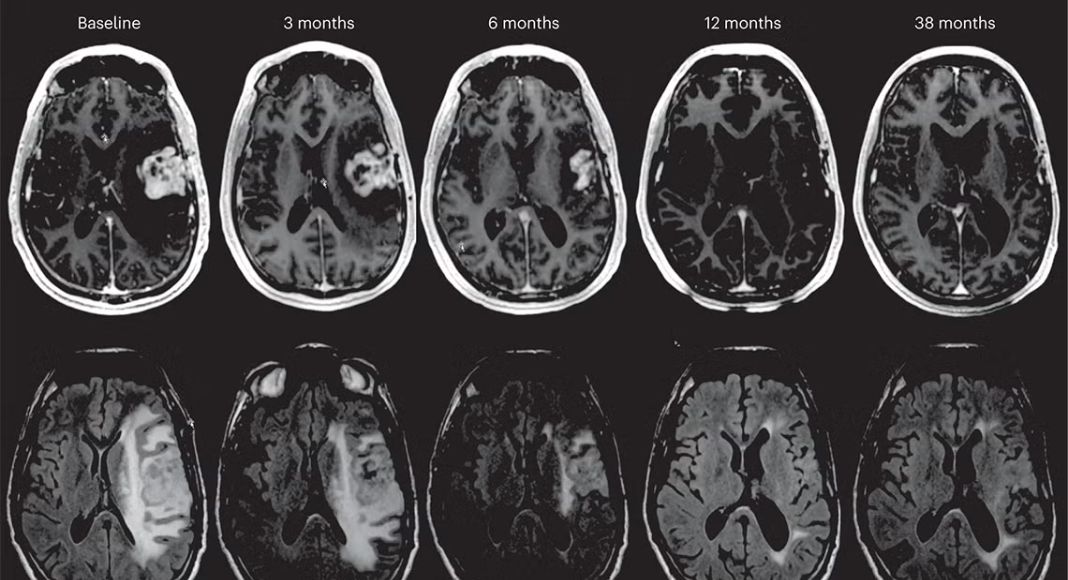
There is currently no cure for glioblastoma brain cancer. Treatment focuses on slowing the growth of the tumour and easing symptoms. Surgery is often the first step, aiming to remove as much of the tumour as possible. However, complete removal is rare because the cancer spreads into healthy brain tissue that cannot be safely cut out.
After surgery, most patients receive radiation therapy to target remaining cancer cells. Chemotherapy is commonly used alongside radiation to further slow tumour growth. Some patients may also undergo newer treatments such as laser-based thermal therapy or targeted drug treatments.
Despite these efforts, glioblastoma brain cancer often returns. This happens because even tiny cancer cells left behind can grow again. Long-term survival remains uncommon, and many treatments can cause side effects that affect quality of life.
Research and Ongoing Efforts
Scientists around the world continue to study glioblastoma brain cancer in search of better treatments. Research is exploring immunotherapy, gene-based treatments, and personalized medicine that targets the tumour’s unique genetic makeup. While progress has been made, results so far show that the disease remains extremely difficult to control.
Clinical trials offer hope to some patients, giving access to experimental treatments not yet widely available. These trials also help researchers understand the disease better and develop future therapies.
Public Awareness and Human Stories
High-profile cases like Sophie Kinsella’s have helped bring attention to glioblastoma brain cancer. When a well-known figure faces this illness, it opens conversations about brain cancer, funding for research, and the need for better support systems. Her experience highlights how the disease can affect anyone, regardless of success or background.
Raising awareness helps encourage early medical attention when symptoms appear and supports ongoing research efforts. It also helps reduce the fear and misunderstanding surrounding brain cancer by sharing real stories of courage, treatment, and daily life with the disease.
Glioblastoma brain cancer remains one of the most challenging medical conditions today. Its aggressive nature, fast progression, and limited treatment success make it a major focus of global cancer research and public concern.