



ICGS Ajit Joins Coast Guard

ICGS Ajit was formally handed over to the Indian Coast Guard on 25 August 2026, strengthening India’s coastal surveillance and maritime security capabilities. Built by Goa Shipyard Limited (GSL), the Fast Patrol Vessel is the seventh vessel of the Adamya-class constructed by the shipyard. The vessel has more than 65% indigenous content, reflecting India’s growing focus on domestic defence shipbuilding.
ICGS Ajit Strengthens Coastal Security
ICGS Ajit is designed for fast and flexible maritime operations. Fast Patrol Vessels are used by maritime security agencies for coastal patrolling, surveillance, interception and other duties where quick movement is important.

The new vessel will support the Indian Coast Guard in monitoring India’s coastline and offshore areas. It will also contribute to maritime law enforcement and safety operations in Indian waters.
With increasing maritime activity, coastal security has become an important part of India’s overall security system. Commercial shipping, fishing activity, offshore infrastructure and other economic activities require regular monitoring of the country’s maritime zones.
Seventh Adamya-Class Fast Patrol Vessel
ICGS Ajit is the seventh Adamya-class Fast Patrol Vessel built by Goa Shipyard Limited. The vessel is part of India’s efforts to increase the availability of modern patrol platforms for the Coast Guard.
The Adamya-class vessels are built for operations that require speed, manoeuvrability and endurance. Their design allows them to respond quickly to incidents and conduct regular patrols over India’s coastal and offshore waters.
The use of indigenous components is also an important feature of the programme. More than 65% of ICGS Ajit’s content is indigenous, supporting Indian manufacturers and the country’s domestic defence production ecosystem.
Key Technical Features
ICGS Ajit has a length of 51.43 metres and a delivery displacement of approximately 330 tonnes. It is powered by two marine diesel engines connected to controllable pitch propellers.
A controllable pitch propeller allows the angle of the propeller blades to be adjusted according to operating requirements. This can provide greater control over the vessel’s movement without requiring the engine speed to be changed.
The vessel can achieve a speed of more than 27 knots and has an operational endurance of around 1,500 nautical miles.
ICGS Ajit has been configured to accommodate six officers and 35 sailors, giving it the crew capacity required for extended patrol and maritime security missions.
Launch and Formal Handover
The vessel was launched on 24 October 2025 at Vasco da Gama in Goa. It was launched alongside its sister vessel, ICGS Aparajit, during a twin-launch ceremony.
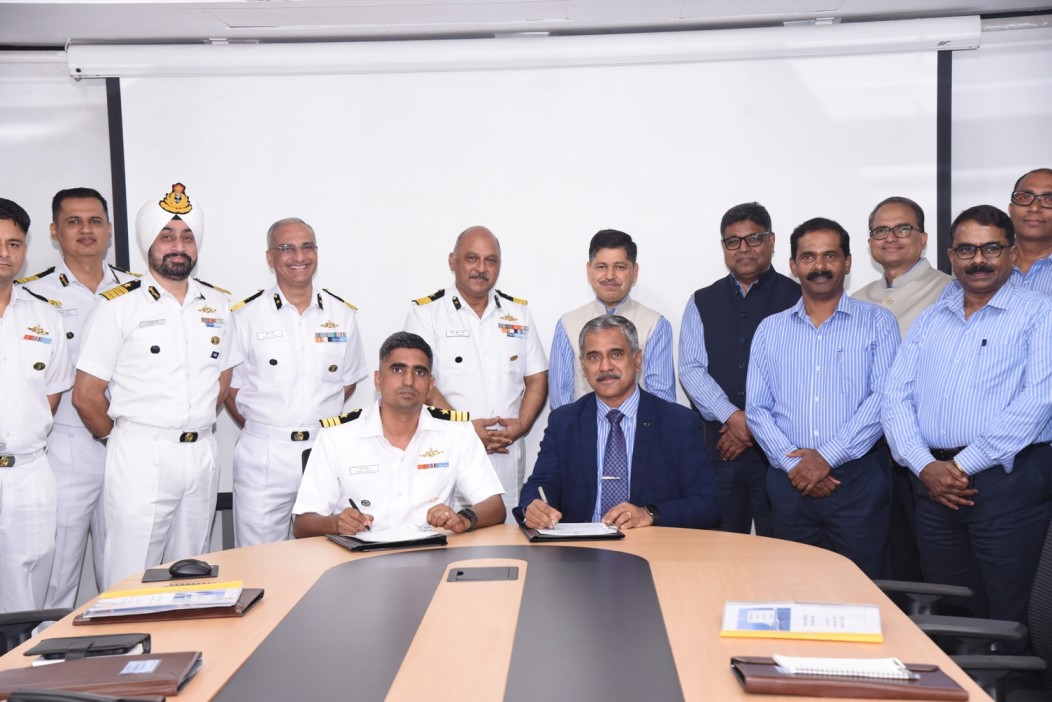
After completing the required stages of construction and testing, ICGS Ajit reached the formal handover stage on 25 August 2026. A First Reading Ceremony was conducted at Goa Shipyard Limited before the vessel was handed over to the Indian Coast Guard.
The completion of the vessel within the planned shipbuilding programme reflects the continuing role of Indian shipyards in supplying platforms to India’s maritime security agencies.
Role in Exclusive Economic Zone Surveillance
One of the major responsibilities assigned to ICGS Ajit will be surveillance of India’s Exclusive Economic Zone (EEZ). The EEZ is a maritime area where a coastal country has specific rights over natural resources under international law.
India has a large maritime zone containing important fishing grounds, offshore resources and shipping routes. Regular surveillance helps authorities monitor activity in these waters and respond to violations.
ICGS Ajit will therefore provide another platform for Coast Guard personnel to monitor maritime activity and protect India’s economic and security interests at sea.
Fisheries Protection and Anti-Smuggling Operations
The vessel will also support fisheries protection. India’s fishing sector involves thousands of fishing boats operating along the coastline and in offshore waters. Coast Guard patrols can help identify illegal fishing and assist fishermen during emergencies.
Another important role will be combating smuggling and maritime crime. Fast patrol vessels can intercept suspicious boats and respond rapidly when illegal activities are detected.
The vessel can also contribute to anti-piracy operations, particularly when maritime security forces need fast-moving platforms for surveillance and interception.
Search and Rescue Operations
ICGS Ajit will not be limited to security duties. Search and rescue is another important part of the Indian Coast Guard’s work.
Fishing boats, merchant vessels and other ships can face emergencies because of storms, mechanical failures, accidents or other problems at sea. A fast patrol vessel can reach an affected location quickly and assist people in distress.
The vessel’s speed and endurance make it suitable for responding to incidents along India’s coastline and nearby offshore areas.
Boost to Indigenous Defence Shipbuilding
The delivery of ICGS Ajit also highlights India’s continuing push for indigenous defence manufacturing. The government has been encouraging Indian shipyards and private-sector companies to develop and manufacture defence equipment within the country.
Higher indigenous content can reduce dependence on imported components while creating opportunities for Indian manufacturers, engineering companies and smaller suppliers.
Goa Shipyard Limited has an important role in this process. The defence public sector shipyard has been involved in building various vessels for India’s maritime security and defence requirements.
Growing Importance of Maritime Security
India’s maritime interests are expanding along with its trade, energy needs and economic activity. A large portion of India’s international trade moves by sea, while the country’s coastline supports major ports, fishing communities and offshore installations.
This makes coastal surveillance and maritime law enforcement essential. Modern patrol vessels such as ICGS Ajit can help security agencies maintain a regular presence at sea and respond to emerging threats.
The addition of ICGS Ajit to the Coast Guard fleet therefore supports several areas at the same time, including coastal patrols, EEZ surveillance, fisheries protection, search and rescue, anti-smuggling operations and maritime law enforcement.