India-China Connectivity Corridors

India-China Connectivity covers a wide network of air routes, mountain passes, maritime trade routes and digital links. These connections have supported trade, travel, cultural exchange and economic activity between the two countries for centuries. In 2026, direct air services are gradually returning after years of disruption, while land, sea and digital connections continue to have economic and strategic importance.
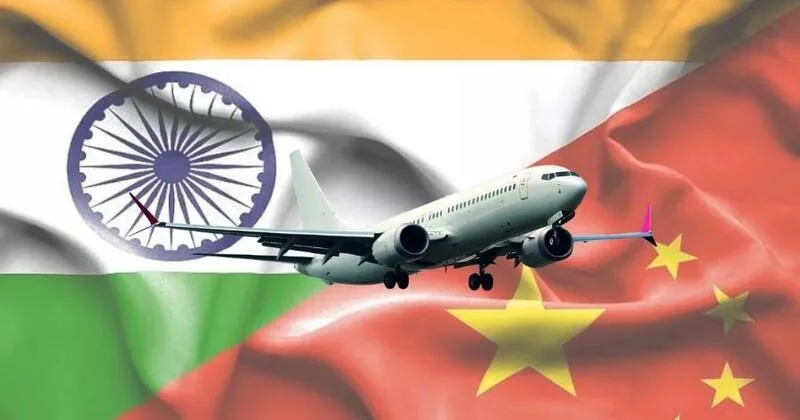
The latest development is the planned resumption of direct flights between Guangzhou and New Delhi from September 21, 2026. The service is expected to improve passenger movement and business connectivity between two major cities of India and China.

Air Connectivity Between India and China
Air travel is currently one of the most visible forms of India-China Connectivity. Direct flights were disrupted for several years because of the COVID-19 pandemic and later bilateral tensions. Services have gradually started returning on selected routes.
China Southern Airlines is scheduled to resume regular passenger flights between Guangzhou and New Delhi from September 21, 2026. The airline will operate one daily round-trip service on the route using Boeing 737-series aircraft. The service will operate under flight numbers CZ359 and CZ360.
The resumption will restore China Southern Airlines’ India operations after a six-year suspension. Guangzhou Baiyun International Airport is one of China’s major airports, while Indira Gandhi International Airport is one of India’s busiest passenger airports.
Other airlines have also restored or started India-China services. IndiGo began daily non-stop flights between Kolkata and Guangzhou in October 2025 and between Delhi and Guangzhou in November 2025. It also launched a daily Kolkata-Shanghai service in March 2026.
China Eastern Airlines resumed Shanghai-Delhi flights in November 2025 and restarted Kunming-Kolkata services in April 2026. Air China resumed Beijing-Delhi flights in April 2026, while Air India restarted Delhi-Shanghai flights in February 2026.
Ancient Land Routes
Long before modern aviation, India-China Connectivity depended heavily on overland routes across the Himalayas and Central Asia.
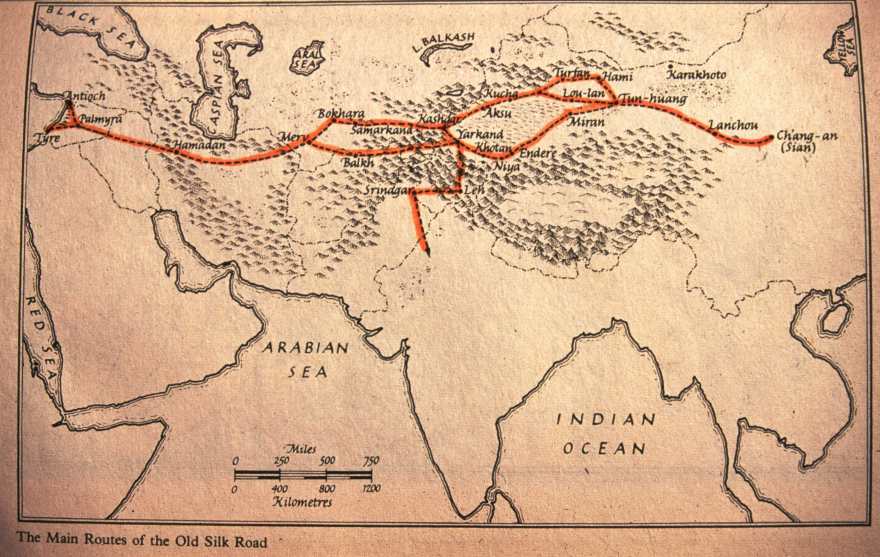
The Silk Road was a large network of land and sea routes that connected India, China, Central Asia and other regions for more than 1,500 years. These routes were important not only for trade but also for the movement of ideas, culture and religions.
Buddhism travelled from India towards China and other parts of East Asia through these networks. Regions such as Kashmir, Ladakh and Tibet played important roles in trans-Himalayan trade and cultural exchange.
The Southern Silk Route connected parts of eastern and northeastern India with China’s Yunnan province through Myanmar. Another route, known as the Sikkim Silk Route, connected Yunnan and India through Tibet and the Chumbi Valley.
Important Himalayan Passes
Several mountain passes have historically connected India with areas around Tibet and China. These routes have also been used for border trade.
Nathu La Pass in Sikkim is located at an altitude of about 4,310 metres. It is one of the recognised trading points between India and China. Trade through Nathu La is based on monetary transactions.
Shipki La Pass in Himachal Pradesh’s Kinnaur district lies at around 3,930 metres. It has traditionally been associated with barter-based trade. The Sutlej River enters India through the Shipki La region.
Lipulekh Pass in Uttarakhand is another important Himalayan pass located close to the India-Nepal-China trijunction. Trade through the route uses currency-based transactions. The route has also been a subject of concern and objection from Nepal because of territorial issues.
Maritime Connectivity
Modern India-China Connectivity is not limited to direct routes between the two countries. Maritime trade connects India and China through the wider Indian Ocean and Southeast Asian shipping network.
The historic Maritime Silk Road connected India with China, Southeast Asia, the Arab world, East Africa and the Mediterranean. Indian ports such as Calicut, Mahabalipuram and Nagapattinam were part of long-distance maritime trade networks.
Today, the Strait of Malacca is particularly important for China’s access to the Indian Ocean. A large share of China’s energy imports travels through maritime routes in the Indian Ocean.
China has also invested in or developed port infrastructure in locations such as Gwadar, Hambantota, Kyaukphyu and Djibouti. This network is often discussed in connection with China’s wider maritime strategy.
Digital Connectivity
Digital networks have become another important part of India-China Connectivity. Modern economies depend heavily on submarine fibre-optic cables for international communications, financial transactions and internet services.
Submarine cables carry more than 98% of international data, making them a critical part of global connectivity. The Indian Ocean has a dense network of cable routes connecting Asia with Europe, Africa and other regions.
Major cable systems, including the SEA-ME-WE series and India-Middle East-Europe routes, connect India with international digital networks. India’s major cable landing locations include Mumbai and Chennai.
China’s Digital Silk Road also includes digital infrastructure and undersea cable projects. The PEACE cable, with landing sites including Pakistan and Djibouti, is one example of China’s wider digital connectivity initiatives.
Proposed BCIM Economic Corridor
One of the major proposed projects related to India-China Connectivity was the Bangladesh-China-India-Myanmar (BCIM) Economic Corridor.
The proposed corridor was designed as a multi-modal network involving roads, railways, waterways and air links. It was expected to connect China’s Yunnan province with Bangladesh, Myanmar and India’s West Bengal.
China proposed including BCIM in the Belt and Road Initiative (BRI) in 2015. However, India has not joined the BRI because of sovereignty and security concerns, particularly regarding the China-Pakistan Economic Corridor (CPEC) and its route through territory claimed by India.
By 2019, BCIM was no longer included in a BRI joint communique, and its role within the BRI framework lost momentum.
India’s Alternative Connectivity Approach
India has promoted other regional connectivity initiatives instead of joining the BRI. These include the International North-South Transport Corridor (INSTC) and development of Chabahar Port in Iran.
India is also exploring new maritime possibilities. The country is preparing to dispatch its first cargo ship along Russia’s Northern Sea Route in 2027, which could provide another route for connecting Asian trade with Europe.
These initiatives show that connectivity is closely linked with trade, infrastructure and wider foreign-policy interests.
India-China Connectivity in 2026
The planned Guangzhou-New Delhi flight from September 21, 2026 is an important recent development in India-China connectivity. The restoration of direct air links can support business travel, tourism, education and people-to-people exchanges.
At the same time, older Himalayan routes, maritime trade lanes and global digital networks continue to connect the two countries indirectly. Together, these air, land, maritime and digital links form a broad connectivity network shaped by geography, trade and changing relations between India and China.