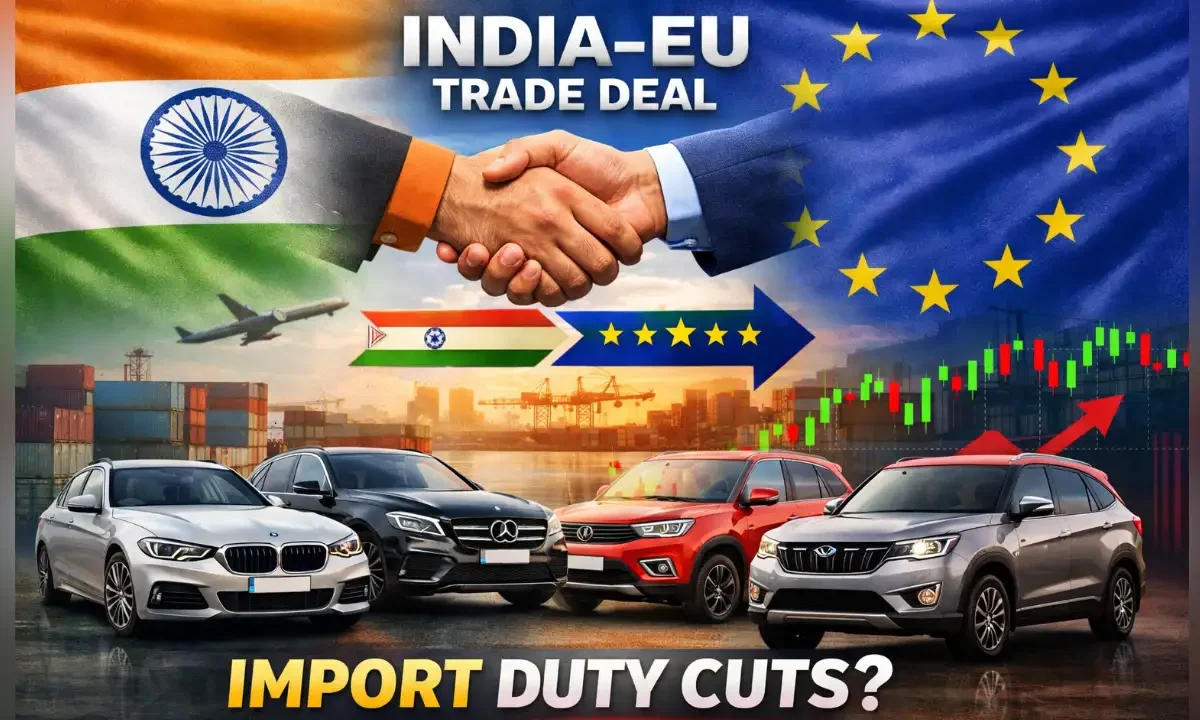
India-EU Car Tariff Cut Signals New Era for India’s Auto Trade Policy

India-EU Car Tariff Cut is set to become one of the most important developments in India’s international trade landscape, as the country prepares to open its automobile market wider than ever before under a proposed free trade agreement (FTA) with the European Union. After years of cautious protectionism, India is now ready to reduce steep import duties on select European passenger cars, marking a historic shift in policy and sending a strong signal about its commitment to deeper global economic integration.
Thank you for reading this post, don't forget to subscribe!This move comes as part of long-running India–EU trade negotiations that have remained stalled for over a decade. With both sides now showing renewed political will, the auto sector has emerged as a key area where compromises are finally being made.
A Major Shift in India’s Auto Trade Approach
For decades, India has maintained very high import duties on fully built passenger vehicles, sometimes reaching up to 110 per cent. These tariffs were designed to protect domestic manufacturers and encourage foreign companies to invest in local production rather than relying on imports.
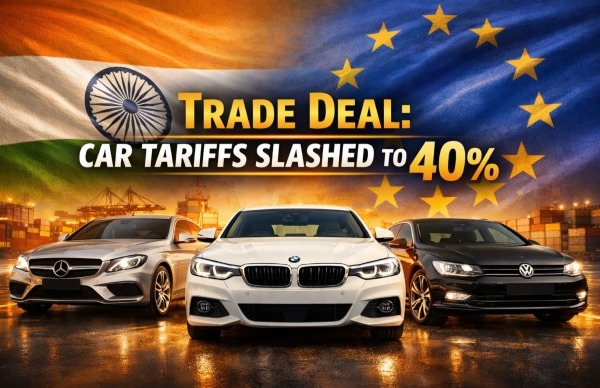
The proposed agreement changes this approach significantly. India has agreed to immediately cut import duties to 40 per cent on a limited number of European-built passenger cars priced above €15,000. Over time, these duties may be reduced further, potentially falling to as low as 10 per cent.
Such a sharp reduction represents one of the biggest concessions India has ever offered in the automobile sector. It reflects a growing belief within the government that carefully managed competition can help strengthen, rather than weaken, India’s manufacturing ecosystem.
What the Tariff Cuts Mean in Practice
The tariff reduction will apply only to a specific quota of vehicles and mainly to higher-end passenger cars. This means mass-market small cars will largely remain protected, while premium and luxury vehicles will see the biggest impact.
For Indian consumers, this could translate into:
- Lower prices for imported European cars
- Wider choice of premium and niche models
- Faster access to global automotive technology
At the same time, the government retains control over how many vehicles can enter under the lower-duty scheme, helping prevent a sudden surge of imports that could disrupt the domestic market.
Boost for European Car Manufacturers
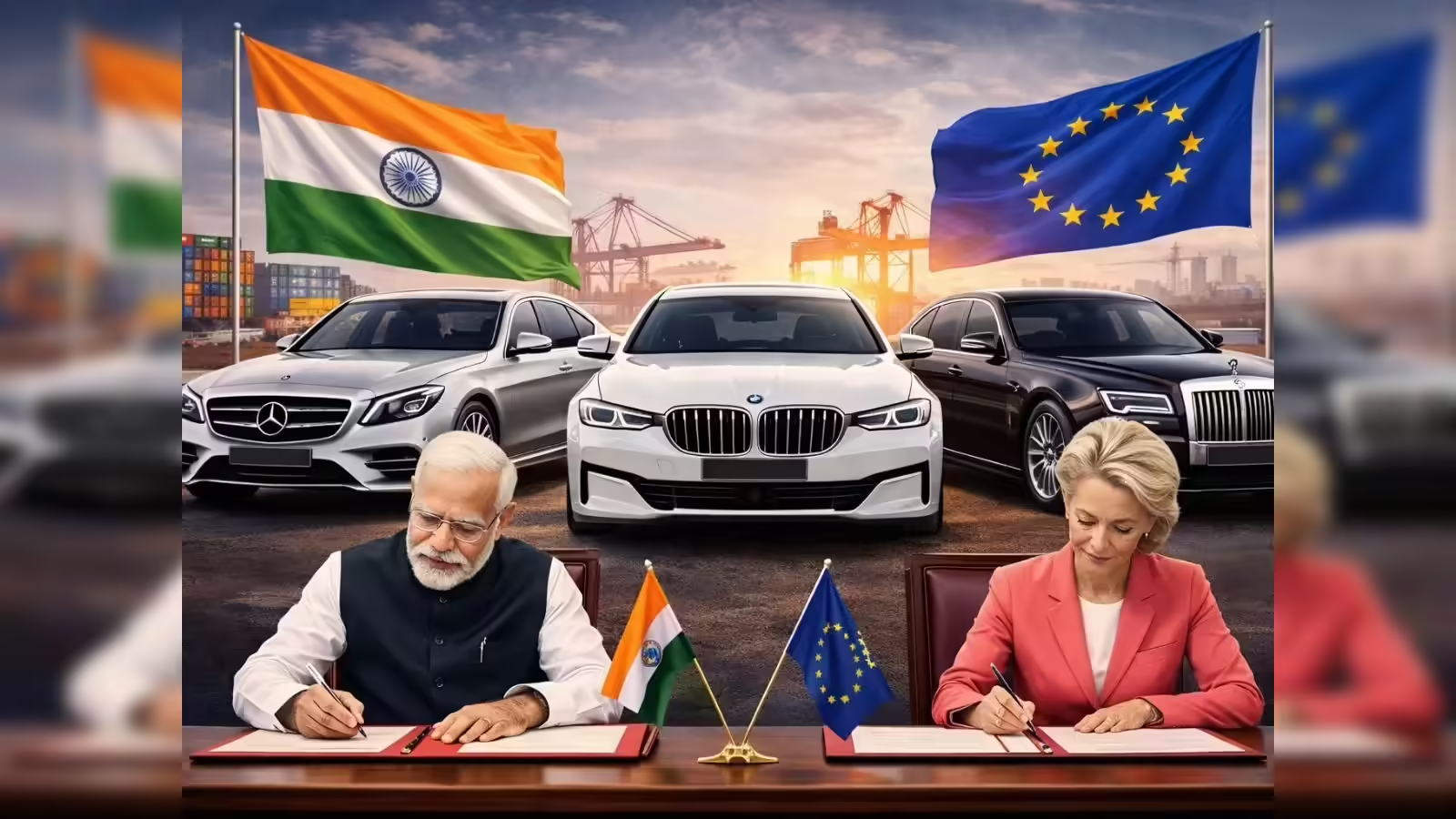
The India-EU Car Tariff Cut is especially positive news for European automakers such as Volkswagen, BMW, Mercedes-Benz, and others. Although many of these companies already have a presence in India through local assembly, high import duties have limited the range of models they can offer.
With lower tariffs:
- Companies can introduce new models more easily
- Brands can test demand before investing in full-scale local production
- India becomes a more attractive destination for global launches
This flexibility is important because developing a new assembly line requires significant capital. Being able to start with imports allows manufacturers to assess market response and plan investments more confidently.
Protection for India’s Electric Vehicle Ecosystem
One of the most notable aspects of the agreement is the special treatment of electric vehicles (EVs). Under the proposed deal, EVs will be excluded from tariff reductions for the first five years.
This decision aims to protect domestic EV manufacturers such as Tata Motors and Mahindra & Mahindra, which are investing heavily in building electric platforms, battery technology, and charging ecosystems.
By keeping high duties on imported EVs initially, India hopes to:
- Give local companies time to scale up
- Encourage technology development within the country
- Build a strong domestic EV supply chain
After the five-year period, EV tariffs are expected to be reduced gradually, similar to conventional vehicles.
Limited Impact on Market Share in the Short Term
European car brands currently account for less than 4 per cent of India’s total car market. Even with tariff reductions, this share is unlikely to rise dramatically in the short term.
India’s car market remains highly price-sensitive, and mass-market segments are dominated by domestic and Asian manufacturers. However, in the premium and luxury segments, competition is expected to intensify.
Over time, this competition could encourage Indian manufacturers to improve quality, safety, and technology offerings, benefiting consumers.
Why This Deal Matters Beyond Cars
Although automobiles have grabbed headlines, the India–EU free trade agreement is much broader in scope. It is expected to cover multiple sectors, including:
- Textiles and apparel
- Gems and jewellery
- Chemicals and pharmaceuticals
- Machinery and electronics
For India, the agreement offers an opportunity to expand exports to one of the world’s largest consumer markets. For the European Union, it opens doors to faster growth in a country with a rapidly expanding middle class.
The timing is also important. Indian exporters face pressure from high tariffs in certain overseas markets, while European companies are searching for new growth engines as demand slows in their home economies.
Strategic and Geopolitical Significance
The India-EU Car Tariff Cut is not just an economic decision; it also has strategic importance.
India is seeking to position itself as a reliable trade partner at a time when global supply chains are being reshaped. The European Union, meanwhile, wants to diversify its economic relationships and reduce dependence on a small number of large markets.
By moving closer together, India and the EU can:
- Strengthen supply chain resilience
- Increase technology cooperation
- Balance global economic power shifts
The agreement also sends a message that India is willing to reform long-standing policies when it sees long-term benefits.
Challenges That Remain
Despite progress, several issues still need to be resolved before the agreement can be finalised. These include:
- Rules of origin for products
- Data protection and digital trade norms
- Environmental and labour standards
Negotiators from both sides will need to find compromises that respect domestic priorities while maintaining the overall ambition of the deal.
Looking Ahead
The India-EU Car Tariff Cut represents a turning point in India’s approach to automobile trade and industrial policy. By carefully lowering barriers while protecting key domestic interests, India is attempting to strike a balance between openness and self-reliance.
If successfully implemented, the policy could reshape India’s premium car market, deepen economic ties with Europe, and set a precedent for future trade agreements. More importantly, it signals that India is ready to take bold steps to integrate with the global economy while safeguarding its long-term development goals.