India Wool Industry: Production, Growth and Employment Across States

The India Wool Industry plays an important role in the country’s textile and rural economy. Wool is a valuable natural fibre used for winter clothing, carpets, floor coverings and several industrial products. With the world’s second largest sheep population, India holds a strong position in global wool production and currently ranks ninth worldwide. The sector supports millions of livelihoods and connects rural sheep rearers with organised textile markets in cities and export hubs.
Thank you for reading this post, don't forget to subscribe!The industry operates across both organised and unorganised sectors. From sheep farms in dry and hilly regions to carpet factories and garment units, the wool value chain is wide and diverse. It not only contributes to domestic textile needs but also strengthens India’s export potential in carpets and woollen goods.
India Wool Industry Production and State Contribution
In FY24, India’s total wool production stood at 33.69 million kg. The production is spread across different states, with some regions playing a much bigger role due to their climate and sheep population.
Rajasthan remained the largest producer of wool in the country. The state produced 16,013.50 thousand kg of wool, accounting for 47.53 per cent of the total national output. The dry and semi arid climate of Rajasthan is suitable for sheep rearing, making it the backbone of the India Wool Industry.
Jammu and Kashmir followed as the second largest producer with 7,770 thousand kg, contributing 23.06 per cent of total output. The cold climate and traditional sheep farming practices in the region support wool production.
Other important wool producing states include Karnataka, Telangana, Gujarat, Maharashtra and Himachal Pradesh. These states show that wool production is not limited to one region but is spread across arid, semi arid and hill areas of the country.
This wide geographical spread makes the India Wool Industry resilient and diverse. It ensures that rural communities in different parts of the country benefit from sheep rearing and wool processing.
Growth Trends in India Wool Industry
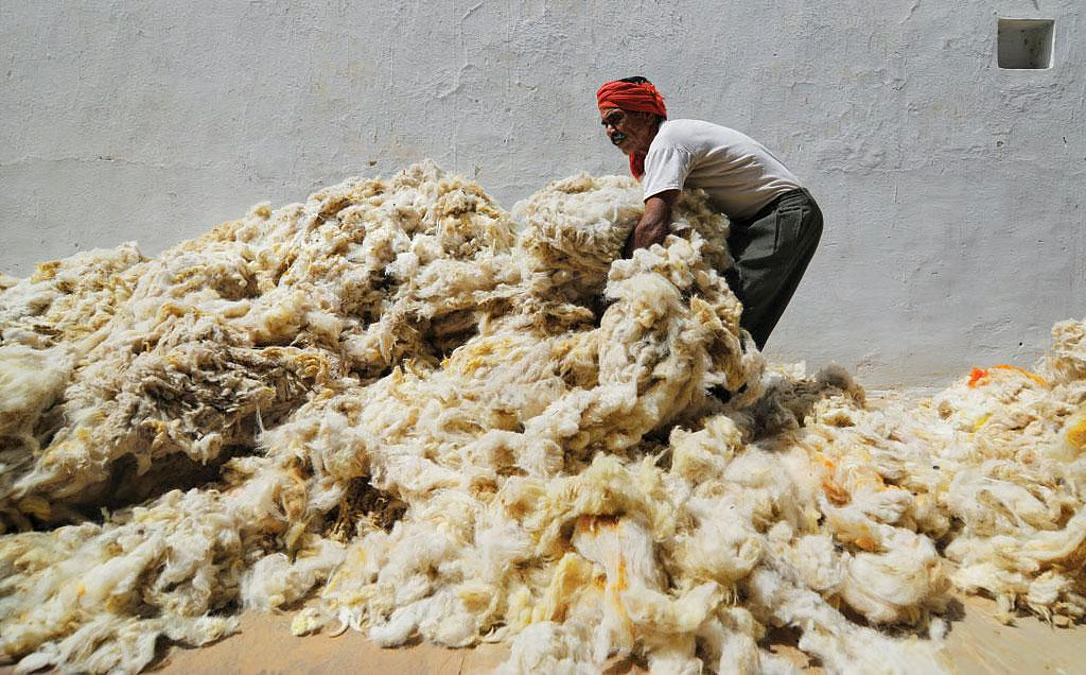
The India Wool Industry has also shown growth in certain states. Punjab recorded the highest annual growth rate in wool production at 22.04 per cent. This strong growth reflects better sheep management and improved farming practices.
Tamil Nadu followed with a growth rate of 17.19 per cent. Gujarat also reported growth of 3.20 per cent. These figures highlight that new regions are improving their contribution to the wool sector.
The growth trends show that with better breeding techniques, veterinary support and government assistance, wool production can increase further. This is important because domestic production still does not fully meet the demand for fine quality wool used in apparel manufacturing.
Wool Categories in India Wool Industry
India produces three main categories of wool. Carpet grade wool forms the largest share at 85 per cent of total production. Apparel grade wool accounts for 5 per cent, while coarser grade wool makes up the remaining 10 per cent.
The dominance of carpet grade wool reflects India’s strong position in carpet and rug manufacturing. The country is known globally for handmade carpets and floor coverings. The India Wool Industry mainly supports this segment because most sheep breeds in the country produce coarse and medium fibre suitable for carpets rather than fine garments.
Apparel grade wool production is limited, which means India depends partly on imports for high quality fine wool required for premium clothing. However, the strong carpet segment gives the country a competitive advantage in global markets.
Structure of India Wool Industry
The India Wool Industry has a complex structure that includes both organised and unorganised segments.
The organised sector includes composite textile mills, combing units, spinning mills, carpet manufacturing units and garment factories. These units use modern machinery and supply products to large domestic brands and export markets. They play a key role in maintaining quality standards and boosting exports.
The unorganised or decentralised sector is equally important. It includes handlooms, power looms, knitting units, hosiery units and dyeing facilities. Many of these units are small scale and family run businesses. They provide employment in rural and semi urban areas and keep traditional weaving skills alive.
Together, these two segments create a strong value chain. Sheep rearers supply raw wool, which is then processed, spun and converted into carpets, shawls, blankets and garments. The India Wool Industry connects villages with national and international markets.
Employment and Livelihood Support
The India Wool Industry is a major source of employment. Around 1.2 million people work in the organised sector. Nearly two million people are engaged in allied activities such as sheep rearing, wool collection, sorting and trading.
Carpet weaving alone provides jobs to about 0.3 million workers. Many of these workers are based in rural areas, where alternative employment options are limited. This makes wool production and carpet weaving important for poverty reduction and rural development.
In terms of sheep wise contribution, ewes account for 71.13 per cent of total wool output. Rams and wethers contribute 14.54 per cent, while lambs account for 14.33 per cent. This shows that proper flock management is essential for maintaining and increasing wool production.
Good breeding practices, animal health services and proper grazing management are necessary to improve both quantity and quality of wool. Strengthening these areas can further boost the India Wool Industry.
Future Scope of India Wool Industry
The India Wool Industry has strong potential for growth. With rising demand for natural fibres and sustainable textiles, wool is gaining attention as an eco friendly option. By improving breed quality and increasing apparel grade wool production, India can reduce imports and increase value addition.
Support for small producers, better marketing facilities and modern processing technology can help the sector grow further. As the country continues to invest in rural development and textile manufacturing, the India Wool Industry is expected to remain a key pillar of employment, exports and traditional craftsmanship.
Overall, the India Wool Industry reflects the strength of India’s rural economy and textile heritage. With continued focus on productivity, quality and innovation, it can play an even bigger role in the global wool market in the coming years.