Indian Scientists Develop AI Tool to Decode Protein Interactions and Boost Disease Research

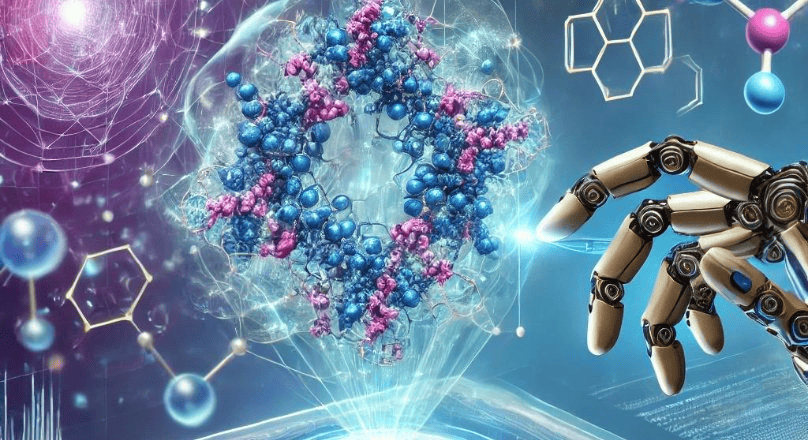
Indian Scientists Develop AI Tool that marks a major step forward in understanding one of the most complex problems in modern biology how flexible, shapeless proteins interact inside living cells. Researchers at the National Centre for Biological Sciences (NCBS), under the Tata Institute of Fundamental Research (TIFR), Bengaluru, have created a powerful deep-learning system that can accurately predict how intrinsically disordered proteins bind with their partners. This breakthrough could reshape disease research and accelerate drug discovery across the world.
Thank you for reading this post, don't forget to subscribe!Understanding the Challenge of Protein Interactions
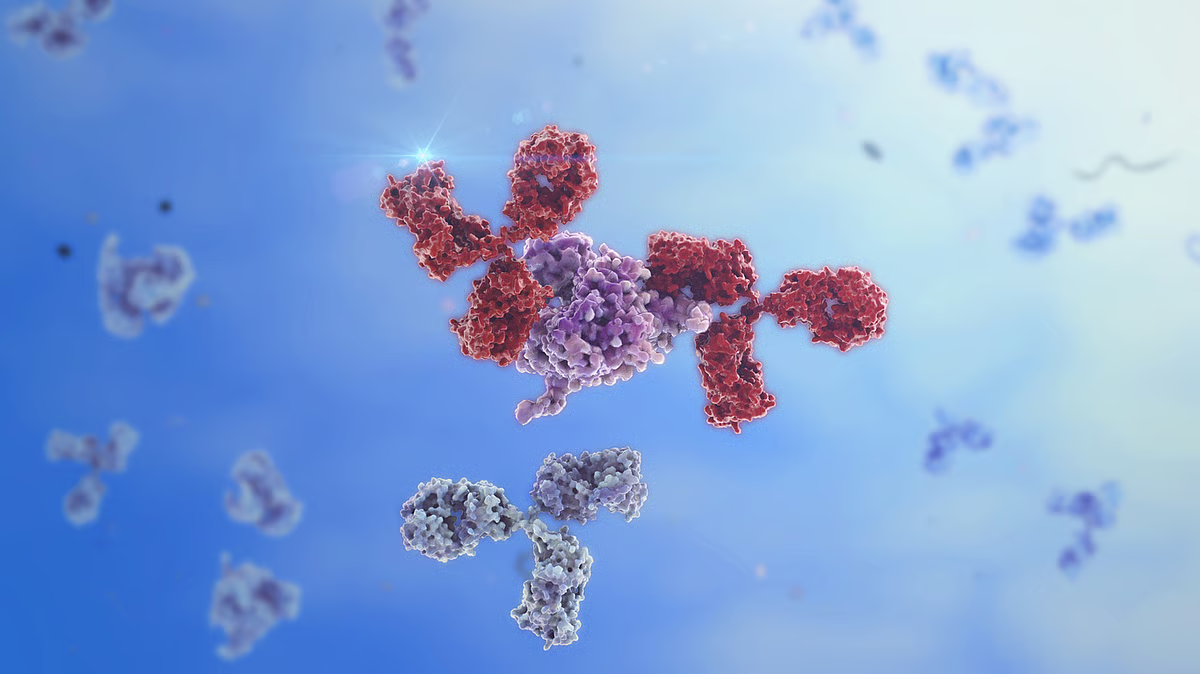
Proteins are essential building blocks of life. Most proteins fold into stable three-dimensional shapes, which makes it easier for scientists to study how they function. However, a large group of proteins does not follow this rule. These are called intrinsically disordered proteins, or IDPs.
IDPs do not have a fixed structure. Instead, they constantly change shape, adapting to different partners and environments inside the cell. This flexibility allows them to play critical roles in cell signalling, gene regulation, protein quality control, and the formation of dynamic cellular compartments known as condensates.
At the same time, this shapeshifting nature makes IDPs extremely difficult to study. Traditional methods of structural biology often fail to capture how these proteins behave, leaving major gaps in scientific understanding. Predicting how IDPs bind to other proteins has remained a long-standing challenge for researchers.
A New AI-Driven Solution from India
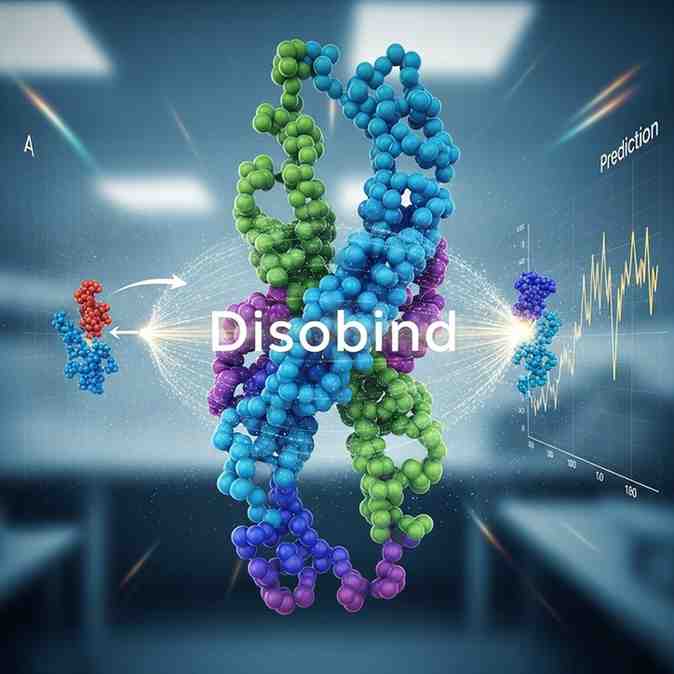
To address this challenge, the NCBS research team developed a deep-learning tool called Disobind. This AI-powered system is designed to predict which regions of a disordered protein will interact with a specific binding partner.
Unlike earlier tools, Disobind does not rely on knowing the three-dimensional structure of the protein beforehand. It also does not need multiple sequence alignments, which are often unavailable for many proteins. Instead, it focuses directly on protein sequences and learns patterns that signal interaction potential.
What makes Disobind especially powerful is that it explicitly considers both the disordered protein and its binding partner together. This is crucial because IDP interactions are highly context-dependent the same protein may behave differently depending on what it binds to.
Role of Protein Language Models
At the heart of Disobind lies an advanced form of artificial intelligence known as protein language models. These models work in a way similar to language models used in human languages. Just as AI can learn grammar and meaning from millions of sentences, protein language models learn the “rules” of protein behaviour from millions of known protein sequences.
By training on vast biological datasets, the AI learns subtle patterns that humans cannot easily detect. These patterns help Disobind predict interaction sites with remarkable accuracy, even for proteins it has never seen before.
This approach represents a shift away from structure-only thinking and opens the door to understanding protein interactions in a more flexible and realistic way.
Strong Performance Against Existing Tools
The research team, led by scientist Kartik Majila, tested Disobind against existing state-of-the-art tools such as AlphaFold-Multimer and AlphaFold3. While AlphaFold systems are highly successful in predicting protein structures, they are less effective when dealing with disordered regions.
Disobind consistently outperformed other predictors, particularly when tested on new protein pairs that were not part of its training data. This shows that the tool is not just memorising known examples, but truly learning general principles of protein interaction.
Interestingly, when Disobind predictions were combined with AlphaFold-Multimer outputs, the overall accuracy improved even further. This highlights how sequence-based AI tools and structure-based methods can complement each other rather than compete.
Implications for Disease Research
According to Shruthi Viswanath, who leads the Integrative Structural Biology Lab at NCBS, Disobind has enormous potential in biomedical research. Many diseases, including cancer, neurodegenerative disorders, and immune system dysfunctions, involve intrinsically disordered proteins.
Because IDPs often act as hubs in cellular networks, small changes in their interactions can have large effects on health. Disobind can help scientists identify disease-linked interaction regions and pinpoint where things go wrong at the molecular level.
This information can reveal new therapeutic targets that were previously hidden due to technical limitations. By understanding how and where proteins interact, researchers can design drugs that interfere more precisely with disease-causing processes.
Indian Scientists Develop AI Tool: Supporting Drug Discovery and Innovation
Drug discovery is a long and expensive process, partly because it is difficult to identify the right molecular targets. Disobind can reduce this uncertainty by mapping interaction hotspots on disordered proteins, offering clear starting points for drug design.
The tool has already been tested on biological systems related to immune signalling, cancer pathways, and neurodegeneration. These early results suggest that Disobind can be applied broadly across many areas of life sciences.
Another major advantage is accessibility. The research team has released Disobind as open-source software, allowing scientists around the world to use, test, and improve it. This open approach encourages collaboration and speeds up scientific progress.
India’s Growing Role in AI-Driven Science
This achievement highlights India’s rising strength at the intersection of artificial intelligence and biological research. Institutions like NCBS and TIFR are increasingly producing tools that meet global standards and address fundamental scientific challenges.
By combining deep biological insight with cutting-edge AI methods, Indian scientists are contributing solutions that have global relevance. Disobind stands as an example of how interdisciplinary research can unlock answers to problems that once seemed unsolvable.
Looking Ahead
The development of Disobind represents more than just a new software tool. It signals a shift in how scientists approach complex biological systems moving from rigid models to flexible, data-driven understanding. As researchers continue to refine and expand such AI systems, our ability to understand life at the molecular level will grow faster than ever before.
With open access, strong performance, and wide applicability, Disobind is set to become an important resource in modern biology, strengthening India’s position in global scientific innovation and opening new paths for disease treatment and discovery.