



NISAR Mexico Subsidence Reveals Rapid Sinking in Mexico City

NISAR Mexico Subsidence is drawing global attention as a new satellite study shows that Mexico City is sinking at an alarming rate. The findings come from the joint Earth observation mission by NASA and ISRO, highlighting serious environmental risks in one of the world’s largest cities.
Thank you for reading this post, don't forget to subscribe!Advanced Satellite Technology Behind NISAR Mexico Subsidence
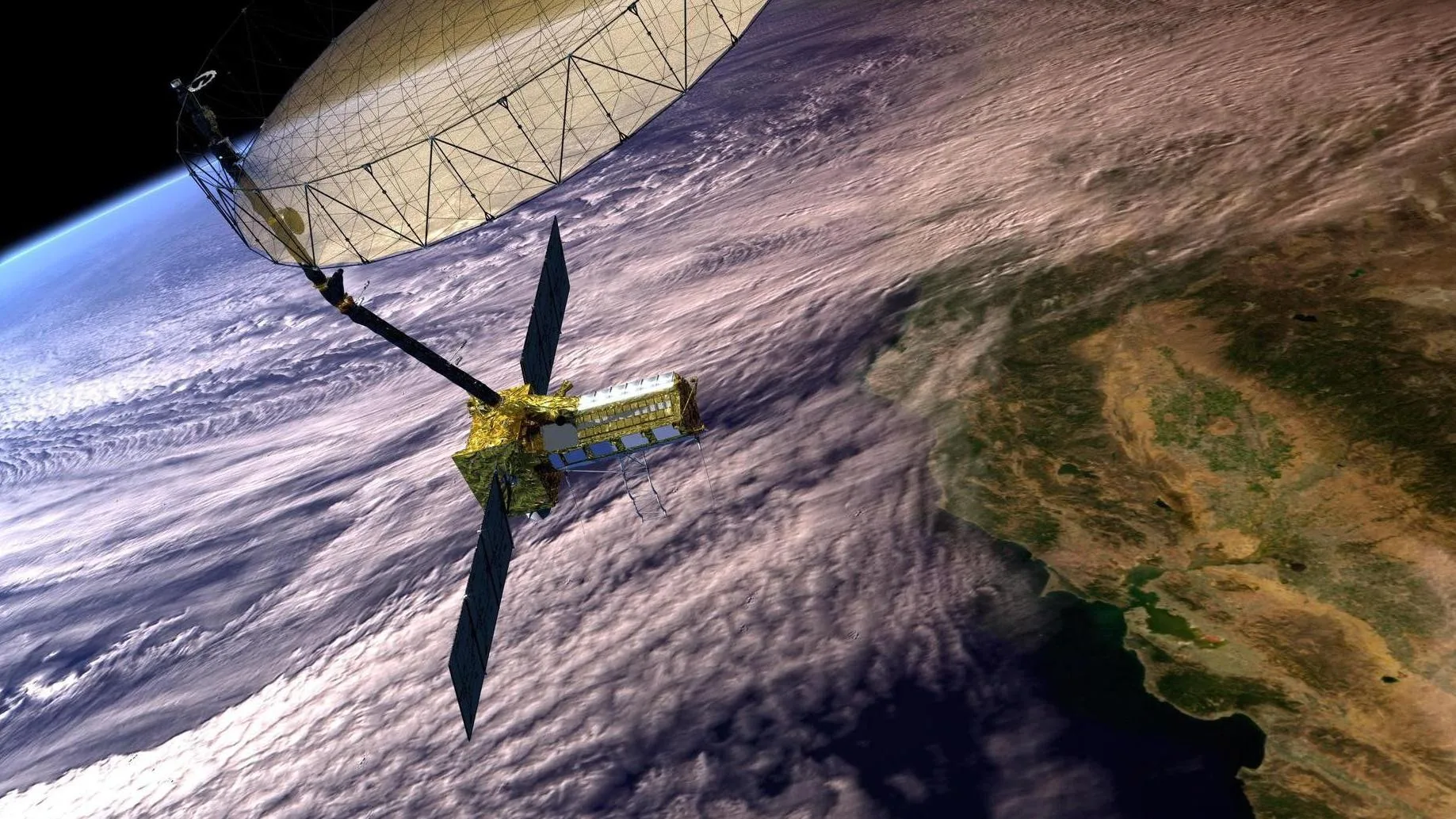
The NISAR satellite, launched in July 2025, is a powerful Earth-monitoring mission. It uses advanced Synthetic Aperture Radar (SAR) to capture detailed images of the Earth’s surface. This technology works even through clouds and at night, making it highly reliable. With its large antenna and dual-frequency radar, NISAR can detect even small changes in land levels with high accuracy.
NISAR Mexico Subsidence Shows Alarming Trends
According to NISAR data, some parts of Mexico City are sinking by more than 2 centimetres per month. This is mainly caused by excessive groundwater extraction. The city is built on an ancient lakebed, which makes the ground soft and unstable. As water is continuously removed, the soil compresses, leading to land subsidence. This creates serious risks for buildings, roads, and public safety.

Scientific Importance of NISAR Mexico Subsidence Data
The data collected between October 2025 and January 2026 confirms that the satellite readings match earlier scientific predictions. NISAR’s ability to track land deformation in near real time is very useful. It helps governments and scientists plan better for urban development, reduce disaster risks, and improve climate resilience. The satellite is also effective in studying other regions with difficult weather conditions.
Global Collaboration and Mission Value
The NISAR mission is valued at around $1.5 billion and reflects strong cooperation between NASA and ISRO. NASA provided the L-band radar system, while ISRO contributed the S-band radar and launch support. This partnership shows how international teamwork can improve space technology and environmental monitoring. The data from NISAR is expected to support global efforts in managing natural resources and preparing for future environmental challenges.