
One Case One Data Initiative Strengthens Digital Judiciary

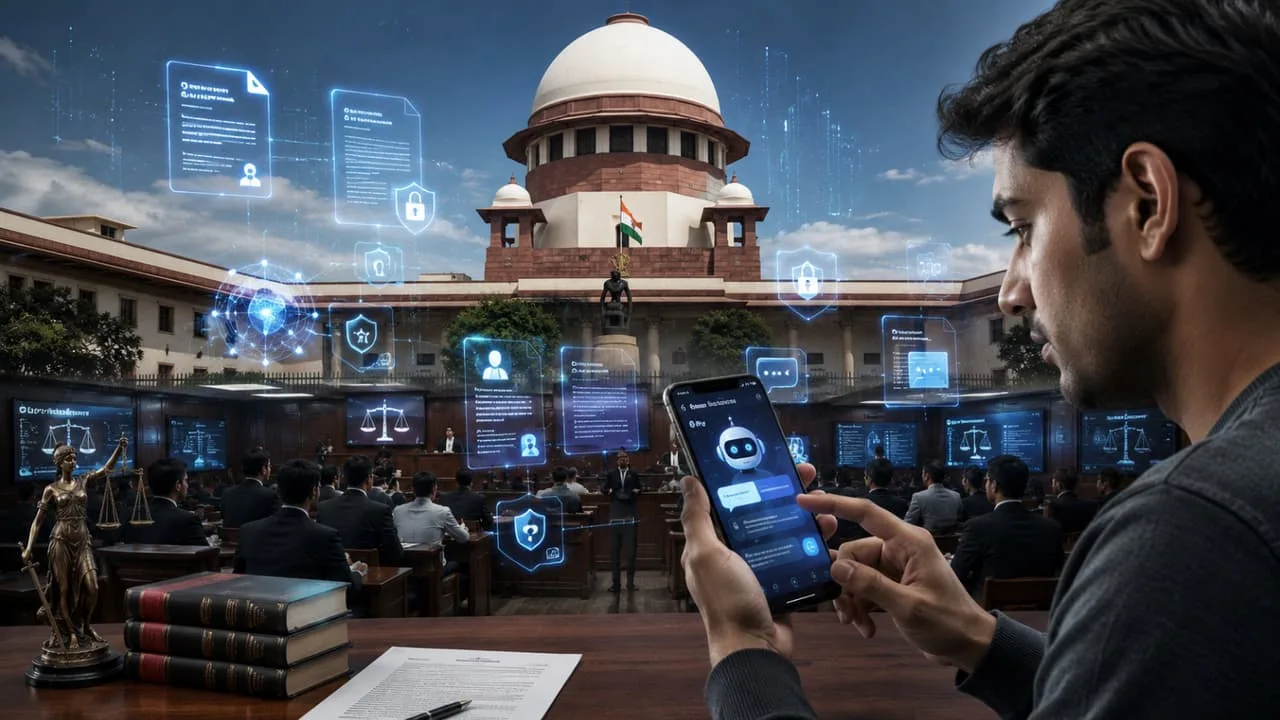
One Case One Data Initiative was launched by Chief Justice of India Surya Kant at the Supreme Court of India on 11 May 2026. Along with this initiative, the AI-powered chatbot “Su Sahay” was also introduced to improve digital court services and make judicial information easier to access for citizens.
Thank you for reading this post, don't forget to subscribe!What is One Case One Data Initiative?
The One Case One Data Initiative is a new digital framework created to connect judicial records from the Supreme Court, High Courts, district courts, and taluka courts into one unified system.
This system will help courts manage case information in a better way. It will also support faster online verification of case details and improve automated data retrieval across different levels of the judiciary.
Digital Court Administration Becomes Stronger
The initiative aims to improve transparency, accuracy, and data integrity in court records. High Courts and government departments can now access important case information when needed through a connected digital system.
This step is expected to reduce delays in handling judicial records and improve coordination between courts across India. It also supports the government’s wider goal of digital governance in the judicial sector.
Su Sahay AI Chatbot for Citizens
The Supreme Court also launched “Su Sahay,” an AI-based chatbot developed by the National Informatics Centre in partnership with the Supreme Court Registry.
The chatbot is integrated with the Supreme Court website and offers front-end guidance to citizens seeking court-related services. It can help users find information quickly and improve public access to judicial services.
Role of Chief Justice Surya Kant
Chief Justice of India Surya Kant became the 53rd Chief Justice of India on 24 November 2025. Under his leadership, the Supreme Court has taken several steps to modernise the Indian judicial system through technology and digital reforms.
His retirement is scheduled for 9 February 2027.
India’s Judicial System and NIC
The Supreme Court of India is the highest judicial authority under the Constitution of India. The National Informatics Centre, which helped develop the AI chatbot, works under the Ministry of Electronics and Information Technology.
Taluka courts, which are part of this new data integration system, operate at the sub-district level in India’s judicial structure.