Religious Schools Charity Case: Supreme Court Reviews Religious Education Status

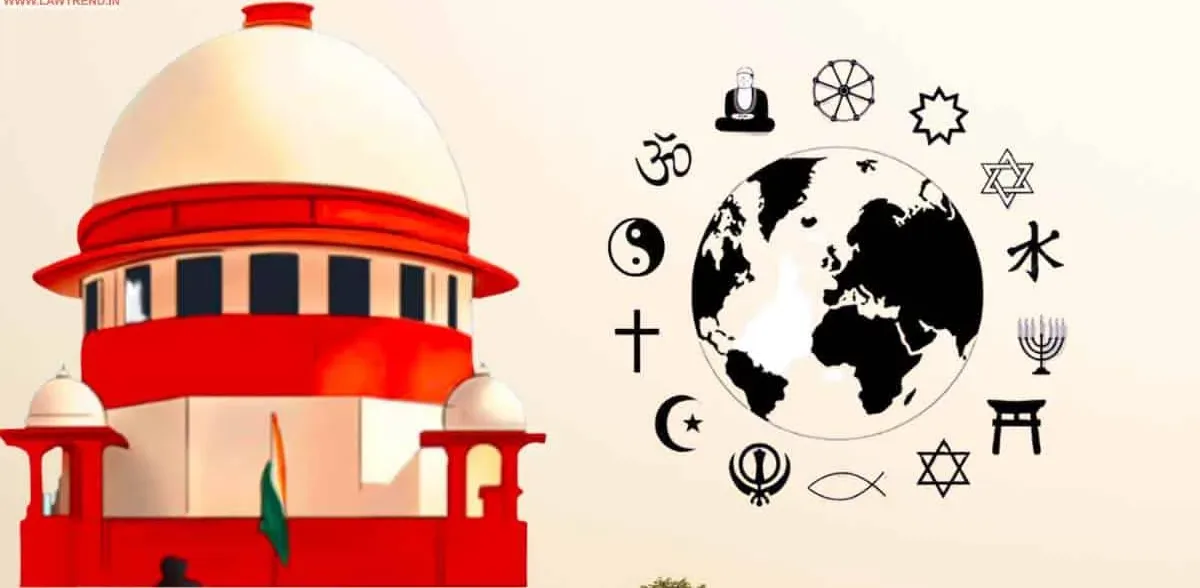
Religious Schools Charity Case has come into focus after the Supreme Court of India examined the legal status of schools that provide religious instruction. On 11 May 2026, the Court discussed whether such institutions should be treated as religious and charitable bodies instead of secular educational institutions. However, the Court left the matter for further examination by the Government of India.
Thank you for reading this post, don't forget to subscribe!Religious Schools Charity Case and Constitutional Rights
The case mainly revolves around important constitutional provisions related to religion and education. Article 26(a) of the Constitution gives every religious denomination the right to establish and maintain institutions for religious and charitable purposes. Article 19(1)(g) protects the freedom to carry on any occupation or profession, while Article 30(1) gives minorities the right to establish and manage educational institutions of their choice.
These constitutional rights are now central to the ongoing debate in the Religious Schools Charity Case.
Petition Filed Before the Supreme Court
The petition was filed by advocate Ashwini Kumar Upadhyay. The plea requested the Supreme Court to declare that institutions mainly imparting religious education should be recognised as religious or charitable establishments rather than professional educational institutions.
A Bench headed by Dipankar Datta observed that the issue falls under the jurisdiction of the Ministry of Education. The Court did not deliver a final verdict and asked the government to examine the matter further.
UK Supreme Court Judgment on Religious Education
A similar issue was recently discussed in the United Kingdom. On 19 November 2025, the UK Supreme Court gave a major judgment regarding religious education in Northern Ireland’s controlled schools.
The case involved a Belfast student identified as JR87 and her father. The UK Supreme Court ruled that religious education and collective worship can violate human rights if they are not taught in an objective, critical, and pluralistic way.
The judgment restored the High Court’s 2022 decision and overturned a previous Court of Appeal ruling.
Human Rights and Religious Instruction
In the UK case, Lord Stephens stated that simply allowing students to withdraw from religious classes was not enough to protect human rights. The Court also criticised the Department of Education in Northern Ireland for failing to properly inspect and monitor religious education practices.
The Religious Schools Charity Case in India may also lead to wider discussions on balancing religious freedom, minority rights, and modern educational standards under constitutional law.