



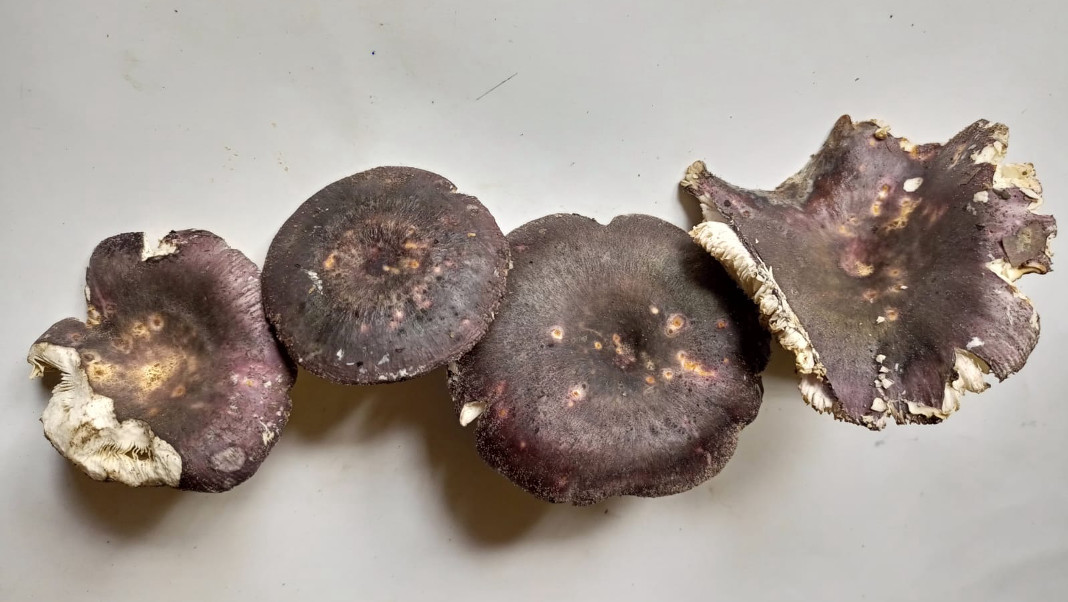
Russula griseopurpurata Found in Meghalaya

Russula griseopurpurata is a newly described mushroom species found in Meghalaya, adding another species to India’s rich fungal diversity. Researchers from Gauhati University described the new species in the scientific journal Phytotaxa on 5 August 2026. The discovery is important because scientists used both physical features and DNA analysis to confirm that the mushroom is different from closely related species.
Thank you for reading this post, don't forget to subscribe!The new mushroom belongs to the genus Russula, a large group of fungi found in many parts of the world. The genus contains around 2,000 known species and includes mushrooms with colourful caps and fragile, brittle flesh. The discovery from Meghalaya highlights the importance of India’s forests and natural habitats in finding and documenting lesser-known forms of life.
New Mushroom Species and Its Scientific Name
The name Russula griseopurpurata refers to the appearance of the mushroom, particularly its greyish-purple colour. The species has been placed under Russula subsection Cyanoxanthinae. Scientists use such taxonomic groups to organise related organisms based on their physical characteristics and evolutionary relationships.
The identification of a new fungal species is not based only on how it looks. Researchers study several features, including the shape and colour of the cap, gills, stalk, spores and other microscopic structures. DNA information can then provide additional evidence to confirm whether the specimen represents a separate species.
Mushroom Found in Ri Bhoi District
The type specimen, known as the holotype, was collected on 22 July 2022 from Jirang in Ri Bhoi district of Meghalaya. The mushroom was found growing beneath a sal tree, scientifically known as Shorea robusta. The location was around 320 metres above sea level.
The holotype is particularly important in biological research because it serves as the main name-bearing reference for a newly described species. The Meghalaya specimen was preserved and deposited as collection number GUBH 20331.
The discovery also shows why forest habitats in the northeastern region remain important for biodiversity research. Meghalaya has a variety of forests, plants, animals and microorganisms, creating suitable conditions for many fungal species.
DNA Study Helped Confirm the Species
Researchers examined three specimens during the study. Two specimens came from West Bengal, while another was collected from Meghalaya. The scientists used DNA sequencing along with traditional methods to study the mushroom.
One of the important genetic tools used in the research was ITS sequencing. ITS, or Internal Transcribed Spacer, is a commonly used DNA marker for identifying and comparing fungi.
The researchers also carried out phylogenetic analysis. This method helps scientists understand relationships between organisms and determine how closely different species are related.
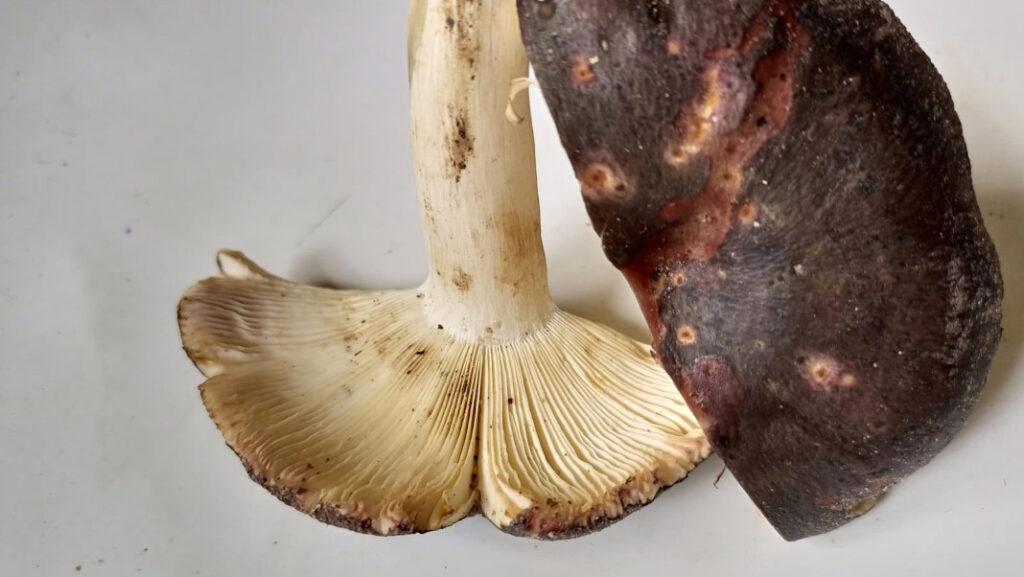
The physical features of Russula griseopurpurata also helped separate it from related mushrooms. Its greyish-purple cap develops cracks as it becomes older, while its gills show noticeable forkings close to the stalk.
Why Meghalaya Matters for Fungal Research
Meghalaya is part of India’s biodiversity-rich northeastern region. Its forests and varied landscapes provide habitats for many species that may not yet have been fully studied.
Fungi play important roles in natural ecosystems. Many fungi help break down dead plant material and return nutrients to the soil. Others form relationships with trees and plants, while some are involved in food chains and other ecological processes.
Because fungi are often small and seasonal, many species can remain unnoticed for years. Scientific surveys and DNA-based research are helping researchers discover and correctly identify these organisms.
Russula Species and Food Safety
The genus Russula includes a large number of mushroom species. Some Russula species are considered edible, while others may not be suitable for consumption. However, the safety of Russula griseopurpurata as a food source has not been established.
Therefore, the newly identified species should not be treated as an edible mushroom simply because some other members of the genus are consumed. Proper scientific identification is important because different mushroom species can have very different properties.
Role of Gauhati University Researchers
Researchers from Gauhati University contributed to the scientific description of the species. Their work combined field observations, preserved specimens, microscopic examination and molecular analysis.
Such research helps build a clearer picture of India’s fungal diversity. Scientific names and verified descriptions also allow researchers in different parts of the world to study the same species using a common reference.
The publication of the study in Phytotaxa, a journal focused on taxonomic research involving plants and fungi, provides a formal scientific record of the species.
A New Addition to India’s Biodiversity
The discovery of Russula griseopurpurata adds to the growing record of India’s fungal species. It also shows how biodiversity research can reveal new organisms even in areas that have been studied for many years.
The combination of traditional mushroom identification and modern DNA technology is making it easier for scientists to distinguish closely related species. Continued research in Meghalaya and other forest-rich parts of India could lead to the identification of more previously undocumented fungi and improve understanding of the country’s natural biodiversity.