Evolution and Role of Vice President: C.P. Radhakrishnan Takes Office

C.P. Radhakrishnan has been elected as the new Vice President of India, marking another chapter in the evolution of this pivotal constitutional office. Established under Article 63 of the Indian Constitution, the Vice President holds the distinction of being the second-highest constitutional authority in the country. Beyond its ceremonial stature, the office assumes crucial responsibilities, serving as the ex officio Chairman of the Rajya Sabha and stepping in as Acting President during contingencies. Since its inception in 1952, the role of the Vice President has undergone a dynamic transformation, mirroring India’s political and social evolution.
Thank you for reading this post, don't forget to subscribe!Philosophical Foundations (1952–1969)
The earliest Vice Presidents were intellectuals and stalwarts of India’s freedom struggle. Sarvepalli Radhakrishnan, the inaugural Vice President, was a distinguished philosopher who significantly influenced parliamentary traditions. His tenure laid the groundwork for the office, blending moral authority with constitutional propriety. Zakir Husain, another educationist and reformer, briefly acted as President while upholding secular and inclusive principles. V. V. Giri, a labour leader and freedom fighter, brought a new dimension to the office, showcasing political activism when he contested the presidency independently in 1969, triggering a constitutional and political debate about the neutrality of the Vice President’s office.
Stabilising Force Amid Political Turmoil (1969–1987)
As India navigated political uncertainty, Vice Presidents became stabilising figures. Leaders such as Gopal Swarup Pathak, a legal luminary, maintained constitutional propriety during turbulent times. B. D. Jatti, serving as Vice President during the Emergency period, stepped in as Acting President with measured caution to uphold democratic norms. Mohammad Hidayatullah, a former Chief Justice of India, strengthened the rule of law and constitutional governance, ensuring the office played a critical mediatory role. Ramaswamy Venkataraman exemplified diplomacy, acting as a bridge between the President and the Prime Minister during periods of political friction, thus reinforcing the Vice Presidency as a stabilising pillar.
Era of Transitions and Inclusion (1987–2002)
This phase highlighted the office as a stepping stone to the presidency. Shankar Dayal Sharma and K. R. Narayanan, India’s first Dalit Vice President, underscored social inclusion at the highest echelons of power. Narayanan’s diplomatic experience enriched parliamentary deliberations and strengthened India’s global image. Krishan Kant, a socialist and freedom fighter, tragically passed away while in office, facing unprecedented security and political challenges, including the aftermath of the 2001 Parliament attack. During this era, the Vice President’s role evolved to embody not just constitutional responsibility but also representation of India’s social diversity.
Modern Political Dynamics (2002–Present)
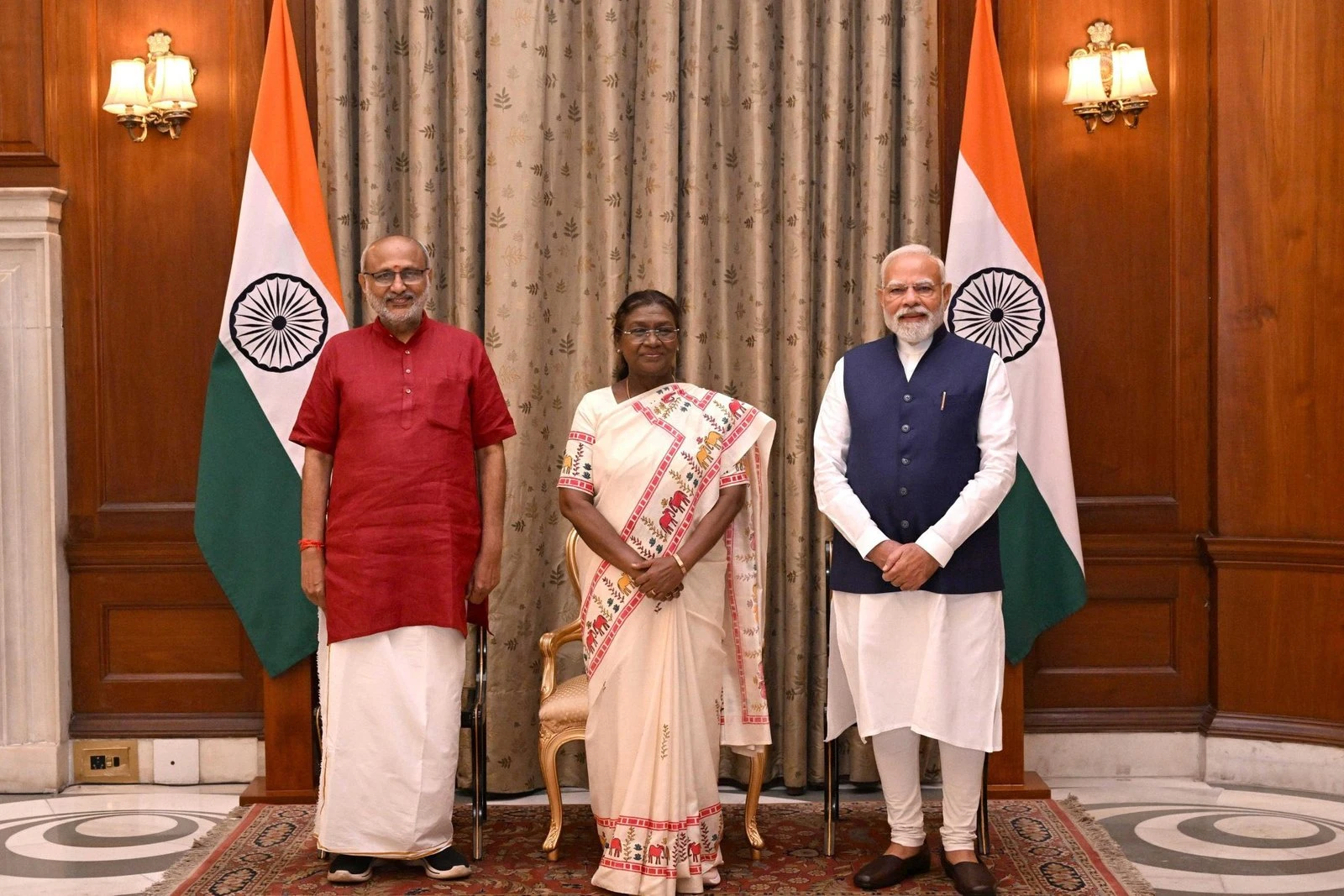
In recent decades, the Vice Presidency has become intertwined with political strategy. Bhairon Singh Shekhawat, the first BJP-affiliated Vice President, presided over coalition-driven legislative complexities. Mohammad Hamid Ansari, serving two consecutive terms, became known for his parliamentary discipline and measured interventions. Muppavarapu Venkaiah Naidu focused on rural empowerment and robust parliamentary debates, actively shaping legislative discourse. Jagdeep Dhankhar maintained strict order in the Rajya Sabha but resigned in 2025 citing health concerns. The current Vice President, C. P. Radhakrishnan, brings administrative expertise, a soft-spoken demeanor, and party alignment under the NDA, continuing the office’s legacy of balancing political pragmatism with constitutional decorum.
Evolution and Role of Vice President: Constitutional and Parliamentary Functions
The Vice President’s responsibilities extend far beyond symbolism. As Chairman of the Rajya Sabha, the office ensures the smooth conduct of legislative business, mediates between political factions, and safeguards democratic procedures. Additionally, the Vice President assumes presidential duties in cases of vacancy, absence, or incapacity, acting as a constitutional safeguard. The office represents an intersection of ceremonial respect, political influence, and administrative oversight, reinforcing India’s democratic architecture.
Significance in Contemporary India
The Vice Presidency reflects India’s political and social evolution, transitioning from an idealistic and philosophical foundation to a role deeply embedded in governance and party politics. It serves as a platform for statesmanship, legal insight, and mediation during critical political junctures. By embracing social diversity, including representation of marginalized communities, the office continues to embody India’s inclusive democratic values. With C. P. Radhakrishnan at the helm, the Vice President’s role remains central to parliamentary stability, constitutional integrity, and the broader functioning of the Indian polity.