


Maritime Disputes: Causes, Major Conflicts and India’s Role

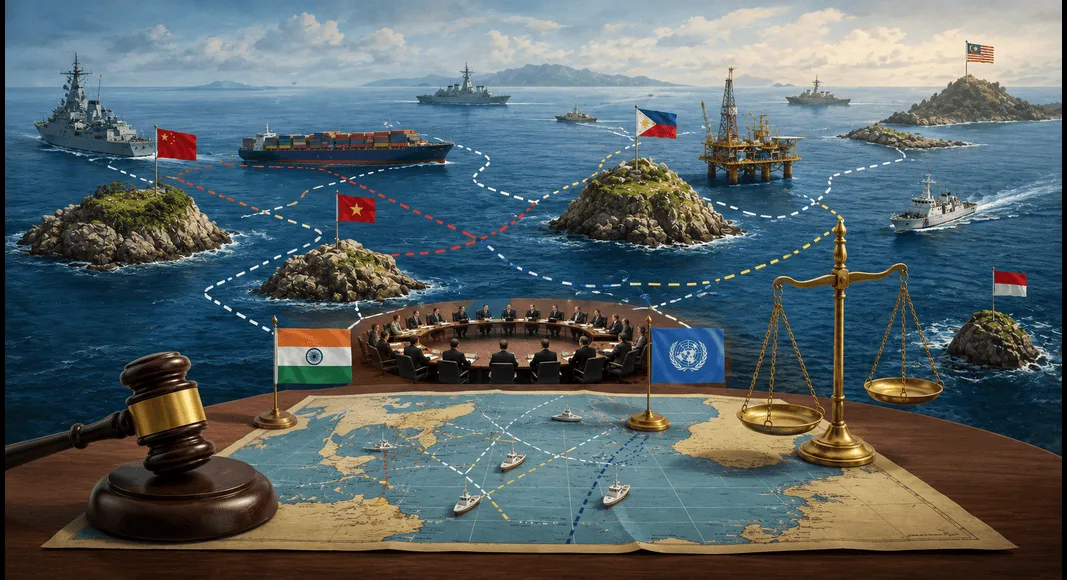
Maritime Disputes are disagreements between two or more countries over the ownership, control, or use of seas, oceans, islands, and coastal regions. These disputes are becoming more important because oceans are rich in natural resources such as fish, oil, natural gas, and minerals. Oceans also carry around 90% of the world’s trade through ships, making sea routes essential for the global economy.
Thank you for reading this post, don't forget to subscribe!For India, maritime disputes are important because the country has a coastline of more than 7,500 km and depends heavily on sea routes for trade, energy imports, and national security. The Indian Ocean Region (IOR) is one of the busiest maritime regions in the world, making peaceful management of maritime disputes necessary for regional stability.
What are Maritime Disputes?
Maritime disputes are conflicts between countries over rights and control in oceans, seas, coastal waters, islands, or underwater resources.
These disputes usually involve:
- Maritime boundaries
- Exclusive Economic Zones (EEZ)
- Fishing rights
- Oil and natural gas exploration
- Shipping routes
- Ownership of islands
- Continental shelf claims
- Military presence in strategic waters
Most maritime disputes are resolved through negotiations, international courts, arbitration, or agreements. However, some continue for decades because of political and strategic interests.
Why are Oceans Important?
About 71% of the Earth’s surface is covered by oceans. Traditionally, the world recognized four oceans:
- Pacific Ocean
- Atlantic Ocean
- Indian Ocean
- Arctic Ocean
Today, many countries also recognize the Southern Ocean surrounding Antarctica as the fifth ocean.
Oceans are important because they:
- Support international trade
- Provide food through fisheries
- Contain valuable oil and gas reserves
- Regulate the global climate
- Support marine biodiversity
- Connect countries through shipping routes
Because of these benefits, many countries compete for control over maritime regions.
Main Causes of Maritime Disputes
1. Maritime Boundary Disagreements
Countries often disagree about where their sea boundaries should be drawn.
2. Exclusive Economic Zones (EEZ)
Under international law, coastal countries enjoy special rights over resources within 200 nautical miles of their coast. When EEZs overlap, disputes arise.
3. Fishing Rights
Fishing is an important source of income for millions of people. Competition over fishing areas often creates conflicts.
4. Oil and Natural Gas
Many disputed seas contain huge reserves of petroleum and natural gas, making ownership highly valuable.
5. Strategic Importance
Certain sea routes are important for global trade and military movement. Countries try to increase their influence in these regions.
6. Historical Claims
Some countries claim islands or sea areas based on historical ownership, while others rely on modern international law.
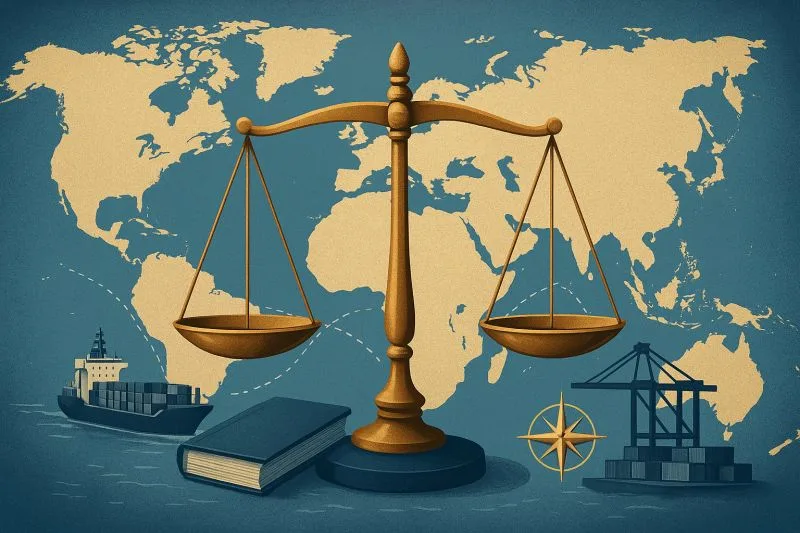
Maritime Disputes Involving India
India-Bangladesh Maritime Dispute
India and Bangladesh had a long-standing dispute over their maritime boundary in the Bay of Bengal.
Bangladesh approached the United Nations Convention on the Law of the Sea (UNCLOS) for arbitration in 2009.
In 2014, the Permanent Court of Arbitration delivered its judgment.
The ruling:
- Clearly defined the maritime boundary.
- Settled territorial sea and EEZ limits.
- Gave Bangladesh rights over a significant portion of the disputed area.
- Reduced future tensions between both countries.
This is considered a successful example of peaceful dispute resolution through international law.
India-Sri Lanka Maritime Dispute
India and Sri Lanka share maritime boundaries in the Palk Strait and Palk Bay.
Katchatheevu Island
One of the biggest issues is Katchatheevu, a small island located in the Palk Strait.
India transferred the island to Sri Lanka through agreements signed in 1974 and 1976.
However, Indian fishermen continue to face problems because many traditionally fish near the island and sometimes cross into Sri Lankan waters.
This leads to:
- Arrest of fishermen
- Seizure of fishing boats
- Diplomatic tensions
Both countries continue discussions to find practical solutions while respecting each other’s sovereignty.
Sethusamudram Ship Channel Project
This proposed shipping channel aims to connect India’s eastern and western coasts without ships having to travel around Sri Lanka.
The project promises economic benefits but has faced delays due to environmental, religious, security, and legal concerns.
India-China Maritime Competition
Although India and China do not have a direct maritime boundary dispute similar to land border issues, they compete strongly in the Indian Ocean Region.
China has expanded its presence by:
- Investing in ports
- Increasing naval deployments
- Supporting anti-piracy missions
- Building strategic partnerships with India’s neighboring countries
India has responded by:
- Strengthening the Indian Navy
- Increasing cooperation with Indian Ocean countries
- Promoting freedom of navigation
- Expanding naval exercises
- Supporting regional security under its Act East Policy
Major Maritime Disputes Around the World
South China Sea Dispute
The South China Sea is one of the world’s most disputed maritime regions.
Countries involved include:
- China
- Vietnam
- Philippines
- Malaysia
- Brunei
- Taiwan
The dispute involves:
- Spratly Islands
- Paracel Islands
- Oil and gas reserves
- Rich fishing grounds
- Important international shipping routes
The region is strategically important because nearly one-third of global trade passes through these waters.
Israel-Lebanon Maritime Dispute
Israel and Lebanon have disputed their maritime boundary in the Mediterranean Sea.
The conflict mainly concerns offshore natural gas fields that could significantly improve both countries’ energy security.
International mediation has helped reduce tensions.
Greece-Turkey Dispute
Greece and Turkey have disagreed for decades over the Aegean Sea.
Major issues include:
- Territorial waters
- Continental shelf
- Airspace
- Islands
- Energy exploration
The dispute continues despite diplomatic efforts.
Russia-Norway
Russia and Norway disputed maritime boundaries in the Barents Sea for many years.
The region contains valuable fisheries and petroleum resources.
Most issues have now been resolved through agreements.
European Union-Norway
Norway and the European Union disagree over fishing rights around Svalbard and the management of marine resources.
United Kingdom-Spain
Both countries dispute sovereignty over Gibraltar and its surrounding territorial waters.
The disagreement affects shipping, fishing, and border management.
Canada-Denmark
Canada and Denmark disputed ownership of Hans Island for decades.
The dispute became famous as the “Whisky War” because both countries peacefully exchanged flags and bottles of alcohol.
In 2022, both nations officially settled the dispute through agreement.
United Kingdom-Argentina
The Falkland Islands (Islas Malvinas) remain disputed between the UK and Argentina.
The issue became internationally known after the Falklands War in 1982.
Although Britain currently controls the islands, Argentina continues to claim sovereignty.
International Laws for Maritime Disputes
United Nations Convention on the Law of the Sea (UNCLOS)
UNCLOS is often called the “Constitution of the Oceans.”
It provides legal rules governing maritime activities worldwide.
It defines important maritime zones such as:
- Internal Waters
- Territorial Sea
- Contiguous Zone
- Exclusive Economic Zone (EEZ)
- Continental Shelf
- High Seas
UNCLOS also explains:
- Rights of coastal states
- Navigation rights
- Marine environmental protection
- Resource management
- Dispute settlement mechanisms
Most countries use UNCLOS as the legal basis for resolving maritime conflicts peacefully.
India’s Maritime Security Framework
India follows a three-layer maritime security system.
Indian Navy
The Navy protects India’s maritime interests, conducts naval operations, and patrols international maritime boundaries.
Indian Coast Guard
The Coast Guard protects India’s Exclusive Economic Zone, prevents smuggling, conducts search and rescue operations, and safeguards coastal security.
State Marine Police
The Marine Police patrol shallow coastal waters and work closely with local communities.
Together, these agencies create a strong coastal security system.
India’s Major Maritime Initiatives
SAGAR
SAGAR stands for Security and Growth for All in the Region.
Launched in 2015, this vision promotes:
- Regional cooperation
- Maritime security
- Economic development
- Disaster response
- Capacity building
Information Fusion Centre – Indian Ocean Region (IFC-IOR)
Located in Gurugram, the IFC-IOR shares maritime information with partner countries to improve maritime awareness and detect threats early.
Anti-Piracy Operations
The Indian Navy has been actively protecting merchant ships from Somali pirates since 2007.
India regularly escorts commercial vessels and participates in international anti-piracy missions.
Indian Ocean Naval Symposium (IONS)
IONS brings together navies of Indian Ocean countries to strengthen cooperation and maritime security.
Indian Ocean Rim Association (IORA)
IORA promotes economic cooperation, sustainable development, maritime safety, and disaster management among Indian Ocean countries.
Challenges in Resolving Maritime Disputes
Several factors make maritime disputes difficult to solve.
These include:
- National security concerns
- Political tensions
- Historical claims
- Competition over natural resources
- Military rivalry
- Different interpretations of international law
- Strategic competition among major powers
Because of these factors, negotiations often take many years.
Way Forward
The peaceful settlement of maritime disputes is essential for global stability.
Some important steps include:
- Following international law, especially UNCLOS.
- Strengthening diplomatic dialogue.
- Increasing confidence-building measures.
- Sharing maritime information.
- Promoting joint development of marine resources.
- Improving regional cooperation.
- Preventing military escalation.
- Protecting marine biodiversity and the Blue Economy.
Countries should focus on cooperation rather than confrontation to ensure safe and secure oceans.
Conclusion
Maritime disputes have become one of the most important geopolitical issues of the 21st century. Oceans are no longer only routes for trade; they are also sources of energy, food, minerals, and strategic influence. As competition over maritime resources increases, peaceful dispute resolution becomes even more important.
India plays a significant role in promoting maritime stability through diplomacy, international law, coastal security, and regional initiatives such as SAGAR, IORA, and IONS. By strengthening its naval capabilities while supporting peaceful negotiations and respect for international law, India is working towards a secure, stable, and prosperous Indian Ocean Region.
In the coming years, cooperation, trust, and adherence to UNCLOS will remain the foundation for resolving maritime disputes and ensuring that oceans continue to benefit all nations peacefully.
FAQs
1. What are Maritime Disputes?
Maritime disputes are disagreements between countries over sea boundaries, islands, fishing rights, natural resources, or navigation in oceans and seas.
2. Why do Maritime Disputes occur?
They occur due to overlapping maritime boundaries, competition for oil and gas resources, fishing rights, strategic sea routes, and historical claims.
3. What is an Exclusive Economic Zone (EEZ)?
An EEZ is a sea area extending up to 200 nautical miles from a country’s coast where it has special rights to explore and use marine resources.
4. What is UNCLOS?
UNCLOS (United Nations Convention on the Law of the Sea) is an international treaty that sets rules for the use of oceans, maritime boundaries, and dispute resolution.
5. Which countries have maritime disputes with India?
India has maritime issues mainly with Bangladesh (resolved through arbitration), Sri Lanka (fishing rights and Katchatheevu), and strategic maritime competition with China in the Indian Ocean.
6. What is the South China Sea dispute?
It is a major international dispute involving China, Vietnam, the Philippines, Malaysia, Brunei, and Taiwan over islands, maritime boundaries, and natural resources.
7. What is India’s SAGAR policy?
SAGAR (Security and Growth for All in the Region) is India’s maritime vision for promoting security, cooperation, and sustainable development in the Indian Ocean Region.
8. How does India protect its maritime boundaries?
India uses a three-tier system involving the Indian Navy, Indian Coast Guard, and State Marine Police to secure its coastal and maritime areas.
9. Why are maritime disputes important?
They affect international trade, energy security, fishing industries, marine resources, regional stability, and national security.
10. How can maritime disputes be resolved peacefully?
They can be resolved through diplomacy, bilateral agreements, international arbitration, adherence to UNCLOS, and peaceful negotiations.