


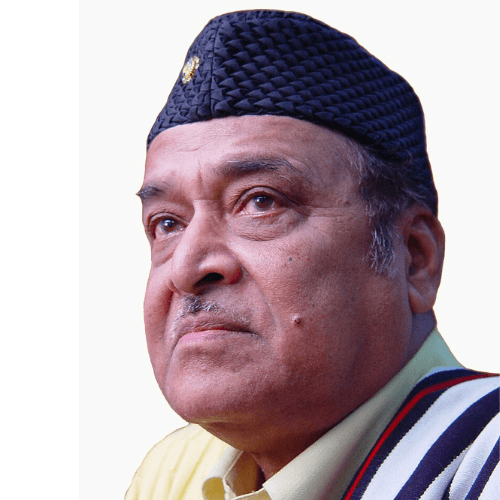
Bhupen Hazarika: The Legendary Voice of Assam

Bhupen Hazarika was one of India’s most respected singers, lyricists, poets, musicians, filmmakers and cultural icons. Popularly known as Sudhakantha and the Bard of the Brahmaputra, he used music and cinema to express human emotions, social issues, unity, love and universal brotherhood. His songs were deeply connected with Assam and Northeast India, yet their messages reached people across India and beyond.
Bhupen Hazarika was not only an extraordinary artist but also a visionary who believed that music could contribute to social change. His work introduced the rich folk traditions and cultural identity of Assam to a much wider audience. Even after his death, his songs continue to inspire generations.

“I too wanted to be a singer with the power to change society.” – Bhupen Hazarika
Early Life and Education
Bhupen Hazarika was born on September 8, 1926, at Sadiya in Upper Assam. He grew up in a culturally rich family. His father, Nilakanta Hazarika, and mother, Shantipriya Hazarika, played an important role in developing his interest in music and values.
His musical talent became visible at a very young age. At only 10 years old, he sang a Borgeet, which impressed the famous Assamese poet, lyricist, playwright and filmmaker Jyotiprasad Agarwala. Hazarika soon became associated with important personalities of Assamese culture, including Jyotiprasad Agarwala and Bishnu Prasad Rabha.
In 1936, at the age of 10, he recorded his first songs at Aurora Studio in Kolkata. A few years later, he sang two songs in Jyotiprasad Agarwala’s film Indramalati, released in 1939. These songs included Kaxote Kolosi Loi and Biswo Bijoyi Naujawan. His early association with Assamese cinema helped establish him as a talented young artist.
Hazarika completed his matriculation in 1940 and his Intermediate Arts from Cotton College in 1942. He later joined Banaras Hindu University and completed his Bachelor’s degree in 1944 and Master’s degree in 1946.
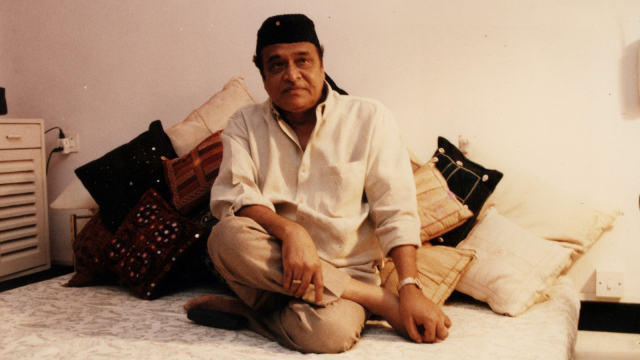
His academic journey later took him to the United States. He received a scholarship to study at Columbia University in New York and earned a Ph.D. for his research on the use of audio-visual techniques in adult education. His education reflected his interest in communication, society and the power of media.
Influence of Paul Robeson
During his stay in New York, Bhupen Hazarika became acquainted with Paul Robeson, the famous American singer, actor and civil rights activist. Robeson’s ideas about equality, justice and human dignity influenced Hazarika deeply.
This influence can be seen in some of Hazarika’s most powerful songs. His famous song Bistirno Parore carries strong imagery and themes associated with Robeson’s Ol’ Man River. Through songs like this, Hazarika gave voice to the struggles and hopes of ordinary people.
His music was therefore not limited to entertainment. It became a medium for discussing poverty, injustice, social inequality, unity and human dignity.
Musical and Cinematic Excellence
Bhupen Hazarika’s contribution to Indian music and cinema is enormous. He composed, wrote and sang songs that combined traditional Assamese folk music with modern musical forms. His songs often focused on humanity, social responsibility, love, patriotism and brotherhood.
After returning to India, he became associated with the Indian People’s Theatre Association (IPTA) in 1953. His association with theatre and social movements further strengthened his belief that art could influence society.
As a filmmaker, he contributed greatly to Assamese cinema. His first film as a director was Era Bator Xur, released in 1956. He also worked as a music composer, lyricist, playback singer and producer.
Some important films associated with Bhupen Hazarika include:
| Film | Contribution or Recognition |
|---|---|
| Indramalati | Playback singer |
| Era Bator Xur | First film as director |
| Shakuntala | Music composer and award-winning film |
| Pratidhwani | Directed by Bhupen Hazarika |
| Lotighoti | Directed by Bhupen Hazarika |
| Chameli Memsaab | National Award-winning music |
| Rudaali | Music composer |
| Ek Pal | Music composer |
| Daman | Music composer |
| Darmiyaan | Music composer |
| Gaja Gamini | Music composer |
His association with filmmaker Kalpana Lajmi also played an important role in bringing his music to Hindi cinema. He composed music for films such as Ek Pal, Rudaali, Daman and Darmiyaan. His work helped bring the cultural sounds of Assam and Northeast India to audiences throughout the country.
Political and Social Contribution
Bhupen Hazarika was also involved in public life and politics. In 1967, he was elected as an independent member of the Assam Legislative Assembly and served until 1972.
His political and social interests were closely connected with his artistic work. He believed in social harmony and often used music to communicate ideas about equality and unity. His songs addressed ordinary people and their struggles while promoting the idea of a society based on humanity and mutual respect.
He also contributed to the development of Assamese cinema and played an important role in establishing Assam’s first state-owned film studio.
Awards and Achievements
Bhupen Hazarika received numerous national and international awards during his lifetime. His contribution to Indian music, cinema and culture was recognized through several prestigious honours.
| Year | Award or Honour |
|---|---|
| 1961 | National Film Award for Best Feature Film in Assamese for Shakuntala |
| 1975 | National Film Award for Best Music Direction for Chameli Memsaab |
| 1977 | Padma Shri |
| 1987 | Sangeet Natak Akademi Award |
| 1992 | Dadasaheb Phalke Award |
| 2001 | Padma Bhushan |
| 2008 | Sangeet Natak Akademi Fellowship |
| 2009 | Asom Ratna |
| 2012 | Padma Vibhushan, posthumously |
| 2019 | Bharat Ratna, posthumously |
He was also the first Indian music director to win an award at the Asia Pacific International Film Festival in Japan for Rudaali in 1993.
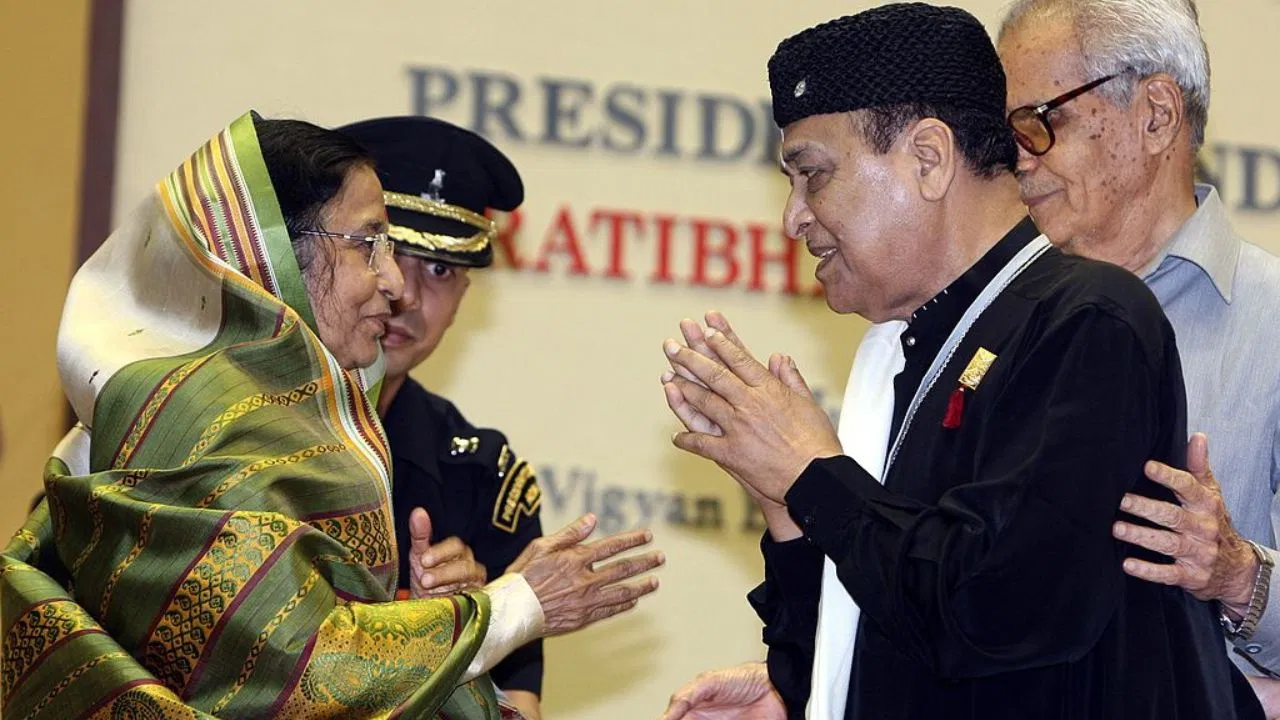
In 1993, he was elected President of Asam Sahitya Sabha at its Sivasagar session. He also received an honorary degree from Tezpur University in 2001. Asom Sahitya Sabha honoured him with the title Biswa Ratna.
Why Bhupen Hazarika Is Called Sudhakantha
The name Sudhakantha means a person with a melodious or nectar-like voice. Bhupen Hazarika earned this title because of his distinctive and powerful singing style.
His deep voice became his identity. Whether he sang about the Brahmaputra, ordinary workers, social injustice, love or human relationships, his voice carried strong emotion.
He was also called the Bard of the Brahmaputra because the river and its surrounding life appeared repeatedly in his music and creative expression. The Brahmaputra became more than a geographical feature in his songs; it represented the people, culture, struggles and dreams of Assam.
Bhupen Hazarika’s Legacy
Bhupen Hazarika passed away on November 5, 2011, in Mumbai, at the age of 85. His death marked the end of an important chapter in Indian cultural history. However, his music continues to live among people.
His posthumous honours, including the Padma Vibhushan in 2012 and Bharat Ratna in 2019, reflect the lasting importance of his contribution to India.
Bhupen Hazarika successfully connected regional culture with national and international audiences. He introduced Assamese folk traditions to Hindi cinema and used music as a bridge between different communities and cultures.
His greatest achievement was perhaps his ability to make local stories universal. His songs came from Assam, but their themes of humanity, equality, struggle and brotherhood could be understood by people everywhere.
Today, Bhupen Hazarika is remembered as much more than a singer. He was a poet, filmmaker, composer, lyricist, social thinker and cultural ambassador. His music remains an important part of Assam’s cultural heritage, and his message of humanity continues to resonate with new generations.
Bhupen Hazarika will always remain one of the greatest cultural icons of Assam and India, whose melodies crossed regional boundaries and created a lasting place in the hearts of millions.
FAQ’s:
Q 1. Who was Bhupen Hazarika?
Bhupen Hazarika was a famous singer, composer, lyricist, and filmmaker from Assam, India. He was known for his soulful music that reflected the culture and struggles of the people.
Q 2. When and where was Bhupen Hazarika born?
He was born on September 8, 1926, in Sadiya, Assam, a northeastern state of India.
Q 3. What was Bhupen Hazarika’s contribution to Indian music?
He played a major role in popularizing Assamese folk music and blending it with modern tunes. His songs often carried deep messages about humanity, unity, and social justice.
Q 4. Which awards and honors did Bhupen Hazarika receive?
He received many prestigious awards, including the Bharat Ratna (India’s highest civilian honor), the Dadasaheb Phalke Award, and the Padma Bhushan.
Q 5. What was Bhupen Hazarika’s role in the Indian film industry?
He was a pioneer in Assamese cinema and contributed as a music director, lyricist, and filmmaker. He worked on several movies that highlighted the culture and traditions of Assam.
Q 6. Did Bhupen Hazarika compose music for films outside Assam?
Yes, he composed music for Hindi and Bengali films as well. His music gained national recognition, and his work in films like “Rudaali” was widely appreciated.
Q 7. What was Bhupen Hazarika’s educational background?
He completed his PhD in Mass Communication from Columbia University in New York. His studies helped him develop innovative ways to use music and cinema for social awareness.
Q 8. How did Bhupen Hazarika promote Assamese culture?
Through his songs, films, and writings, he brought Assamese folk music and traditions to a global audience. He played a vital role in preserving and promoting the rich cultural heritage of Assam.
Q 9. When did Bhupen Hazarika pass away?
He passed away on November 5, 2011, in Mumbai due to health complications. His funeral witnessed one of the largest gatherings of people paying their respects.
Q 10. Why is Bhupen Hazarika called the ‘Bard of Brahmaputra’?
He earned this title because his music beautifully captured the essence of Assam and the life around the Brahmaputra River. His songs remain an inspiration for generations.