
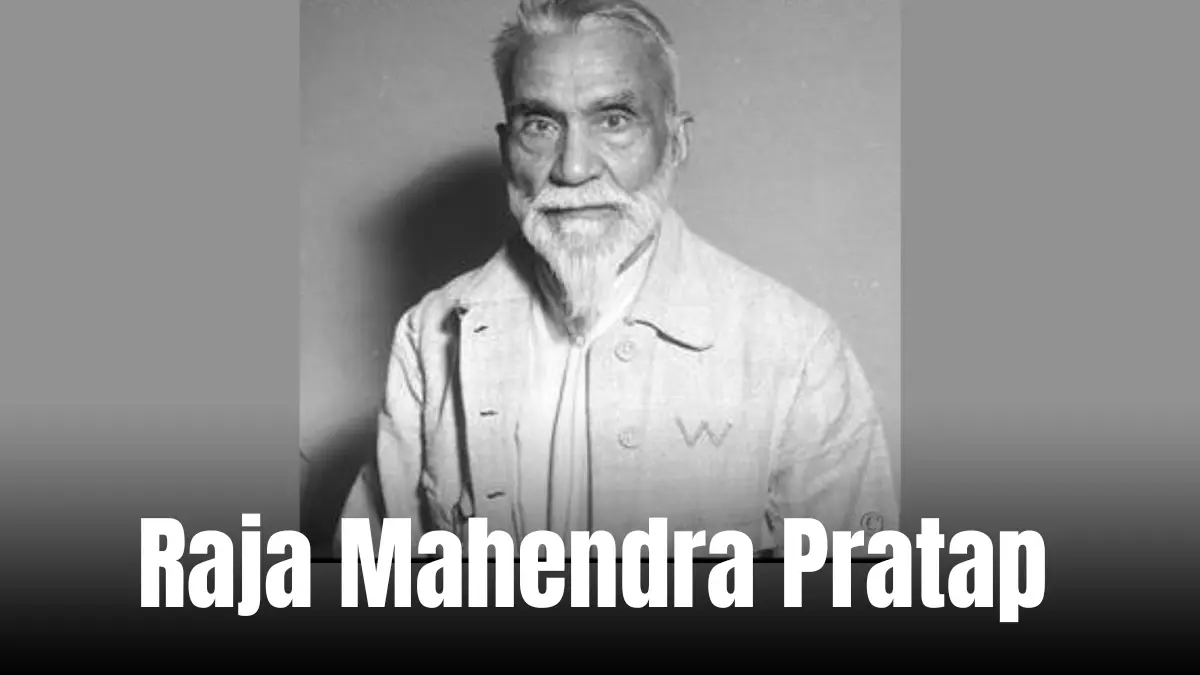
Raja Mahendra Pratap Birth Anniversary, Role in India’s Freedom Movement

Raja Mahendra Pratap was a fearless freedom fighter, visionary leader, and educationist whose life and legacy continue to inspire India’s progress and patriotism.
About Raja Mahendra Pratap
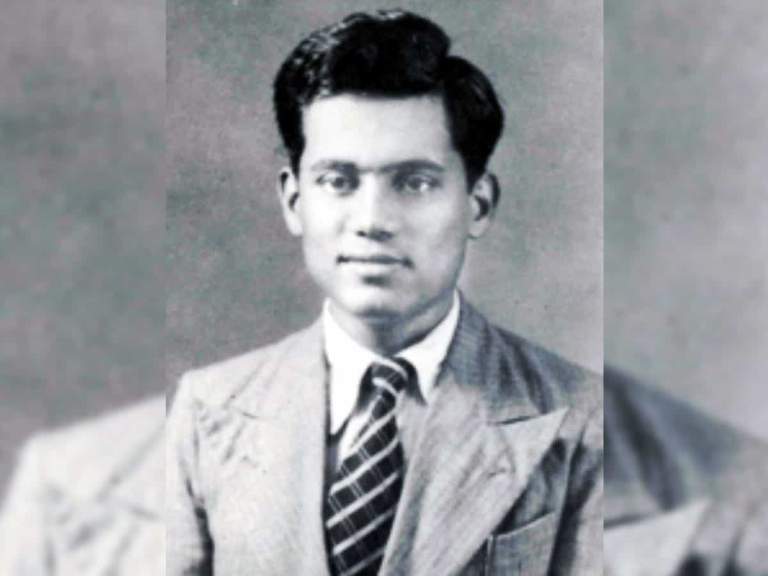
Raja Mahendra Pratap Singh (1886–1979) was an eminent freedom fighter, educationist, and visionary social reformer who dedicated his life to India’s independence and global peace. Born on December 1, 1886, in Hathras district of Uttar Pradesh, he hailed from the royal family of Mursan in the Aligarh region. Despite his royal background, he lived a simple life and devoted himself to the nation’s service.

He was deeply influenced by the Indian independence movement and became one of the earliest leaders to advocate for complete freedom from British colonial rule. His contributions were not limited to politics; he played a significant role in promoting technical and modern education in India. Raja Mahendra Pratap believed that true independence could only be achieved through education, scientific progress, and unity among Indians.
In recognition of his immense contributions, the Government of India and several educational institutions continue to honor his legacy. The establishment of the Raja Mahendra Pratap Singh State University in Aligarh stands as a testament to his lifelong efforts to advance education and empower youth.
Early Life and Education
Raja Mahendra Pratap Singh was born on December 1, 1886, into a royal Jat family in Mursan, near Aligarh, Uttar Pradesh. His father, Raja Bahadur Ghanshyam Singh, was a respected ruler, and his mother, Rani Balveer Kaur, was known for her compassion and patriotism. Despite being born into royalty, Mahendra Pratap displayed simplicity and humility from a young age.
He received his early education at Government High School, Aligarh, and later attended the Mohammedan Anglo-Oriental College (now Aligarh Muslim University). During his time there, he was deeply inspired by the institution’s founder, Sir Syed Ahmad Khan, whose vision of modern and scientific education shaped Mahendra Pratap’s thinking.
He excelled academically and was known for his progressive outlook and leadership qualities even as a student. His exposure to diverse ideologies and reformist ideas during his college years influenced his later work in both social and political spheres.
In his youth, Raja Mahendra Pratap developed a strong sense of nationalism, rejecting a life of luxury to dedicate himself to India’s freedom and the upliftment of society through education and reform.
Role in India’s Freedom Movement
Raja Mahendra Pratap Singh played a remarkable role in India’s struggle for independence, emerging as one of the earliest revolutionaries who combined both intellectual and diplomatic efforts to free the nation from British rule. Deeply moved by the oppression faced by his countrymen, he decided to dedicate his life to the cause of national liberation.
In 1914, during World War I, he left India to garner international support for the country’s independence. He traveled to Afghanistan, Germany, Turkey, and Japan, building alliances with foreign leaders sympathetic to India’s cause. His most notable contribution came in 1915, when he established the Provisional Government of India in Kabul, Afghanistan, becoming its President, with Maulana Barkatullah as Prime Minister and Maulana Ubaidullah Sindhi as Home Minister.
This government-in-exile symbolized India’s defiance against British imperialism and inspired later revolutionary groups. Mahendra Pratap’s diplomatic initiatives also influenced leaders of the Ghadar Movement, and his vision was widely recognized among Indian nationalists abroad.
He was deeply admired by freedom fighters such as Subhas Chandra Bose for his courage and international approach to independence. Despite facing exile for over three decades, Raja Mahendra Pratap never gave up his mission, continuing to write, organize, and speak for India’s sovereignty.
Contributions to Education
Raja Mahendra Pratap Singh was not only a freedom fighter but also a visionary educationist who believed that true independence could only be sustained through the enlightenment of society. His commitment to education was reflected in his lifelong efforts to establish and promote institutions that nurtured knowledge, discipline, and patriotism among the youth.
In 1917, he founded the Prem Maha Vidyalaya in Mathura — India’s first polytechnic institute established by an Indian. His goal was to provide practical, scientific, and industrial education to young Indians, empowering them to become self-reliant and contribute to national development. This initiative was revolutionary at a time when British education policy was designed to produce clerks rather than innovators or leaders.
He also contributed significantly to the development of Aligarh Muslim University (AMU) by donating land for its establishment. In recognition of his progressive vision, Prime Minister Narendra Modi laid the foundation stone for a university named after Raja Mahendra Pratap Singh in Aligarh in 2021, further honoring his legacy as an education reformer.
His philosophy emphasized unity among communities, gender equality in education, and self-sufficiency through learning. By promoting both modern science and moral values, Raja Mahendra Pratap envisioned an India where knowledge would drive social and economic transformation.
Vision for a Progressive Society
Raja Mahendra Pratap Singh envisioned a self-reliant, egalitarian, and progressive India founded on principles of education, unity, and social justice. His idea of nationalism went beyond mere political independence — he believed true freedom could only be achieved through social upliftment and intellectual empowerment of the people.
He championed universal education, industrial self-sufficiency, and harmony among different religious communities. His writings and speeches reflected his dream of building a nation where science, technology, and moral values worked hand in hand to create a balanced and inclusive society.
A firm believer in gender equality, he advocated for women’s education and their participation in the nation-building process — a progressive view that was far ahead of his time. His establishment of educational institutions like the Prem Maha Vidyalaya aimed to create a generation of Indians capable of scientific innovation and ethical leadership.
Raja Mahendra Pratap Singh’s global outlook also shaped his reformist vision. His travels across Europe and Asia exposed him to modern democratic ideals and technological advancements, which he sought to integrate into India’s growth model.
In essence, his vision for a progressive society was rooted in education, social harmony, and technological advancement, reflecting his lifelong mission to see India emerge as a strong, united, and enlightened nation.
Political Career
Raja Mahendra Pratap Singh’s political career reflected his unwavering commitment to India’s freedom, social justice, and education-based reform. His political ideology was a blend of nationalism, socialism, and humanism — emphasizing independence through education, unity, and self-sufficiency.
He founded the Prem Maha Vidyalaya in 1909 in Vrindavan, an institution that became a hub for political and social awakening during the freedom movement. Many revolutionaries and freedom fighters drew inspiration from his ideals of national reconstruction.
During World War I, he traveled abroad to garner international support for India’s independence. In 1915, while in Afghanistan, he established the Provisional Government of India in Kabul — a significant act of defiance against British rule. He served as its President, with Maulana Barkatullah as Prime Minister and Maulana Ubaidullah Sindhi as Home Minister. This marked one of the earliest attempts at setting up an Indian government in exile, symbolizing India’s desire for self-governance.
After returning to India post-independence, Raja Mahendra Pratap Singh continued to engage in public life. He was elected to the Lok Sabha from Mathura in 1957 as an independent candidate. Even in his later years, he maintained an active voice in promoting education and rural development, focusing on empowering the youth with moral and scientific knowledge.
His political philosophy was centered on national unity, economic self-reliance, and ethical governance, and his contributions continue to inspire progressive leaders and educators in modern India.
Honors and Recognition
Raja Mahendra Pratap Singh’s dedication to India’s freedom struggle and social reform earned him recognition both during his lifetime and posthumously. While his contributions were sometimes overshadowed by more widely publicized leaders, historians and scholars consistently acknowledge his pioneering efforts in education, diplomacy, and nation-building.
- In 2021, the Prime Minister of India, Narendra Modi, laid the foundation stone for a university named after Raja Mahendra Pratap Singh in Aligarh, honoring his lifelong commitment to education and social reform.
- His role in establishing the Provisional Government of India in Kabul is celebrated as a bold and visionary act in India’s freedom movement.
- Academic circles honor his contributions to education, particularly his efforts to promote scientific, industrial, and moral learning among young Indians.
- Several biographies and research works document his multifaceted achievements as a freedom fighter, reformer, diplomat, and visionary, ensuring that his legacy continues to inspire future generations.
Through these recognitions, Raja Mahendra Pratap Singh remains a symbol of courage, foresight, and dedication to a progressive and independent India.
Key Takeaways from Raja Mahendra Pratap Singh’s Life
Raja Mahendra Pratap Singh’s life offers profound lessons for students, leaders, and citizens alike. His journey exemplifies courage, vision, and unwavering dedication to India’s independence and social progress.
- Fearless Patriotism – He risked his life and comfort, establishing the Provisional Government of India in Kabul to challenge British rule.
- Education as Empowerment – He believed education was the key to national strength, founding institutions like the Prem Maha Vidyalaya.
- Global Vision – His travels and diplomatic efforts abroad highlight the importance of international awareness and alliances in achieving national goals.
- Social Reforms – Advocated unity, gender equality, and community development as essential pillars for a progressive society.
- Persistence in Adversity – Despite facing exile and challenges, he remained committed to his mission, illustrating resilience and determination.
- Legacy of Inspiration – His life continues to motivate generations to prioritize courage, learning, and social responsibility.
Raja Mahendra Pratap Singh exemplifies how vision, education, and action together can shape a nation’s destiny.
Conclusion
Raja Mahendra Pratap Singh was more than a freedom fighter; he was a visionary, educationist, and reformer whose life remains a beacon of inspiration. His unwavering dedication to India’s independence, coupled with his commitment to education and social progress, reflects a holistic approach to nation-building.
From establishing educational institutions to setting up the Provisional Government of India in Kabul, his actions were marked by courage, foresight, and a deep sense of responsibility towards society. His vision for a progressive, self-reliant, and united India continues to resonate in contemporary times, inspiring leaders, educators, and citizens alike.
By studying his life and legacy, one can understand the importance of blending patriotism with social reform, education, and ethical leadership. Raja Mahendra Pratap Singh exemplifies how a single individual, driven by purpose and principles, can influence the course of a nation’s history.
Must-Read Related Articles
Jagadguru Basaveshwara: Inspiring Life, Teachings, and Legacy on Basava Jayanti
Neeraj Chopra Biography: Breaches 90m Mark at Doha Diamond League 2025 with 90.23m NR
Jawaharlal Nehru Biography: Remarkable Life & Legacy
Maharana Pratap Jayanti: Biography, Valor, and Battle of Haldighati
FAQ’s on Raja Mahendra Pratap
1. Who was Raja Mahendra Pratap?
Raja Mahendra Pratap was an Indian freedom fighter, educationist, and social reformer known for his role in India’s independence movement.
2. When was Raja Mahendra Pratap born?
He was born on February 1, 1886.
3. What is Raja Mahendra Pratap famous for?
He is famous for establishing the Provisional Government of India in Kabul, promoting education, and advocating social reforms.
4. What educational contributions did he make?
He founded Prem Maha Vidyalaya in Vrindavan and actively promoted education, scientific learning, and moral development among youth.
5. Did Raja Mahendra Pratap hold any political positions in independent India?
Yes, he was elected to the Lok Sabha from Mathura in 1957 as an independent candidate.
6. What was his vision for society?
He envisioned a progressive, self-reliant, and egalitarian India with emphasis on education, unity, and social justice.
7. Did he receive any posthumous honors?
Yes, a university in Aligarh was named after him to honor his contributions to education and social reform.
8. What was his role during World War I?
He traveled abroad to garner international support for India’s independence, highlighting his global approach to freedom.
9. What social reforms did he advocate?
He championed gender equality, religious harmony, and rural development.
10. When did Raja Mahendra Pratap die?
He passed away on May 29, 1979, leaving behind a legacy of patriotism and reform.