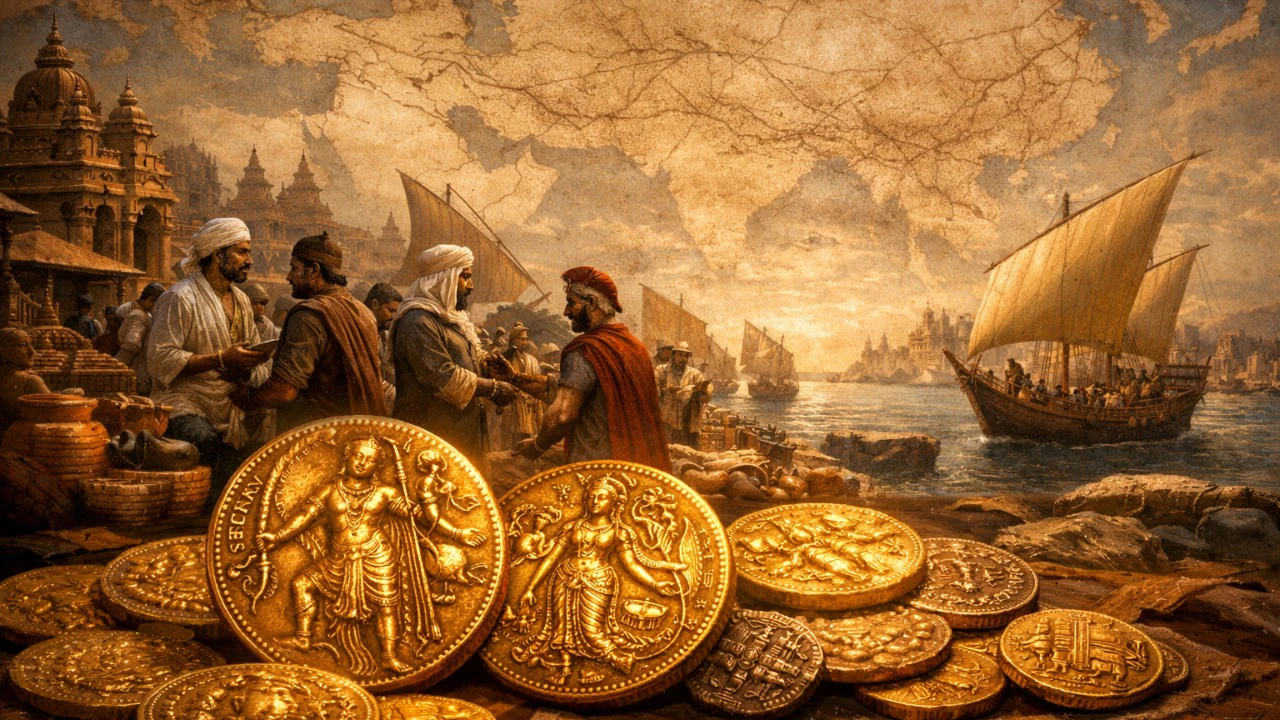
Indian Coinage: Ancient to Medieval Eras

Indian Coinage is an important part of Indian history. It tells us how trade, economy, culture, and rulers changed over time. Coins are not just money. They also give information about kings, religions, languages, and art. From the earliest seals of the Indus Valley to the detailed coins of the Mughals, Indian coinage shows a long journey of development.
Thank you for reading this post, don't forget to subscribe!Introduction to Indian Coinage
Indian coinage started many thousands of years ago. At first, people used barter (exchange of goods). Slowly, metal coins came into use. These coins were made of gold, silver, copper, and other metals.
Coins help historians understand:
- Who ruled at a particular time
- What religion was popular
- Trade and economic condition
- Art and culture of that period
Early Evidence: Indus Valley Seals
The earliest signs of money-like objects come from the Indus Valley Civilization (2500 BC – 1750 BC).
- Seals were found in places like Harappa and Mohenjo-Daro.
- These seals had animals and symbols on them.
- Some historians believe they were used like coins.
- But there is no clear proof that they were actual money.
These seals show that trade existed even in ancient times.
Punch-Marked Coins (First Real Coins)
Punch-marked coins are the earliest proper coins in India.
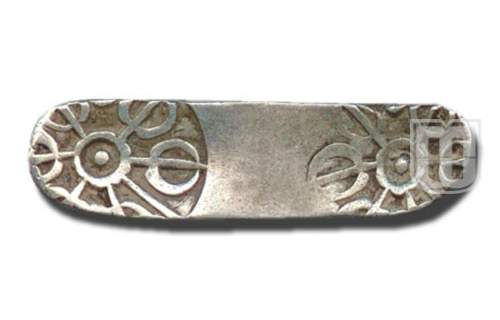
- They were used from the 7th–6th century BC to 1st century AD.
- These coins are mentioned in ancient texts like Manusmriti and Jataka tales.
Features of Punch-Marked Coins
- Made mainly of silver and copper
- No king’s name or date written
- Symbols were punched using small tools
- Each coin had many symbols
Common Symbols
- Sun, tree, wheel (Dharmachakra)
- Animals like elephant, bull, horse
Usage
- Used widely in North India
- Continued in South India for a longer time
- Later replaced by Greek-style coins
These coins show early economic systems in India.
Indo-Greek Coinage
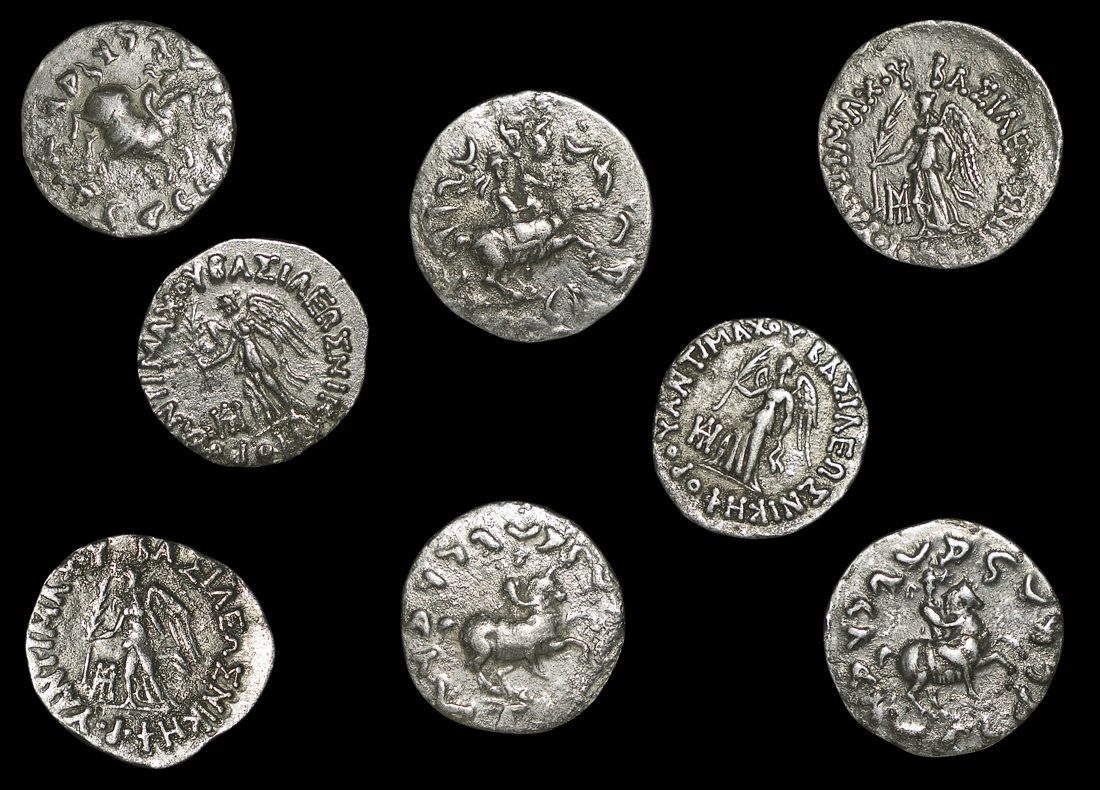
Indo-Greeks ruled parts of India from 189 BC to 30 BC. They brought big changes in coin design.
Key Features
- First coins with king’s portrait (face)
- Names written in Greek and Kharosthi scripts
- Images of Greek gods like Zeus and Apollo
These coins are important because they help historians know about Indo-Greek rulers.
Dynastic Coins in Ancient India
From around 2nd century BC to 2nd century AD, many kingdoms issued their own coins.
Saka and Western Satrap Coins
- These rulers used the Saka Era (starting 78 AD)
- Coins had clear dates
- King’s image on one side
- Religious symbols on the other
These coins help in fixing exact historical timelines.
Kushan Coinage
The Kushans were powerful rulers.
Features
- Mix of Greek, Iranian, and Indian styles
- Images of gods like Shiva and Buddha
- King shown sitting cross-legged
These coins show cultural mixing between different regions.
Satavahana Coins
The Satavahanas ruled in South and Central India.
Features
- Made mostly of lead and copper
- Silver coins were rare
- Animal symbols like elephant and lion
- Ujjain symbol (cross with circles)
These coins are simple but very useful for history.
Gupta Coinage (Golden Age of Coins)
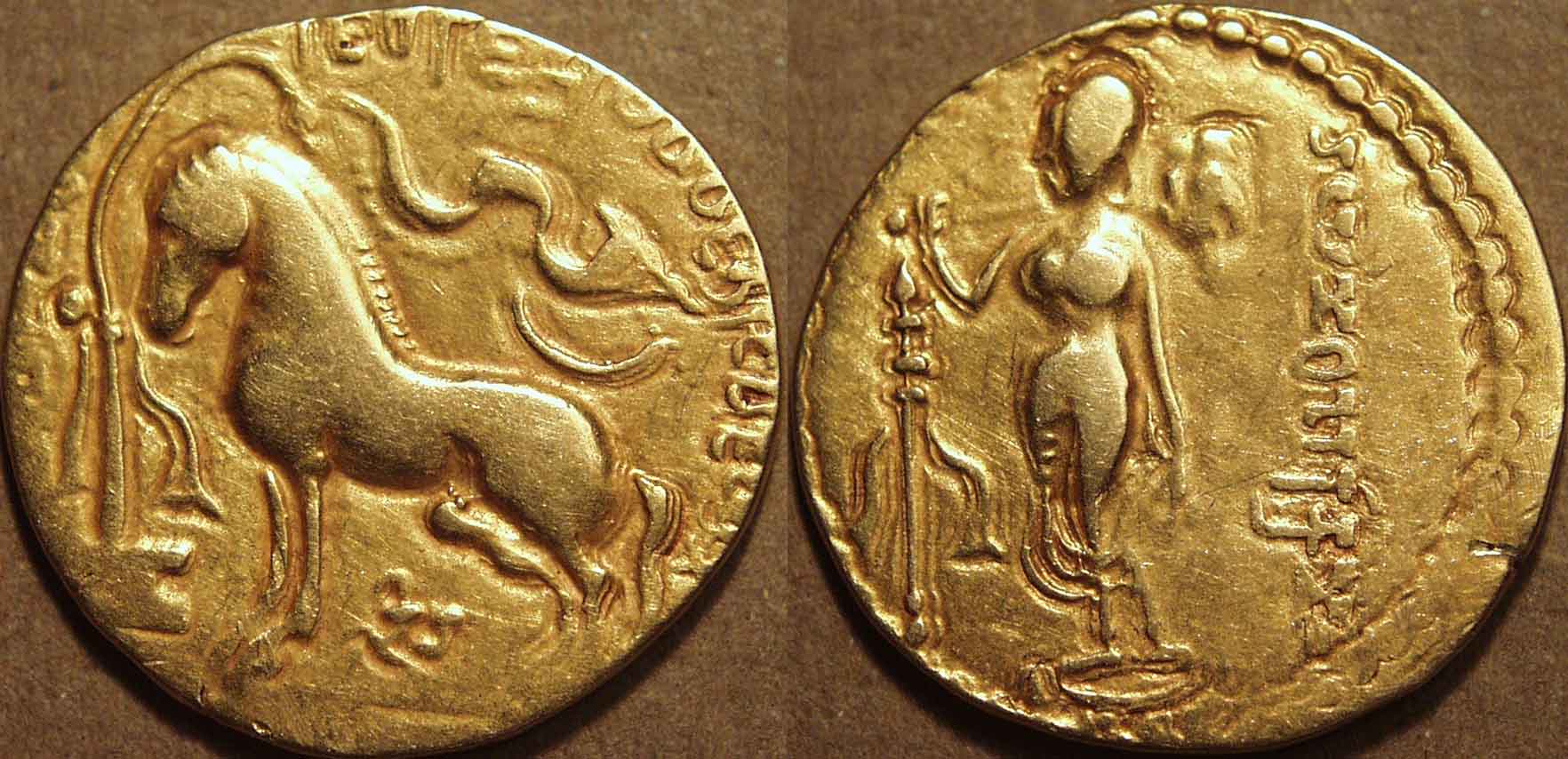
The Gupta period (300–550 AD) is called the Golden Age of Indian coinage.
Features
- Mostly gold coins
- Beautiful designs and high quality
- King shown doing different activities
- Goddess Lakshmi on reverse side
Importance
- First use of Sanskrit on coins
- Coins showed events like marriages and victories
These coins are considered the finest in Indian history.
Post-Gupta Coinage
After the Gupta period, coin quality declined.
Features
- Less artistic designs
- Fewer gold coins
- More copper coins
Examples
- Coins of Harsha
- Rajput coins with horse and bull symbols
Trade with Romans also brought foreign coins into India.
Coins in Ancient South India
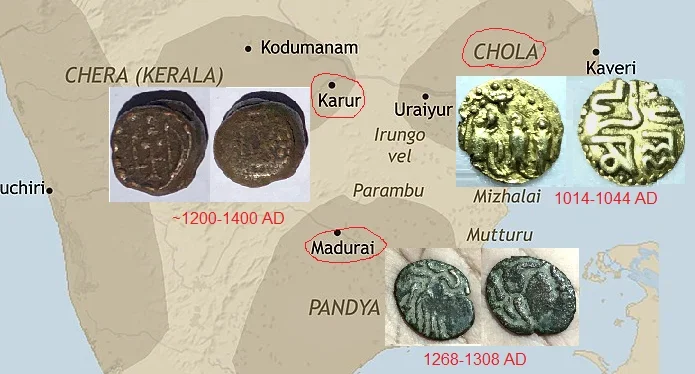
South India had its own rich coin traditions.
These coins show regional identity, trade, and strong kingdoms.
Chalukya Coins
- Western Chalukya coins (6th–12th century) had symbols like temples and lions.
They used old Kannada language, and the back side was usually blank. - Eastern Chalukya coins (7th–11th century) showed a boar symbol in the center.
The king’s name was written around it, and the reverse side remained blank.
Chola Coins
- The Chola Empire (10th–13th century) issued many types of coins.
Important rulers include Raja Raja I, Rajendra Chola, and Kulothunga I. - Most coins show a standing king on one side and a seated goddess on the other.
They used Sanskrit inscriptions and symbols like tiger, fish, and bow. - Rajendra Chola coins had names like “Sri Rajendra” or “Gangaikonda Chola.”
Kulothunga I coins had tiger in the center with fish and bow symbols.
Pandya Coins
- Pandya coins started in the 7th century with square designs.
Early coins had an elephant symbol and blank reverse side. - Later, the fish symbol became very important on their coins.
They used Sanskrit on gold/silver coins and Tamil on copper coins. - Pandyas became strong again in the 13th century after decline.
Their coins show political changes and regional power.
Chera and Other Coins
- Coins of Cheras and other dynasties were simple in design.
- They mostly had names or titles of rulers in local scripts.
Alupas and Yadavas Coins
- Alupas of Udupi used fish as their dynastic symbol.
This is similar to the Pandya coin symbols. - Yadavas of Devagiri issued coins called “Padmatankas.”
These had an eight-petalled lotus on one side and blank reverse. - Most coins had very few decorations and simple designs.
God images appeared mostly in later Vijayanagara period.
Foreign Coins in South India
- South India had strong trade with Rome, Greece, Middle East, and China.
Trade routes included land routes (Silk Route) and sea routes. - Roman coins were widely found in South India.
Some coins were cut to show rejection of foreign rule. - These coins prove that South India had a strong maritime trade system.
Delhi Sultanate Coinage (Medieval Period)
A major change in Indian coinage came with the Delhi Sultanate (1206–1526).
This period marked the shift from ancient styles to Islamic-style coinage.

Evolution of Medieval Coinage
- Began after the Arab conquest of Sindh (712 AD).
- Fully developed under the Delhi Sultanate in the 13th century.
- Old pictorial designs were replaced by Arabic inscriptions on both sides.
- Coins now gave more detailed information.
- They included religious messages and political authority.
Main Changes
- Pictures and symbols were removed from coins.
- Arabic script became the main writing style.
- Coins carried names, titles, mint places, and dates.
Types of Coins
- Tanka – made of gold and silver for high-value trade.
- Jittal – made of copper for daily use.
- This system helped in expanding the money economy.
- Trade and markets grew during this time.
Special Features
- Coins had grand royal titles to show power.
- Example: rulers used titles like “Second Alexander.”
- Coins reflected Islamic influence and strong governance.
Important Rulers and Their Coins
Alauddin Khalji
- First ruler to remove the Abbasid Caliph’s name from coins.
- Used titles like Yamin-ul-Khilafat (Right Hand of the Caliph).
- Also called himself Sikandar-us-Sani (Second Alexander).
- Showed his ambition to be a great world conqueror.
Qutbuddin Mubarak Shah
- Issued coins in gold, silver, billon, and copper.
- Declared himself Khalifullah (Caliph of Allah).
- Also used the title Sikander-uz-Zaman.
- This showed strong political authority and independence.
Muhammad bin Tughluq
- Introduced bronze token currency (about 10 grams).
- Copper coins were used equal to silver coins.
- Coins had messages like “Obeying the king is obeying God.”
- This experiment failed due to misuse and forgery.
Bahlol Lodi
- Stopped using gold and silver coins.
- Continued with billon and copper coins.
- His rule marked the final phase of the Delhi Sultanate.
Sher Shah Suri
- Introduced the silver Rupee (around 11.5 grams).
- Created a standard and stable currency system.
- Introduced copper coin called paisa (about 20 grams).
- Added Devanagari script with name “Sri Ser Sahi.”
Importance
- It became the base of modern Indian currency.
- Delhi Sultanate coins show a major cultural shift.
- They reflect Islamic influence, economic growth, and political power.
- The system of rupee and paisa continued in later periods.
Vijayanagara Empire Coinage
The Vijayanagara Empire had rich coinage.
Features
- Gold, silver, copper coins
- Gods like Vishnu, Shiva on coins
- Pagoda was main gold coin
Important Rulers
- Krishnadevaraya issued high-quality coins
- Coins showed religious devotion
Mughal Coinage (Advanced System)
The Mughal Empire had one of the best coin systems.
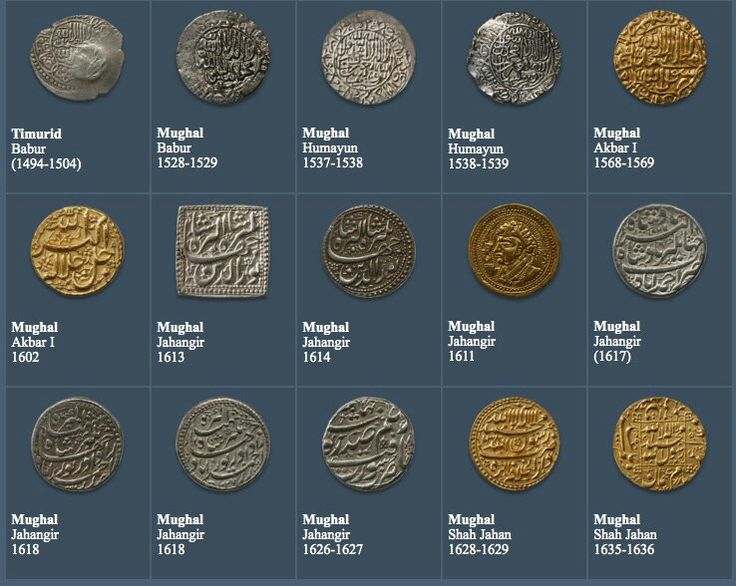
Phases of Mughal Coinage
- Early phase (Babur, Humayun)
- Golden phase (Akbar to Aurangzeb)
- Decline phase
- Final phase (regional powers)
Important Mughal Rulers
Babur and Humayun
- Used traditional Islamic coins
- Continued earlier systems
Akbar
- Introduced new coin system
- Gold (Mohur), Silver (Rupee), Copper coins
- Used Persian language
Jahangir
- Most creative coins
- Zodiac signs and portraits
- Even allowed queen Nur Jahan to issue coins
Shah Jahan
- Removed portraits
- Used Islamic inscriptions
Aurangzeb
- Simple coins
- No images
- Religious focus
Decline of Mughal Coinage
- After Aurangzeb’s death in 1707, Mughal power started weakening.
- Regional rulers and foreign groups like the East India Company began getting minting rights.
- Farrukhsiyar allowed the Company to mint coins in Bombay in 1717 through royal orders (farmaans).
- During Muhammad Shah’s time, decline became faster due to invasions like Nadir Shah (1739) and rise of regional powers.
- States like Hyderabad and Awadh started issuing their own coins.
Key Events
- Battle of Buxar (1764) ended Mughal control over economy.
- British took control of Delhi in 1803 and changed coin system.
- In 1835, Mughal names were replaced by British monarch names on coins.
- Bahadur Shah Zafar issued the last coins during the 1857 revolt.
- After his exile, Mughal coinage completely ended.
Coinage Act, 2011 (Modern System)
The Coinage Act, 2011 controls coin production in India.
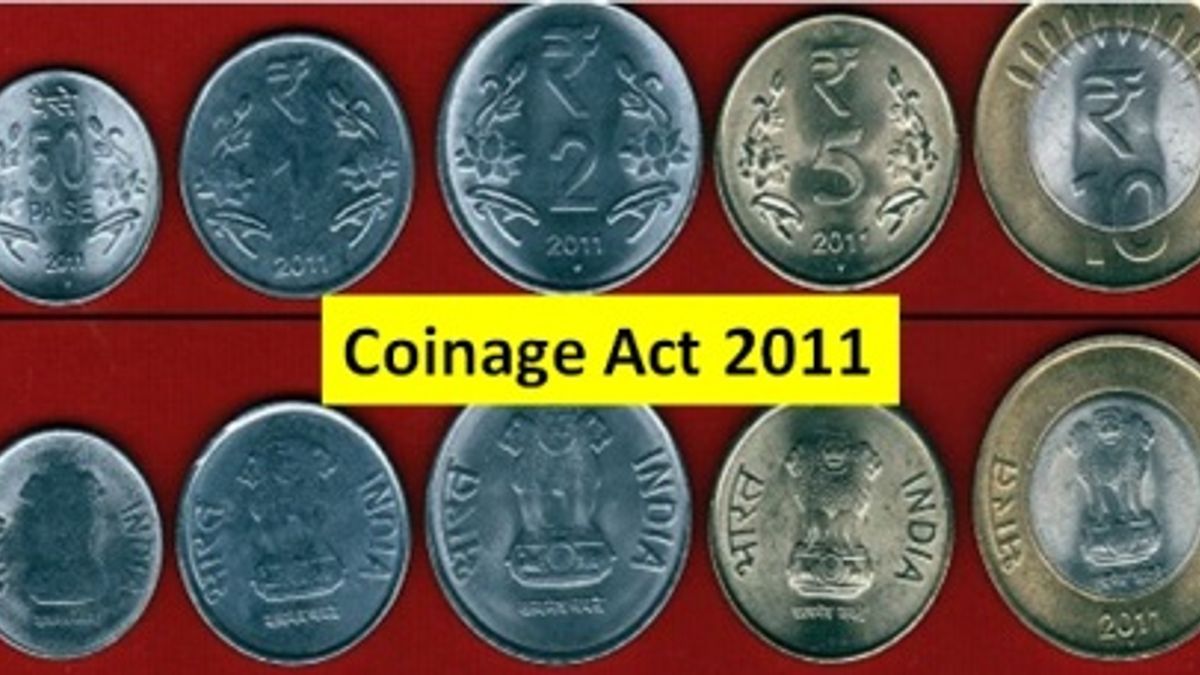
Key Points
- Government has power to mint coins
- RBI distributes coins
- Coins made in Mumbai, Kolkata, Hyderabad, Noida
Importance of Indian Coinage
Indian coinage helps us understand history in a better way.
Key Uses
- Gives exact dates of rulers
- Shows religious beliefs
- Explains economic growth
- Displays art and culture
Coins are like small history books made of metal.
Conclusion
The journey of Indian coinage from simple punch-marked coins to detailed Mughal coins shows the growth of Indian civilization. Each period added something new. Coins became more artistic, informative, and useful over time.
Understanding Indian coinage helps students in exams and also gives a deep knowledge of India’s past.
FAQs
1. What is Indian coinage?
Indian coinage refers to the system of coins used in India from ancient to modern times.
It shows economic, political, and cultural changes in history.
2. Which were the earliest coins in India?
Punch-marked coins are the earliest known coins in India.
They were used from the 6th century BC and had symbols instead of names.
3. What was special about Gupta coins?
Gupta coins were mainly made of gold and had beautiful designs.
They showed kings, gods, and important events in history.
4. Who introduced the rupee in India?
Sher Shah Suri introduced the silver rupee coin.
This system later became the base of modern Indian currency.
5. How were Mughal coins different?
Mughal coins had detailed inscriptions in Persian language.
They included names of rulers, dates, and mint places.
6. What is the Coinage Act, 2011?
It is a law that controls the minting of coins in India.
The central government has the authority to issue coins.