
Parliament of India: Leaders, Sessions and Law Making Process(Part-II)

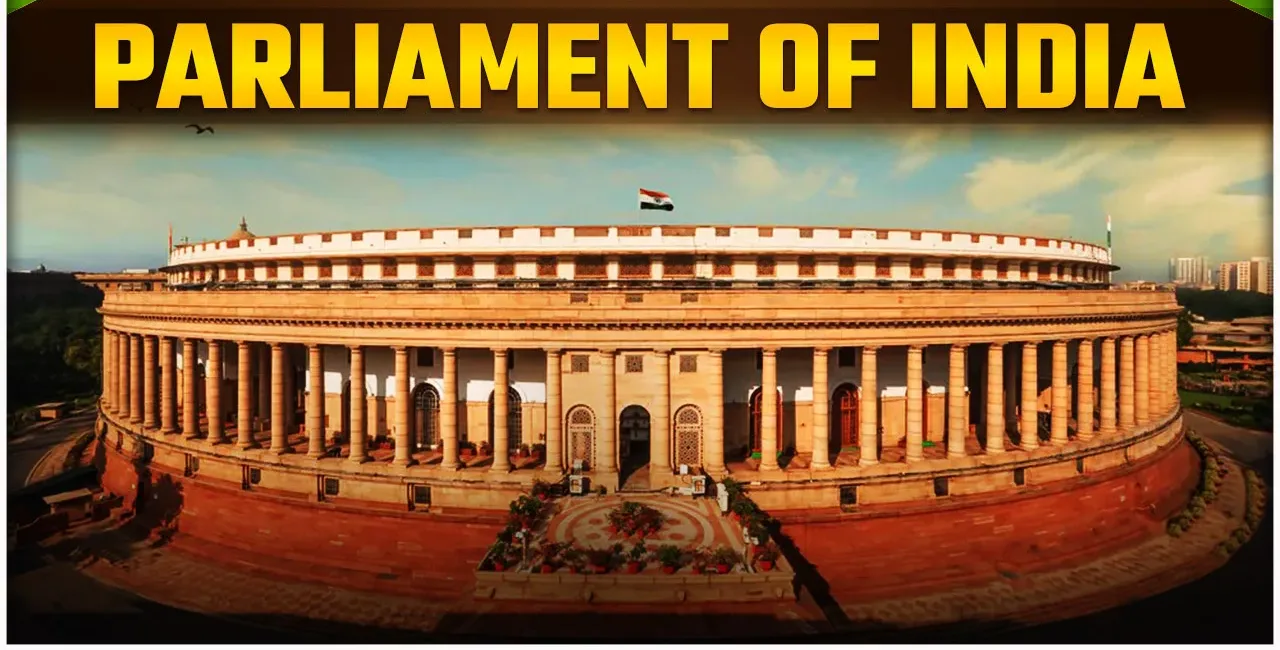
Parliament of India is the highest law-making body of the country. It represents the people of India and makes laws for the nation. The Parliament has three important parts the President of India, the Lok Sabha (House of the People), and the Rajya Sabha (Council of States). It also checks the work of the government and discusses important national issues.
Thank you for reading this post, don't forget to subscribe!Important Leaders in Parliament
Several leaders help Parliament function smoothly.
Leader of the House
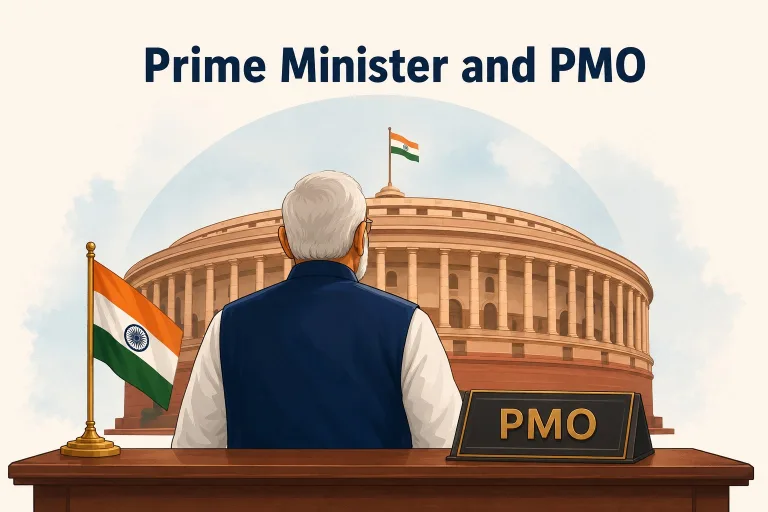
The Leader of the House is usually the Prime Minister in the Lok Sabha. If the Prime Minister is a member of the Rajya Sabha, another minister may be appointed as the Leader of the House in the Lok Sabha.
The Leader of the House plans government business, decides the schedule of discussions, and works with other parties to ensure smooth functioning of Parliament. This post is based on the Rules of Parliament and not directly mentioned in the Constitution.
Leader of the Opposition
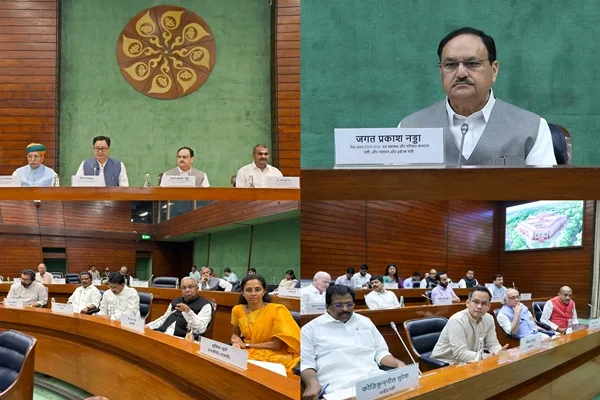
The Leader of the Opposition is the leader of the largest opposition party that has at least one-tenth of the total seats in the House.
The main duties include:
- Questioning government decisions
- Suggesting better policies
- Representing the views of the opposition
- Holding the government accountable
The Leader of the Opposition enjoys the rank and facilities of a Cabinet Minister.
Whip
Every political party appoints a Whip in Parliament.
The Whip ensures that party members attend important meetings and vote according to the party’s decision. It also maintains discipline among party members during parliamentary debates.
The office of the Whip is based on parliamentary traditions and is not mentioned in the Constitution.
Sessions of Parliament
A Parliament session is the period during which both Houses meet to conduct official work.
Summoning
Summoning means calling all Members of Parliament to attend a session.
According to Article 85 of the Constitution, the President summons each House. There cannot be a gap of more than six months between two sessions.
Three Sessions of Parliament
| Session | Usual Time | Main Purpose |
| Budget Session | January to April | Presentation and approval of the Union Budget |
| Monsoon Session | July to August | Discussion on bills and public issues |
| Winter Session | November to December | Legislative business and policy discussions |
India does not have a fixed parliamentary calendar, but these three sessions are followed by convention.
Adjournment
Adjournment means temporarily stopping the proceedings of the House. It may last for a few hours, days, or weeks.
If no date is fixed for the next meeting, it is called Adjournment Sine Die.
The Speaker of the Lok Sabha or the Chairman of the Rajya Sabha has the power to adjourn the House.
Prorogation
Prorogation officially ends a session of Parliament. It is done by the President of India after the advice of the government.
Prorogation is different from the dissolution of the Lok Sabha.
Quorum
A Quorum is the minimum number of members required to conduct a meeting.
The Constitution says that one-tenth of the total members of a House must be present for the proceedings to continue.
Joint Session of Parliament
Under Article 108, the President may call a Joint Session when the Lok Sabha and Rajya Sabha disagree on a bill.
The Joint Session is usually chaired by the Speaker of the Lok Sabha.
Lame Duck Session
The last session of the existing Lok Sabha after a new Lok Sabha has been elected is called the Lame Duck Session.
Members who fail to get re-elected are known as Lame Ducks.
Parliamentary Proceedings
Question Hour
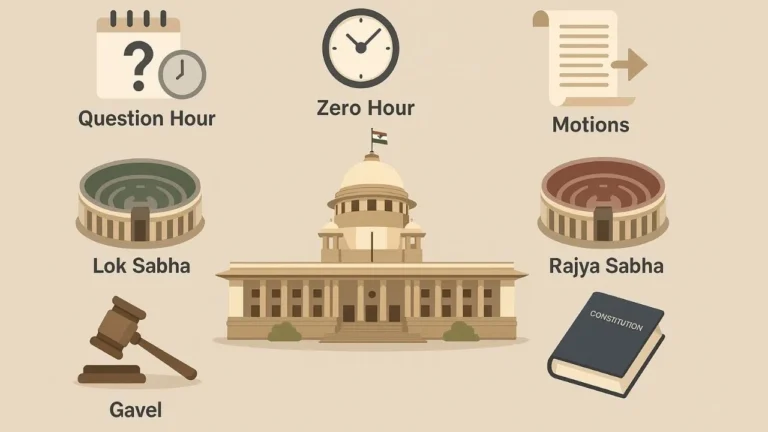
The first hour of every parliamentary sitting is called Question Hour.
During this time, Members of Parliament ask questions to ministers.
Types of Questions
| Type | Answer |
| Starred Question | Oral answer with supplementary questions allowed |
| Unstarred Question | Written answer only |
| Short Notice Question | Asked on urgent public matters with less than ten days’ notice |
Zero Hour
Zero Hour begins immediately after Question Hour.
Members can raise urgent public issues without giving prior notice. It is an Indian parliamentary practice and is not mentioned in the official rules.
Half-an-Hour Discussion
This discussion is held when members need more explanation on an important issue that has already been discussed.
There is no voting during this discussion.
Short Duration Discussion
Also called the Two-Hour Discussion, it allows members to discuss urgent matters of public importance.
No formal voting takes place.
Important Motions in Parliament
Parliament uses different motions to discuss issues and hold the government accountable.
| Motion | Purpose |
| Privilege Motion | Against a minister for giving wrong or incomplete information |
| Censure Motion | Criticizes government policies |
| Call Attention Motion | Seeks a minister’s statement on an urgent issue |
| Adjournment Motion | Discusses an urgent matter by stopping normal business |
| No-Day-Yet-Named Motion | Accepted but discussion date is not fixed |
| No Confidence Motion | Tests whether the government has majority support |
| Motion of Thanks | Discusses the President’s Address |
| Cut Motion | Opposes government spending proposals |
| Closure Motion | Ends debate and brings the matter to voting |
| Point of Order | Raised when parliamentary rules are not followed |
| Special Mention | Raises important matters that cannot be discussed through other procedures |
No Confidence Motion
The Council of Ministers is collectively responsible to the Lok Sabha under Article 75.
If the Lok Sabha passes a No Confidence Motion, the government must resign.
At least 50 members must support the motion before it can be discussed.
Motion of Thanks
After every general election and at the beginning of each financial year, the President addresses Parliament.
Both Houses discuss this speech through the Motion of Thanks. If this motion is defeated, it is considered a major setback for the government.
Cut Motions
Cut Motions are used only in the Lok Sabha during discussions on the Budget.
There are three types:
| Type | Purpose |
| Policy Cut | Reduces demand to Re.1 to oppose a policy |
| Economy Cut | Reduces expenditure by a specified amount |
| Token Cut | Reduces demand by Rs.100 to highlight a specific grievance |
Closure Motion
A Closure Motion is used to stop debate and proceed directly to voting.
Its four forms are:
- Simple Closure
- Closure by Compartments
- Kangaroo Closure
- Guillotine Closure
Point of Order
A member raises a Point of Order if the rules of Parliament are not being followed.
The Speaker decides whether the point is valid. No debate is allowed during this process.
Special Mention
Special Mention allows members to raise important public matters that cannot be discussed through other parliamentary procedures.
In the Lok Sabha, a similar process is called Notice under Rule 377.
Legislative Procedure in Parliament of India
The Parliament of India follows a clear process before any proposal becomes a law. A proposal for a new law is called a Bill. After approval by both Houses and the President, the Bill becomes an Act.
There are different types of bills introduced in Parliament.
| Type of Bill | Purpose |
|---|---|
| Ordinary Bill | Deals with general matters other than financial issues |
| Money Bill | Deals only with taxation, government spending, borrowing, and other financial matters |
| Financial Bill | Contains financial provisions but is different from a Money Bill |
| Constitutional Amendment Bill | Changes the provisions of the Constitution |
Public Bill and Private Member’s Bill
Bills are also classified based on who introduces them.
| Public Bill | Private Member’s Bill |
| Introduced by a minister | Introduced by any MP who is not a minister |
| Represents government policy | Reflects the views of an individual member |
| Higher chance of becoming law | Less likely to be passed |
How an Ordinary Bill Becomes a Law
An Ordinary Bill follows several stages before becoming an Act.
First Reading
The bill is introduced in either the Lok Sabha or the Rajya Sabha. After its introduction, it is published in the Gazette of India.
Second Reading
This is the most important stage of the legislative process.
It includes:
- General discussion on the bill
- Examination by a Select Committee or Joint Committee, if required
- Detailed discussion on each clause
- Changes and amendments, if necessary
Third Reading
The House discusses whether the bill should be accepted or rejected. If a majority of members present vote in favour, the bill is passed.
The bill is then sent to the other House, where the same process is repeated.
President’s Assent
After both Houses approve the bill, it is sent to the President.
The President may:
- Give assent
- Return the bill for reconsideration (except a Money Bill)
- Withhold assent in certain situations
Once the President gives assent, the bill becomes a law.
Money Bill and Financial Bill
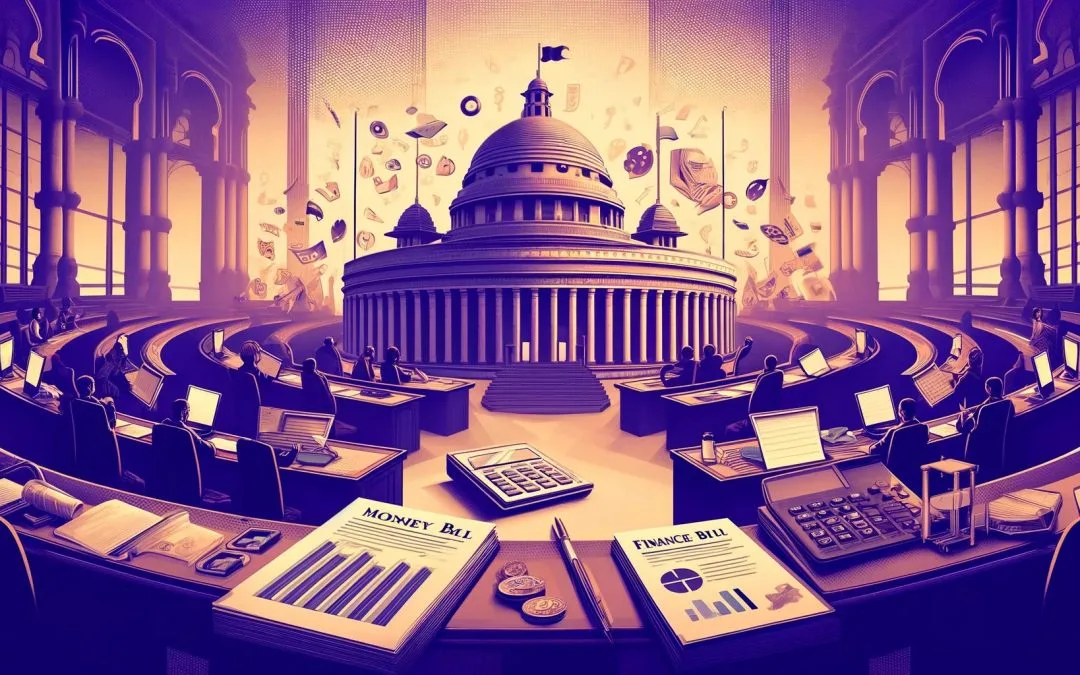
Although both deal with financial matters, they are different.
| Feature | Money Bill | Financial Bill |
| Constitutional Provision | Article 110 | Article 117 |
| Introduction | Only in Lok Sabha | Mostly in Lok Sabha |
| Speaker’s Certification | Required | Not required |
| Rajya Sabha Power | Can only recommend changes | Can amend or reject |
| Joint Sitting | Not allowed | Allowed if required |
The Speaker of the Lok Sabha decides whether a bill is a Money Bill. This decision is final.
Constitutional Amendment Bill
A Constitutional Amendment Bill is introduced to change the Constitution of India.
It may require:
- A simple majority
- A special majority
- A special majority along with approval from at least half of the State Legislatures, depending on the amendment.
Unlike ordinary bills, there is no Joint Sitting for Constitutional Amendment Bills. Both Houses must pass the bill separately.
Parliamentary Privileges
Members of Parliament enjoy certain rights and protections called Parliamentary Privileges.
These privileges allow MPs to perform their duties freely without fear.
Some important privileges include:
- Freedom of speech inside Parliament
- Protection for statements made during parliamentary proceedings
- Immunity while performing official duties
If these privileges are violated, it is called a Breach of Privilege, and Parliament may take action against the person responsible.
Importance of Parliament of India
The Parliament of India is one of the strongest pillars of Indian democracy.
Its major functions include:
- Making new laws
- Amending existing laws
- Approving the Union Budget
- Controlling government spending
- Discussing national and international issues
- Holding the government accountable
- Representing the people of India
Every law that affects the lives of citizens passes through Parliament before it comes into force.
The discussions, debates, and voting in Parliament ensure that different opinions are heard before important decisions are made.
FAQs
What is the legislative procedure in the Indian Parliament?
It is the process through which a bill is introduced, discussed, approved by both Houses, and signed by the President to become a law.
How many sessions does Parliament usually hold every year?
Parliament generally holds three sessions: Budget Session, Monsoon Session, and Winter Session.
What is a Money Bill?
A Money Bill deals only with financial matters such as taxation, borrowing, and government expenditure.
What is Question Hour?
Question Hour is the first hour of every parliamentary sitting during which MPs ask questions to ministers.
What is the difference between Question Hour and Zero Hour?
Question Hour is mentioned in parliamentary rules and requires prior notice, while Zero Hour allows members to raise urgent issues without prior notice.