Peasant Movements in India: History, Causes, and Impact

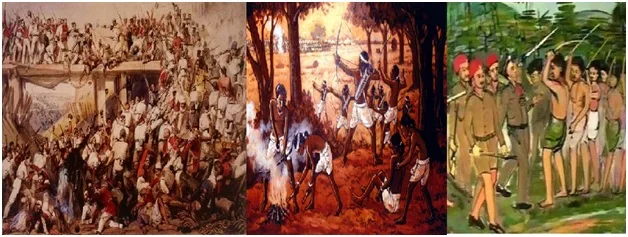
Peasant Movements in India played a crucial role in shaping the country’s social, economic, and political landscape during the colonial period. These movements were not just isolated protests but powerful expressions of resistance by farmers against exploitation, injustice, and oppressive policies. Over time, they evolved from small local uprisings into organized, large-scale struggles that contributed significantly to India’s freedom movement.
Thank you for reading this post, don't forget to subscribe!Introduction to Peasant Movements in India
Peasant movements in India were struggles led by farmers to protect their rights, livelihood, and dignity. During British rule, peasants suffered under heavy taxation, exploitation by landlords, and unfair economic systems. As a result, they began to organize protests and revolts.
In the early phase (1858–1914), these movements were mostly local and unorganized. However, after 1914, especially with the influence of leaders like Mahatma Gandhi, these struggles became more structured and connected to the national freedom movement.
Main Causes of Peasant Movements in India
1. Exploitation by Landlords and Zamindars
Peasants had to pay very high rents and were often forced to give extra payments illegally. Many were evicted from their lands without valid reasons. In some areas, they were also forced to provide unpaid labour (begar).
2. Heavy Land Revenue System
The British government imposed high land taxes. Even during crop failures, peasants were forced to pay full revenue, pushing them into debt.
3. Decline of Traditional Industries
British policies destroyed local industries like handicrafts. Many artisans lost their jobs and became dependent on agriculture, increasing pressure on land and reducing income.
4. Role of Moneylenders
Peasants often borrowed money at very high interest rates. When they failed to repay, moneylenders took control of their land.
5. Unfavourable Colonial Policies
British policies mainly benefited landlords and traders. Farmers had little legal protection, which led to frequent uprisings.
Rise of Peasant Organizations
By the 20th century, peasants realized the importance of unity and organization. Several groups were formed:
- Bihar Provincial Kisan Sabha (1929)
- All India Kisan Sabha (1936)
The All India Kisan Sabha demanded:
- Abolition of the zamindari system
- Rights for tenants
- Reduction in land revenue
These organizations helped transform local struggles into national movements.
19th Century Peasant Movements (Pre-Gandhian Phase)
Indigo Rebellion (1859–1862)
The Indigo Rebellion was one of the earliest and most important peasant movements in India. In Bengal, European planters forced farmers to grow indigo instead of food crops in order to increase their profits. This system caused great suffering among peasants.
Reasons:
- Very low prices were offered for indigo cultivation
- Indigo farming was not profitable for farmers
- Continuous indigo cultivation reduced soil fertility
- Forced cultivation under pressure from planters
Peasants became deeply dissatisfied and decided to resist. They refused to grow indigo and launched a movement for non-cultivation. They also suffered due to exploitation by traders and middlemen.
This movement received strong support from the press and missionaries. Harish Chandra Mukherjee, a Bengali journalist, highlighted the condition of peasants in his newspaper The Hindu Patriot. Dinabandhu Mitra, a famous writer, portrayed the suffering of peasants in his play Nil Darpan (1860), which created widespread awareness but was later banned by the British authorities.
As the movement grew stronger, the government appointed an Indigo Commission. In November 1860, it declared that forcing peasants to grow indigo was illegal. This marked a major victory for the farmers.
Pabna Movement (1870s–1880s)
The Pabna Movement took place in eastern Bengal, where landlords exploited peasants by increasing rents and land taxes unfairly. Poor farmers were also denied occupancy rights under Act X of 1859.
In May 1873, peasants formed an Agrarian League in the Yusufshahi Pargana of Pabna district. This organization helped them unite and resist oppression.
Features:
- Organized rent strikes
- Collection of funds for the movement
- Spread of agitation to nearby districts
- Mostly peaceful and legal resistance
The movement gained support from important leaders like Bankim Chandra Chatterjee, R.C. Dutt, and the Indian Association led by Surendranath Banerjea.
The struggle continued until 1885, when the British government passed the Bengal Tenancy Act. This act improved occupancy rights for tenants and provided some relief to peasants.
Deccan Riots (1875)
The Deccan Riots took place in regions of Maharashtra such as Poona, Ahmednagar, Solapur, and Satara. This movement was mainly directed against the exploitation by Marwari and Gujarati moneylenders.
Peasants under the Ryotwari system suffered from heavy taxation, and land revenue was increased by 50% in 1867. Due to debts and high interest rates, many farmers lost their lands.
Causes:
- Heavy land revenue demands
- High interest rates charged by moneylenders
- Loss of land due to inability to repay loans
Actions:
- In 1874, peasants started a social boycott against moneylenders
- Refused to buy goods from their shops
- Refused to cultivate their lands
- Service providers like barbers, washermen, and shoemakers also boycotted them
This boycott soon turned into violent agrarian riots. Peasants attacked the houses and shops of moneylenders in a systematic way.
The British government suppressed the movement, but later passed the Deccan Agriculturists Relief Act in 1879 as a relief measure for farmers.
20th Century Peasant Movements (Gandhian Phase)
Champaran Satyagraha (1917)
This was the first major peasant movement led by Mahatma Gandhi and marked the beginning of Gandhian methods in India.
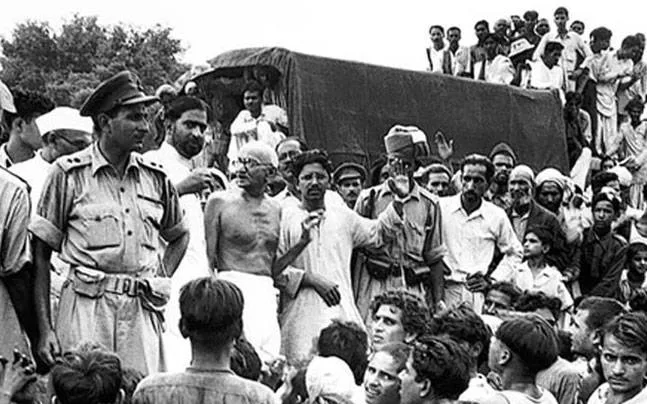
Issue:
The peasants working on indigo plantations in the Champaran district of Bihar were heavily exploited by European planters. They were forced to grow indigo on at least 3/20th of their land and sell it at very low prices fixed by the planters.
Development:
In 1917, Gandhi visited Champaran and started a detailed investigation into the problems of the peasants. He refused to obey the orders of British officials who asked him to leave the district, showing his commitment to the cause.
Outcome:
- The government formed an enquiry committee, including Gandhi as a member.
- The Champaran Agrarian Act (1918) was passed.
- This act freed peasants from unfair taxes and forced indigo cultivation.
Kheda Satyagraha (1918)
This movement took place in the Kheda district of Gujarat and was mainly directed against the British government’s harsh tax policies.
Cause:
In 1918, crops failed badly, but the government still demanded full land revenue from the farmers.
Leadership:
The movement was led by Mahatma Gandhi along with Sardar Vallabhbhai Patel.
Action:
Peasants were advised to withhold payment of taxes until their demand for tax relief was accepted.
Result:
- The satyagraha continued till June 1918.
- The government finally agreed to suspend tax collection, giving relief to farmers.
Moplah Rebellion (1921)
This movement took place in the Malabar region of Kerala and involved Muslim tenant farmers known as Moplahs.
Issues:
- Lack of land ownership rights
- High rents and heavy taxes
- Frequent exploitation by landlords
Development:
The movement became part of the larger Khilafat Movement. Leaders like Mahatma Gandhi, Shaukat Ali, and Maulana Abul Kalam Azad addressed Moplah gatherings.
However, over time, the movement took a communal turn. Some Moplah groups targeted Hindu landlords, whom they believed supported the British.
Outcome:
- The communal nature weakened the movement.
- It became isolated from the Non-Cooperation Movement.
- The rebellion was suppressed and ended by December 1921.
Bardoli Satyagraha (1928)
This was one of the most successful peasant movements in India.
Cause:
The British government increased land revenue by 30% in the Bardoli region of Gujarat, which farmers found unjust.
Leadership:
The movement was led by Sardar Vallabhbhai Patel.
Action:
Peasants started a No-Revenue Campaign, refusing to pay taxes.
Development:
- The British tried to suppress the movement by seizing land and cattle.
- However, the peasants remained united and continued their protest peacefully.
Outcome:
- The government appointed an enquiry committee.
- It was found that the tax increase was unfair.
- The revenue hike was reduced to 6.03%.
- Vallabhbhai Patel was given the title “Sardar” by the people of Bardoli.
Difference Between 19th and 20th Century Movements
The Peasant Movements in India changed significantly from the 19th century to the 20th century. These differences can be clearly understood through their objectives, leadership, scale, awareness, and level of organization.
1. Objective of Movements
- 19th Century: The objective of these movements was mainly limited to economic issues such as high rents, heavy taxes, and specific local grievances. They did not aim to completely end the exploitation of peasants or challenge British rule.
- 20th Century: The objectives became broader. Peasants were brought into the larger struggle against colonialism, especially through movements like Champaran, Kheda, and Bardoli. These movements were connected with India’s freedom struggle.
2. Leadership
- 19th Century: Most movements were led by the peasants themselves without support from national leaders.
- 20th Century: Leadership shifted to organized political groups. Many movements were guided by leaders from the Indian National Congress and also by socialist and communist leaders.
3. Extent of Movements
- 19th Century: These movements were mostly local and limited to specific regions or districts.
- 20th Century: The movements spread across India and became nationwide. Mobilisation was done through large meetings, kisan conferences, and organized campaigns.
4. Understanding of Colonialism
- 19th Century: The struggles were focused on solving immediate problems like rent and taxes. Colonialism itself was not seen as the main enemy.
- 20th Century: There was a clear rise in anti-colonial awareness among peasants. They began to understand that British rule was the root cause of their suffering.
5. Formal Organization
- 19th Century: There was no proper organization, and movements were usually short-lived due to lack of coordination.
- 20th Century: Organized peasant groups began to emerge. Independent class organizations of farmers were formed in rural areas. The most important among them was the All India Kisan Sabha (1936), which played a key role in uniting peasants and voicing their demands.
Significance of Peasant Movements in India
1. Spread of Awareness
Peasants became aware of their rights and began to demand justice through legal and political means.
2. Foundation for Future Movements
These movements inspired other uprisings and strengthened resistance against British rule.
3. Unity Among Farmers
Different sections of peasants came together, including landless labourers.
4. Recognition of Peasant Issues
Government was forced to respond to farmers’ demands in many cases.
5. Growth of Nationalism
Participation in these movements increased patriotic feelings and support for independence.
6. Impact on Post-Independence Reforms
These struggles led to important reforms after independence, such as:
- Abolition of zamindari
- Land reforms
- Better rights for tenants
Conclusion
Peasant Movements in India were a powerful force of resistance against injustice during British rule. Though many early movements were local and limited, they gradually evolved into organized struggles that contributed to the larger freedom movement. These movements not only improved the condition of farmers during colonial times but also laid the foundation for agricultural reforms in independent India.
FAQs on Peasant Movements in India
1. What are Peasant Movements in India?
Peasant Movements in India were protests and struggles by farmers against exploitation by British authorities, landlords, and moneylenders to protect their rights and livelihoods.
2. What were the main causes of Peasant Movements in India?
The main causes included high land revenue, exploitation by zamindars, debt from moneylenders, forced cultivation, and unfair British economic policies.
3. Which was the first major peasant movement in India?
The Indigo Rebellion (1859–1862) in Bengal is considered one of the first major organized peasant movements in India.
4. What was the Champaran Satyagraha?
Champaran Satyagraha (1917) was a movement led by Mahatma Gandhi where farmers protested against forced indigo cultivation. It was Gandhi’s first major movement in India.
5. Who led the Bardoli Satyagraha?
The Bardoli Satyagraha (1928) was led by Sardar Vallabhbhai Patel, who later earned the title “Sardar” for his leadership.
6. What was the role of Mahatma Gandhi in Peasant Movements in India?
Mahatma Gandhi introduced non-violent methods (Satyagraha) and helped organize peasants in movements like Champaran and Kheda, connecting them with the national freedom struggle.
7. What is the difference between 19th and 20th century peasant movements?
19th-century movements were local and unorganized, while 20th-century movements were widespread, better organized, and linked to the Indian independence movement.
8. What was the All India Kisan Sabha?
The All India Kisan Sabha (formed in 1936) was a national organization of farmers that demanded land reforms, abolition of zamindari, and better rights for peasants.
9. Why was the Moplah Rebellion important?
The Moplah Rebellion (1921) highlighted the issues of tenant farmers in Kerala, though it later became communal and lost its original focus.
10. What was the significance of Peasant Movements in India?
These movements raised awareness among farmers, united them, influenced the freedom struggle, and led to important land reforms after independence.