


Tughlaq Dynasty History(Part-iii): Rise, Rule, Policies, and Decline of the Delhi Sultanate

The Tughlaq Dynasty History is one of the most important chapters in medieval Indian history. The Tughlaq dynasty ruled the Delhi Sultanate from 1320 to 1413 CE after the fall of the Khilji dynasty. The rulers of this dynasty tried to expand the empire, improve administration, develop agriculture, and strengthen the economy. Some of their policies were successful, while others failed badly and created unrest in the empire.
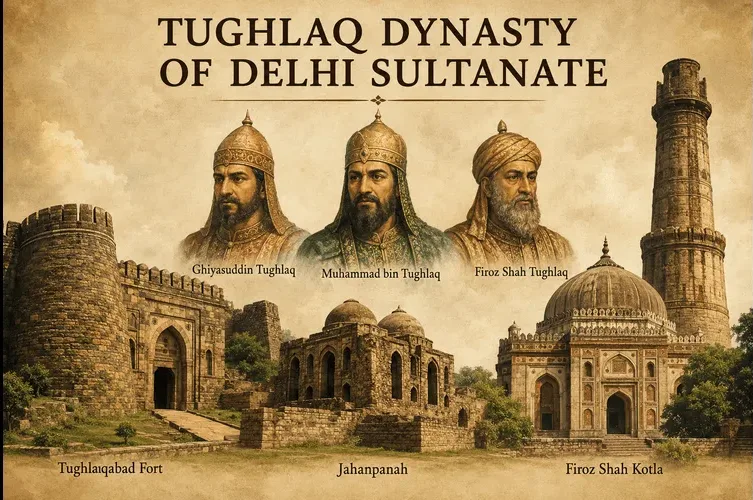
The Tughlaq period is remembered for strong rulers like Ghiyasuddin Tughlaq, Muhammad bin Tughlaq, and Firoz Shah Tughlaq. During their rule, new cities, canals, roads, mosques, and public buildings were built. Trade and agriculture also increased in many regions. However, internal rebellions, weak administration, and controversial decisions later weakened the dynasty.

Introduction to the Tughlaq Dynasty
The Tughlaq dynasty came to power in Delhi in 1320 CE. It replaced the Khilji dynasty and became one of the strongest dynasties of the Delhi Sultanate. The rulers of this dynasty tried to expand their territory across North and South India.
The Tughlaq rulers paid attention to administration, military power, agriculture, taxation, and infrastructure. They also built many towns, canals, schools, mosques, and forts. The dynasty ruled for nearly ninety years before becoming weak due to rebellions and political instability.
The major rulers of the dynasty were:
- Ghiyasuddin Tughlaq
- Muhammad bin Tughlaq
- Firoz Shah Tughlaq
Each ruler had a different style of governance and left a major impact on Indian history.
Ghiyasuddin Tughlaq: Founder of the Dynasty
Rise to Power
Ghazi Malik founded the Tughlaq dynasty. After becoming the ruler of Delhi in 1320 CE, he took the title of Ghiyasuddin Tughlaq.
He came to power after defeating the last ruler of the Khilji dynasty. Ghiyasuddin was known as a capable military leader and administrator. He worked to strengthen the Delhi Sultanate and restore stability.
Achievements of Ghiyasuddin Tughlaq
Expansion of the Empire
Ghiyasuddin worked hard to bring distant territories under the control of the Delhi Sultanate. He strengthened the administration and improved law and order.
Construction of Tughlaqabad
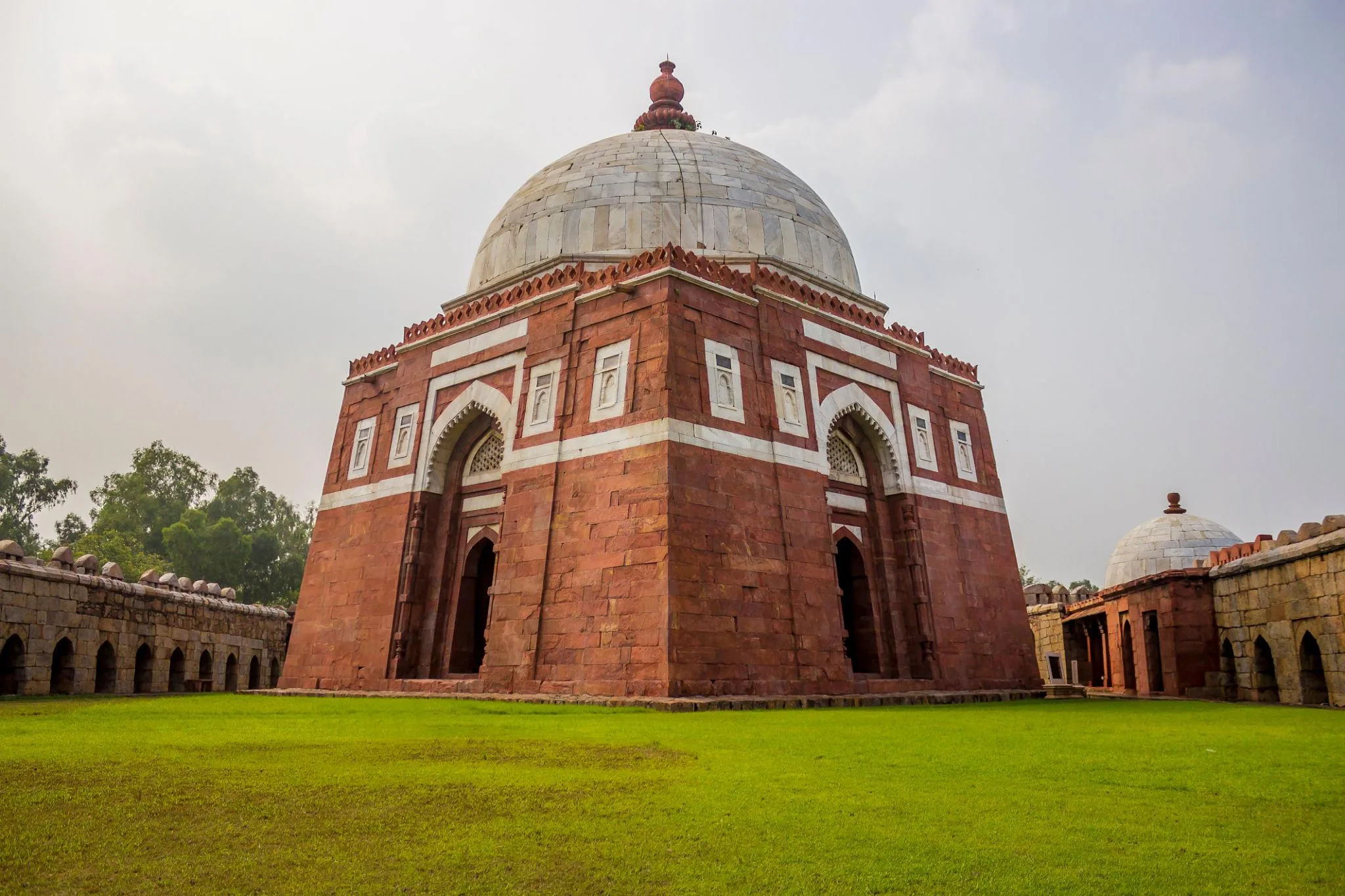
One of his greatest achievements was the construction of Tughlaqabad Fort near Delhi.
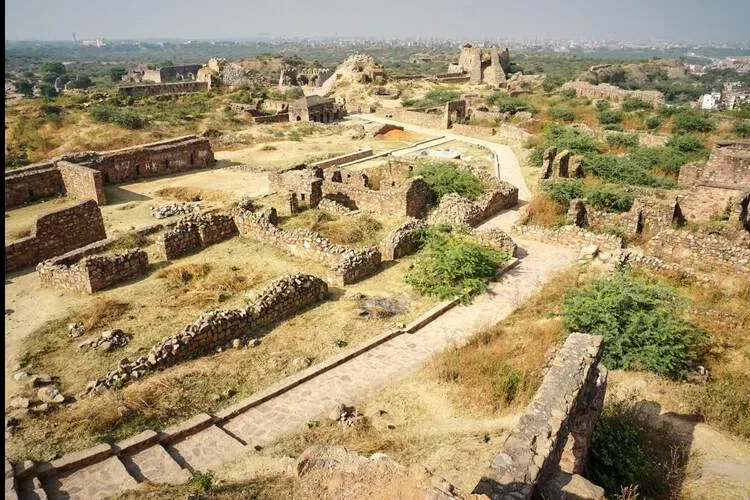
The fort was built as a strong defensive structure to protect Delhi from attacks. It reflected the military strength of the Tughlaq rulers.
Death of Ghiyasuddin
Ghiyasuddin ruled for a short time and died in 1325 CE. After his death, his son Muhammad bin Tughlaq became the ruler.
Muhammad bin Tughlaq: The Most Controversial Ruler
Introduction
Muhammad bin Tughlaq is remembered as one of the most intelligent yet controversial rulers in Indian history. He ruled from 1325 to 1351 CE.
He was highly educated and had knowledge of philosophy, mathematics, medicine, and religion. However, many of his ambitious experiments failed because they were not properly planned.
His empire became one of the largest among the Delhi Sultans.
Policies and Achievements of Muhammad bin Tughlaq
Religious Policy
Muhammad bin Tughlaq followed a comparatively liberal policy. He appointed people to important positions without considering caste, religion, or background.
He also treated Hindu subjects without major discrimination and encouraged talented individuals to join administration.
Expansion of the Empire
Muhammad bin Tughlaq tried to expand his empire through military campaigns. He sent expeditions to regions such as:
- Khurasan
- Nagarkot
- Qarachil
- Mewar
- Telingana
- Malabar
He also maintained diplomatic relations with several Asian countries.
Construction Activities
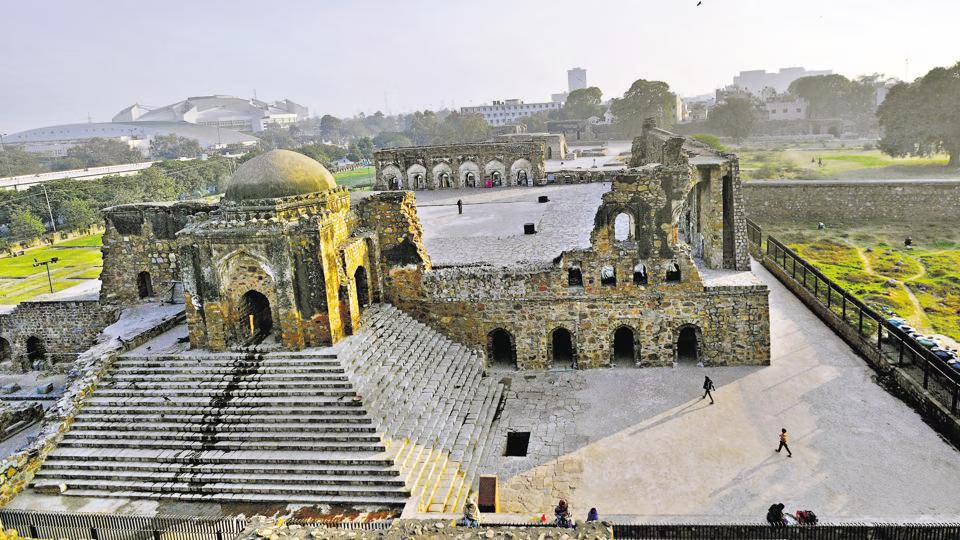
Muhammad bin Tughlaq built the city of Jahanpanah in Delhi. He also built mosques and royal residences.
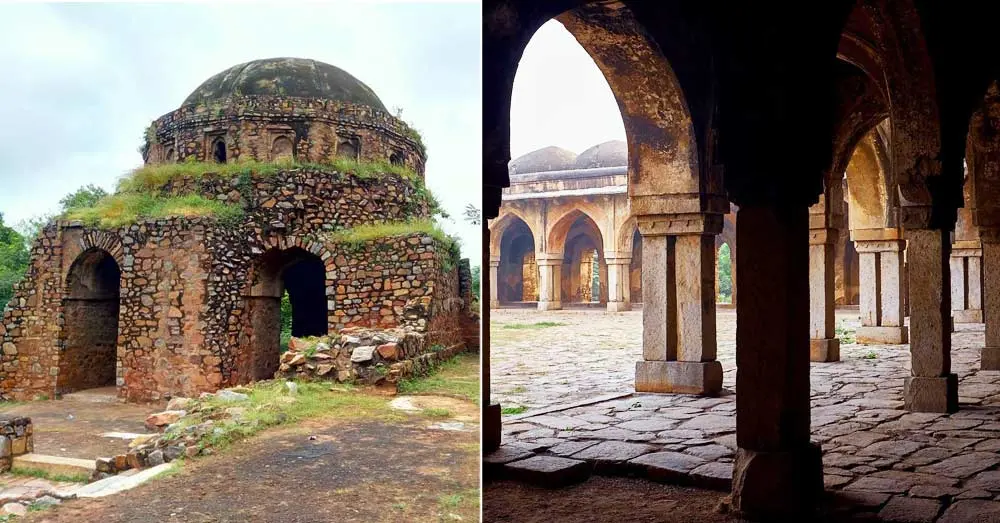
The architecture of the Tughlaq period was simple, strong, and defensive in style.
Muhammad bin Tughlaq’s Famous Experiments
Muhammad bin Tughlaq is mainly remembered for his bold but unsuccessful experiments.
Transfer of Capital from Delhi to Daulatabad
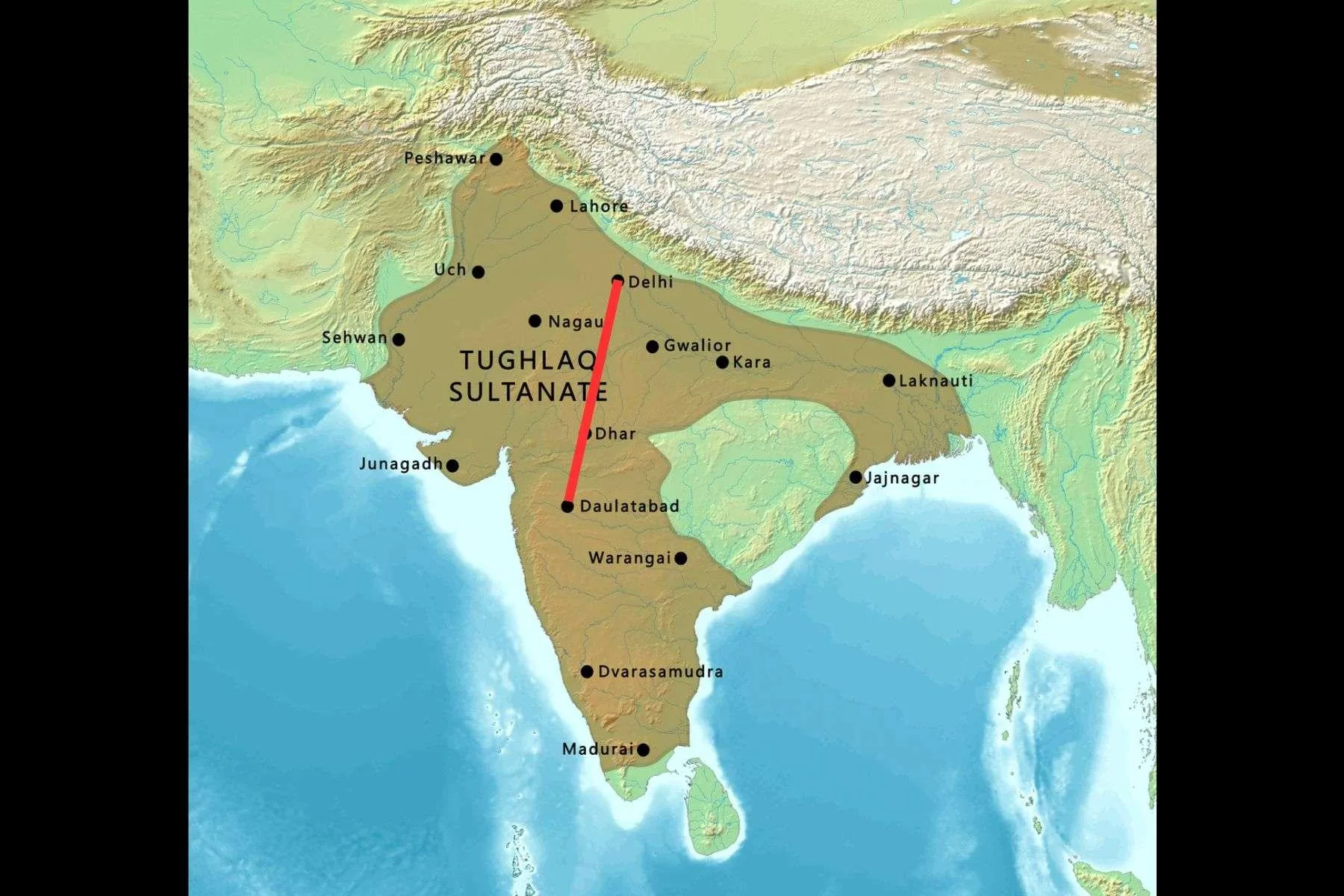
One of his most controversial decisions was shifting the capital from Delhi to Daulatabad in the Deccan region.
Reasons Behind the Decision
- Daulatabad was located in the center of the empire.
- It was safer from Mongol invasions.
- The Sultan wanted better control over South India.
Problems Faced
The journey from Delhi to Daulatabad was difficult. Many nobles, scholars, and officials suffered during the migration.
Although only upper-class groups were ordered to move, the decision created dissatisfaction among people.
Result
Later, Muhammad bin Tughlaq realized that controlling North India from Daulatabad was difficult. Therefore, he abandoned the plan and shifted the capital back to Delhi.
Importance
Despite failure, the policy increased cultural interaction between North and South India. Many scholars and religious leaders settled in the Deccan and spread northern cultural traditions there.
Introduction of Token Currency
Another famous experiment was the introduction of token currency.
Reason for the Policy
At that time, there was a shortage of silver in the world. The Sultan also needed money for military campaigns and administration.
The Experiment
Muhammad bin Tughlaq introduced copper coins and declared them equal in value to silver coins.
Failure of the Policy
People started making fake copper coins at home because the government failed to control forgery.
As fake coins spread in the market, the economy became unstable.
Finally, the Sultan withdrew the token currency system.
Khurasan and Qarachil Expeditions
Muhammad bin Tughlaq also planned military expeditions toward Khurasan and Qarachil.
Khurasan Expedition
The Sultan wanted to secure the western borders of the empire, but the expedition was never fully carried out.
Qarachil Expedition
This expedition was launched to solve border disputes in the Himalayan region. However, the army faced difficult conditions and the campaign failed.
Even after failure, diplomatic relations between Delhi and China later improved.
Agrarian Reforms of Muhammad bin Tughlaq
Muhammad bin Tughlaq took several steps to improve agriculture and increase production.
Development in the Doab Region
The Sultan focused mainly on the fertile Doab region between the Ganga and Yamuna rivers.
He wanted the state to receive proper land revenue while improving cultivation.
Peasant Rebellion and Famine
High taxes and over-assessment created anger among peasants. Many farmers left their villages.
At the same time, a severe famine affected the region for many years.
Thousands of people died due to hunger and disease.
Relief Measures
The Sultan tried to help farmers by:
- Giving loans for seeds and cattle
- Encouraging the digging of wells
- Supporting cultivation
However, these measures came too late and could not fully solve the crisis.
Diwan-i-Amir-i-Kohi
Muhammad bin Tughlaq created a new department called Diwan-i-Amir-i-Kohi for agricultural development.
Its main aim was to:
- Expand cultivation
- Improve crop quality
- Provide loans to farmers
Farmers were encouraged to grow better crops like wheat, sugarcane, grapes, and dates.
Failure of the Scheme
The scheme failed because many officials were corrupt and inexperienced. They misused government money for personal benefit.
Even though the project failed during his reign, later rulers like Firoz Shah Tughlaq and Akbar adopted similar agricultural policies successfully.
Problems with the Nobility
Muhammad bin Tughlaq faced major challenges from nobles.
Diverse Nobility
The nobles of his court came from different racial and social backgrounds. Some were foreign Muslims, while others were Indian converts.
The Sultan even appointed people from lower social groups such as:
- Barbers
- Weavers
- Cooks
- Wine-makers
This created dissatisfaction among traditional nobles.
Rebellions
The empire became too large to control effectively. Governors and nobles started revolts in different regions.
Muhammad bin Tughlaq used harsh punishments to suppress rebellions, but this increased hatred against him.
His reign represented both the peak and the beginning of the decline of the Delhi Sultanate.
Rise of Firoz Shah Tughlaq
After the death of Muhammad bin Tughlaq in 1351 CE, his cousin Firoz Shah Tughlaq became the ruler.
At that time, the empire was already weakening due to rebellions and military failures.
South India had become independent with the rise of:
- The Vijayanagara Empire
- The Bahmani Kingdom
Bengal had also separated from Delhi.
Firoz Shah adopted peaceful policies to stop further decline.
Firoz Shah Tughlaq and His Rule
Firoz Shah Tughlaq ruled from 1351 to 1388 CE. He was not a great military commander, but he was known for administration, construction work, and public welfare.
Achievements of Firoz Shah Tughlaq
Public Welfare Departments
Firoz Shah created several departments for public welfare.
Diwan-i-Khairat
This department worked for charity and helped poor people.
Diwan-i-Bundagan
This department managed slaves under the Sultanate.
Sarais
Rest houses called Sarais were built for travelers and merchants.
Construction of New Towns
Firoz Shah founded several new towns, including:
- Firozabad
- Fatehabad
- Jaunpur
- Hissar
These towns became important centers of trade and administration.
Canal Construction
Firoz Shah paid great attention to irrigation and agriculture.
He built canals from:
- Yamuna to Hissar
- Sutlej to Ghaggar
- Ghaggar to Firozabad
- Sirmour Hills to Hansi
These canals improved farming and increased agricultural production.
Taxes Under Firoz Shah Tughlaq
Firoz Shah imposed several taxes according to Islamic law.
Kharaj
Land tax collected from agricultural produce.
Zakat
Tax collected from Muslims on property.
Khams
One-fifth share of war booty taken by the state.
Other Taxes
Additional taxes included:
- Irrigation tax
- Garden tax
- Octroi tax
- Sales tax
Policies of Firoz Shah Tughlaq
Hereditary Offices
Firoz Shah allowed government posts and land grants to pass from father to son.
This policy pleased nobles and reduced rebellions.
However, it later weakened administration because talented new people found fewer opportunities.
Military Changes
Soldiers were paid through land revenue assignments instead of cash salaries.
Over time, corruption increased in the military system.
Religious Policy
Firoz Shah presented himself as a strict Muslim ruler.
He imposed Jaziya, a tax on non-Muslims, more strictly.
He also stopped practices considered un-Islamic by religious scholars.
Translation of Sanskrit Texts
One positive achievement of Firoz Shah was encouraging translation work.
He ordered several Hindu religious and scientific texts to be translated from Sanskrit into Persian.
Books related to:
- Music
- Medicine
- Mathematics
were translated during his reign.
This helped in cultural exchange and understanding between different communities.
Decline of the Tughlaq Dynasty
After the death of Firoz Shah Tughlaq, weak rulers came to power.
The empire became unstable because of:
- Internal conflicts
- Weak administration
- Corruption
- Rebellions
- Invasions
The central government gradually lost control over provinces.
Finally, the Tughlaq dynasty declined completely in 1413 CE.
Importance of the Tughlaq Dynasty
The Tughlaq dynasty played an important role in the history of medieval India.
Major Contributions
- Expansion of the Delhi Sultanate
- Development of irrigation and agriculture
- Construction of forts, cities, and canals
- Promotion of trade and urbanization
- Cultural interaction between North and South India
- Translation of Sanskrit texts into Persian
Negative Aspects
- Harsh taxation
- Failed experiments of Muhammad bin Tughlaq
- Religious intolerance during some periods
- Weakening of administration due to hereditary policies
Conclusion
The Tughlaq Dynasty History shows both progress and failure in the Delhi Sultanate period. Ghiyasuddin Tughlaq strengthened the empire, Muhammad bin Tughlaq introduced ambitious reforms and experiments, while Firoz Shah Tughlaq focused on public welfare and development.
Although many policies failed, the Tughlaq rulers contributed greatly to architecture, agriculture, trade, and administration. Their rule also encouraged cultural exchange between different parts of India.
The dynasty eventually declined because of rebellions, weak rulers, and administrative problems, but its impact on medieval Indian history remains highly significant even today.
FAQs on Tughlaq Dynasty History
1. Who founded the Tughlaq Dynasty?
The Tughlaq Dynasty was founded by Ghiyasuddin Tughlaq in 1320 CE after the fall of the Khilji dynasty.
2. Who was Muhammad bin Tughlaq?
Muhammad bin Tughlaq was a ruler of the Delhi Sultanate known for his ambitious experiments like token currency and shifting the capital to Daulatabad.
3. Why did Muhammad bin Tughlaq shift the capital to Daulatabad?
He shifted the capital to improve control over South India and protect the empire from Mongol attacks.
4. What was the token currency introduced by Muhammad bin Tughlaq?
It was a copper coin introduced as equal in value to silver coins, but the system failed because of fake coins.
5. Who was Firoz Shah Tughlaq?
Firoz Shah Tughlaq was a ruler of the Tughlaq dynasty known for public welfare works, canals, and new towns.
6. What were the major achievements of Firoz Shah Tughlaq?
He built canals, towns, rest houses, and welfare departments for charity and administration.
7. Why did the Tughlaq Dynasty decline?
The dynasty declined because of rebellions, weak rulers, corruption, and administrative problems.
8. Which fort was built by Ghiyasuddin Tughlaq?
Ghiyasuddin Tughlaq built the famous Tughlaqabad Fort in Delhi.