


Volcanism: Meaning, Types, Distribution, Landforms and Impacts of Volcanoes

Volcanism is one of the most powerful natural processes found on Earth. It is responsible for the formation of mountains, islands, plateaus, and many unique landforms. Volcanoes have shaped the surface of the Earth for millions of years and continue to influence the environment even today. While volcanic eruptions can cause destruction and loss of life, they also provide fertile soil, valuable minerals, and new landforms.
Volcanism is an important topic in physical geography because it helps us understand the internal structure of the Earth and the forces that shape our planet. The study of volcanoes also helps scientists predict eruptions and reduce damage caused by volcanic disasters.

What is Volcanism?
Volcanism refers to the process through which molten rocks, gases, ash, and other materials rise from inside the Earth and come out onto the surface. This activity happens because of intense heat present inside the Earth.
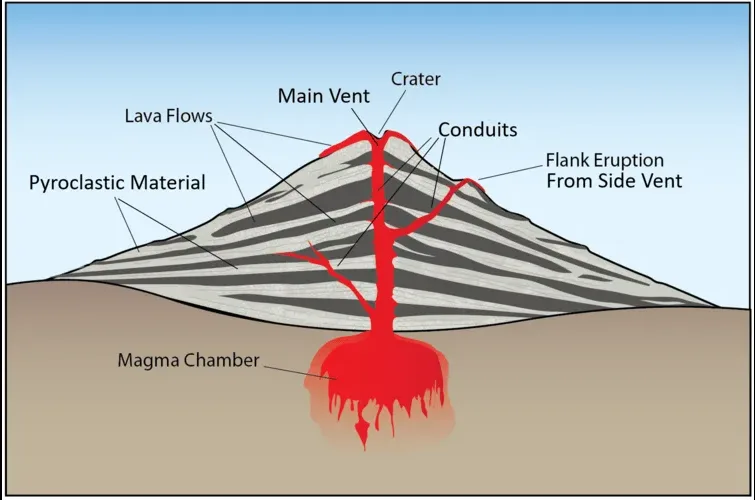
Inside the Earth, rocks melt due to very high temperatures and pressure. This molten material is called magma. When magma rises and reaches the Earth’s surface through cracks or openings, it is called lava. The movement of magma and lava creates volcanic eruptions and many volcanic landforms.
Volcanism is not limited to Earth only. It is also found on other planets and moons where internal heat exists.
What is a Volcano?
A volcano is an opening or vent in the Earth’s crust through which lava, gases, steam, ash, and rock fragments erupt. Volcanoes are usually formed in weak zones of the Earth’s crust where magma can easily rise to the surface.
Volcanic eruptions are examples of endogenic processes because they originate from inside the Earth. Some eruptions are gentle and release lava slowly, while others are highly explosive and dangerous.
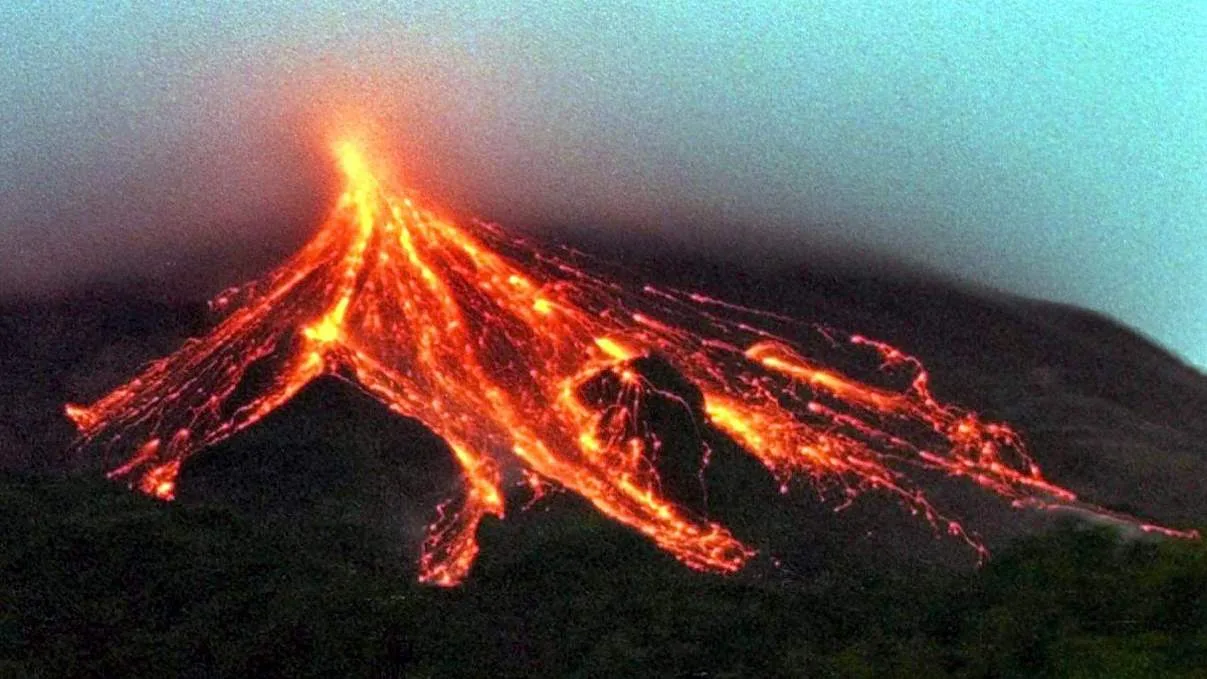
Volcanoes can create different types of landforms depending on the nature of the eruption. Slow eruptions often form lava plateaus, while explosive eruptions create volcanic mountains.
Difference Between Magma and Lava
Many people think magma and lava are the same, but there is a difference between them.
Magma
Magma is molten rock present inside the Earth. It contains melted rocks, gases, and minerals. Most magma is formed in the mantle region called the asthenosphere.
Lava
When magma reaches the Earth’s surface through a volcanic vent, it is called lava. Lava cools and solidifies after coming out of the volcano.
Causes of Volcanic Eruptions
Volcanic eruptions mainly occur because of the movement of tectonic plates and the pressure of magma inside the Earth.
Movement of Tectonic Plates
The Earth’s crust is divided into several tectonic plates. These plates move slowly over time. When plates collide, separate, or slide past each other, magma can rise through cracks and cause volcanic eruptions.
Pressure Inside the Earth
Gases trapped inside magma create pressure. When this pressure becomes too strong, magma is forced upward and erupts through volcanic vents.
Hotspots
Some volcanoes form above hotspots. These are areas deep inside the Earth where extremely hot material rises upward. The Hawaiian Islands are examples of hotspot volcanoes.
Methods Used to Predict Volcanic Eruptions
Scientists use different tools and methods to predict volcanic eruptions and reduce risks.
Seismic Monitoring
Before an eruption, small earthquakes and tremors often occur near volcanoes. Scientists study these movements using seismographs.
Ground Deformation
The ground around a volcano may swell or crack due to rising magma. Satellite images and GPS technology help scientists observe these changes.
Gas Emissions
Volcanoes release gases such as sulfur dioxide and carbon dioxide. Changes in gas levels can indicate upcoming eruptions.
Temperature Changes
Increasing temperatures around volcanic areas may signal rising magma beneath the surface.
Types of Volcanoes
Volcanoes are classified based on the frequency of eruptions and the nature of eruptions.
Types of Volcanoes Based on Frequency of Eruption
Active Volcanoes
Active volcanoes erupt frequently or have erupted recently. Most active volcanoes are located around the Pacific Ring of Fire.
The Pacific Ring of Fire is a region around the Pacific Ocean where many earthquakes and volcanic eruptions occur due to tectonic plate movements.
Examples of active volcanoes include:
- Kilauea in Hawaii
- Santa Maria in Guatemala
- Mount Etna in Italy
Dormant Volcanoes
Dormant volcanoes are currently inactive but may erupt again in the future.
Example:
- Mount Kilimanjaro in Tanzania
Extinct Volcanoes
Extinct volcanoes have not erupted for thousands or millions of years and are not expected to erupt again.
Example:
Types of Volcanoes Based on Nature of Eruption
Shield Volcanoes
Shield volcanoes are broad and gently sloping volcanoes formed mainly by basalt lava.
The lava is thin and flows easily over long distances. These volcanoes usually have less explosive eruptions.
The Hawaiian volcanoes are famous examples of shield volcanoes.
Composite Volcanoes
Composite volcanoes are also called stratovolcanoes. They are formed by layers of lava, ash, and volcanic materials.
These volcanoes are steep and highly explosive.
Examples include:
- Mount Fuji in Japan
- Mayon Volcano in the Philippines
- Mount Rainier in the United States
Calderas
Calderas are large depressions formed when the top of a volcano collapses after a massive eruption.
These are among the most explosive volcanic structures on Earth.
Flood Basalt Volcanoes
These volcanoes release highly fluid lava over large areas, creating lava plateaus.
The Deccan Plateau of India is an example of flood basalt activity.
Mid-Ocean Ridge Volcanoes
These volcanoes are located underwater along ocean ridges where tectonic plates move apart.
They erupt frequently and form new oceanic crust.
Distribution of Volcanoes Around the World
Volcanoes are not evenly distributed across the Earth. Most volcanoes are found in certain belts or zones.
Pacific Ring of Fire
The Pacific Ring of Fire is the most important volcanic belt in the world. It surrounds the Pacific Ocean and contains nearly 75% of the world’s active volcanoes.
Countries in this region include:
- Japan
- Indonesia
- Philippines
- New Zealand
- Chile
- United States
Frequent earthquakes and volcanic eruptions occur here because of plate collisions and subduction zones.
Mid-World Mountain Belt
This volcanic belt extends from Europe through Asia. It includes volcanic regions around the Mediterranean Sea.
African Rift Valley Belt
This belt is located in East Africa where tectonic plates are moving apart. Several volcanoes are found in this region.
Volcanic Landforms
Volcanic activities create many landforms both below and above the Earth’s surface.
Intrusive Volcanic Landforms
These landforms are formed when magma cools and solidifies below the Earth’s surface.
Batholiths
Batholiths are very large masses of igneous rocks formed deep underground. They are irregular in shape and become visible after erosion removes upper layers.
Sills
Sills are horizontal sheets of magma that cool between layers of rocks.
Dikes
Dikes are vertical intrusions of magma that cut across rock layers.
Laccoliths
Laccoliths are dome-shaped formations created when magma pushes rock layers upward.
Phacoliths
Phacoliths are lens-shaped magma intrusions found in folded rock structures.
Monadnocks or Inselbergs
These are isolated hills or mountains that remain after surrounding softer rocks are eroded away.
Extrusive Volcanic Landforms
These landforms are formed when lava erupts onto the Earth’s surface.
Fissure Vents
Fissure vents are long cracks through which lava flows quietly over large areas.
Conical Volcanoes
These are cone-shaped volcanoes formed by repeated eruptions around a central vent.
Shield Volcanoes
Shield volcanoes are broad volcanic mountains formed by fluid lava flows.
Lava Plateaus
Large quantities of lava spread over vast areas and cool to form flat plateaus.
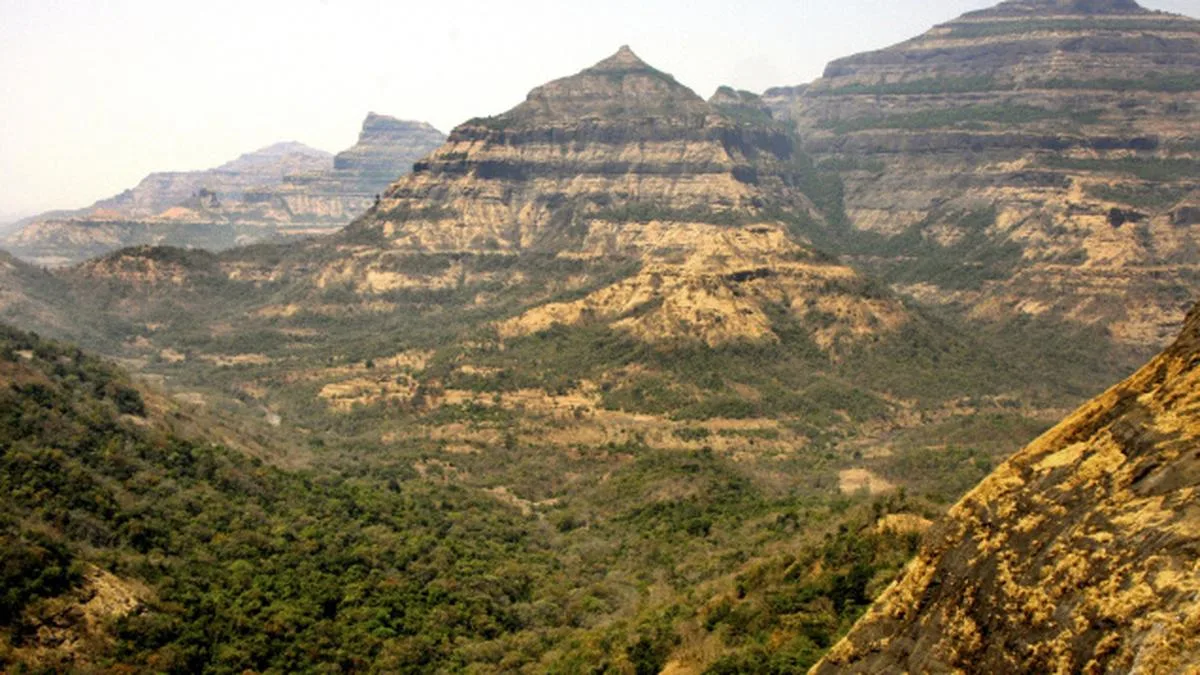
Examples:
- Deccan Plateau in India
- Columbia Plateau in the United States
Calderas
Calderas are huge depressions formed after explosive eruptions.
Lava Domes
Lava domes are rounded structures formed by thick lava that cools near the volcanic vent.
Mid-Ocean Ridges
These underwater mountain chains are formed due to volcanic activity along ocean floors.
Impacts of Volcanic Eruptions
Volcanic eruptions have both destructive and constructive effects.
Destructive Effects of Volcanoes
Earthquakes
Movement of magma inside the Earth can trigger earthquakes. These earthquakes can damage buildings and cause loss of life.
Pyroclastic Flows
Pyroclastic flows are fast-moving clouds of hot gas, ash, and rock fragments. They are extremely dangerous and can destroy everything in their path.
Volcanic Ash
Volcanic ash can spread over large areas. It affects air quality, damages crops, and creates breathing problems.
Climate Changes
Large eruptions release gases and ash into the atmosphere. These particles can block sunlight and temporarily lower global temperatures.
Loss of Life and Property
Volcanic eruptions can destroy towns, roads, forests, and agricultural lands. Many people living near volcanoes are at risk during eruptions.
Constructive Effects of Volcanoes
Fertile Soil
Volcanic ash contains important minerals such as potassium, magnesium, and iron. Over time, this ash forms fertile soil suitable for farming.
Many agricultural regions near volcanoes are highly productive.
Formation of New Land
Repeated volcanic eruptions can create new islands and landforms.
The Hawaiian Islands were formed through volcanic activity.
Valuable Minerals
Volcanic regions contain valuable minerals and rocks used in industries and construction.
Geothermal Energy
Heat from volcanic regions can be used to produce geothermal energy, which is an important renewable energy source.
Countries like Iceland use geothermal energy for electricity and heating.
Formation of Volcanic Lakes
Large volcanic craters may fill with water and form beautiful lakes.
These lakes support tourism and local ecosystems.
Contact Metamorphism
When magma comes into contact with surrounding rocks, heat changes their structure and creates new rock types such as marble and hornfels.
Volcanic Geysers
Geysers are hot springs that periodically throw hot water and steam into the air. They form due to geothermal heating in volcanic regions.
Famous Volcanoes Around the World
Mount Fuji, Japan
Mount Fuji
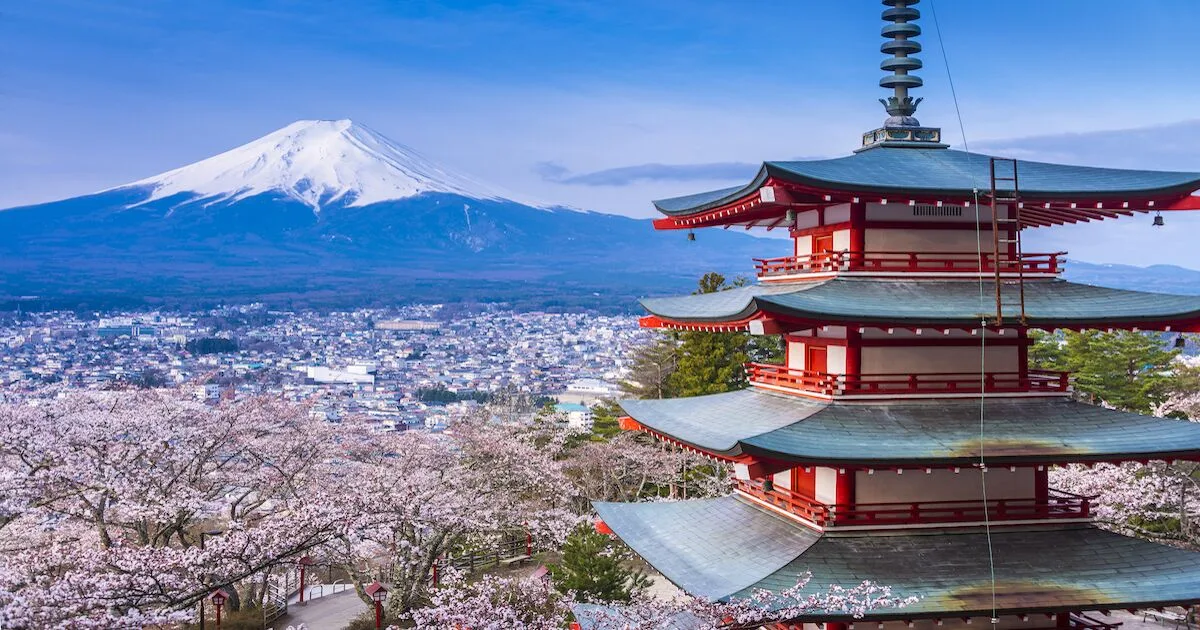
Mount Fuji is a famous composite volcano and an important cultural symbol of Japan.
Kilauea Volcano, Hawaii
Kilauea
Kilauea is one of the world’s most active volcanoes and is known for frequent lava eruptions.
Mount Vesuvius, Italy
Mount Vesuvius
Mount Vesuvius destroyed the ancient Roman city of Pompeii in 79 AD.
Krakatoa, Indonesia
Krakatoa
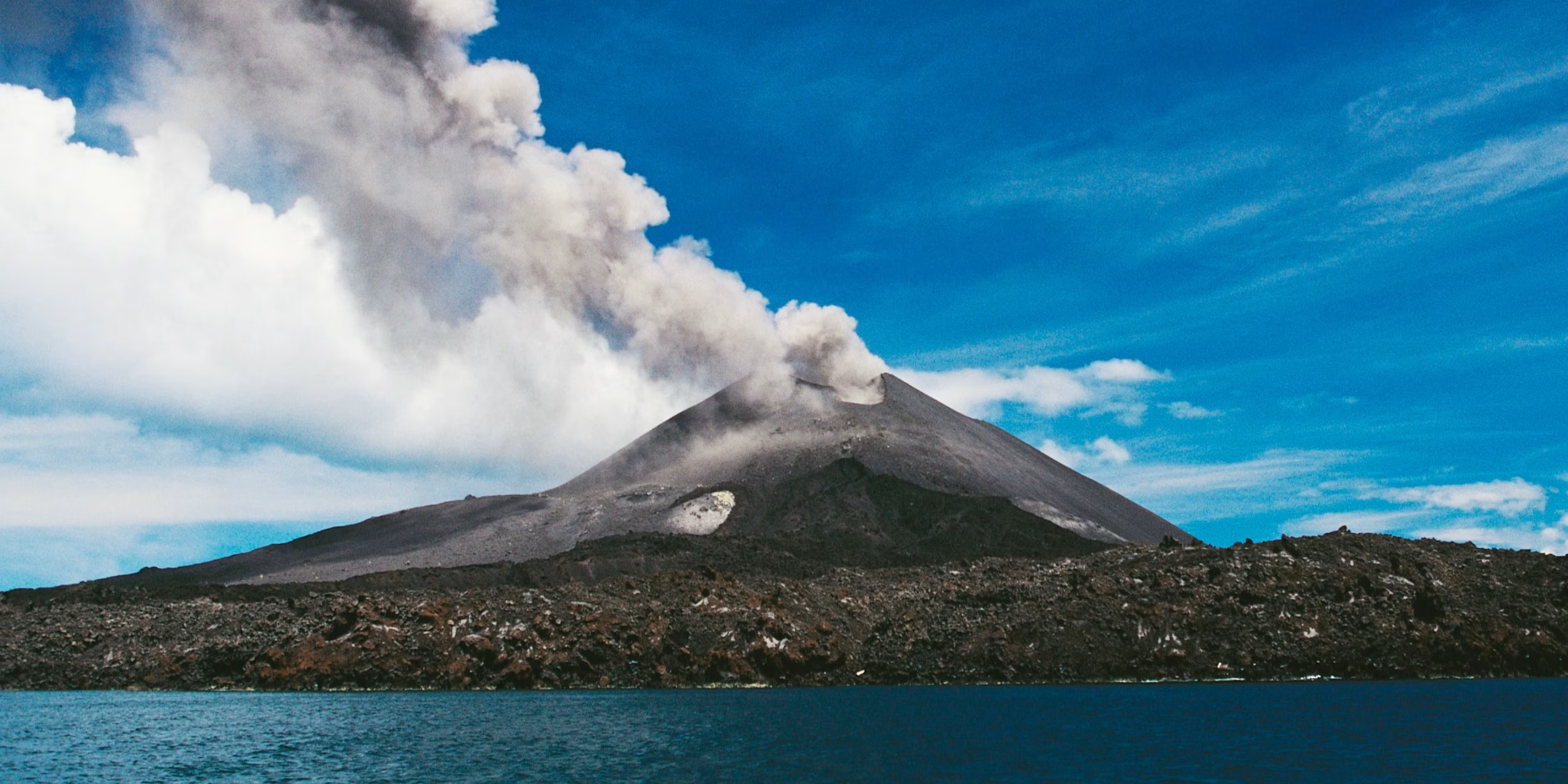
Krakatoa is famous for its powerful eruption in 1883, which caused massive destruction and tsunamis.
Importance of Studying Volcanism
Studying volcanism is important because it helps scientists understand the Earth’s interior and tectonic activities. It also helps governments and disaster management agencies prepare for future eruptions.
Modern technology allows scientists to monitor volcanic activity and issue early warnings to nearby populations.
Understanding volcanic hazards can save lives and reduce economic losses.
Conclusion
Volcanism is one of the most important geological processes shaping the Earth. Volcanoes are powerful natural features that can both destroy and create. Their eruptions can lead to earthquakes, ash clouds, climate changes, and loss of life. At the same time, volcanoes provide fertile soil, valuable minerals, geothermal energy, and new landforms.
Volcanic activities are closely connected with tectonic plate movements and the internal structure of the Earth. Scientists continue to study volcanoes to better understand their behavior and reduce risks associated with eruptions.
Although volcanic eruptions can be dangerous, volcanoes also play a major role in maintaining the dynamic nature of our planet. By understanding volcanism, humans can better prepare for disasters while also benefiting from the resources and opportunities provided by volcanic regions.
FAQs on Volcanism and Volcanoes
1. What is volcanism?
Volcanism is the process through which magma, gases, and ash come out from inside the Earth to the surface.
2. What is a volcano?
A volcano is an opening in the Earth’s crust through which lava, gases, and ash erupt.
3. What is the difference between magma and lava?
Magma is molten rock inside the Earth, while lava is magma that reaches the Earth’s surface.
4. What are the main types of volcanoes?
The main types are active volcanoes, dormant volcanoes, and extinct volcanoes.
5. What is the Pacific Ring of Fire?
The Pacific Ring of Fire is a volcanic belt around the Pacific Ocean where many earthquakes and volcanoes occur.
6. What are shield volcanoes?
Shield volcanoes are broad volcanoes formed by thin and flowing basalt lava.
7. What are the harmful effects of volcanic eruptions?
Volcanic eruptions can cause earthquakes, ash fall, climate changes, and destruction of life and property.
8. How do volcanoes help humans?
Volcanoes create fertile soil, geothermal energy, valuable minerals, and new landforms.
9. What are intrusive volcanic landforms?
These are landforms formed when magma cools below the Earth’s surface, such as batholiths and dikes.
10. Why is the study of volcanism important?
It helps scientists predict eruptions, reduce disasters, and understand Earth’s structure.