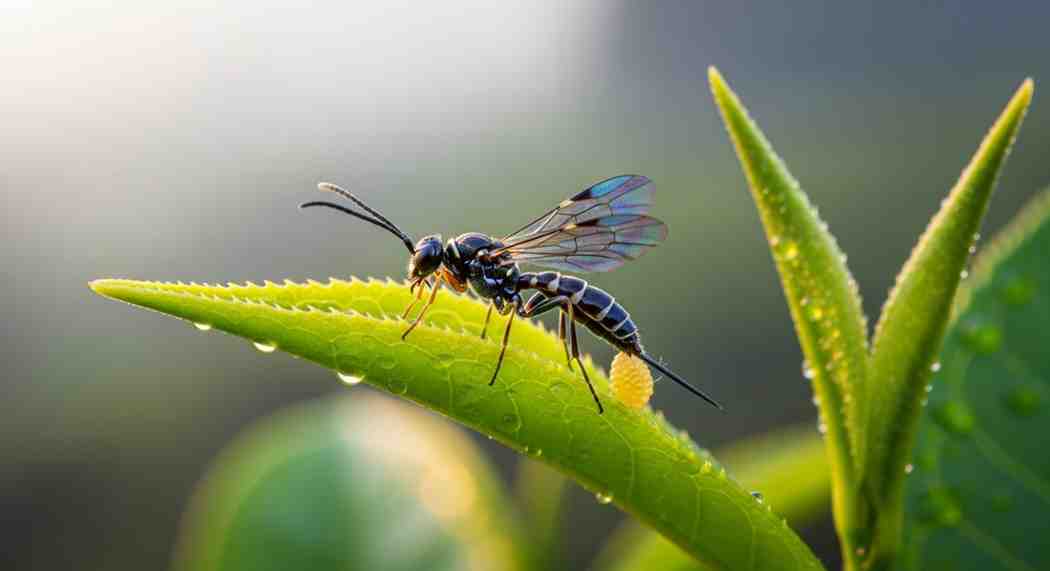
New Parasitic Wasp Species Found in Assam Reveals Rich Biodiversity

A Parasitic Wasp Species has been discovered in a tea estate in Assam, bringing attention to the rich but often unnoticed life forms living in plantation areas. This finding was made by a team of scientists from the Zoological Survey of India, the Centre for Biodiversity Genomics in Canada, and the Kalinga Foundation. The newly identified insect, named Chelonus (Carinichelonus) mahadeb, was found in Nahortoli Tea Estate in Assam. Along with this, another species called Chelonus siangensis was also recorded in Chubwa Tea Estate, showing that it exists in more places than earlier known.
Thank you for reading this post, don't forget to subscribe!New Parasitic Wasp Species Found in Assam
The discovery of this Parasitic Wasp Species is important because it belongs to a very rare group of wasps known as Carinichelonus. These wasps are part of the Braconidae family, which includes many tiny insects that are not easily noticed. Scientists say that only a few species from this group have been recorded in India so far.
Finding Chelonus (Carinichelonus) mahadeb adds new knowledge about these rare insects. It also shows that even familiar places like tea gardens can still hide unknown species. Many such insects remain undiscovered because of their small size and the detailed study needed to identify them.
How These Tiny Wasps Help Nature
The Parasitic Wasp Species may be small, but it plays a big role in nature. These wasps are known as parasitoids. They lay their eggs inside the eggs of other insects, mostly moths and butterflies. When the baby wasps grow, they feed on the host insect, which eventually dies.
This process helps control the number of insects that can harm crops. Many moth larvae are known to damage plants, so these wasps act as natural protectors. Instead of using chemicals, farmers can benefit from these insects that keep pest numbers under control in a natural way.
Why This Discovery Matters for Tea Gardens
The discovery of a New Parasitic Wasp Species in tea plantations is a good sign for both farming and nature. Tea estates are not just places where tea is grown—they also support many living organisms like insects, birds, and spiders.
These tiny wasps help maintain balance in these environments. By reducing harmful insects, they lower the need for chemical pesticides. This makes farming more eco-friendly and helps protect other useful creatures living in the same area.
Tea Estates as Rich Natural Habitats

Scientists believe that tea plantations in Assam, especially in the Brahmaputra Valley, are full of hidden biodiversity. Over time, researchers have found many butterflies, birds, and insects living in these areas.
However, groups like parasitic wasps are still not well studied. Their small size and complex features make them difficult to identify. The discovery of Chelonus (Carinichelonus) mahadeb suggests that many more unknown species may still be waiting to be found in these regions.
A Step Forward in Understanding Nature
The finding of this Parasitic Wasp Species shows how important it is to explore even common landscapes like tea gardens. It reminds us that nature is full of surprises, even in places we see every day.
Such discoveries not only expand our knowledge but also highlight the need to protect these ecosystems. As scientists continue their work, more hidden species may come to light, helping us better understand and care for the natural world around us.