



Chandra Shekhar Azad Biography, Freedom Struggle & Legacy

Chandra Shekhar Azad was a fearless revolutionary whose life and sacrifices became a powerful symbol of India’s struggle for independence.
Chandra Shekhar Azad
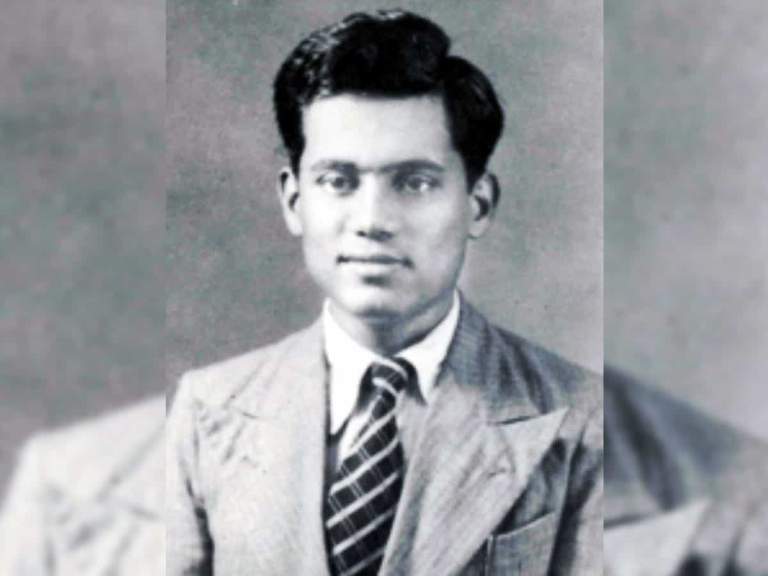
Chandra Shekhar Azad, born Chandra Shekhar Tiwari, was a fearless revolutionary in India’s freedom struggle. He adopted the name “Azad” (meaning “free”) to signal his vow never to be captured alive. At a very young age, he dedicated himself to fighting British colonial rule with unwavering courage and sacrifice. He reorganised revolutionary groups, led daring missions, and inspired generations with his ideal of absolute freedom and self-sacrifice.

Chandra Shekhar Azad History
Chandra Shekhar Azad was born on 23 July 1906 in Bhabhra village (now Chandra Shekhar Azad Nagar) in Madhya Pradesh. His father was Sitaram Tiwari, and his mother, Jagrani Devi, played a significant role in shaping his patriotic ideals. From his childhood, Azad was deeply influenced by the sacrifices of early revolutionaries and freedom fighters.
He first gained national attention during the Non-Cooperation Movement in 1921, led by Mahatma Gandhi. Arrested at a young age for participating in protests, he fearlessly declared his name as “Azad,” his father’s name as “Swatantrata,” and his residence as “Jail.” This bold act symbolized his lifelong commitment to India’s freedom.
After the suspension of the Non-Cooperation Movement in 1922, many young nationalists turned toward more radical methods, and Azad became a central figure among them. His association with Ram Prasad Bismil, Ashfaqulla Khan, and Bhagat Singh later placed him at the forefront of India’s revolutionary movement.
Chandra Shekhar Azad Birth Anniversary
Every year on 23rd July, India commemorates the birth anniversary of Chandra Shekhar Azad, one of the most fearless revolutionaries in India’s struggle for independence. His birth anniversary is not just a day of remembrance but also a tribute to his undying patriotism and courage.
The day is observed across the country, especially in Madhya Pradesh and Uttar Pradesh, where numerous events, rallies, and cultural programs are organized. Educational institutions, social organizations, and government bodies pay homage to Azad by organizing debates, patriotic songs, and exhibitions that highlight his life and sacrifices.
At his birthplace, Chandra Shekhar Azad Nagar (formerly Bhabhra), and at Alfred Park (now Chandra Shekhar Azad Park) in Prayagraj (Allahabad) — the place where he attained martyrdom — thousands of admirers gather annually to offer their respects. Statues and memorials of Azad are garlanded, and his principles of bravery, sacrifice, and nationalism are recalled with reverence.
This day serves as a reminder of Azad’s immortal spirit and his declaration that he would “live free and die free.” It encourages the younger generation to uphold the values of self-respect, independence, and love for the nation that Azad embodied throughout his life.
Chandra Shekhar Azad Biography
| Full Name | Chandra Shekhar Tiwari |
|---|---|
| Popular Name | Chandra Shekhar Azad |
| Date of Birth | 23 July 1906 |
| Place of Birth | Bhavra, Alirajpur District, Madhya Pradesh (then Central India Agency) |
| Parents | Father: Sitaram Tiwari, Mother: Jagrani Devi |
| Education | Studied at local school in Bhavra and later in Sanskrit Pathshala, Varanasi |
| Famous For | Revolutionary leader and freedom fighter in India’s independence movement |
| Organizations Associated With | Hindustan Republican Association (HRA), later Hindustan Socialist Republican Association (HSRA) |
| Notable Movements | Non-Cooperation Movement, Kakori Conspiracy, HSRA Activities |
| Death | 27 February 1931 |
| Place of Death | Alfred Park (now Chandra Shekhar Azad Park), Allahabad, Uttar Pradesh |
| Motto | “I will never be caught alive by the British.” |
| Legacy | Remembered as one of the most fearless revolutionaries who inspired generations of Indians to fight for freedom. |
Chandra Shekhar Azad’s Contribution to Freedom Struggle
Chandra Shekhar Azad played a defining role in shaping India’s revolutionary movement during the early 20th century. From a young age, his life was dedicated to freeing India from British colonial rule through courage, discipline, and unshakable patriotism.
Non-Cooperation Movement
Azad’s journey into India’s independence struggle began with the Non-Cooperation Movement launched by Mahatma Gandhi in 1920. At the tender age of just 15, Azad actively participated in protests and demonstrations against British policies. When he was arrested for his involvement, he declared his name as “Azad” (meaning “Free”), his father’s name as “Swatantrata” (Freedom), and his residence as “Jail.” From that day, he became known as Chandra Shekhar Azad, symbolizing his lifelong vow to never surrender to British authorities.
Although the Non-Cooperation Movement was later suspended, Azad’s spirit remained unbroken. The movement awakened in him a deep realization that complete independence could not be achieved through non-violence alone. He began seeking more assertive methods to challenge British power and joined hands with other revolutionaries to continue the fight.
Hindustan Republican Association (HRA)
After the suspension of Gandhi’s movement, Azad met prominent revolutionaries like Ram Prasad Bismil, Jogesh Chandra Chatterjee, and Sachindra Nath Sanyal, and joined the Hindustan Republican Association (HRA) in 1924. The HRA aimed to end British rule through armed struggle and establish a federal republic of India.
Azad soon became one of the most active members of the HRA. His leadership qualities, discipline, and courage earned him respect among fellow revolutionaries. He took part in several missions, including fundraising through strategic robberies of government treasuries, which were used to finance revolutionary activities.
Kakori Conspiracy
The Kakori Conspiracy remains one of the most remarkable and daring acts in India’s revolutionary history, marking a turning point in the struggle for independence. On August 9, 1925, members of the Hindustan Republican Association (HRA), including Ram Prasad Bismil, Ashfaqulla Khan, Rajendra Lahiri, Roshan Singh, and Chandra Shekhar Azad, executed a well-planned train robbery near the small town of Kakori, close to Lucknow in Uttar Pradesh.
The plan was to seize government funds from the British train carrying money collected from Indian taxpayers. The objective behind this act was not personal gain but to fund revolutionary activities and demonstrate the determination of Indian youth to defy British authority. Azad played a key role in both planning and executing the mission, ensuring precise coordination and leadership.
Although the operation was successful, the British authorities soon launched an extensive investigation, leading to the arrest of several revolutionaries. However, Chandra Shekhar Azad managed to escape and continued his revolutionary mission underground. The trial that followed — known as the Kakori Conspiracy Case — resulted in the execution of key leaders like Ram Prasad Bismil, Ashfaqulla Khan, Rajendra Lahiri, and Roshan Singh in 1927.
This incident deeply affected Azad, but rather than discouraging him, it strengthened his resolve to continue the fight for India’s liberation. He took up the responsibility of reorganizing the HRA to keep the revolutionary spirit alive and ensure that his comrades’ sacrifices were not in vain.
Hindustan Socialist Republican Association
After the loss of his comrades in the Kakori Conspiracy case, Chandra Shekhar Azad took on the responsibility of rebuilding and strengthening the revolutionary movement in India. In 1928, under his leadership, the Hindustan Republican Association (HRA) was reorganized and renamed the Hindustan Socialist Republican Association (HSRA).
The new organization reflected a broader vision — it was no longer just about ending British rule, but also about establishing a socialist and egalitarian India where every citizen would enjoy justice, equality, and dignity. The word “Socialist” was included to emphasize the revolutionary goal of eliminating social inequality and oppression in post-independent India.
Azad, along with other prominent revolutionaries like Bhagat Singh, Sukhdev Thapar, Rajguru, and Chandrashekhar Azad himself, became the backbone of the HSRA. He played a crucial role in training new recruits, planning strategies, and organizing underground operations. His leadership style was characterized by strict discipline, secrecy, and devotion to the cause of freedom.
He was also known for his brilliant use of guerrilla tactics and his ability to evade the British police for years despite being one of the most wanted revolutionaries in India. Under Azad’s guidance, the HSRA became a symbol of fearless resistance and inspired a generation of young Indians to take up the cause of independence.
Chandra Shekhar Azad’s deep influence on Bhagat Singh and his associates further strengthened the revolutionary movement. The ideals of freedom, socialism, and sacrifice became the core values of the HSRA, ensuring that the spirit of resistance continued to grow even in the face of severe British repression.
HSRA and Assassination of Saunders
The assassination of J.P. Saunders in 1928 was one of the most dramatic and significant events in the history of India’s revolutionary movement. It was carried out by members of the Hindustan Socialist Republican Association (HSRA) under the leadership and strategic guidance of Chandra Shekhar Azad.
This incident took place as a revenge act for the death of Lala Lajpat Rai, a respected nationalist leader who was brutally injured during a peaceful protest against the Simon Commission in Lahore. Lala Lajpat Rai succumbed to his injuries, which infuriated the entire nation. Determined to avenge his death, the HSRA planned to target James A. Scott, the British police officer responsible for ordering the lathi charge that led to Rai’s death.
However, due to mistaken identity, Assistant Superintendent J.P. Saunders was shot dead on December 17, 1928, by Bhagat Singh and Rajguru, while Chandra Shekhar Azad provided armed cover to ensure their safe escape. Azad’s courage, precision, and ability to manage the operation under immense pressure played a decisive role in its success.
After the incident, the British government intensified its crackdown on revolutionaries. Azad and his associates went underground, moving across cities like Jhansi, Delhi, Allahabad, and Agra while continuing to organize the HSRA’s activities.
Despite being hunted relentlessly by the police, Azad remained untraceable for several years, earning immense respect as a master of disguise and strategy. His leadership ensured that the revolutionary flame continued to burn, even when faced with constant danger.
The Saunders assassination became a symbol of India’s growing revolutionary defiance and inspired countless young Indians to join the struggle for independence. It marked the transformation of India’s freedom movement into a more radical and action-oriented phase, in which Azad emerged as one of the most heroic and admired figures.
Legacy of Chandra Shekhar Azad
Chandra Shekhar Azad’s life continues to inspire generations as a symbol of courage, sacrifice, and unwavering patriotism. His contributions to India’s freedom struggle were not limited to armed resistance; they also included the ideals of unity, discipline, and selfless service for the nation.
Azad’s commitment to freedom was absolute — he took a solemn vow never to be captured alive by the British and lived by it until his last breath. This pledge became a powerful testament to his dedication and an enduring symbol of self-sacrifice in the fight for independence.
His leadership transformed the Hindustan Socialist Republican Association (HSRA) into one of the most effective revolutionary organizations of its time, inspiring many young Indians to join the cause. Azad’s ability to strategize and train new revolutionaries ensured that the spirit of resistance remained alive despite severe repression by the British.
Today, Chandra Shekhar Azad is remembered not only for his acts of bravery but also for his moral courage. He is honored through numerous memorials, statues, and institutions named after him, including the Chandra Shekhar Azad Park in Allahabad and various educational establishments across India.
His life remains a beacon for youth, embodying the belief that freedom is worth every sacrifice. Azad’s legacy is a lasting reminder that true patriotism involves courage, unity, and the willingness to fight for justice without fear.
Conclusion
Chandra Shekhar Azad remains one of the most revered figures in India’s struggle for independence. His fearless leadership, unwavering commitment to freedom, and readiness to sacrifice his life for the nation have made him an eternal symbol of patriotism.
From his early involvement in the Non-Cooperation Movement to his leadership in the Hindustan Socialist Republican Association, Azad exemplified the spirit of resistance against colonial rule. His role in significant events like the Kakori Conspiracy and the assassination of Saunders showcased his strategic brilliance and unshakable resolve.
Azad’s life teaches us that true freedom demands courage, discipline, and unity. His motto of never being captured alive reflected his dedication to India’s independence and inspired countless revolutionaries to join the movement.
Even decades after his martyrdom, Chandra Shekhar Azad’s ideals continue to inspire young Indians to stand up for justice, equality, and liberty. His legacy remains a guiding light for those who believe that the struggle for freedom is both a duty and an honor.
Must-Read Related Articles:
MS Swaminathan Biography: Remarkable Father of India’s Green Revolution
Acharya Vinoba Bhave Biography: Inspiring Life, Bhoodan Movement & Lasting Legacy
Inspiring Sir CV Raman Biography: Nobel Laureate in Physics for the Revolutionary Raman Effect
Narendra Modi Biography – Age, Education, Achievements & Political Career
Chandra Shekhar Azad FAQs
Who was Chandra Shekhar Azad?
Chandra Shekhar Azad was a prominent Indian revolutionary leader who fought against British colonial rule and became a symbol of courage and sacrifice.
Why did Chandra Shekhar Tiwari change his name to Azad?
He adopted the name “Azad,” meaning “free,” to declare his vow never to be captured alive by the British.
When and where was Chandra Shekhar Azad born?
He was born on 23 July 1906 in Bhavra village, Alirajpur District, Madhya Pradesh, India.
What was Chandra Shekhar Azad’s role in the Kakori Conspiracy?
Azad was a key planner and leader in the Kakori Conspiracy of 1925, which aimed to seize government funds to support revolutionary activities.
Which organization did Chandra Shekhar Azad lead?
He was a prominent leader of the Hindustan Republican Association (HRA) and later the Hindustan Socialist Republican Association (HSRA).
What was the purpose of the HSRA?
The HSRA aimed to overthrow British rule through armed struggle and establish a socialist republic in India.
What was Chandra Shekhar Azad’s famous motto?
His famous motto was, “I will never be captured alive by the British.”
When and how did Chandra Shekhar Azad die?
Azad died on 27 February 1931 in Alfred Park (now Chandra Shekhar Azad Park), Allahabad, during a gunfight with the British police.
Why is Chandra Shekhar Azad remembered as a hero?
He is remembered for his bravery, leadership, self-sacrifice, and his unwavering commitment to India’s independence.
How is Chandra Shekhar Azad honored today?
His legacy is preserved through memorials, statues, parks, and institutions named after him, inspiring future generations to fight for justice and freedom.