

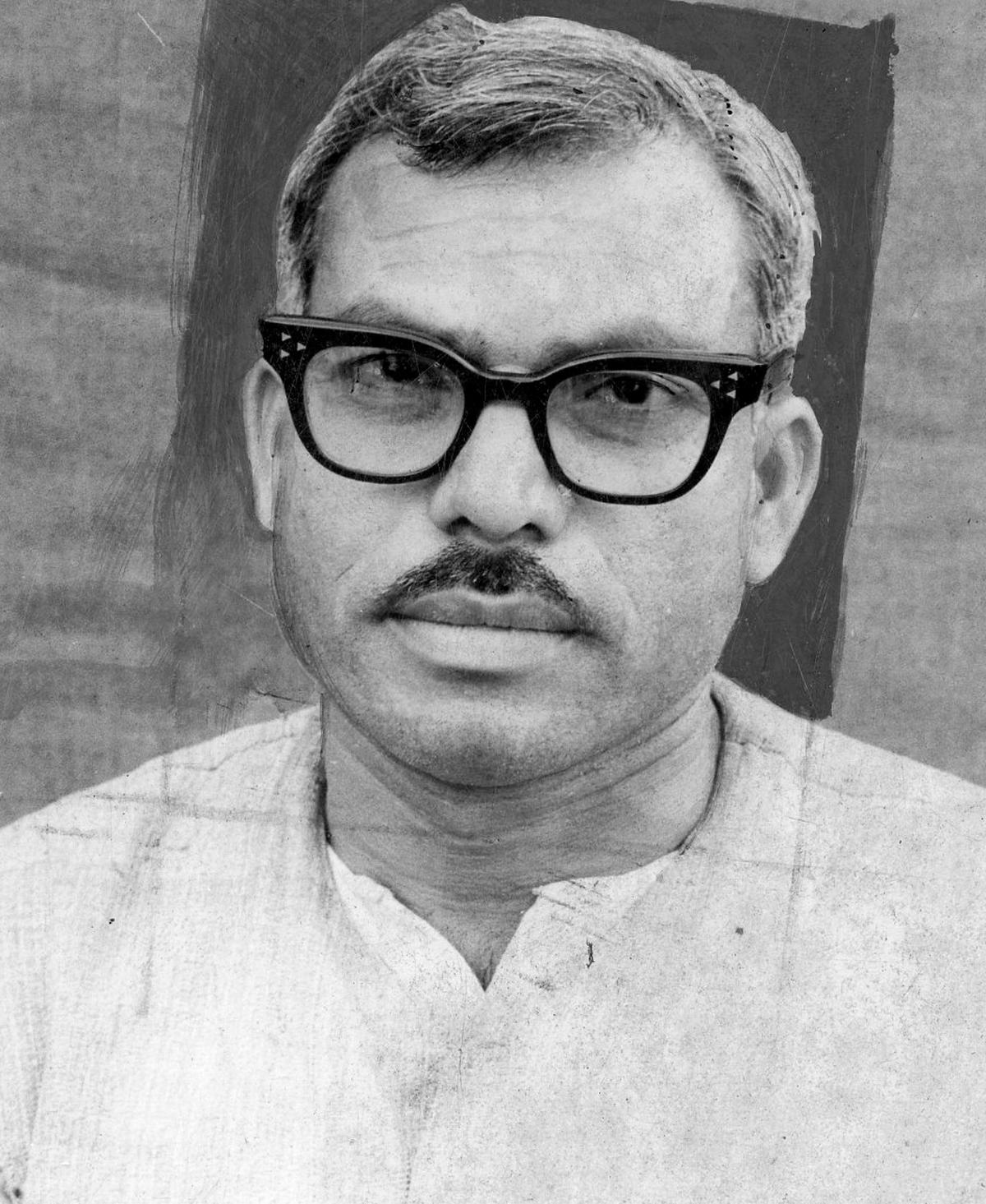
Karpoori Thakur: A People’s Leader Who Reformed Bihar

Karpoori Thakur was an Indian politician and social reformer who is widely regarded as a champion of the marginalised and backward classes. Coming from a humble background, he rose to become Chief Minister of Bihar state not once, but twice. His life and work symbolise a persistent struggle for social justice, equality, and upliftment of the oppressed. Through land reforms, educational changes, quotas for backward sections, and moral‑social measures like alcohol prohibition, he sought to build a more equitable society.
Early Life and Background
- Karpoori Thakur was born on 24 January 1924 in a village called Pitaunjhia in Samastipur district of Bihar.
- His family belonged to the Nai community (barber caste), one of the most underprivileged and socially marginalised communities.
- Growing up in a disadvantaged social background, young Karpoori witnessed the pervasive inequalities and caste discrimination that existed in rural Bihar. These early experiences shaped his lifelong commitment to social justice and upliftment of the poor and backward classes.
During his schooling days, he was drawn to nationalist and socialist ideals. He joined the All India Students Federation (AISF), the oldest student organisation in India, which had strong roots in anti-colonial and progressive politics.

When the call for independence grew stronger, Karpoori gave up his college education to join the freedom struggle a decision that reflects his conviction and sacrifice.
Participation in Freedom Struggle
- During the turmoil of the freedom movement, Karpoori actively participated in the Quit India Movement (1942), answering the call of national leaders and sacrificing his education.
- For his participation, he endured about 26 months in prison, undergoing hardship for the cause of India’s independence.
This phase of his life forged his ideological grounding a deep belief in equality, social justice, and the need to uplift marginalised communities. It also connected him with socialist leaders and ideals that would define his future career.
Entry into Politics and Early Political Journey
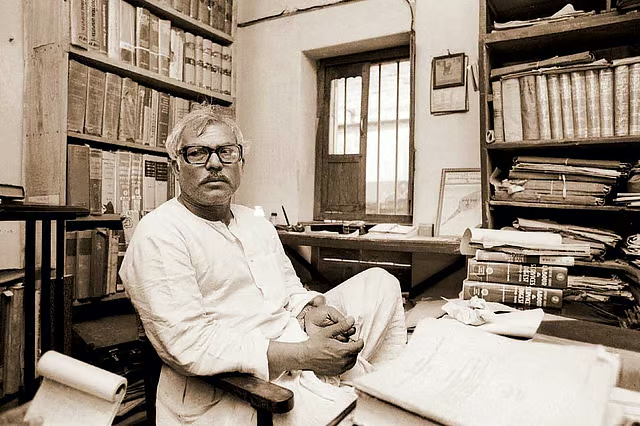
- After India gained independence in 1947, Karpoori Thakur briefly worked as a teacher in his village.
- In 1952, he entered active electoral politics and won election to the Bihar Legislative Assembly from Tajpur constituency as a candidate of the socialist movement.
- Over time, he aligned with various socialist parties, prioritising social justice, labour rights, and upliftment of backward classes rather than elite or upper-caste interests.
He also engaged in labour and trade union movements for example, in 1970, he undertook a 28-day fast unto death to support the cause of Telco labourers, demonstrating his social activism even before becoming chief minister.
Chief Minister of Bihar: First Term (1970–1971)
- Karpoori Thakur first became Chief Minister of Bihar in December 1970, becoming the first non‑Congress, non‑upper‑caste socialist leader to hold that post.
- During this brief tenure, he implemented visionary decisions: most notably, he imposed a total prohibition on alcohol in Bihar a bold social reform aimed at curbing addiction and its social harms.
- This move resonated with the poor and marginalized, who often bore the brunt of alcoholism, domestic violence, and economic exploitation associated with it. The prohibition also symbolized moral governance and concern for common people rather than elite interest.
Though his first term was short (about seven months), it set the tone for the kind of politics he stood for social justice, pro-poor reforms, and a focus on morality and equality over elitism.
Social Justice, Education & Reservation — The Landmark Reforms
Perhaps the most lasting aspect of Karpoori Thakur’s legacy is his commitment to social justice for backward classes, dalits and the underprivileged.
Implementation of Backward Class Reservations
- During his second term as Chief Minister (1977–1979), he implemented the recommendations of the Mungeri Lal Commission. This was a pioneering move in Bihar’s politics.
- Through those recommendations in 1978, a 26% reservation quota was introduced for backward classes and deprived sections in state government jobs and education. The quota had layers including categories for “Other Backward Classes (OBC)”, “Most Backward Classes (MBC)”, women, and economically backward sections among upper castes.
- This policy ensured that many from historically deprived castes and classes who had little or no access to government jobs or higher education got opportunities and representation. It laid a foundation for what later evolved into broader caste-based reservation policies nationwide.
Focus on Education and Upliftment
- Karpoori Thakur believed that social justice must come through equal opportunities in education. He worked to establish many schools and colleges, particularly in backward and underdeveloped regions of Bihar, to make education accessible to those who had been historically excluded.
- Removing barriers like economic inequality, social discrimination, and caste bias from education and employment was central to his vision of a casteless and just society. Through his reforms, many from backward sections started aspiring for and achieving upward mobility.
Moral-Social Reforms
- As already noted, alcohol prohibition was a flagship policy of his first tenure as CM (and upheld later). The ban on alcohol was not just a law it was a social statement aimed at protecting poor families from addiction-related social ills.
- His policies reflected not only political ambition but a moral vision: to build a society where dignity, equality, and justice are not mere slogans but lived reality. He came to be known popularly as “Jan Nayak” People’s Leader.
Chief Minister: Second Term (1977–1979) — Politics, Challenges & Legacy
- In the elections of 1977, after the Emergency period, the newly formed Janata Party a coalition of socialists, Lok Dal, Congress (O), and others won convincingly. Karpoori Thakur was chosen to be Chief Minister of Bihar for the second time.
- As CM, he strongly pushed the Mungeri Lal Commission’s recommendations, enforcing reservations, representing oppressed castes, and attempting to bring structural reforms in society.
However, his path was not easy. His progressive policies esp. reservation for backward classes triggered resistance from upper-caste leaders and conservative factions, even within his own party coalition.
Due to internal pressure and attempts to dilute his reservation policy, political infighting mounted. Eventually he had to resign in 1979, and was replaced by another leader from within the coalition.
Despite the political setback, the reforms he initiated left an enduring impact: backward classes got representation, educational and social mobility improved, and the politics of social justice got stronger roots in Bihar.
Ideology & Vision
Karpoori Thakur’s political philosophy was shaped by socialist ideals, deeply influenced by leaders who sought to eliminate caste- and class-based inequalities. He believed that real freedom and democracy meant not just political independence from colonial rule but social and economic emancipation for the marginalized.
He envisioned a society where caste, birth, or background would not determine a person’s opportunities. He fought for land reforms, educational access, jobs, reservations and moral-social reforms like prohibition seeing them as essential to building dignity and equality for all.
He was not a politician chasing power rather, a leader committed to the welfare of the oppressed, often making unpopular decisions for larger social good. That is why the title “Jan Nayak” People’s Leader suits him best.
Posthumous Recognition — Why Karpoori Thakur Matters Today
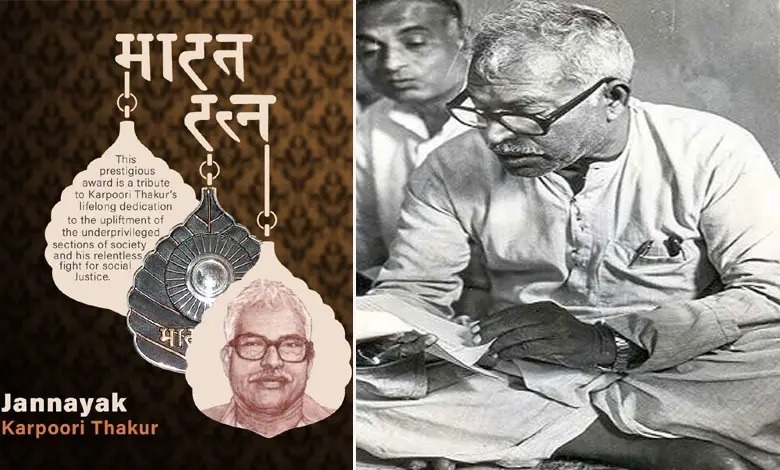
- On 26 January 2024, the Government of India announced that Karpoori Thakur would be posthumously awarded the country’s highest civilian honour, Bharat Ratna.
- This recognition reflects a renewed acknowledgement of his lifelong service to democracy, social justice, and upliftment of backward and deprived classes.
- For Bihar (and India), it is a reminder that socio-economic inequality cannot be addressed merely by rhetoric structural reforms, moral vision, and commitment to the marginalized are essential. Karpoori Thakur’s life stands as testament to that.
His reforms also provide historical context to modern debates around caste backward class politics, reservations, social justice especially as India grapples with inequality, representation, and inclusive development.
Relevance for UPSC & Civil Services Aspirants
For aspirants of competitive exams like UPSC, and for those aiming to understand India’s social and political evolution, Karpoori Thakur’s life offers several lessons and insights:
- Understanding Social Justice in Post‑Independence India
- His reforms reservation for backward classes, educational expansion, prohibition represent early and bold attempts to implement social justice and affirmative action at state level.
- In the broader context, they complement national-level measures (like the later Mandal Commission) and reflect the grassroots dimension of social justice politics.
- Policy Implementation & Challenges
- His efforts illustrate the challenges of translating social justice vision into policy against resistance. The internal party opposition he faced shows how caste and class interests can overshadow progressive goals.
- For civil service and public administration answer-writing, his tenure offers case-study material on implementation of welfare policies, administrative challenges, and social reform.
- Moral Leadership and Governance Ethics
- Karpoori Thakur’s moral-social reforms (like prohibition), egalitarian approach, dedication to common people, and personal integrity contrast with opportunistic or elite-driven politics.
- For essays, ethics, and GS papers, his life underscores the role of values, integrity, and pro-people motivations in governance.
- Representation & Inclusion in Democracy
- His rise from a marginalised caste to Chief Minister, and his pushing for OBC/MBC quotas, reflect the possibilities of inclusive democracy.
- Aspirants can refer to him while discussing representation, social inclusion, caste dynamics, and how democracy can be made more equitable.
- Historical Continuity of Social Justice Movements
- Karpoori Thakur’s era forms a link between independence‑era egalitarian ideals and later social justice movements (e.g. Mandal politics).
- Understanding this continuum helps in framing India’s socio-political history useful for history, polity, and society topics in UPSC.
In short, Karpoori Thakur’s life and legacy are not mere history they are living lessons for anyone studying or working for India’s social transformation, justice, and equality.
Criticism, Controversies and Challenges
No social reformer’s journey is without criticism and challenges and Karpoori Thakur’s story also had its share:
- Some critics argued that his decision as Education Minister (before becoming CM) to remove English as a compulsory subject from the matriculation syllabus lowered the standards of English-medium education in Bihar.
- His bold measures especially reservation and social reforms stirred backlash from upper-caste and elite sections; caste and class tensions surfaced strongly during his tenure.
- Politically, these reforms contributed to factionalism within his own party coalition, ultimately leading to his resignation in 1979.
Nevertheless, many historians, social scientists, and subsequent generations view these criticisms as symptomatic of structural resistance to social justice underscoring the difficulty of reform in a historically inequitable society.
Legacy and Continuing Relevance
The legacy of Karpoori Thakur lives on in many ways:
- The village of his birth, Pitaunjhia, has been renamed “Karpuri Gram” in his honour.
- Many institutions schools, colleges, and public establishments in Bihar carry his name, especially in underdeveloped regions, symbolising his commitment to education and upliftment.
- His policies laid the groundwork for later caste‑based political mobilizations and affirmative‑action frameworks. The idea of separate categories within backward classes (OBC, MBC, economically backward among upper castes) first introduced through the Mungeri Lal Commission under his leadership later influenced national level debates and policies.
- Politically and socially, he remains an icon of socially conscious leadership: a proof that a person from marginalised background, with conviction and will, can challenge entrenched social hierarchies and bring change.
Awarding him Bharat Ratna in 2024 was not just a symbolic gesture it reaffirmed his place in India’s socio-political history, and recognised the value of social justice, equality, and upliftment of the downtrodden as central to India’s democratic identity.
Related Articles:
Infosys Narayana Murthy, Biography, Career and Philanthropy
Major Dhyan Chand Biography, Birth Anniversary, Achievements
Homi Jehangir Bhabha – A Comprehensive Biography of India’s Father of Nuclear Science
Conclusion
Karpoori Thakur was more than a political leader he was a social reformer, a voice for the voiceless, a believer in justice and equality. Rising from a marginalised background, he dedicated his life to ensuring that backward classes, dalits, the poor, and the oppressed got dignity, representation and opportunity.
His life shows us that social justice is not given it must be fought for. It requires courage, conviction, and willingness to challenge entrenched privilege. His policies, especially around reservation and education, had their share of criticism yet, they opened the doors of opportunity for thousands who had been denied access for centuries.
For anyone studying India its politics, society, history or governance Karpoori Thakur’s journey offers important lessons. For aspiring civil servants or students preparing for exams like UPSC, his life provides rich material for understanding social justice, policy-making, and inclusive governance.
Above all, Karpoori Thakur’s story remains relevant even today in a country wrestling with social inequality, caste divisions, and demands for justice. As India moves forward, studying and remembering leaders like him can help guide policies, shape inclusive societies, and keep alive the spirit of equality, dignity, and social reform.
FAQs on Karpoori Thakur
1. Who was Karpoori Thakur?
Karpoori Thakur was a popular Indian politician from Bihar, also known as “Jan Nayak.” He was known for his work for backward classes, the poor, and the socially weaker groups.
2. Why is Karpoori Thakur called Jan Nayak?
He was called Jan Nayak (People’s Leader) because he always worked for equality, social justice, and upliftment of poor communities. His decisions were focused on helping common people.
3. What was Karpoori Thakur’s biggest contribution?
His biggest contribution was introducing the reservation policy for OBCs in Bihar, which later inspired the Mandal Commission at the national level.
4. What positions did Karpoori Thakur hold?
He served as the Chief Minister of Bihar twice. Before that, he was also a teacher, freedom fighter, and social worker.
5. What was his role in the freedom struggle?
Karpoori Thakur participated in the Quit India Movement in 1942 and went to jail for almost two years.
6. When was Karpoori Thakur born?
He was born on 24 January 1924 in Samastipur district of Bihar.
7. When did Karpoori Thakur pass away?
He passed away on 17 February 1988.
8. Why is Karpoori Thakur important for UPSC exams?
He is important because he is linked to topics like reservation policy, Indian politics, social reform movements, and Bihar’s political history. His policies are often asked in UPSC Polity and Modern History.
9. What was Karpoori Thakur’s education background?
He studied at Patna College, but later left his studies to join the freedom movement.
10. Did Karpoori Thakur belong to a backward class?
Yes, he belonged to the Nai (barber) caste, which comes under the OBC category in Bihar.