


Netaji Subhas Chandra Bose: Inspiring Biography, Achievements & Contributions

Netaji Subhas Chandra Bose
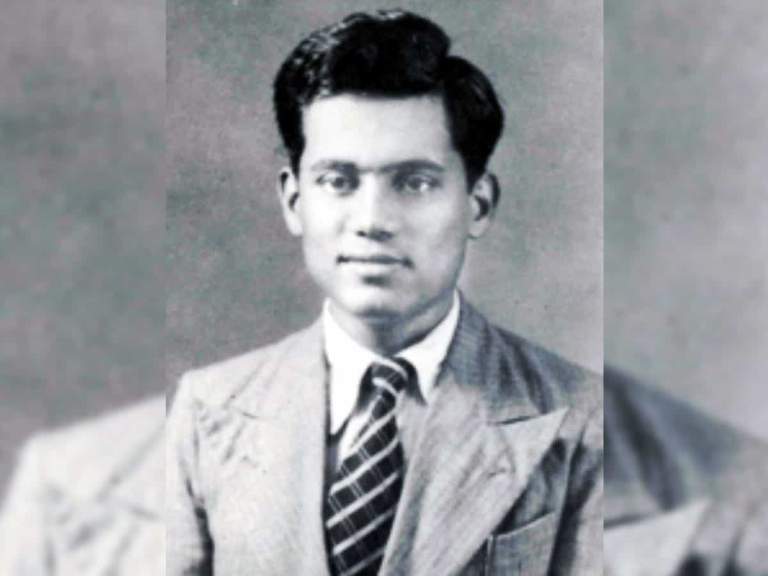
Netaji Subhas Chandra Bose (1897–1945) was a prominent Indian nationalist and a central figure in the Indian independence movement. Known for his unwavering commitment to India’s freedom, Bose’s legacy continues to inspire generations.
Born on January 23, 1897, in Cuttack, Odisha, Bose was a brilliant student with a deep sense of patriotism. He joined the Indian Civil Services (ICS) in 1920 but resigned in 1921 to dedicate himself fully to the struggle for India’s independence.

Bose’s leadership was marked by his bold and dynamic approach. He believed in the use of force to achieve independence and was determined to free India from British colonial rule. His famous slogan, “Give me blood, and I shall give you freedom”, galvanized many to join the cause.
In 1943, Bose formed the Indian National Army (INA), also known as the Azad Hind Fauj, with the aim of overthrowing British rule through armed struggle. His efforts were instrumental in bringing the cause of Indian independence to the global stage.
Despite facing numerous challenges and controversies, Netaji Subhas Chandra Bose remains a symbol of courage, determination, and patriotism. His contributions to India’s freedom struggle are invaluable, and his legacy continues to be honored and remembered across the nation.
Netaji Subhas Chandra Bose
Netaji Subhas Chandra Bose (1897–1945) was a prominent Indian nationalist and a key leader in India’s struggle for independence. Known for his fearless approach and dedication to the nation, he inspired millions with his vision of a free India.
Born on January 23, 1897, in Cuttack, Odisha, Bose was an exceptional student with strong patriotic values. After joining the Indian Civil Services (ICS) in 1920, he resigned in 1921 to devote himself entirely to the independence movement.
Bose believed in direct action and armed struggle against British colonial rule, famously declaring, “Give me blood, and I shall give you freedom.” In 1943, he established the Indian National Army (INA), also known as the Azad Hind Fauj, to fight for India’s liberation.
His courage, determination, and leadership made him a symbol of nationalism and resistance, and his legacy continues to inspire generations across India.
Netaji Subhas Chandra Bose Birth Anniversary
Netaji Subhas Chandra Bose’s birth anniversary is celebrated every year on January 23 to honor his contributions to India’s freedom struggle. The day is observed across the country with tributes, events, and educational programs highlighting his life and achievements.
| Event | Date | Significance |
|---|---|---|
| Birth of Subhas Chandra Bose | January 23, 1897 | Commemorates the birth of one of India’s greatest freedom fighters |
| Annual Celebrations | January 23 (Every Year) | Tributes, parades, seminars, and cultural events across India |
| National Recognition | January 23 | Honoring his leadership, INA, and contribution to independence |
| School and College Programs | January 23 | Special assemblies, essay competitions, and lectures on his life |
| INA Remembrance | January 23 | Homage to Bose’s Indian National Army and its role in India’s freedom struggle |
These observances serve to inspire patriotism among citizens and educate younger generations about Bose’s courage, vision, and sacrifices for India’s independence.
Subhas Chandra Bose Early Life and Family
Subhas Chandra Bose was born on January 23, 1897, in Cuttack, Odisha, into a well-educated and affluent Bengali family. His father, Janakinath Bose, was a successful lawyer, and his mother, Prabhavati Devi, was a deeply religious and disciplined woman who instilled strong moral values in her children.
Bose was the ninth child in the family and grew up in an environment that emphasized education, discipline, and patriotism. From a young age, he exhibited intelligence, leadership qualities, and a strong sense of justice.
He completed his early education in Cuttack and later moved to Presidency College, Calcutta, where he graduated with a degree in Philosophy. During his formative years, he was deeply influenced by the nationalist ideals circulating in Bengal and developed a strong desire to dedicate his life to India’s independence.
Bose’s family environment, combined with his early exposure to nationalist ideas, shaped his character and laid the foundation for his unwavering commitment to India’s freedom struggle.
Subhas Chandra Bose Ideology
Subhas Chandra Bose’s ideology was shaped by nationalism, self-reliance, and militant struggle. Unlike leaders who emphasized constitutional methods or gradual reforms, Bose believed that India’s independence could only be achieved through direct action and sacrifice.
Key Aspects of His Ideology:
- Nationalism First: For Bose, the liberation of India was above all else. He prioritized national interest over personal or political differences.
- Militant Struggle: He strongly believed that British colonial rule would not end through negotiations alone. Armed resistance and organized force, in his view, were necessary for freedom.
- Social and Economic Justice: Bose advocated for a strong, self-reliant India built on principles of equality, industrial development, and modernization. He supported the idea of socialism as a means to uplift the masses.
- Leadership and Unity: He envisioned a disciplined, united front where Indians, regardless of caste, creed, or gender, could contribute to the freedom movement.
- Global Inspiration: Bose drew inspiration from leaders such as Giuseppe Garibaldi and movements worldwide, which reinforced his belief in revolutionary action.
His ideology reflected a blend of nationalism and socialism, aiming not just for political freedom but also for building a strong, modern, and just Indian nation.
Netaji Subhas Chandra Bose History
Subhas Chandra Bose’s journey in India’s independence movement reflects his unwavering determination and dynamic leadership. His political career began in the Indian National Congress (INC), where he quickly rose as a strong voice advocating radical measures for achieving freedom.
In the 1920s and 1930s, Bose became a youth leader and organizer, inspiring young Indians to actively participate in the nationalist struggle. His speeches and writings emphasized discipline, sacrifice, and armed resistance, distinguishing him from moderate leaders of the time.
He was elected as the President of the Indian National Congress in 1938 (Haripura Session) and again in 1939 (Tripuri Session). However, ideological differences with Mahatma Gandhi and other Congress leaders over strategies for independence led him to resign.
After leaving Congress, Bose established the Forward Bloc in 1939, aiming to consolidate anti-British forces and unite Indians under a more militant and uncompromising banner. His political trajectory showcased his fearlessness, independent vision, and readiness to take bold risks.
Through these developments, Netaji emerged not just as a nationalist leader but as a revolutionary icon, determined to achieve complete independence for India at any cost.
Subhas Chandra Bose And Indian National Congress
Subhas Chandra Bose’s association with the Indian National Congress (INC) played a crucial role in shaping his political career. He initially joined the Congress in the early 1920s, inspired by the nationalist fervor sweeping across the country. His organizational skills, charisma, and strong nationalist views soon made him a popular leader within the party.
In 1938, Bose was elected as the President of the Haripura Session of the INC. During his presidency, he laid out a clear vision of a self-reliant and industrialized India, emphasizing the need for planning, modern infrastructure, and socialist principles. His ideas were progressive and appealed especially to the younger generation.
In 1939, Bose was re-elected as Congress President at the Tripuri Session, defeating Pattabhi Sitaramayya, Gandhi’s preferred candidate. This victory highlighted his growing influence but also deepened ideological rifts within the party. Bose advocated for immediate and aggressive action against British rule, while Gandhi and his supporters preferred non-violent methods and gradual reforms.
The differences became irreconcilable, leading to Bose’s resignation from the presidency. Soon after, he founded the Forward Bloc, aiming to unite left-wing sections within the Congress and create a stronger revolutionary front.
This phase marked a turning point in Bose’s political journey, as he shifted from the mainstream Congress movement to independent leadership, which eventually led to his role in organizing the Indian National Army (INA).
Subhas Chandra Bose Escape from India
One of the most daring episodes in India’s freedom struggle was Subhas Chandra Bose’s escape from British surveillance in 1941. By this time, Bose was under strict house arrest in Calcutta due to his increasing influence and revolutionary activities.
Disguised as a Pathan named Mohammed Ziauddin, he evaded British intelligence and secretly left his family home on January 16, 1941. With the help of supporters, he traveled through different regions of India before crossing into Afghanistan. From there, he managed to reach the Soviet Union via Kabul, and later made his way to Germany to seek international support for India’s independence.
Bose’s escape was a masterstroke of planning, courage, and secrecy, shocking the British authorities who had been closely monitoring him. His journey demonstrated his unwavering determination to gather external assistance and build a global alliance against British rule.
This bold move not only freed him from British restrictions but also paved the way for his international campaigns, including the eventual formation of the Azad Hind Fauj (Indian National Army).
Azad Hind Fauj or Indian National Army (INA)
The Indian National Army (INA), also known as the Azad Hind Fauj, was a revolutionary military force established to fight against British rule with the support of Axis powers during World War II. Subhas Chandra Bose took charge of the INA in 1943 and transformed it into a formidable symbol of India’s struggle for independence.
Bose reorganized the INA with a clear vision of liberating India through armed struggle. His leadership infused a sense of patriotism, discipline, and sacrifice among the soldiers. The INA drew members from Indian prisoners of war captured by Japan and volunteers from the Indian diaspora in Southeast Asia.
The INA was not just a military force but also a political and emotional movement, inspiring Indians within and outside the country. Bose established the Provisional Government of Free India (Azad Hind Government) in Singapore in 1943, which was recognized by countries like Japan, Germany, and Italy.
With the battle cry of “Chalo Dilli” (March to Delhi), the INA launched military campaigns in northeastern India, demonstrating both determination and valor. Although militarily unsuccessful in the long run due to the defeat of Axis powers, the INA’s efforts left a deep impact on India’s freedom struggle, significantly weakening British confidence and inspiring nationalist fervor across the country.
General Mohan Singh’s Contribution
Before Subhas Chandra Bose took charge, the foundation of the Indian National Army (INA) was laid by General Mohan Singh. A former officer in the British Indian Army, Mohan Singh was captured by Japanese forces during World War II. Instead of remaining a prisoner, he chose to dedicate himself to the cause of India’s freedom.
With the support of the Japanese, Mohan Singh began recruiting Indian prisoners of war and laid the groundwork for the INA in 1942. His efforts were instrumental in giving shape to the initial vision of an armed force that would fight the British for India’s liberation.
Although he later faced differences with Japanese authorities and stepped aside from leadership, Mohan Singh’s pioneering role cannot be overlooked. His early efforts created the base upon which Subhas Chandra Bose later built a stronger and more organized INA.
Thus, General Mohan Singh’s contribution represents the first spark of transforming Indian soldiers into freedom fighters on foreign soil.
Subhas Chandra Bose’s Leadership
When Subhas Chandra Bose took charge of the Indian National Army (INA) in 1943, the movement gained a new energy and direction. Unlike its early uncertain phase, Bose provided a strong vision and turned the INA into a disciplined, motivated, and goal-driven force.
Bose arrived in Singapore and took command of the INA, renaming it the Azad Hind Fauj. Under his inspiring leadership, the INA became not just a military outfit but also a symbol of hope for millions of Indians under British rule. His famous slogan, “Give me blood, and I will give you freedom,” echoed across India, motivating countless people to join the struggle.
He also established the Provisional Government of Free India (Azad Hind Government), which gained recognition from countries like Japan, Germany, and Italy. This gave the Indian independence movement international visibility and legitimacy.
Bose reorganized the INA into different brigades and created specialized units, including the Rani Jhansi Regiment (a women’s regiment), showing his progressive outlook and belief in gender equality.
Through his leadership, the INA became a disciplined army with the clear goal of marching into India to overthrow British rule.
Provisional Administration Announcement
On 21 October 1943, Subhas Chandra Bose made a historic announcement in Singapore, proclaiming the formation of the Provisional Government of Free India (Azad Hind Government). This government was established with the objective of liberating India from British rule with the support of the Indian National Army (INA) and international allies.
The Provisional Government quickly gained diplomatic recognition from several Axis powers, including Japan, Germany, Italy, Croatia, Burma, and the Philippines, as well as other nations under Japanese influence. This recognition gave Bose’s movement a new level of global legitimacy.
Bose assumed the roles of Head of State, Prime Minister, and Minister of War and Foreign Affairs in this government. Under his leadership, the Azad Hind Government:
- Declared war against Britain and the United States.
- Established its own currency, postage stamps, and administrative structure.
- Received control over the Andaman and Nicobar Islands, which were renamed Shaheed (Martyr) and Swaraj (Self-rule) Islands.
This move transformed Bose from being just a revolutionary leader into the head of a recognized government-in-exile, strengthening the resolve of Indians fighting for independence.
Offensive in Northeastern India
With the support of Japan, the Indian National Army (INA) launched a major military campaign against British forces in Northeastern India during 1944. The operation aimed to liberate Indian territory and inspire a nationwide uprising against colonial rule.
Key highlights of this offensive:
- Imphal and Kohima Campaigns (March–July 1944): INA troops, alongside Japanese forces, advanced into Manipur and Nagaland. Their primary objective was to capture Imphal and Kohima, two strategic locations crucial for entering mainland India.
- Azad Hind Flag on Indian Soil: In April 1944, INA soldiers under Bose’s command hoisted the tricolor flag of free India at Moiraang in Manipur, marking a historic moment as Indian soil was symbolically reclaimed from British rule.
- Challenges Faced: Despite initial success, the INA suffered from severe shortages of food, medicine, and supplies, compounded by the heavy monsoon and lack of reinforcements.
- Outcome: The Imphal–Kohima battles turned into one of the bloodiest campaigns of World War II. The INA and Japanese forces were eventually forced to retreat, marking a significant setback in Bose’s military strategy.
Although the campaign did not achieve its ultimate objective, it demonstrated the determination of the INA and Bose’s leadership in taking the fight for independence directly into Indian territory. This event became a powerful inspiration for future generations.
Collaboration with Japan
Netaji Subhas Chandra Bose recognized the strategic importance of aligning with powers opposed to British colonial rule during World War II. His most significant collaboration was with Imperial Japan, which provided military, financial, and logistical support to the Indian National Army (INA).
Key aspects of Bose’s collaboration with Japan:
- Military Support: Japan supplied weapons, training, and equipment to INA soldiers, enabling them to organize into a professional fighting force.
- Territorial Access: The Japanese allowed Bose to establish bases in Southeast Asia, particularly in Singapore and Rangoon (Burma), which became strongholds of the Azad Hind movement.
- Recognition of Azad Hind Government: In October 1943, Japan officially recognized the Provisional Government of Free India, giving legitimacy to Bose’s leadership and his mission to liberate India.
- Joint Campaigns: The INA fought alongside Japanese troops in key battles, including the Imphal–Kohima campaigns and other operations across Burma and Northeastern India.
- Ideological Convergence: Both Bose and Japanese leaders shared the goal of dismantling European colonialism in Asia, though Bose maintained that India’s sovereignty and independence remained his ultimate priority.
This collaboration, though controversial, amplified the international dimension of India’s independence struggle and underscored Bose’s pragmatic approach to achieving freedom at any cost.
Contribution of Indian Women
Netaji Subhas Chandra Bose firmly believed in the power of women in nation-building and actively encouraged their participation in the freedom struggle. Under his leadership, the Indian National Army (INA) saw an unprecedented involvement of women in direct combat and organizational roles.
The most significant step was the formation of the Rani of Jhansi Regiment, led by Captain Lakshmi Sahgal. This was the first all-women combat regiment in modern Indian history, named after Rani Lakshmibai of Jhansi, a symbol of courage and resistance against British rule.
Key contributions of women in INA:
- Combat Role: Women soldiers were trained in warfare, weapons handling, and military strategy.
- Support System: They played essential roles in medical aid, communications, and logistics within the INA.
- Inspiration for Equality: Bose emphasized women’s empowerment by stating that India’s freedom would remain incomplete without the active participation of women.
- Symbol of Courage: The Rani of Jhansi Regiment became a beacon of inspiration for Indian women, proving their capability to fight shoulder-to-shoulder with men in the quest for independence.
Through Bose’s vision, Indian women gained a historic role in the armed struggle, breaking traditional barriers and shaping the path toward gender equality in India’s freedom movement.
End of World War II
The end of World War II in 1945 had a profound impact on the future of the Indian National Army (INA) and Netaji Subhas Chandra Bose’s mission. With the defeat of Japan and Germany, the INA lost its primary sources of military and logistical support. This collapse severely weakened Bose’s struggle against British colonial rule.
Key developments after WWII:
- Japanese Surrender (August 1945): The surrender of Japan following the atomic bombings of Hiroshima and Nagasaki cut off INA’s final line of assistance.
- INA’s Disbandment: Without arms, supplies, and allies, the INA could no longer sustain its operations, leading to its eventual disintegration.
- Impact on India: Despite military defeat, the INA’s trials and sacrifices ignited a surge of nationalist sentiment in India. The INA trials at the Red Fort (1945–46) drew widespread sympathy and galvanized the demand for independence.
- British Concern: The loyalty of Indian soldiers within the British Indian Army became uncertain, making it increasingly difficult for the British to maintain control.
While the INA could not achieve its immediate goal, its influence on Indian nationalism was undeniable. The post-war environment set the stage for the final phase of India’s struggle for independence, with Bose remembered as a symbol of defiance and sacrifice.
Netaji Subhas Chandra Bose’s Death
The death of Netaji Subhas Chandra Bose remains one of the most debated mysteries in modern Indian history. According to official reports, Bose died on 18 August 1945 in a plane crash in Taihoku (present-day Taipei, Taiwan) while attempting to escape to Manchuria after Japan’s surrender in World War II. It is said that he suffered severe burn injuries and succumbed shortly after.
However, the circumstances surrounding his death have been shrouded in controversy:
- Plane Crash Theory: The Japanese government and several eyewitnesses confirmed the crash and Bose’s death.
- INA & Indian Belief: Many INA soldiers and Indian citizens refused to accept the news, believing that Bose had survived and would return to lead India’s freedom struggle.
- Government Inquiries: Over the decades, multiple committees—including the Shah Nawaz Committee (1956), the Khosla Commission (1970), and the Mukherjee Commission (2006)—were set up to investigate. While the first two supported the plane crash theory, the Mukherjee Commission rejected it, stating that there was no conclusive evidence of Bose’s death in the crash.
- Legacy of Mystery: This unresolved question has kept Bose’s memory alive in the hearts of millions, with theories of his survival continuing to spark debate.
Despite the uncertainty, Bose’s courage, leadership, and sacrifice remain immortal, and he continues to inspire generations as one of India’s greatest patriots.
Subhash Chandra Bose: Important Events for UPSC
The following table highlights the major events in the life of Netaji Subhas Chandra Bose, useful for aspirants preparing for UPSC and other competitive examinations:
| Year | Event | Description |
|---|---|---|
| 1897 | Birth of Subhas Chandra Bose | Born on 23 January in Cuttack, Odisha. |
| 1920 | ICS Examination | Qualified for the Indian Civil Services in England but later resigned to join the freedom struggle. |
| 1923 | Leader of Youth Wing | Became President of the All India Youth Congress and also served as Secretary of the Bengal State Congress. |
| 1938 | Haripura Session | Elected President of the Indian National Congress at the Haripura Session. |
| 1939 | Tripuri Session | Re-elected as Congress President but resigned due to differences with Mahatma Gandhi and the Congress high command. |
| 1941 | Escape from India | Escaped house arrest in Calcutta and traveled to Germany to seek support against the British. |
| 1943 | INA Leadership | Took command of the Indian National Army in Singapore and revived it as a strong fighting force. |
| 1943 | Provisional Government | Announced the formation of the Provisional Government of Free India (Azad Hind) in Singapore. |
| 1944 | Call to INA | Gave the famous slogan “Give me blood, and I will give you freedom.” INA advanced into northeastern India. |
| 1945 | Alleged Death | Reportedly died in a plane crash in Taiwan on 18 August, though the mystery remains unresolved. |
These events reflect his unwavering determination, leadership, and unique vision for India’s freedom.
Conclusion
Netaji Subhas Chandra Bose stands as one of the most dynamic and visionary leaders of India’s freedom struggle. His determination, fearless leadership, and unyielding belief in achieving independence through armed resistance inspired countless Indians to rise against British rule. Through the Indian National Army (INA) and the Provisional Government of Free India, he gave shape to a military and political movement that shook the foundations of colonial power.
Although his untimely and mysterious death left many questions unanswered, his legacy continues to live on. Bose’s slogans like “Jai Hind” and “Give me blood, and I will give you freedom” still echo as symbols of patriotism and sacrifice. For students, aspirants, and citizens alike, Netaji remains a guiding light who demonstrated that true freedom requires courage, unity, and relentless struggle.
Netaji Subhas Chandra Bose will forever be remembered as a national hero and an icon of India’s independence movement, whose life and ideals continue to inspire generations.
Must-Read Related Articles:
MR Srinivasan: The Visionary Indian Nuclear Scientist Who Shaped India’s Energy Future
Ahilyabai Holkar: The Inspiring Queen and Reformer Who Empowered Society
Sree Narayana Guru: The Inspiring Leader Who Redefined Equality in Kerala
Mangal Pandey: Freedom Fighter Behind the 1857 Revolt
Subhash Chandra Bose Biography FAQs
Q1. When and where was Subhas Chandra Bose born?
He was born on 23 January 1897 in Cuttack, Odisha.
Q2. Why is Subhas Chandra Bose called ‘Netaji’?
The title ‘Netaji’, meaning “Respected Leader,” was given to him by Indian soldiers and civilians in Germany in 1942, recognizing his leadership qualities.
Q3. What was Subhas Chandra Bose’s ideology?
He believed in radical nationalism and supported armed struggle as a means to achieve India’s independence, contrasting with Mahatma Gandhi’s non-violent approach.
Q4. What role did Subhas Chandra Bose play in the Indian National Army (INA)?
Bose reorganized and led the INA, inspiring thousands of Indian soldiers to fight against British colonial forces during World War II.
Q5. What were some of Subhas Chandra Bose’s famous slogans?
His most famous slogans include “Give me blood, and I will give you freedom” and “Jai Hind.”
Q6. How did Subhas Chandra Bose die?
According to official accounts, he died in a plane crash in Taiwan on 18 August 1945, but the exact circumstances of his death remain a mystery.
Q7. Why is Netaji’s contribution important for UPSC aspirants?
Bose’s life, ideology, and leadership are crucial for understanding the Indian freedom struggle, making his biography an important subject for history and polity sections of the UPSC exam.