


High Jump: Gravity Is Just a Challenge

High jump is one of the most exciting events in athletics, where an athlete runs and jumps over a horizontal bar placed at a certain height without touching it. The bar is supported by two vertical stands, and the athlete lands safely on a soft mat, with the main aim being to jump higher than others. It is a part of track and field events and is included in major competitions like the Olympic Games and the World Athletics Championships. The sport tests speed, strength, flexibility, balance, and technique, and although it looks simple, mastering it takes years of practice. High jump is an individual sport where each athlete competes alone, there is no fixed number of players, and many participants compete in one event, each trying to achieve the highest jump.
Thank you for reading this post, don't forget to subscribe!History of High Jump
High jump has a long and interesting history.
- The first recorded high jump competitions started in 19th century Scotland.
- Early athletes used simple techniques like the scissors method, where they crossed the bar in an upright position.
- Later, new styles like the Eastern cut-off, Western roll, and straddle technique were developed.
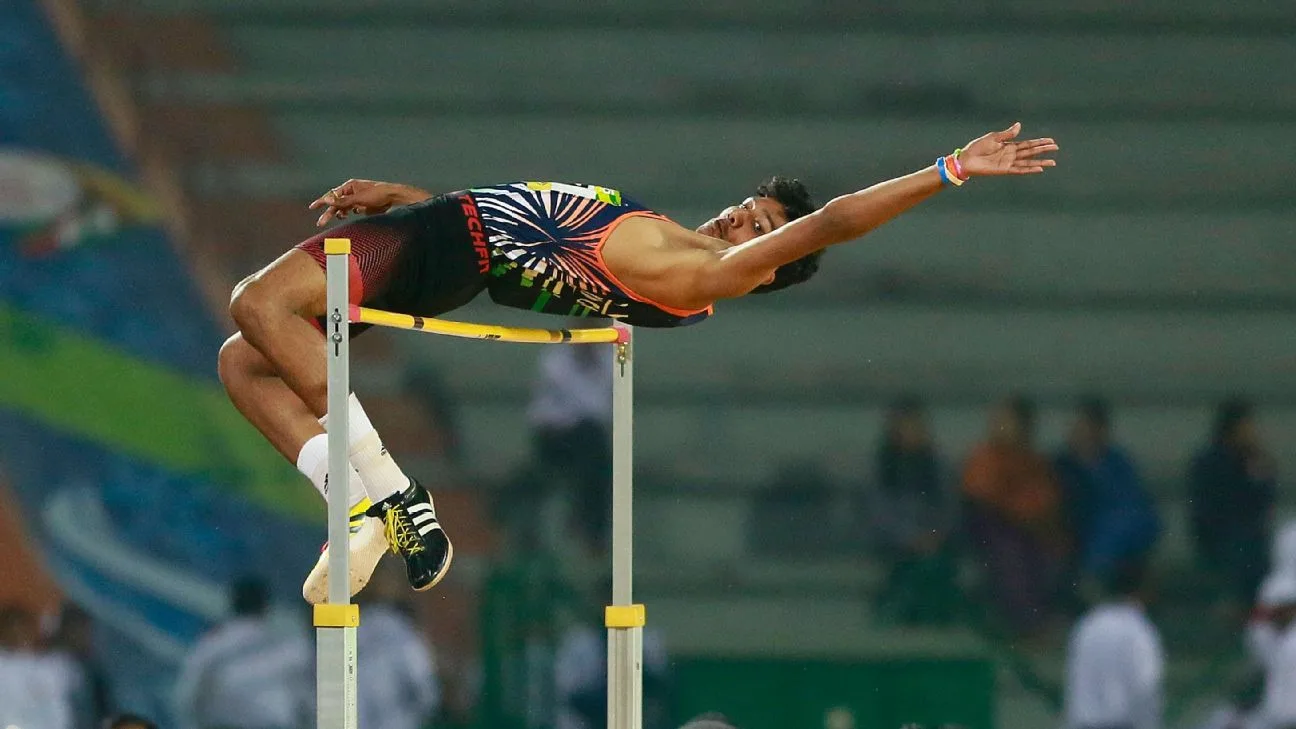
- A major revolution came in 1968 when Dick Fosbury introduced the Fosbury Flop, where athletes jump backwards over the bar. This technique is still used today.
Olympic History
- Men’s high jump has been part of the Olympics since 1896.
- Women’s high jump was introduced in 1928.
- The standing high jump was removed after the 1912 Olympics.

Player Eligibility
To participate in high jump:
- Athletes must be physically fit.
- They must register through schools, clubs, or federations.
- In international events, players must follow rules set by World Athletics.
- Age categories include junior, youth, and senior levels.
Dress Code
High jump athletes wear:
- Lightweight sportswear (jersey and shorts or track suit)
- Proper running shoes with spikes
- Comfortable clothing that allows free movement
In professional events, athletes often wear uniforms representing their country or team.
Attempts in High Jump
High jump does not have a fixed time duration.
- The bar starts at a certain height.
- It increases gradually.
- Each athlete gets three attempts at each height.
- If they fail three times at one height, they are eliminated.
The competition continues until only one athlete clears the highest height.
Basic Rules of High Jump
Here are the main rules:
- The athlete must take off from one foot only.
- If the bar falls, it is a failed attempt.
- Touching the ground beyond the bar before clearing it is also a failure.
- Athletes can skip heights if they want.
- The winner is the one who clears the highest height.
- In case of a tie:
- Fewer misses wins
- If still tied, a jump-off may happen
Techniques in High Jump
Different techniques have been used over time:
Scissors Technique
- Old method
- Athlete crosses the bar upright
Western Roll
- Body turns sideways over the bar
Straddle Technique
- Athlete crosses face-down
- Was popular before 1980
Fosbury Flop (Modern Technique)
- Athlete jumps backward
- Most efficient technique today
- Used by almost all professionals
High Jump in the Olympics
High jump is one of the main events in the Olympics.

- First included in 1896 (men)
- Women joined in 1928
- It is one of the two vertical jump events (along with pole vault)
World Records
- Men’s record: Javier Sotomayor – 2.45 m (1993)
- Women’s record: Yaroslava Mahuchikh – 2.10 m (2024)
Benefits
High jump offers many benefits:
Physical Benefits
- Improves strength and power
- Builds flexibility
- Enhances coordination
- Increases speed and stamina
Mental Benefits
- Improves focus and confidence
- Teaches discipline
- Builds determination
Social Benefits
- Encourages teamwork in training
- Helps build sportsmanship
Challenges
High jump is not easy. Athletes face many challenges:
- Risk of injury (especially ankle and knee)
- Requires perfect timing and technique
- Needs strong mental focus
- Weather conditions can affect performance
- Continuous practice is required
Successful High Jump Players
Male Players
- Javier Sotomayor
- Valeriy Brumel
- Charles Dumas
Female Players
- Iolanda Balaș
- Ulrike Meyfarth
- Sara Simeoni
Major International Competitions
High jump is played in many major events:
- Olympic Games
- World Athletics Championships
- Commonwealth Games
- Asian Games
- Diamond League
These competitions bring the best athletes from around the world.
India’s Role and Success
India is growing in high jump but still developing.
Progress in India
- Better training facilities
- More participation in athletics
- Government support through sports schemes
Famous Indian High Jumpers
- Tejaswin Shankar (Won bronze medal at the Commonwealth Games 2022 and National record holder in high jump)
- Swayam Singh (Gold medalist at youth-level international competitions)
Indian athletes are improving and competing internationally.

Future of High Jump
The future of high jump looks bright:
- New training technologies are improving performance
- Better sports science is helping athletes avoid injuries
- Young athletes are showing great potential
- Countries like India are investing more in athletics
High jump may see new world records in the coming years.
Conclusion
High jump is a thrilling and challenging sport that tests both body and mind. From simple beginnings in Scotland to modern Olympic competitions, it has evolved greatly. The introduction of the Fosbury Flop changed the game forever.
Today, high jump continues to inspire athletes around the world. With proper training, dedication, and technique, anyone can learn and enjoy this sport. As more countries invest in athletics, the future of high jump looks very promising.
Whether you are a beginner or a sports lover, high jump teaches valuable lessons like discipline, courage, and perseverance.
FAQs About High jump
- What is high jump?
High jump is a track and field event where athletes jump over a bar without touching it. - How many players compete in high jump?
It is an individual sport, so athletes compete one by one. - What is the main goal in high jump?
The goal is to clear the highest height without knocking the bar down. - What technique is most used today?
The Fosbury Flop is the most popular and effective technique. - How many attempts does an athlete get?
Each athlete gets three attempts at each height. - Who is the world record holder in high jump?
Javier Sotomayor holds the men’s record, and Yaroslava Mahuchikh holds the women’s record. - Is high jump included in the Olympics?
Yes, it is a major event in the Olympic Games. - What equipment is used in high jump?
A crossbar, uprights, landing mat, and running shoes are used. - What skills are needed for high jump?
Speed, strength, flexibility, and balance are important. - Can beginners learn high jump easily?
Yes, with proper practice and guidance, beginners can learn it step by step.