


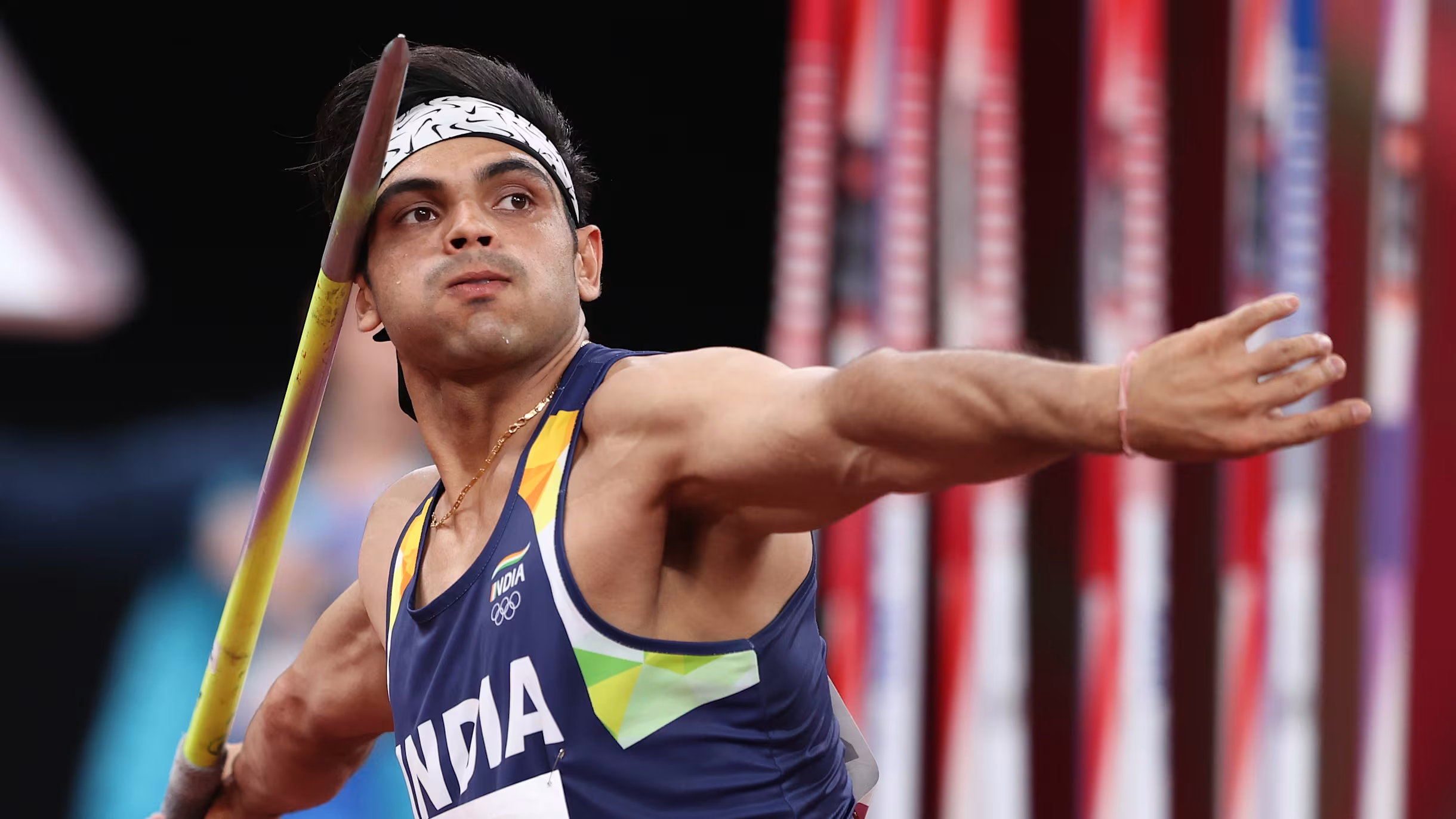
Javelin Throw: Rules, History & Techniques

Javelin Throw is one of the most exciting events in athletics where a player throws a long spear, called a javelin, as far as possible. The athlete runs on a track to gain speed and then throws the javelin into a marked area, and the player with the longest valid throw wins. The javelin is about 2.5 meters long, made of strong material, and has a pointed tip with a grip in the middle. It is an important part of track and field events and is also included in the decathlon for men and the heptathlon for women. Javelin is an individual sport, meaning each athlete competes alone, not as part of a team. Many players can take part in a competition, but they perform one by one, and usually around 8 to 12 players qualify for the final round.
Thank you for reading this post, don't forget to subscribe!History of Javelin
The history of javelin is very old and interesting, starting from ancient times. Javelin throwing was part of the Ancient Olympic Games around 708 BC, where it was also used in ancient Greece for war and hunting. Athletes used a leather strap called ankyle to throw the javelin farther, and there were two types of events distance and accuracy. The modern form of javelin began in Germany and Sweden in the 1870s, and countries like Sweden and Finland became very strong in this sport. It was included in the modern Olympic Games in the early 20th century. Over time, many changes were made, such as allowing throws with only one hand instead of both, and changing the material from wood to metal. In 1986 for men and 1999 for women, the javelin design was modified to improve safety and ensure proper landing.

Eligibility of Players
To play javelin, athletes must follow some basic eligibility rules:
- Must be physically fit and trained.
- Must follow age group rules (Under-14, Under-16, Under-18, Junior, Senior).
- Must use the correct javelin weight based on age and gender.
- Must follow the rules of athletics authorities like World Athletics.
Dress Code
Players wear comfortable sportswear:
- Running shoes or spikes
- Shorts or track pants
- T-shirt or sports vest
- No heavy or loose clothing
The dress should allow easy movement and running.
Attempts
Javelin is not based on time but on attempts:
- Each player gets 3 to 6 attempts.
- In big competitions:
- First 3 attempts for all players
- Top 8 players get 3 more attempts
- The longest valid throw is counted.
Basic Rules of Javelin
Here are the main rules:
- The javelin must be thrown over the shoulder.
- It must land tip first.
- The throw must fall within the marked sector.
- The player must not cross the foul line.
- The athlete must stay inside the runway.
- No spinning like discus is allowed.
Techniques of Javelin
Javelin throwing has three main phases:
Run-Up
- Athlete runs to gain speed.
- Holds the javelin near the head.
Transition
- Body turns sideways.
- Javelin is taken backward.
Delivery
- Athlete throws the javelin with full force.
- Uses shoulder, arm, and body strength.
Important Techniques
- Proper grip
- Balance and coordination
- Strong arm and core muscles
- Correct angle of release
Javelin in Olympics
Javelin is an important Olympic event.

Men’s Event
- Introduced in early modern Olympics
- Included in decathlon
Women’s Event
- Added in 1932 Olympics
Famous Olympic Moments
- Finland dominated early years
- Many world records were set
Benefits of Playing Javelin
Playing javelin has many benefits:
- Improves strength and power
- Develops coordination and balance
- Increases speed and flexibility
- Builds focus and discipline
- Helps in overall fitness
Challenges in Javelin
Javelin is not an easy sport. Some challenges include:
- High risk of injuries (shoulder and elbow)
- Requires strong technique
- Needs proper training and coaching
- Weather affects performance (wind)
Successful Players (Male)
Some of the greatest male javelin throwers:
- Jan Železný – World record holder (98.48 m)
- Johannes Vetter – One of the best modern throwers
- Andreas Thorkildsen – Olympic champion
- Neeraj Chopra – Olympic gold medalist from India
Successful Players (Female)
Top female javelin athletes:
- Barbora Špotáková – World record holder (72.28 m)
- Osleidys Menéndez – Olympic champion
- Christina Obergföll – World champion
- Haruka Kitaguchi – Olympic gold medalist
Major International Competitions
Important javelin competitions:
- Olympic Games
- World Athletics Championships
- Asian Games
- Commonwealth Games
- Diamond League
India’s Role And Success in Javelin
India has shown great improvement in javelin in recent years and is becoming a strong nation in this sport. The biggest achievement came when Neeraj Chopra won the gold medal at the Tokyo Olympics 2020, making history for India, and he also won gold at the World Athletics Championships in 2023. Other Indian athletes like Shivpal Singh and Annu Rani have also performed well and contributed to the country’s success. With better training facilities, coaching, and support, India is steadily growing and achieving more success in javelin at the international level.

Famous Javelin Players in India
- Neeraj Chopra – Most famous athlete
- Annu Rani – Top female player
- Devendra Jhajharia (Paralympics javelin)
Future of Javelin
The future of javelin is very bright:
Global Growth
- Increasing popularity worldwide
- More countries participating
Technology
- Better equipment
- Improved training methods
Youth Development
- More young athletes joining
- Better coaching systems
Conclusion
Javelin is a powerful and exciting sport that combines speed, strength, and skill. From ancient times to the modern Olympics, it has grown into a popular global event. The sport teaches discipline, focus, and hard work. With rising stars like Neeraj Chopra, countries like India are making a strong mark. With better training and support, the future of javelin looks very encouraging.
It also inspires young athletes to take up athletics and build a career in sports. As awareness and participation increase, more talents are likely to emerge from different parts of the world. Overall, javelin continues to develop as a competitive and respected sport at both national and international levels.
FAQs About Javelin Throw
- What is javelin throw?
Javelin throw is a track and field event where athletes throw a spear-like object for distance. - How long is a javelin?
A javelin is about 2.5 meters long. - How many attempts are allowed?
Players usually get 3 to 6 attempts in a competition. - Is javelin a team sport?
No, it is an individual sport. - What are the main rules of javelin?
The javelin must be thrown over the shoulder and land tip first within the sector. - Who is the best javelin player in India?
Neeraj Chopra is the most famous javelin player in India. - When was javelin introduced in the Olympics?
It was introduced in the early modern Olympic Games. - What skills are needed for javelin?
Strength, speed, balance, and proper technique are important. - What are the benefits of playing javelin?
It improves strength, coordination, and overall fitness. - Can beginners learn javelin easily?
Yes, with proper training and guidance, beginners can learn it.