


Wushu Secrets: Strength, Balance, Control

Wushu is a traditional Chinese martial art that combines fighting skills, physical exercise, and artistic performance. The word Wushu comes from two Chinese words: Wu meaning martial or combat, and Shu meaning art. So, Wushu simply means “martial arts.”
Thank you for reading this post, don't forget to subscribe!Wushu is also popularly known as Kung Fu, and it includes different styles like Shaolin Kung Fu, Tai Chi, and Wudangquan. Today, Wushu is practiced both as a sport and as a method of self-defense. It includes beautiful movements, fast kicks, powerful punches, and even weapon techniques.
Modern Wushu has two main forms:
- Taolu (forms) – choreographed routines
- Sanda (combat) – full-contact fighting
Wushu is now an international sport managed by the International Wushu Federation, and it is played in many international competitions.
History of Wushu
Wushu has a very long history that goes back thousands of years in China. It started as a method of survival and later developed into a respected cultural practice and sport.
Ancient Period
In ancient China, martial arts were mainly used for war, hunting, and self-defense. Soldiers were trained in different fighting techniques to protect their country. During the Han Dynasty (206 BC – 220 AD), martial arts were known as military fighting techniques. These techniques included the use of weapons like swords and spears, along with hand-to-hand combat.
Later, during the Song Dynasty, the name changed to martial arts (Wu Yi), showing that these skills were becoming more organized and respected as a discipline.
Development of the Term Wushu
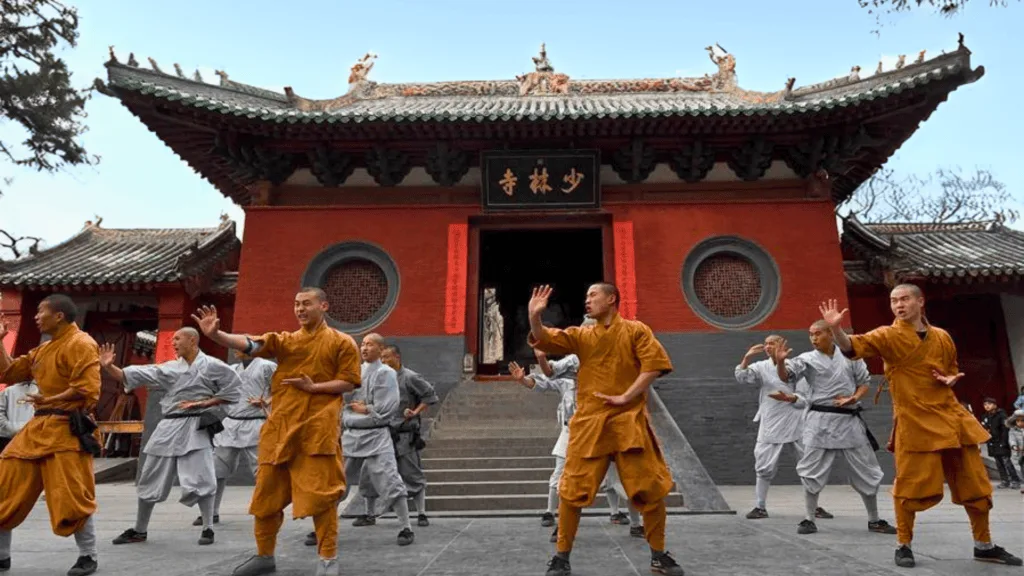
The word “Wushu” appeared in ancient Chinese writings and poems. In 1928, China officially used the term Guoshu (National Art) when martial arts were promoted at a national level. However, after 1949, the Chinese government brought back the term Wushu and started organizing it in a modern way.
Modern Wushu (20th Century)
In 1949, efforts were made to standardize martial arts across China. By 1958, a national training system was created. This helped students learn Wushu in a structured way. Schools and universities started including Wushu in their physical education programs.
In 1986, China established a national research institute to study and promote Wushu. This helped in improving techniques, rules, and competitions.
Global Spread
Wushu gained worldwide popularity through movies, cultural exchange, and international competitions. Famous martial artists like Jet Li played a big role in making Wushu popular across the world.
Forms of Wushu
Wushu is mainly divided into two major categories: Taolu and Sanda.
Taolu (Forms)
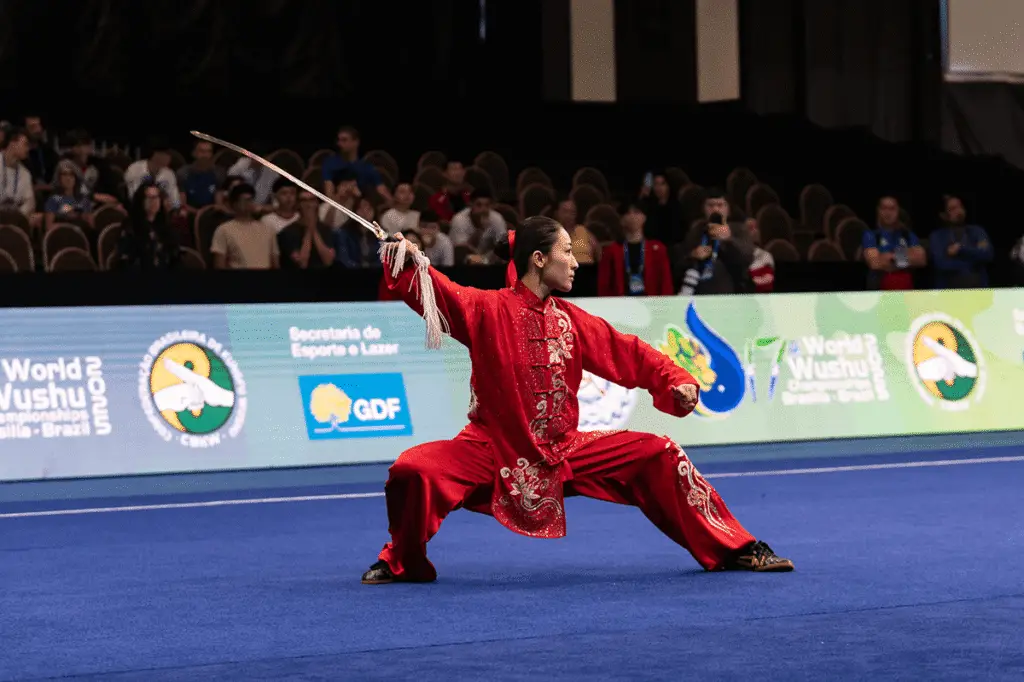
Taolu are pre-arranged routines that showcase techniques in a stylish and controlled manner. These routines include:
- Kicks
- Punches
- Jumps
- Balance movements
Athletes perform these routines on a mat, and judges give scores based on performance.
Popular Taolu Styles
- Changquan (Long Fist) – fast, extended, and flexible movements
- Nanquan (Southern Fist) – powerful and stable techniques
- Tai Chi (Taijiquan) – slow, smooth, and graceful movements
Weapon Forms
Wushu also includes weapon-based performances such as:
- Dao (Broadsword)
- Jian (Straight sword)
- Gun (Staff)
- Qiang (Spear)
These weapon routines require great control, coordination, and skill.
Sanda (Combat)
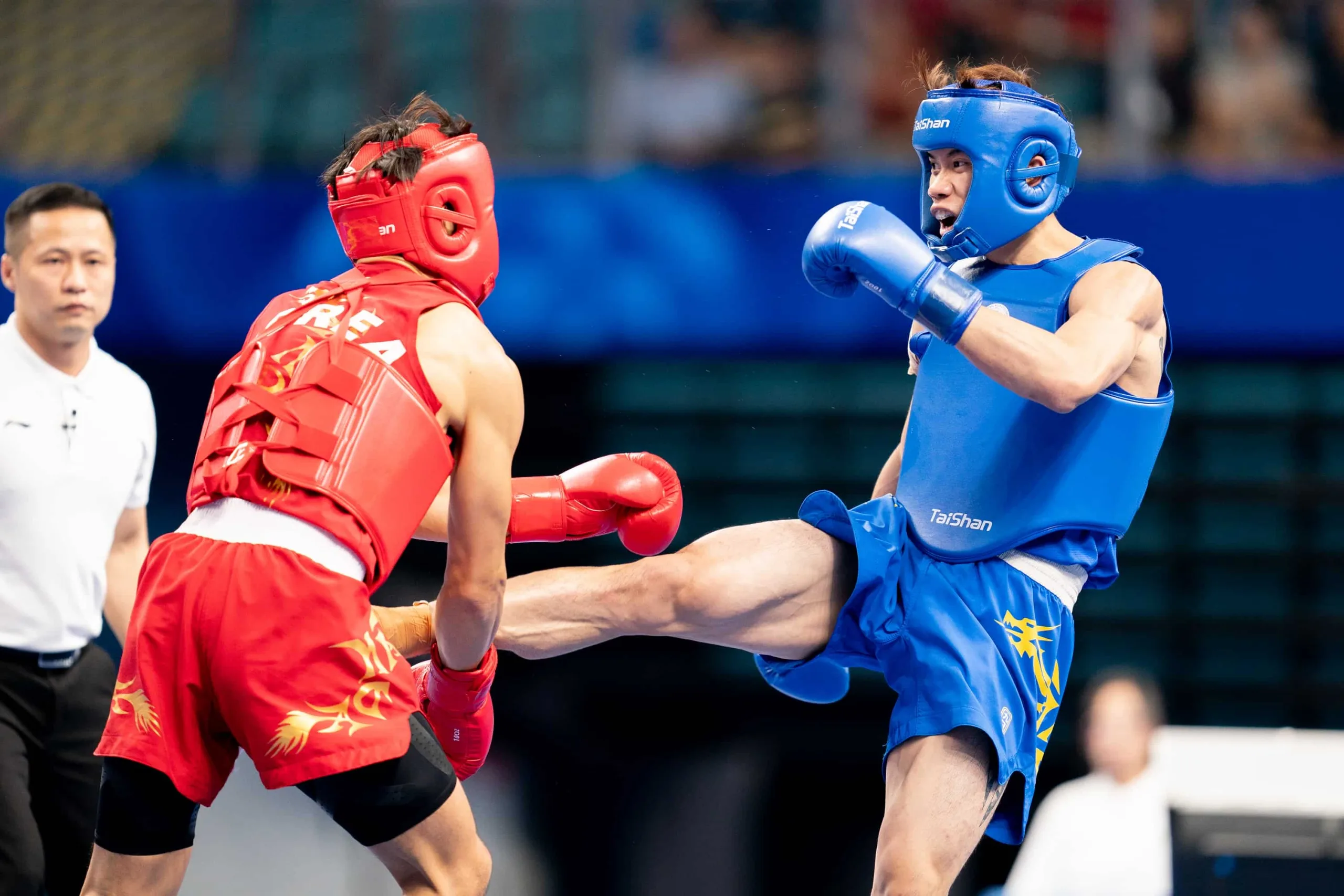
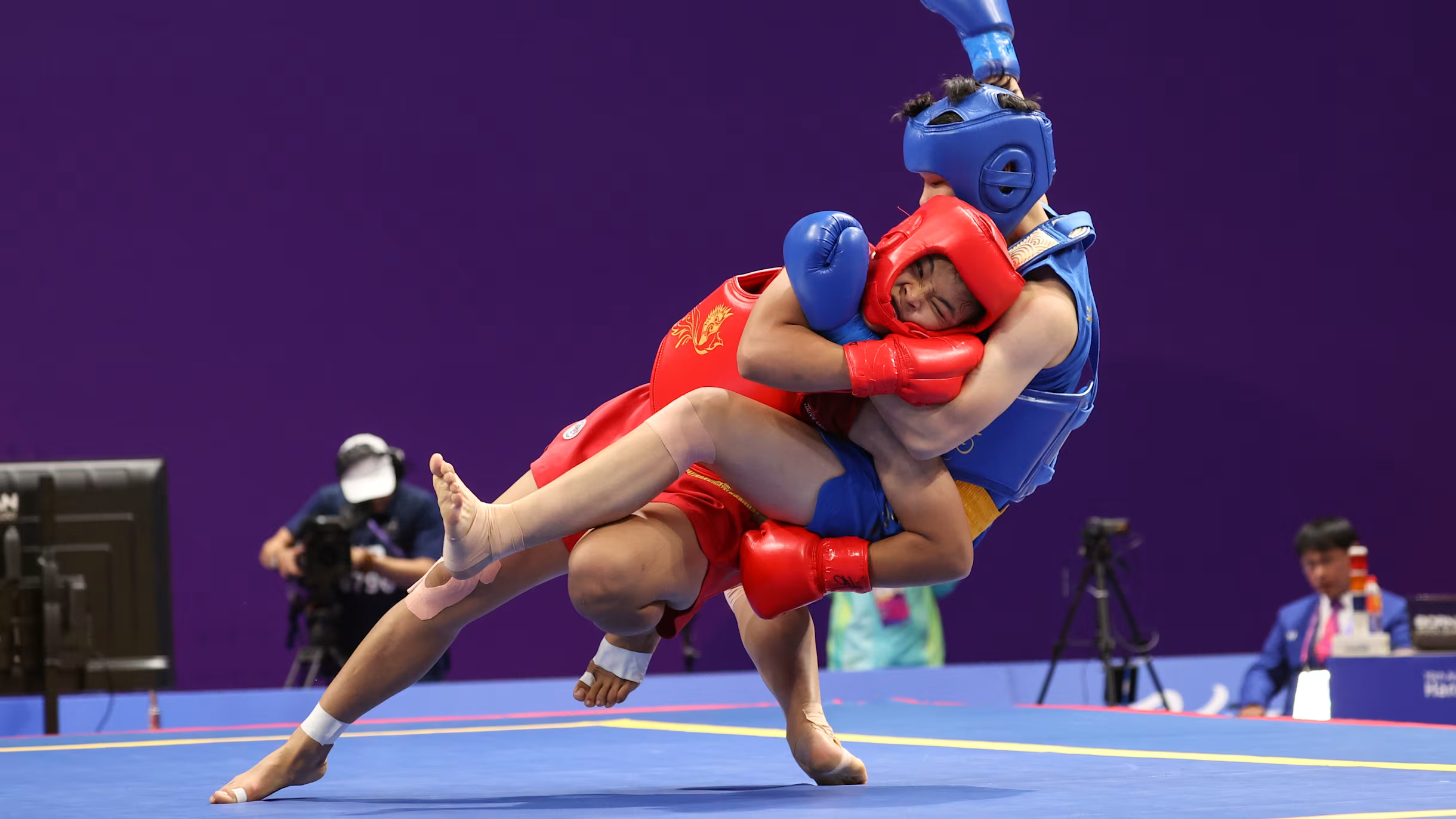
Sanda is a modern fighting sport that allows real combat between two players. It includes:
- Punching
- Kicking
- Throwing
- Takedowns
Sanda is similar to boxing and kickboxing but also includes wrestling techniques. It is a fast and exciting sport where players must use both strength and strategy.
Number of Players
- Taolu: Individual performance (1 player)
- Sanda: Two players compete against each other
Equipment Used in Wushu
Basic Equipment
- Training mat
- Gloves (for Sanda)
- Headgear (for beginners)
- Mouth guard
- Chest protector
Weapons (for Taolu)
- Sword (Jian)
- Broadsword (Dao)
- Staff (Gun)
- Spear (Qiang)
Dress Code in Wushu
Players wear special uniforms known as Wushu costumes.
For Taolu
- Light and flexible clothing
- Silk or cotton material
- Bright and attractive colors
- Belt or sash
For Sanda
- Shorts and T-shirt
- Gloves and protective gear
The dress is designed to allow easy movement and comfort during performance.
Player Eligibility
Wushu is open to people of all ages.
- No strict age limit
- Basic fitness is required
- Training is necessary before competitions
- Players must register for official events
This makes Wushu a sport that can be enjoyed by both beginners and professionals.
Duration of the Game
- Taolu: 1 to 3 minutes per routine
- Sanda:
- 3 rounds
- Each round lasts 2 minutes
- 1-minute break between rounds
Basic Rules of Wushu
Taolu Rules
- Perform movements correctly
- Maintain balance and control
- Follow rhythm and timing
- Judges give scores based on:
- Quality (5 points)
- Difficulty (2 points)
- Overall performance (3 points)
Sanda Rules
- Points are scored by:
- Punches and kicks
- Throws and takedowns
- Not allowed:
- Elbow strikes (in amateur level)
- Choking
- Joint locks
- Winning methods:
- Points
- Knockout
- Opponent falling off the platform
Techniques in Wushu
Wushu includes many techniques that require practice and control.
Hand Techniques
- Punches
- Palm strikes
- Blocking moves
Leg Techniques
- Front kick
- Side kick
- Jump kick
Throws and Grappling
- Takedowns
- Sweeping techniques
Balance and Acrobatics
- Spins
- Jumps
- Flips
These techniques make Wushu both powerful and visually attractive.
Benefits of Playing Wushu
Physical Benefits
- Improves strength
- Increases flexibility
- Builds stamina
- Enhances balance
Mental Benefits
- Improves focus and concentration
- Builds confidence
- Reduces stress
Social Benefits
- Teaches discipline
- Encourages respect
- Builds teamwork
Wushu is not only a sport but also a way to improve overall personality.
Challenges in Wushu
Despite its benefits, Wushu has some challenges:
- Requires long-term training
- Risk of injuries
- Physically demanding
- Difficult techniques to master
- Training can be costly
However, with dedication and proper guidance, these challenges can be overcome.
Successful Wushu Players
Famous Taolu Athletes
- Jet Li
- Zhao Changjun
- Yuan Wenqing
Famous Sanda Fighters
- Muslim Salikhov
- Cung Le
- Zhang Weili
These players have inspired many people to learn and practice Wushu.
Major International Competitions
Wushu is played in many global competitions, such as:
- World Wushu Championships
- Asian Games
- World Combat Games
- Southeast Asian Games
All these events are organized under the International Wushu Federation.
India’s Role and Success in Wushu
India is growing quickly in the field of Wushu.
Achievements
- Indian players have won medals in international competitions
- Strong performance in Asian-level events
- Rising number of skilled athletes
Famous Indian Wushu Players
- Pooja Kadian – First Indian to win a gold medal at the World Wushu Championships
- Praveen Kumar – Asian Games medalist
- Narender Grewal – Bronze medalist at Asian Games
- Roshibina Devi – Asian Games silver medalist
- Surya Bhanu Pratap Singh – International medal winner
Development
- The Wushu Federation of India promotes the sport
- Training centers are increasing
- Government support is improving
Indian athletes are gaining recognition and making the country proud.
Future of Wushu
The future of Wushu looks very bright.
- Growing popularity worldwide
- More international tournaments
- Chance of Olympic inclusion in the future
- Increasing interest among youth
Wushu is also becoming popular through movies, social media, and fitness trends.
Conclusion
Wushu is not just a sport it is a blend of art, culture, and self-defense. It teaches discipline, strength, and respect. From its ancient roots in China to modern international competitions, Wushu has developed into a global sport.
It helps people stay physically fit, mentally strong, and confident. With growing popularity and support, Wushu has a promising future. Whether you learn it for self-defense, fitness, or competition, Wushu is a powerful and beautiful martial art that can benefit everyone.
FAQs About Wushu
- What is Wushu?
Wushu is a Chinese martial art that combines fighting skills and performance. - Is Wushu the same as Kung Fu?
Yes, Wushu is often called Kung Fu, but modern Wushu is more standardized. - What are the main types of Wushu?
Taolu (forms) and Sanda (combat). - Is Wushu good for beginners?
Yes, anyone can start with basic training. - What equipment is used in Wushu?
Weapons like sword, staff, and protective gear for fighting. - How long does a Wushu match last?
Sanda matches usually have 3 rounds of 2 minutes each. - Is Wushu an Olympic sport?
No, but it is played in Asian Games and other events. - What are the benefits of Wushu?
Improves fitness, flexibility, and mental focus. - Can children learn Wushu?
Yes, children can start training at a young age. - Which country is famous for Wushu?
China is the origin and leading country in Wushu.