


Sailing Guide: From Wind to Win

Sailing is a water sport where boats move using the power of wind. Sailors use sails to catch the wind and move forward on water. The main goal is to control the boat smartly and finish the race faster than others. Sailing is exciting because it depends on nature, especially wind and water.
Thank you for reading this post, don't forget to subscribe!In simple words, sailing is about speed, balance, and smart decision-making. It is also an Olympic sport and is played worldwide in different formats like races and regattas.
Physics Behind Sailing
Sailing works based on basic physics. When wind hits the sail at an angle, it creates force that pushes the boat forward. The sail is placed in such a way that wind hits it properly and helps the boat move faster.
Two main forces work:
- Lift force (helps move forward)
- Drag force (resistance)
Good sailors use wind direction wisely to gain speed.
Objective of Sailing
The main aim is:
- Start at the right time with speed
- Follow the course properly
- Cross the finish line first
In team sailing, all members must work together to win.
History of Sailing
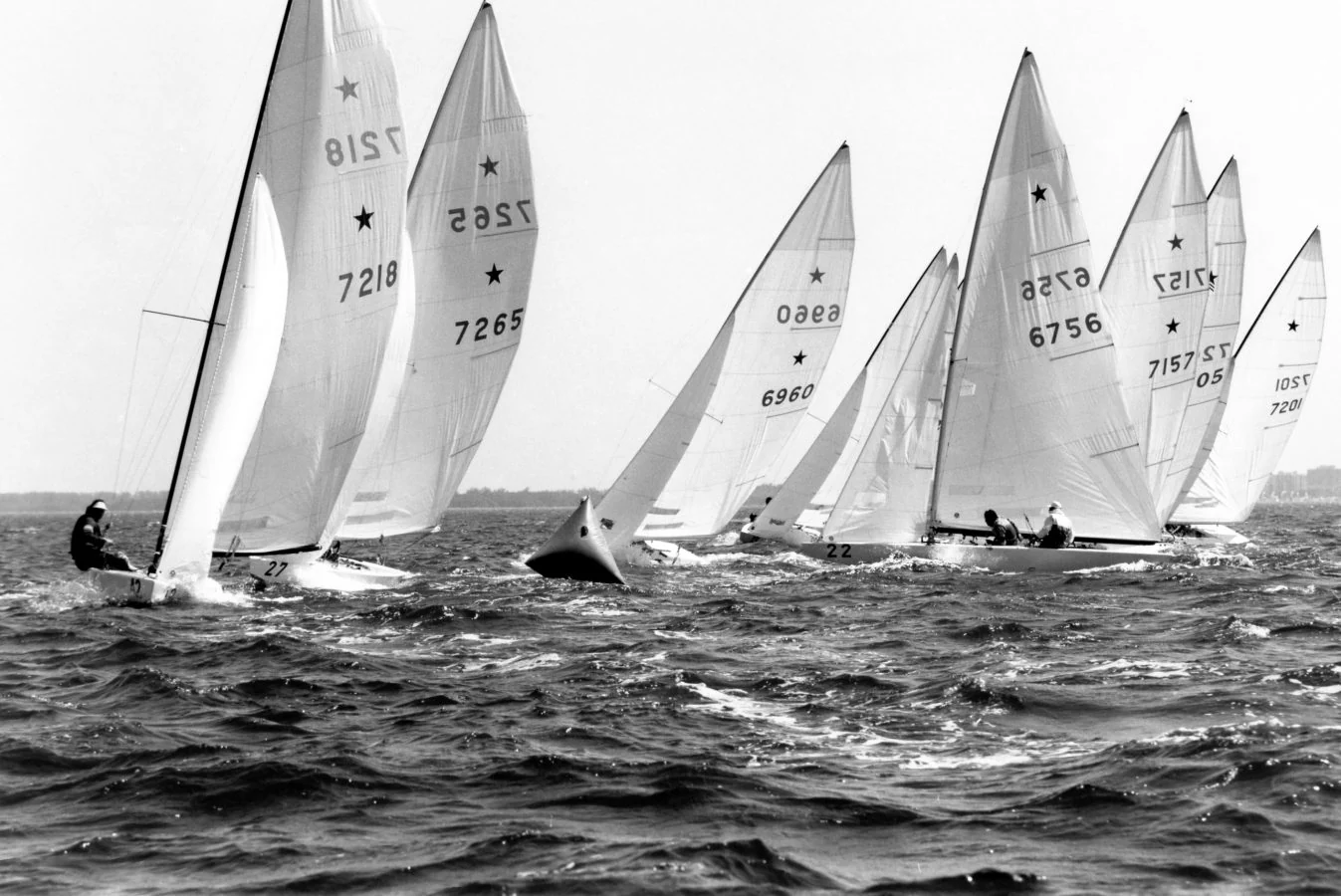
Sailing started as a mode of transport in the 17th century, especially in Holland. Later, it spread to England when King Charles II introduced it. Slowly, it became popular in America.
Key milestones:
- First sailing club: Cork, Ireland (1720)
- Famous race: America’s Cup (1851)
- Governing body formed: 1907 (later became World Sailing)
- Olympic inclusion: Since 1900
Today, sailing uses advanced boats and technology like weather tracking systems.
Number of Players
The number of players depends on the type of boat:
- Single-handed: 1 player
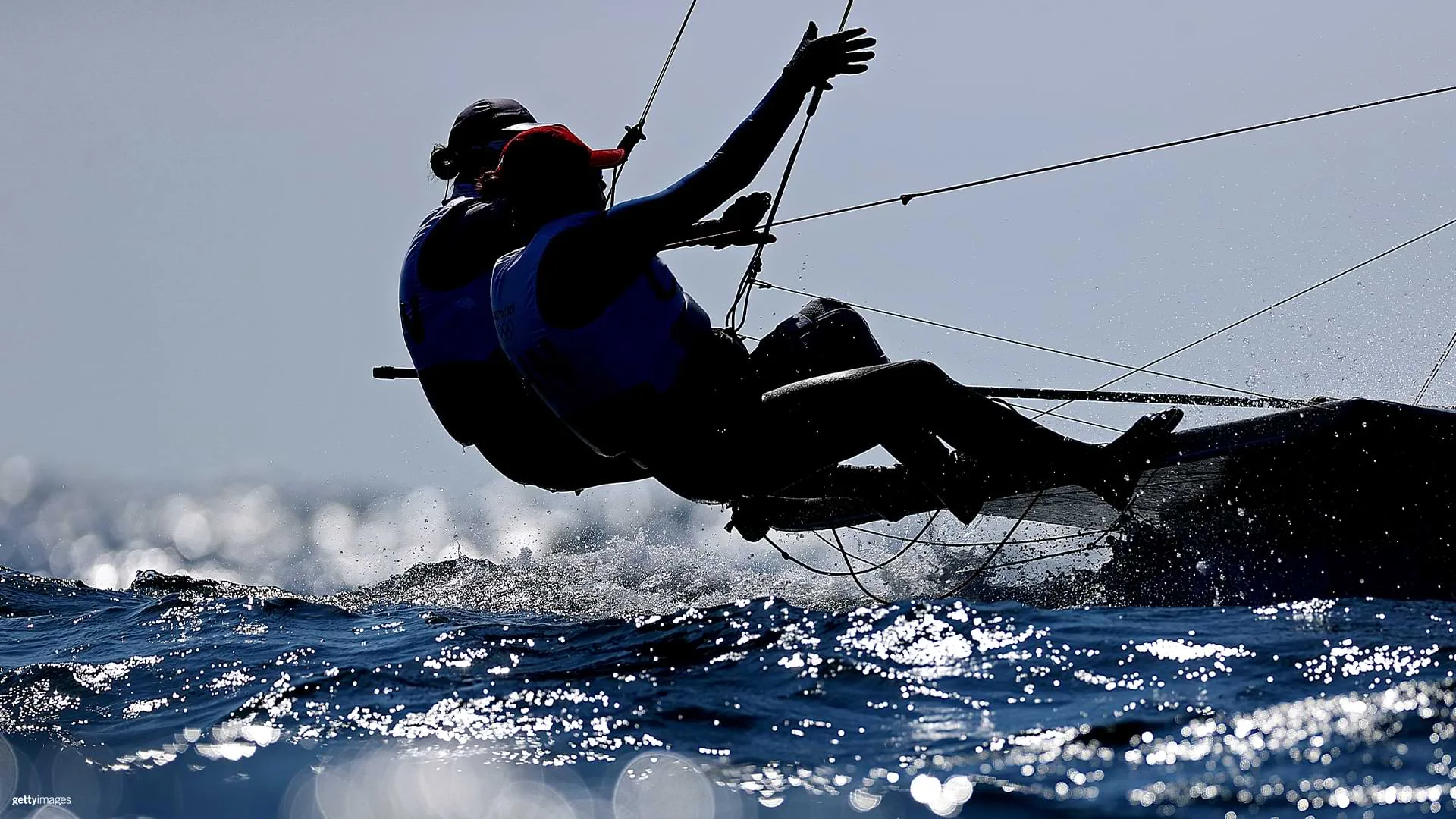
- Double-handed: 2 players
- Team boats: 3-10 players
Types of Sailing Events
Fleet Racing
- Many boats compete together
- Lowest score wins
Match Racing
- Only 2 boats compete
- Focus is on beating the opponent
Team Racing
- Teams of 3 boats
- Strategy is very important
Offshore Racing
- Long-distance races on open seas
Equipment Used in Sailing
Sail
Captures wind and moves the boat
Sailboat
Main vehicle used in the sport
Life Jacket (PFD)
For safety in water
Gloves
Protect hands from rope burns
Sailing Boots
Keep feet dry and safe
Jacket & Dungarees
Protect from wind and water
Drysuits
Used in cold weather
Buoyancy Aid
Helps in floating
Player Eligibility
To participate:
- Basic swimming skills required
- Good physical fitness
- Knowledge of wind and water
- Age categories vary (junior, senior)
Dress Code
Sailors wear:
- Waterproof jackets
- Non-slip shoes
- Gloves
- Life jackets
Clothes should be comfortable and safe.
Duration of Matches
- Short races: 10–60 minutes
- Medium races: Few hours
- Long races: Days or weeks
Basic Rules of Sailing
- Follow the race course
- Avoid collisions
- Respect right-of-way rules
- Start on time
- Follow signals and flags
Techniques in Sailing
Tacking
Turning boat against the wind
Jibing
Turning boat with the wind
Trimming
Adjusting sails properly
Balance Control
Maintaining boat stability
Wind Reading
Understanding wind direction
Benefits of Sailing
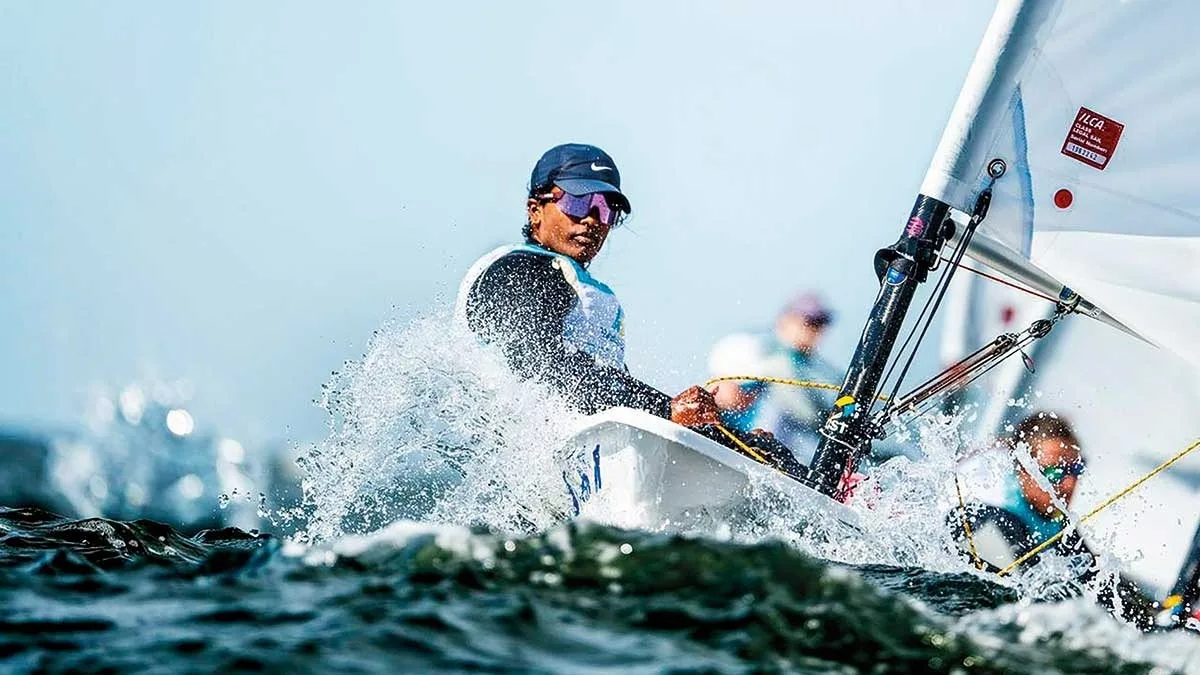
- Improves physical fitness
- Builds teamwork skills
- Enhances decision-making
- Reduces stress
- Connects with nature
Challenges in Sailing
- Weather changes
- Strong winds
- Risk of capsizing
- Expensive equipment
- Requires training
Successful Sailors
Male
- Ben Ainslie
- Robert Scheidt
- Torben Grael
Female
- Ellen MacArthur
- Hannah Mills
- Marit Bouwmeester
Major International Competitions
- Olympic Games
- America’s Cup
- The Ocean Race
- World Sailing Championships
- Vendée Globe
Famous Sailing Leagues Worldwide
- SailGP
- Extreme Sailing Series
- Clipper Round the World Race
Famous Sailing Clubs / Hubs
- New York Yacht Club
- Royal Yacht Squadron (UK)
- Royal Cork Yacht Club (Ireland)
Sailing in Olympics
Overall, Olympic sailing is a test of skill, strategy, and understanding of wind and water conditions, making it one of the most unique sports in the Games.
Sailing has been part of the Summer Olympics since 1900, and it has appeared in almost every edition except 1904.
Earlier, the sport was called “yachting”, but later its name was officially changed to sailing.
Olympic sailing includes different boat classes, where all players use the same type of boat to ensure fair competition.
Events are divided into men’s, women’s, and mixed categories, promoting equal participation.
Competitions are usually held as fleet races, where many boats race together on a fixed course.
Sailors compete in multiple races, and points are given based on finishing position; the lowest total score wins.
The top performers qualify for a medal race, where points are doubled and winners are decided.
Modern Olympic sailing includes events like windsurfing, kiteboarding, dinghy, skiff, and multihull racing.
Around 300–350 athletes from many countries take part, showing its global popularity.
India’s Role & Success in Sailing
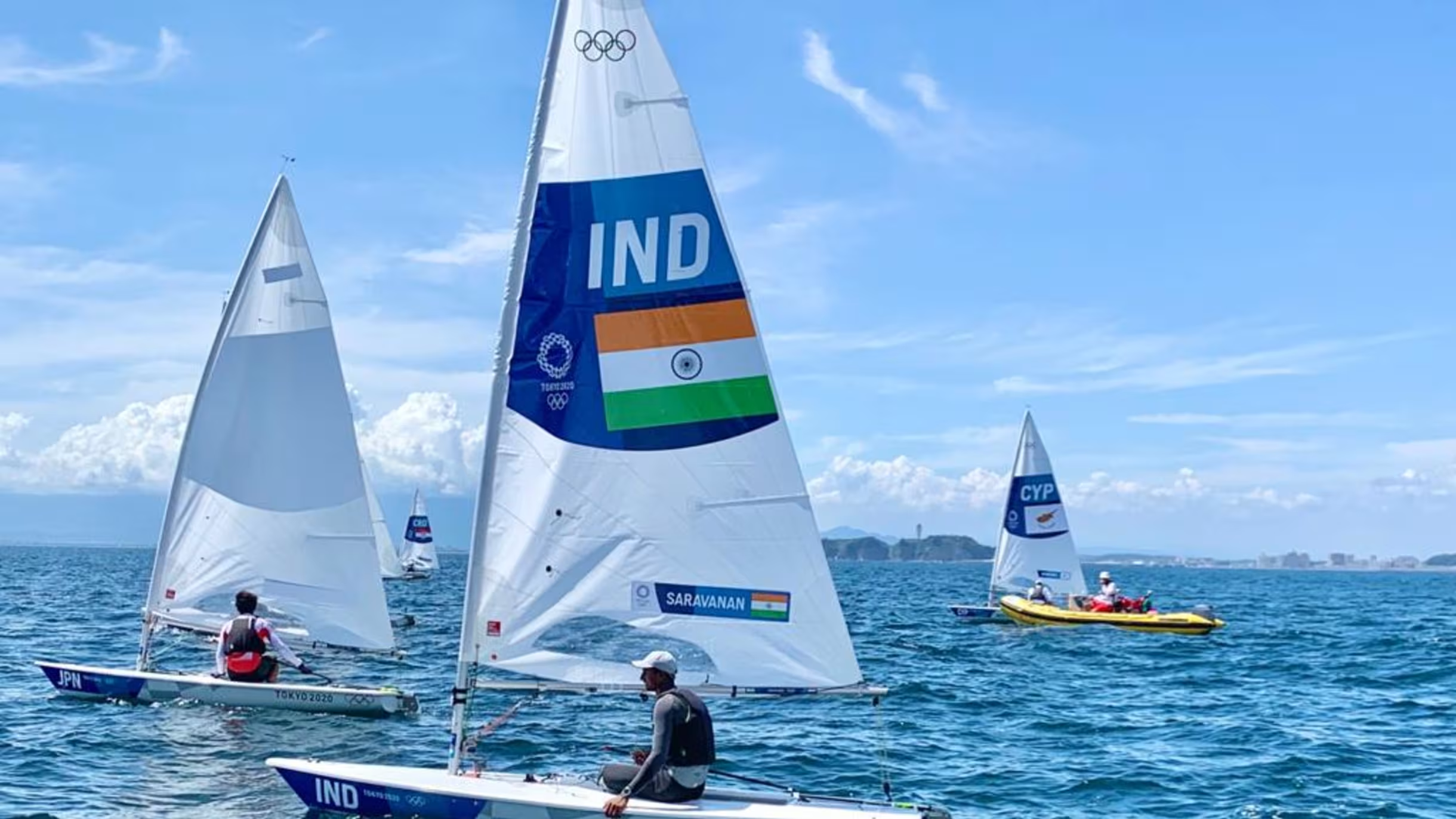
India is growing in sailing with better facilities and training.
Achievements
- Participation in Olympics
- Growth in coastal sailing events
Famous Indian Sailors
- Nethra Kumanan
- Varun Thakkar
- Ganapathy Chengappa
India is improving but still developing compared to top countries.
Future of Sailing
The future looks bright due to:
- Better technology
- More youth participation
- Increased global competitions
- Eco-friendly boats
Sailing is becoming faster, safer, and more exciting.
Conclusion
Sailing is a unique sport that combines skill, strategy, and nature. It teaches patience, teamwork, and smart thinking. From its history as transport to becoming a global sport, sailing has grown a lot.
With rising popularity and support, especially in countries like India, sailing has a strong future. Anyone interested in water sports should definitely try sailing for its adventure and learning experience.
FAQs about Sailing
- What is sailing?
Sailing is a water sport where boats move using wind power. - How does a sailboat move?
It moves by using wind force on sails. - Is sailing an Olympic sport?
Yes, sailing has been in the Olympics since 1900. - How many players are in sailing?
It depends on the boat, from 1 to multiple players. - Is sailing dangerous?
It can be risky, but safety gear reduces danger. - What skills are needed for sailing?
Balance, wind understanding, and teamwork. - What equipment is used in sailing?
Sailboat, sails, life jacket, gloves, and boots. - Can beginners learn sailing easily?
Yes, with training and practice. - What is a regatta?
A series of sailing races. - Which country is best in sailing?
Countries like the UK, USA, and Australia perform well.