Types of Schools in India: CBSE, ICSE, State Boards Explained

India’s education system is vast and diverse, offering different types of school boards to suit different learning needs. Parents and students often feel confused about which board is “better,” but the truth is, each board has its own strengths, teaching methods, and academic focus. The best choice depends on the student’s learning style, career goals, and the kind of environment the family prefers.
This guide breaks down the major school boards in India, CBSE, ICSE, and State Boards, in a clear, practical way. With elaborated pointers under each category, this pillar article will help you choose a board confidently and understand how each one shapes a student’s learning experience.

CBSE (Central Board of Secondary Education)
Overview of CBSE
- CBSE is India’s most preferred national-level board, recognized in all states and widely accepted by colleges and competitive exams.
- It focuses on a structured, application-oriented, and exam-friendly curriculum that aligns closely with national entrance exams like JEE, NEET, and NDA.
- Schools across India and abroad follow CBSE, making it convenient for families who relocate frequently.
Curriculum Style
- The CBSE curriculum promotes conceptual clarity through Maths and Science-focused learning.
- Subjects follow a highly organized NCERT pattern, which is considered simpler and more standardized.
- Learning is balanced between academics, co-curricular activities, and skill-based education.
Assessment and Examination Pattern
- Exams emphasize MCQs, reasoning, and problem-solving, which help prepare students for competitive tests.
- The board follows a continuous assessment approach with internal tests, practicals, projects, and term-end exams.
Best Suited For
- Students preparing for engineering, medical, or national-level competitive exams.
- Families who move between cities due to transferable jobs.
- Students who prefer structured learning and a lighter syllabus compared to the ICSE.
ICSE (Indian Certificate of Secondary Education)

Overview of ICSE
- ICSE, regulated by the CISCE Council, is known for its comprehensive and detailed syllabus.
- It emphasizes English language strength, research-based learning, and real-world understanding.
- ICSE schools are often found in cities and emphasize quality academic standards.
Curriculum Style
- The ICSE curriculum is expansive, detailed, and subject-rich.
- It includes strong focus areas like English literature, grammar, environmental science, humanities, and creative subjects.
- Students are encouraged to analyze, think critically, and express ideas in detail rather than memorize.
Assessment and Examination Pattern
- Exams include long-answer questions, descriptive writing, and practical projects.
- ICSE evaluates students through both internal assessments and external exams, with higher weightage given to practical skills.
Best Suited For
- Students aiming for careers requiring strong communication, language, and analytical skills (law, management, arts, humanities).
- Learners who enjoy in-depth study and detailed explanations.
- Families prioritizing holistic education and rich academic exposure.
State Boards (Different State Education Boards)
Overview of State Boards
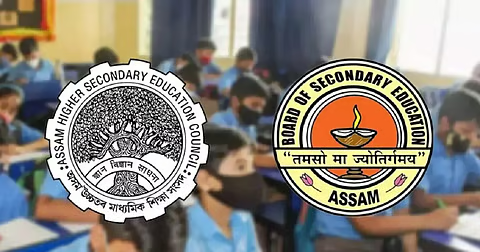
- Every Indian state has its own education board, such as Maharashtra State Board, West Bengal Board, Assam SEBA/AHSEC, Tamil Nadu Board, etc.
- These boards focus on regional needs, local culture, language, and accessible education.
- State board schools are more affordable and available in both urban and rural regions.
Curriculum Style
- The curriculum varies from state to state, often simpler compared to CBSE and ICSE.
- It includes strong emphasis on the state language, basic sciences, maths, and social studies.
- The syllabus is designed to be relatable to local contexts and easier for the majority of students.
Assessment and Examination Pattern
- Examinations are straightforward, focusing mainly on textbook knowledge.
- Assessment is typically descriptive, testing memory, understanding, and writing abilities.
- Several states are slowly adopting competency-based learning under NEP 2020 guidelines.
Best Suited For
- Students who wish to prepare for state government exams, state engineering/medical entrances.
- Families want affordable education with regional language strength.
- Students who prefer simpler syllabi and less academic pressure.
Key Differences Between CBSE, ICSE, and State Boards

Syllabus Difficulty
- ICSE: Most detailed and academically deep
- CBSE: Balanced and concept-oriented
- State Boards: Generally simpler and exam-focused
Language Preference
- ICSE: Strong emphasis on English
- CBSE: Balanced between English and Hindi
- State Boards: State language + English
Competitive Exams
- CBSE: Best alignment with national competitive exams
- ICSE: Builds strong analytical and writing skills
- State Boards: Good for state-level exams
Flexibility
- CBSE: Highly flexible, student-friendly
- ICSE: More demanding with varied subjects
- State Boards: Flexible and accessible for all backgrounds
How to Choose the Right School Board
Understand the Child’s Learning Style
- If a child prefers structured learning → CBSE
- If the child enjoys creativity and depth → ICSE
- If comfort with regional language and simpler content → State Board

Consider Future Goals
- Engineering, medical, or central government jobs → CBSE
- Creative careers (writing, design, humanities) → ICSE
- State government careers or local colleges → State Boards
Check School Infrastructure
- The quality of teachers, labs, libraries, and extracurriculars matters more than the board itself.
Assess Academic Pressure
- ICSE has heavier loads
- CBSE offers balance
- State boards reduce pressure for early learners
Advantages and Disadvantages of Each Board
CBSE Advantages
- National recognition
- Competitive exam-friendly
- Modern, practical curriculum
CBSE Disadvantages
- Fewer creative subjects compared to ICSE
- Less emphasis on literature and the humanities
ICSE Advantages
- Strong English foundation
- Wide range of subjects
- Ideal for global opportunities
ICSE Disadvantages
- Heavy syllabus
- It can be stressful for average learners
State Board Advantages
- Affordable
- Local language support
- Simple, easy-to-understand content
State Board Disadvantages
- Less national mobility
- Syllabus may vary in quality.
- Competitive exam alignment is weaker
Conclusion: Understanding India’s School Boards for a Better Future
India’s school board, CBSE, ICSE, and State Boards, each carry their own philosophy and approach to learning. There is no single “best” board; the right choice depends on the child’s abilities, interests, plans, and the family’s goals.
A student who thrives in a descriptive, expressive style may do well in ICSE, while another aiming for competitive exams may excel in CBSE. Meanwhile, State Boards continue to support millions of learners through accessible and culturally grounded education.
A well-chosen school board doesn’t just shape a student’s academic journey; it builds confidence, enhances growth, and lays the foundation for a fulfilling future. With awareness, research, and understanding, parents and students can make a decision that supports learning, happiness, and long-term success.