Ancient Indian Science Conference at IIT Dhanbad

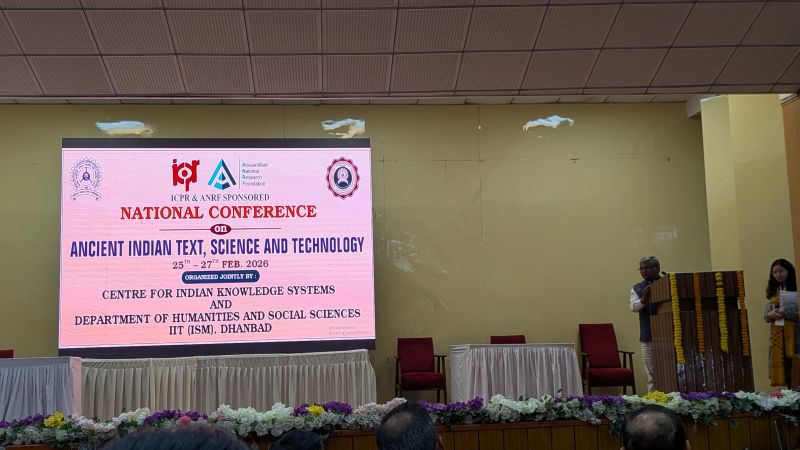
Ancient Indian Science was placed at the centre of academic discussion as a three-day national conference began at IIT (ISM) Dhanbad. Scholars from different parts of the country gathered to explore how classical Indian texts connect with modern science and technology. The conference, titled “Ancient Indian Text, Science and Technology,” aims to encourage fresh thinking about India’s traditional knowledge systems in today’s rapidly changing world.
Thank you for reading this post, don't forget to subscribe!In recent years, there has been a renewed interest in studying ancient Indian ideas in fields such as mathematics, astronomy, medicine, and philosophy. With India focusing strongly on research, innovation, and digital growth, many institutions are looking back at classical sources to understand how earlier scholars approached scientific thinking. The conference at IIT (ISM) Dhanbad reflects this larger movement of combining heritage with innovation.
Joint Effort to Promote Knowledge Dialogue
The event is supported by the Indian Council of Philosophical Research and the Anusandhan National Research Foundation. These organisations promote academic research and encourage discussions that bridge multiple disciplines. Their support highlights the importance of studying philosophy and science together rather than treating them as separate areas.
The conference is jointly organised by the Centre for Indian Knowledge Systems and the Department of Humanities and Social Sciences at IIT (ISM) Dhanbad. Technical institutions today are expanding beyond engineering subjects. They are increasingly hosting events that bring historians, linguists, philosophers, and scientists onto the same platform. This approach reflects a growing belief that innovation benefits from diverse viewpoints.
Opening Session and Main Objectives
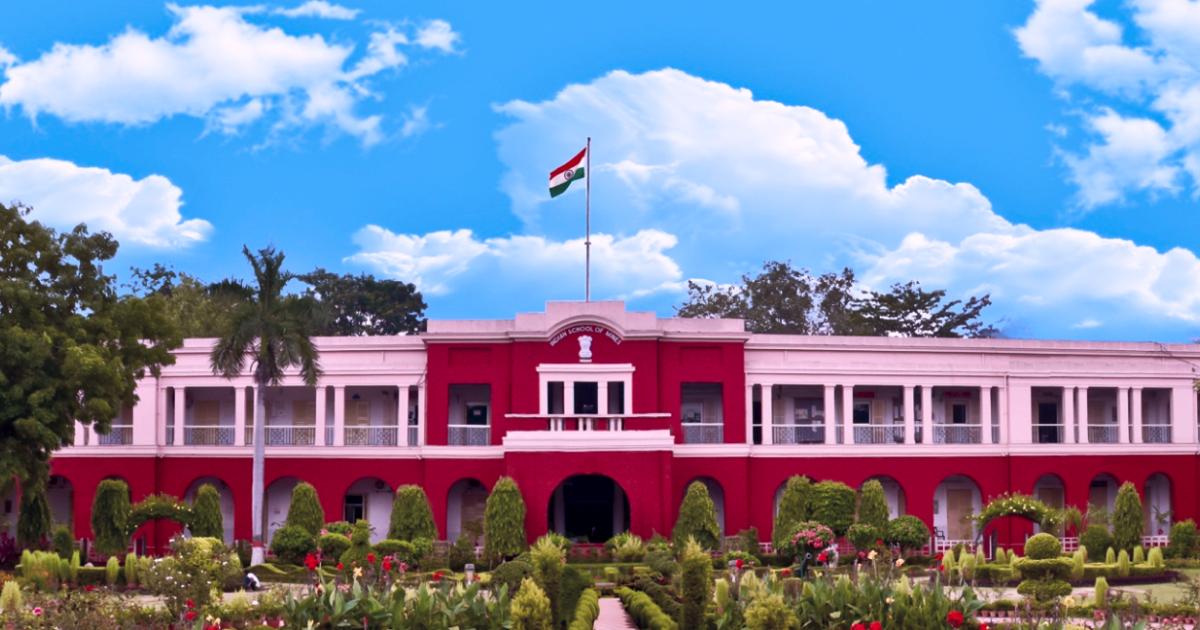
The inaugural session was held at the Golden Jubilee Lecture Theatre on campus. Faculty members, students, and invited scholars attended the opening ceremony. Gyan Prakash, Head of the Department and Convenor of the conference, welcomed the participants and shared the vision behind the programme.
He explained that the goal is to revisit ancient Indian texts using interdisciplinary research methods. Instead of reading classical works only from a historical angle, the conference encourages scientific and technical analysis. Sanskrit experts and historians of science are interacting with engineers and researchers in applied sciences. This collaboration may help reinterpret traditional ideas in ways that speak to present-day challenges.
The organisers believe that many ancient texts contain systematic observations and logical arguments that can be studied with modern tools. By combining textual analysis with scientific methods, scholars hope to develop deeper insights into India’s intellectual heritage.
Ancient Indian Science: From Knowledge to Technology
Director Sukumar Mishra addressed the gathering and spoke about the structure of Indian knowledge traditions. He described how understanding evolves from “gyan” (knowledge) to “vigyan” (analytical or scientific knowledge) and finally to “prodyogiki” (applied technology). According to him, knowledge becomes powerful when it benefits society and improves everyday life.
He noted that in ancient India, philosophy and science were not separated. Thinkers combined reasoning, observation, and practical application within a single framework. This holistic view, he suggested, is valuable even today. In a time when artificial intelligence, clean energy, and biotechnology are transforming society, ethical reflection and balanced thinking are becoming equally important.
The Director also pointed out that Indian traditions emphasised harmony between humans and nature. As climate change and environmental concerns dominate global discussions, these ideas appear more relevant than ever.
Sānkhya and Modern Scientific Ideas
One of the main highlights of the conference was the keynote lecture by CD Sebastian from IIT Bombay. His talk focused on Sānkhya philosophy and its relationship with modern science. Sānkhya is one of the classical schools of Indian philosophy and presents a structured explanation of reality based on categories such as matter and consciousness.
Sebastian explained that Sānkhya uses analytical reasoning and classification, similar to scientific models used today. While ancient philosophers did not have modern laboratory tools, they developed logical systems to understand the world. Drawing parallels between classical concepts and present-day theories encourages meaningful discussion rather than simple comparison.
He stressed that such dialogue should be careful and balanced. The aim is not to claim that ancient texts predicted modern inventions, but to appreciate the intellectual depth and systematic thinking present in traditional knowledge systems.
Ancient Indian Science: Spirituality and Scientific Balance
Swami Kripamayanand Avadhut also addressed the gathering and spoke about the relationship between spirituality and science. In Indian traditions, he said, spiritual inquiry and rational thinking were seen as complementary paths. This perspective differs from the idea that science and spirituality must always conflict.
Today, conversations about mental health, mindfulness, and sustainable lifestyles are common worldwide. Technology shapes daily routines, yet many people search for balance and inner peace. The speaker noted that ancient Indian teachings often emphasise self-discipline, ethical conduct, and harmony. These values can guide responsible innovation in the modern age.
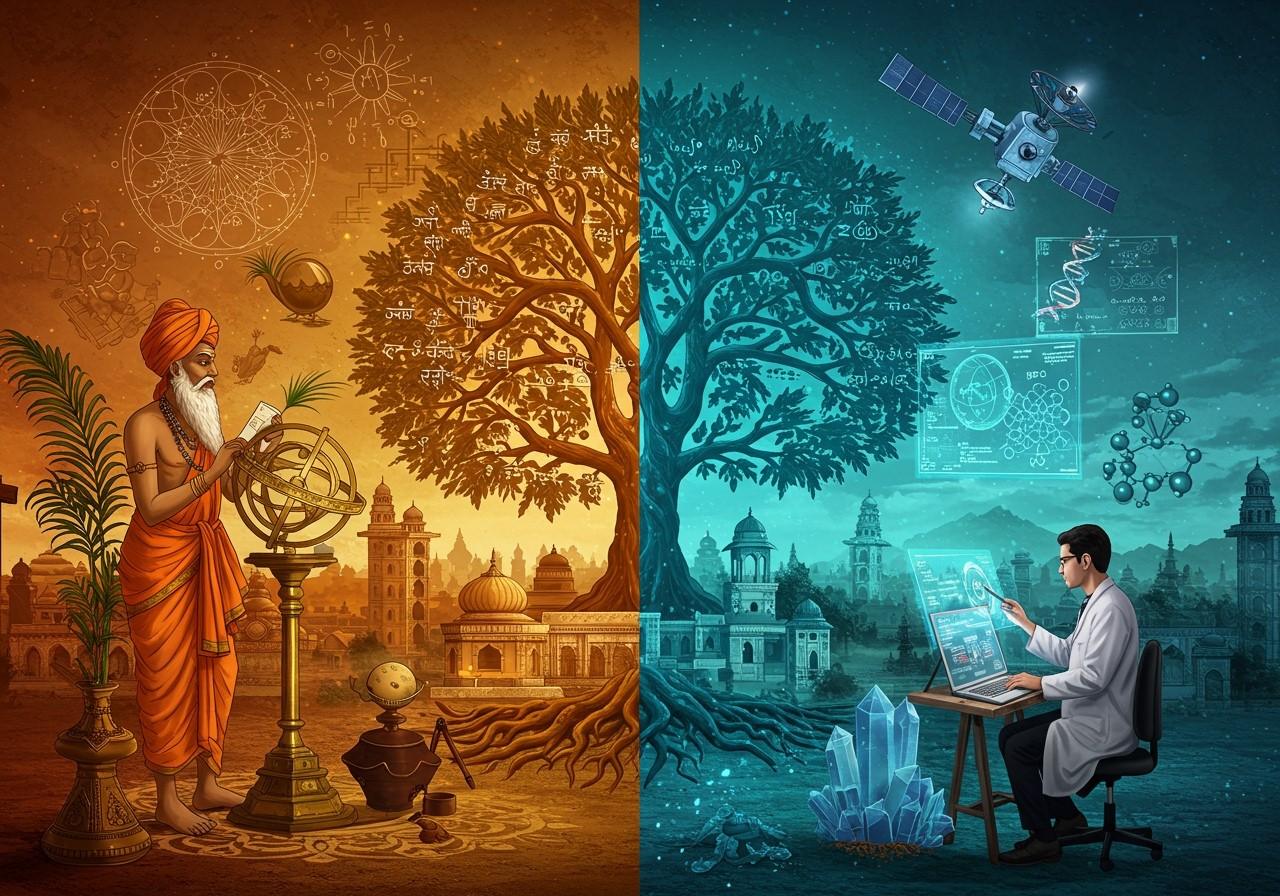
As India moves forward with digital transformation and research growth, combining technical skills with ethical awareness becomes increasingly important. The conference encourages such balanced thinking.
Ancient Indian Science: Technical Sessions and Cultural Integration
Over the three days, several technical sessions are being held where researchers present papers on topics related to ancient astronomy, mathematics, medicine, architecture, and environmental practices. Some discussions focus on how digital tools can preserve manuscripts and translate classical texts more accurately.
Young scholars are actively participating, showing that interest in Indian knowledge systems is not limited to senior academics. Many research projects are exploring how traditional ecological practices can support current sustainability efforts. In the context of global climate concerns, such studies are gaining attention.
A cultural programme has also been planned as part of the conference. Music and artistic performances inspired by classical traditions reflect the idea that knowledge in India has always included both science and art. This integration of intellectual discussion with cultural expression represents the broader spirit of the event.
The Ancient Indian Science conference at IIT (ISM) Dhanbad highlights a growing trend in higher education where technical learning connects with cultural roots. By creating space for dialogue between past wisdom and present innovation, the event contributes to a deeper understanding of how knowledge evolves across generations.