


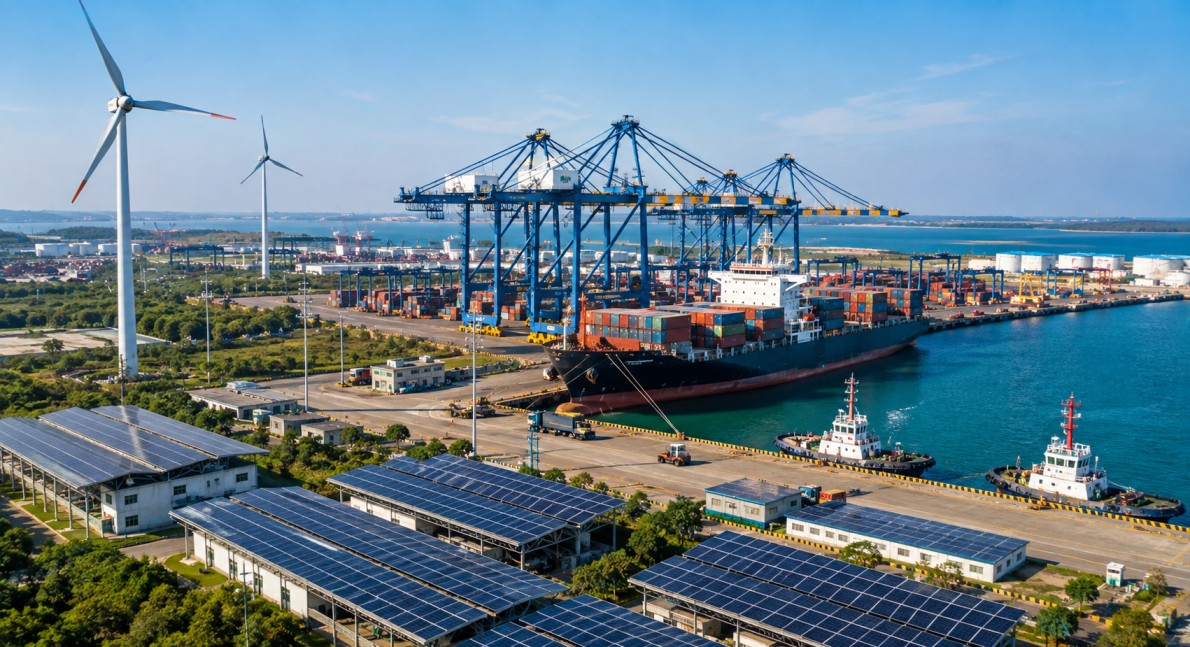
VOC Port Becomes Scope-2 Emission-Free

VOC Port in Thoothukudi, Tamil Nadu, has achieved a major milestone in India’s move towards cleaner and more sustainable maritime operations. V.O. Chidambaranar Port Authority has been recognised as India’s first major port to achieve Scope-2 emission-free status. The recognition reflects the port’s growing use of renewable energy and its efforts to reduce dependence on conventional electricity sources.
Thank you for reading this post, don't forget to subscribe!The development places VOC Port among the country’s leading green ports at a time when the maritime sector is focusing more on clean energy, lower emissions and sustainable infrastructure.
What Scope-2 Emission-Free Means
Scope-2 emissions are indirect greenhouse gas emissions linked to the electricity, steam, heating or cooling purchased by an organisation. For a large port, electricity is needed for many activities, including cargo handling, lighting, administration, equipment and other operations.
VOC Port’s Scope-2 recognition reflects its transition towards renewable energy. According to the port’s sustainability reporting, renewable energy offsets nearly 94% of its energy-consumption equivalent, while the port has also reported a significant reduction in net carbon emissions.
The Scope-2 recognition was provided by Bureau Veritas, an international testing, inspection and certification organisation. The achievement is important because ports are major energy users and are central to India’s trade and logistics network.
Solar and Wind Power at VOC Port
Renewable energy is at the centre of VOC Port’s green transition. The port has developed solar and wind power capacity to support its electricity requirements.
The port’s green infrastructure includes solar power and wind energy projects, while additional renewable capacity and energy storage are also being planned. Battery storage can help manage the changing supply from solar and wind power by storing electricity when renewable generation is high and making it available when required.
The port is also working on a Green Hydrogen Hub. Green hydrogen is produced using renewable electricity and can become an important clean-energy option for industries, transport and port-related activities.
These projects are part of a wider effort to reduce the environmental impact of maritime operations while improving energy efficiency.
ISO 50001 Certification
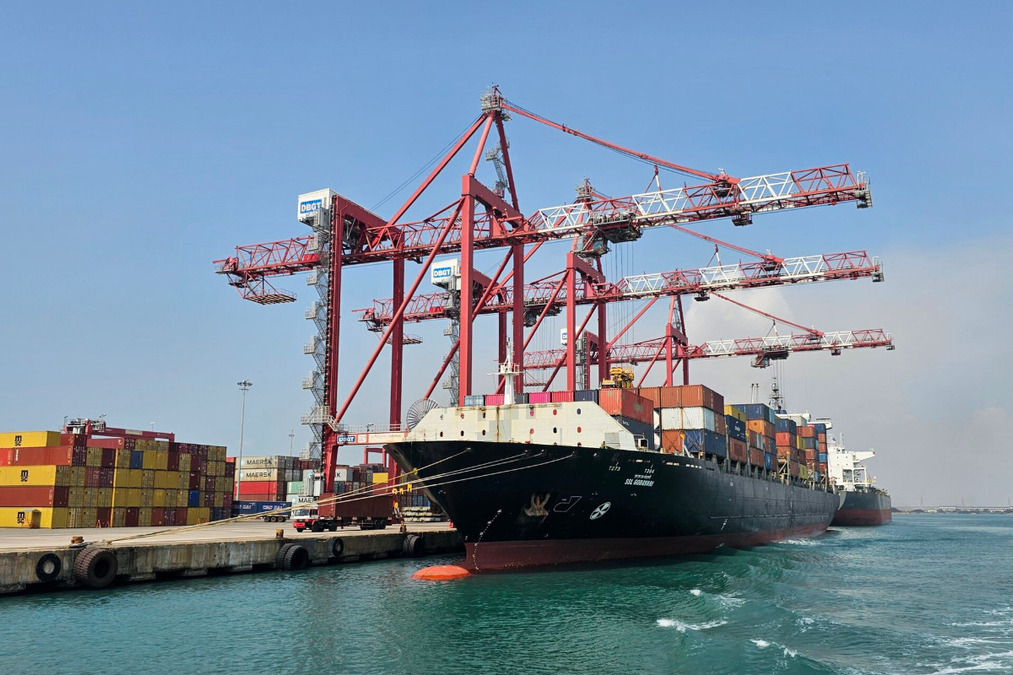
VOC Port has also received ISO 50001:2018 certification for its Energy Management System. ISO 50001 provides a framework for organisations to manage energy use more efficiently and continuously improve their energy performance.
For a busy port, an organised energy management system can help identify areas of high consumption, improve efficiency and support the use of cleaner energy sources.
The combination of renewable power and structured energy management strengthens VOC Port’s approach to long-term sustainability.
Carbon Reduction and Green Maritime Growth
VOC Port’s first Sustainability Report, released in June 2026, highlighted its progress in reducing emissions and increasing renewable energy use. The report showed that net carbon emissions had fallen by around 45%.
The port’s sustainability work comes as India is paying greater attention to greener transport and logistics infrastructure. Ports play an important role in this transition because they connect ships, roads, railways, warehouses and industrial supply chains.
Reducing energy-related emissions at ports can therefore have an impact beyond the port itself. Cleaner electricity, efficient equipment and alternative fuels can gradually support lower-carbon logistics.
Green Hydrogen and Future Energy Plans
Green hydrogen is another major part of VOC Port’s long-term plans. The port has already been associated with a green hydrogen pilot project and is exploring ways to expand its clean-energy ecosystem.
An IIM Calcutta case study titled The Hydrogen Pivot: Orchestrating the Green Transition at V.O. Chidambaranar Port Authority has also documented the port’s work on renewable energy, electrification and green hydrogen.
The development is significant as countries and industries are looking for alternatives to fossil fuels in sectors where direct electrification can be difficult.
Digital Technology at the Port
VOC Port’s transformation is not limited to renewable energy. The port has also introduced digital technologies as part of its modernisation programme.
In June 2026, the port launched PortGPT, an enterprise-grade generative AI mobile application. It was described as the first such dedicated mobile application implemented by an Indian major port. The platform is intended to support access to information, operational efficiency and data-based decision-making.
The port is also working towards broader smart-port and digital transformation goals, showing how environmental technology and digital technology are being developed together.
Partnership for Maritime Education
VOC Port has also expanded its focus beyond cargo and energy infrastructure. In June 2026, it signed a Memorandum of Understanding with Gati Shakti Vishwavidyalaya to support cooperation in logistics education, research, innovation and skill development.
Such partnerships can help connect the changing needs of the maritime industry with education and research. As ports become more automated, digital and environmentally focused, the demand for new skills is also increasing.
A New Direction for Indian Ports
VOC Port’s achievement comes as India’s maritime sector is moving towards cleaner and more technology-driven operations. Renewable energy, electric equipment, green hydrogen, energy storage and digital systems are increasingly becoming part of the development plans for modern ports.
The port’s experience also provides an example of how an established cargo facility can combine renewable power, energy management, digital tools and sustainability planning.
With India’s ports handling large volumes of domestic and international trade, reducing their environmental impact is becoming an important part of the country’s wider clean-energy and logistics transition.