East India Company: From Trade to Empire

The East India Company was one of the most powerful trading companies in world history. It started as a simple trading company from England, but slowly it became the ruler of large parts of India. Its story is important because it changed the history of India forever.
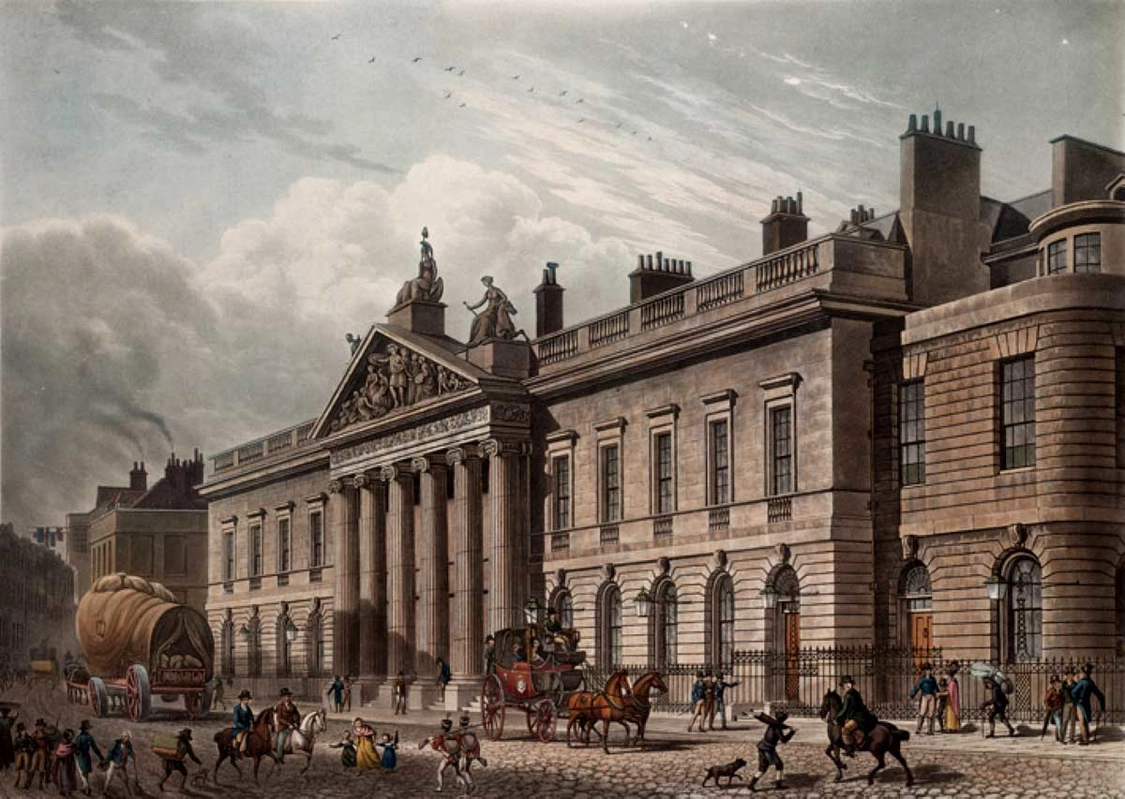
Thank you for reading this post, don't forget to subscribe!The British East India Company was the first among various East India Companies formed in Europe. It was granted an English Royal Charter by Queen Elizabeth I on 31 December 1600. The company was officially named “Governor and Company of Merchants of London Trading into the East Indies.”
In the beginning, it was only a business organization. It was a joint-stock company with 125 shareholders and a capital of 68,373 Pounds Sterling. Later, when the company began long sea voyages, the capital increased to 429,000 Pounds Sterling. The first governor of the company was Thomas Smith, and the commander of the first voyage to India was James Lancaster, who commanded a ship named Red Dragon.
In its early days, the company was also known as “John Company.” At that time, the Portuguese had already taken control of trade in the East Indies. They had shifted the center of world trade from the Mediterranean Sea to the Atlantic Ocean. So, the British faced strong competition from the Portuguese.
Early Efforts in India
In 1603, Queen Elizabeth I died. Around the same time, in India, the great Mughal Emperor Akbar also died in 1605. His son Jahangir became the new emperor.
The new English king, James I of England, sent William Hawkins as his ambassador to the Mughal court. Hawkins arrived at Surat in 1608 on a ship named Hector. However, the Portuguese captured the ship and claimed that all ports belonged to the King of Portugal. After some time, Hawkins was released and reached Agra in 1609.
Emperor Jahangir welcomed Hawkins warmly and even called him “English Khan.” Hawkins tried to get permission to open an English factory (trading center) at Surat. At first, he succeeded, but due to pressure from the Portuguese, the permission was withdrawn. Hawkins returned to England disappointed and died soon after.
In 1611, Captain Middleton fought against the Portuguese and defeated them in the Battle of Bombay. However, royal permission from the Mughal Emperor was still necessary.
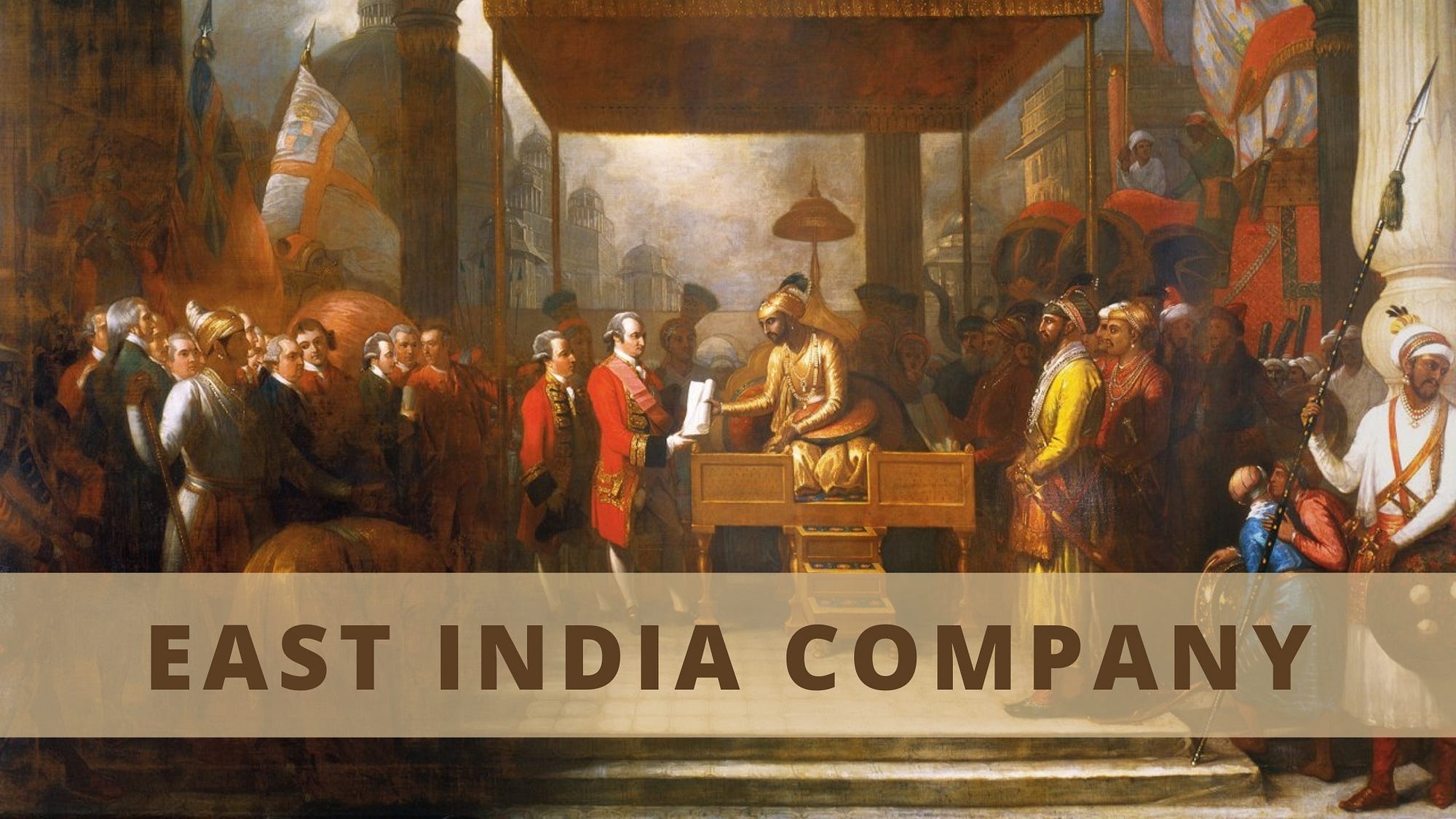
In 1615, Sir Thomas Roe came to India as the official ambassador. He stayed at Jahangir’s court in Agra until 1619. Though England was economically small compared to India at that time, Roe managed to get a royal order called a “Firman.” This Firman allowed the English to trade in Surat under reasonable conditions. This gave the company a legal and permanent base in India. Soon, a branch factory was opened at Masulipattanam.
Expansion of Commercial Activities
The British also faced competition from the Dutch. In 1623, the Amboyna tragedy forced the British out of Indonesia. After this event, they focused more on India.
They opened new factories:
- Armagaon (1625–26)
- Golconda (1632)
- Near Balasore in Odisha (1633)
These trading centers helped the company grow stronger in India.
Establishment of the Three Presidencies
Presidency of Madras
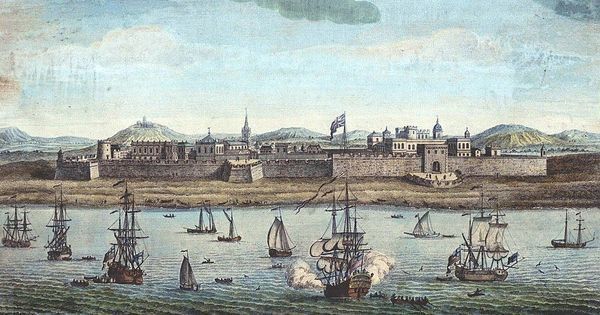
In 1639, the company purchased land at Madraspatanam from the Raja of Chandragiri. They built Fort St. George there. This was their first territorial possession in India.
By 1653, Madras was made a Presidency. It became the first Presidency of the East India Company. Factories at Hooghly (1650) and Kasimbazar (1655) were placed under Madras Presidency.
Presidency of Bombay
Bombay was given to the British by the Portuguese in 1661 as dowry when Catherine of Braganza married Prince Charles II of England. In 1665, Charles II transferred Bombay to the East India Company for just 10 Pounds per year.
In 1664, Shivaji attacked Surat. The company officer George Oxenden defended the factory successfully. Because Shivaji was an enemy of the Mughals, the Mughal rulers allowed the company to trade freely for one year.
In 1667, the company shifted its headquarters from Surat to Bombay. Gerald Aungier, the Governor of Bombay, developed the town into a trading center. He started the first mint and printing press in Bombay. Later, Bombay became a Presidency.
Presidency of Bengal
In 1667, the company got permission to trade in Bengal. However, in 1686, Nawab Shaista Khan seized the company’s factory at Kasimbazar. The company officers were forced to leave.
After four years, they received a new royal Firman. This time, Job Charnock established a fortified factory at Sutnati instead of Hooghly. Sutnati later became Calcutta (now Kolkata).
Thus, Bengal became the third Presidency of the East India Company.
From Traders to Rulers
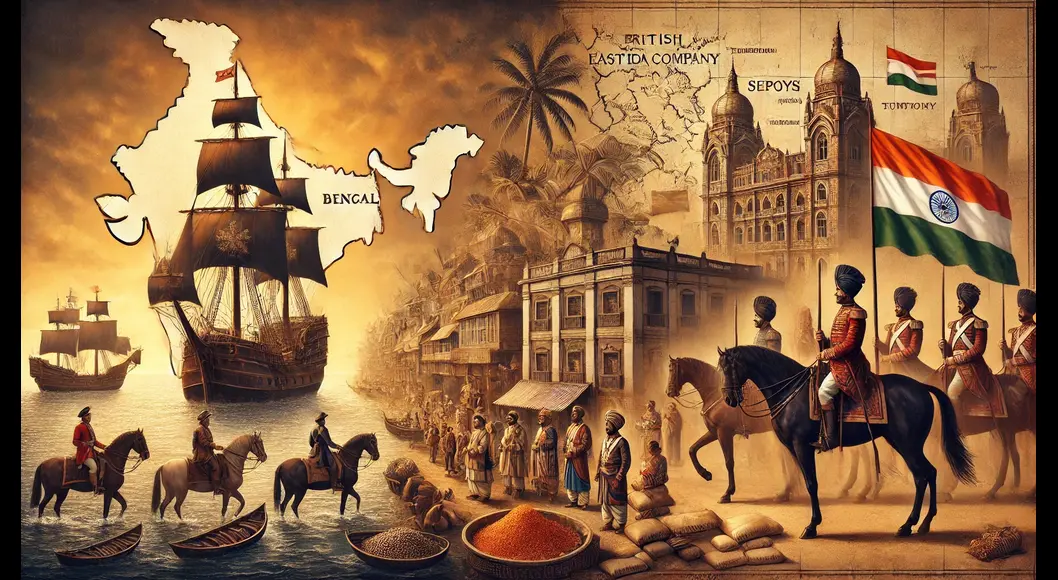
At first, the East India Company came only for trade. They traded in:
- Spices
- Silk
- Cotton
- Indigo
- Tea
- Saltpetre
But slowly, they began to interfere in Indian politics.
The turning point came in 1757 at the Battle of Plassey. The company, led by Robert Clive, defeated Nawab Siraj-ud-Daulah of Bengal. This victory gave the company control over Bengal’s wealth.
In 1764, at the Battle of Buxar, they defeated the combined forces of the Nawab of Awadh, the Mughal Emperor Shah Alam II, and Mir Qasim. After this, the Mughal Emperor granted the Diwani rights (right to collect revenue) of Bengal, Bihar, and Orissa to the company.
Now the company was not only trading but also ruling.
Administration and Exploitation
The company introduced many new systems:
- Revenue collection system
- Permanent Settlement (1793)
- New courts and laws
- English education
However, many of these systems harmed Indian farmers and artisans. Heavy taxes caused poverty and famines.
Indian industries, especially handloom weaving, suffered because British machine-made goods were imported into India.
Major Wars and Expansion
The company fought many wars:
- Anglo-Mysore Wars against Tipu Sultan
- Anglo-Maratha Wars
- Anglo-Sikh Wars
Through these wars, they captured most parts of India.
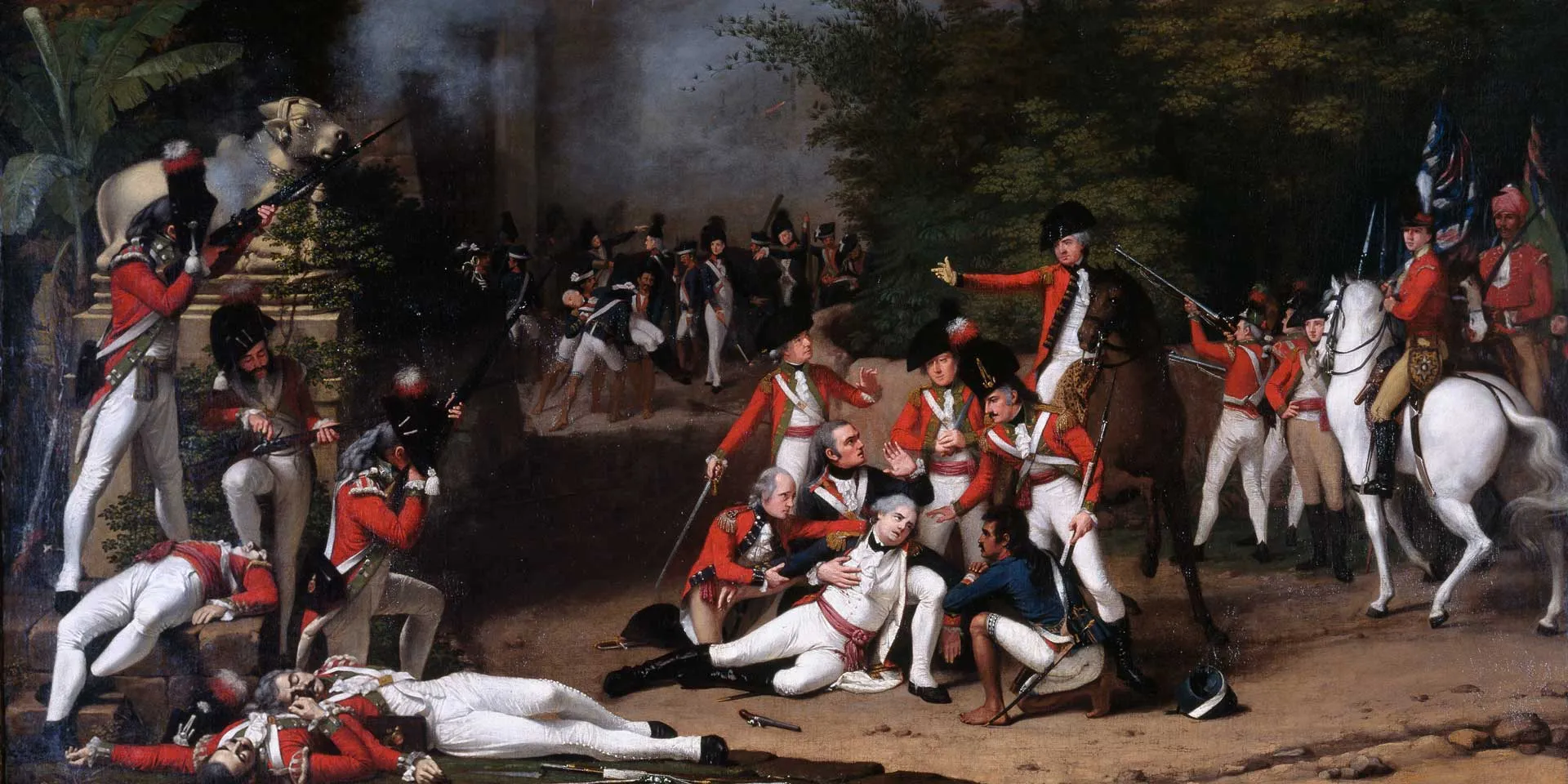
They also used policies like:
- Subsidiary Alliance (introduced by Lord Wellesley)
- Doctrine of Lapse (introduced by Lord Dalhousie)
These policies helped them annex Indian kingdoms.
Revolt of 1857 and End of Company Rule
In 1857, Indian soldiers revolted against the company. This revolt is known as the First War of Independence.
The revolt spread to many parts of North India. Although the revolt failed, it shocked the British government.
In 1858, the British Parliament passed the Government of India Act. The East India Company was dissolved, and India came directly under the British Crown.
Thus ended the rule of the East India Company.
Impact of the East India Company
Positive Impacts
- Introduction of modern education
- Development of railways and telegraph
- Introduction of modern legal system
Negative Impacts
- Economic exploitation
- Destruction of Indian industries
- Famines and poverty
- Loss of Indian independence
Conclusion
The East India Company started as a simple trading company in 1600. With time, it became one of the most powerful rulers in India. It changed India’s political, economic, and social life.
Though it introduced some modern systems, its main aim was profit. The company’s policies led to the loss of India’s freedom and caused suffering to millions of people.
The story of the East India Company teaches us how trade can turn into political power. It also reminds us of the importance of unity and self-rule.
FAQs about the East India Company
1. What was the East India Company?
The East India Company was a British trading company formed in 1600. It later became the ruler of large parts of India.
2. Who gave permission to start the East India Company?
Queen Elizabeth I gave the company a Royal Charter on 31 December 1600.
3. Why was the company formed?
It was formed to trade with countries in Asia, especially India and the East Indies. The main aim was to earn profit from spices, silk, cotton, and other goods.
4. When did the East India Company come to India?
The company first came to India in 1608 when William Hawkins arrived at Surat.
5. Who allowed the British to trade in India?
Jahangir allowed the British to trade in India after giving them a royal order called a Firman.