

Colombo Security Conclave

Colombo Security Conclave concluded its three-day Table Top Exercise on September 12, 2026, at the Eastern Naval Command in Visakhapatnam. The exercise began on September 9 and focused on improving cooperation among participating countries to respond to illicit maritime activities in the Indian Ocean Region (IOR).
The exercise brought together delegations and maritime security experts from member states and observer countries. Through simulated situations and detailed discussions, participants examined how different agencies can coordinate their response to maritime security threats.

Table Top Exercise Held in Visakhapatnam
The Table Top Exercise was conducted at the Eastern Naval Command in Visakhapatnam, a major centre for India’s naval operations on the eastern coast. Unlike a conventional military exercise involving ships and weapons, a Table Top Exercise mainly uses discussion-based simulations.
During such an exercise, participants are presented with hypothetical situations and asked to decide how they would respond. This helps security agencies test their communication systems, decision-making processes and standard operating procedures before dealing with similar situations in the real world.
The Colombo Security Conclave exercise continued for more than 72 hours, giving participants an opportunity to examine different maritime security situations in detail.
Focus on Indian Ocean Maritime Security
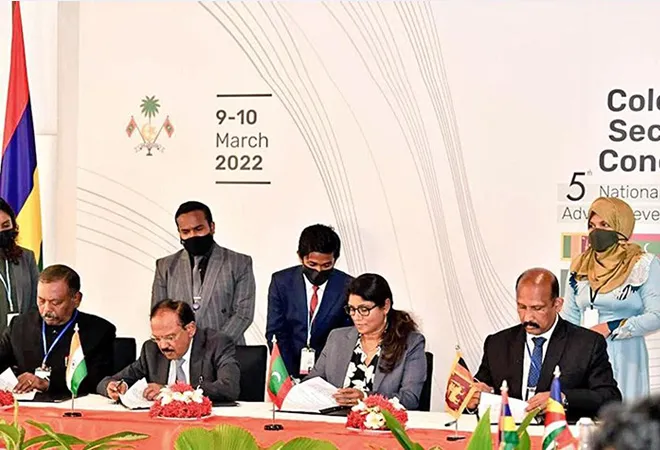
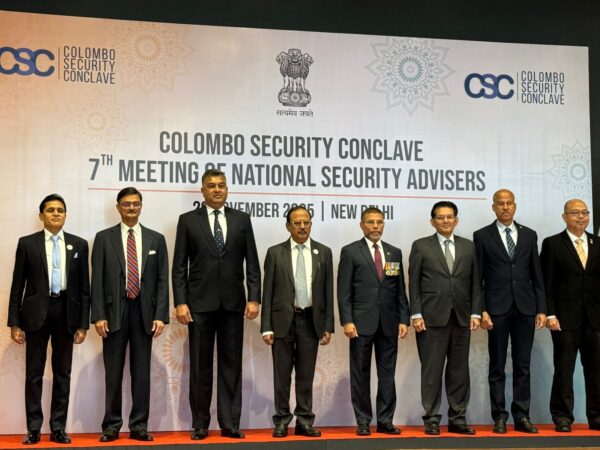
The Colombo Security Conclave is a regional maritime security grouping focused on cooperation among countries in the Indian Ocean Region. Maritime security has become increasingly important as the region handles major shipping routes, trade, energy movement and fishing activities.
The Table Top Exercise focused on several threats that can affect maritime safety and regional stability. These included maritime terrorism, narcotics smuggling, human trafficking and illegal, unreported and unregulated (IUU) fishing.
By discussing these challenges together, participating countries can develop a better understanding of how threats move across maritime boundaries and how information can be shared quickly.
Tackling Maritime Terrorism
Maritime terrorism was one of the important issues discussed during the exercise. Terrorist groups can use the sea for movement, transportation of illegal materials or attacks against vessels and coastal infrastructure.
A coordinated response is important because maritime incidents can involve several countries and agencies. Sharing information and following common procedures can help authorities identify suspicious activities and respond more effectively.
The exercise provided a simulated environment for participants to examine how such incidents could be handled through regional cooperation.
Narcotics Smuggling and Human Trafficking
The exercise also addressed narcotics smuggling and human trafficking, which are major transnational security concerns.
Criminal networks may use maritime routes to transport illegal drugs, weapons, people and other prohibited goods. Since these activities can cross national boundaries, individual countries may not be able to address them alone.
The Table Top Exercise allowed participants to discuss information-sharing mechanisms and possible coordinated responses. Such cooperation can strengthen the ability of maritime security agencies to detect and disrupt criminal networks operating across the Indian Ocean.
Illegal and Unregulated Fishing
Another important theme was illegal, unreported and unregulated fishing, commonly known as IUU fishing.
Unregulated fishing can damage marine ecosystems and reduce fish resources. It can also create disputes over maritime resources and make it harder for governments to properly manage their waters.
By including IUU fishing in the exercise, the participating countries recognised that maritime security is connected not only with military threats but also with the protection and responsible use of ocean resources.
Maritime Domain Awareness
A major part of the exercise involved Maritime Domain Awareness (MDA). Maritime Domain Awareness means having a clear understanding of activities and developments at sea that could affect security, safety, the economy or the marine environment.
Effective MDA depends heavily on timely information. Countries need to know what is happening in their surrounding waters and share relevant information when an activity may have regional implications.
Participants reviewed existing information-sharing arrangements and standard operating procedures as part of the exercise. Improving these systems can help countries build a more complete picture of maritime activities in the Indian Ocean.
Strengthening Regional Coordination
The Colombo Security Conclave exercise focused strongly on coordination. A maritime security incident can develop quickly, and delays in communication can make a response more difficult.
The simulated scenarios gave participants an opportunity to test how different agencies and countries would communicate during a crisis. They could also identify areas where existing procedures may need improvement.
Regular exercises of this type help participating countries understand each other’s working methods. They can also strengthen professional relationships among maritime security officials.
Role of the Indian Ocean Region
The Indian Ocean is one of the world’s important maritime regions. It connects major economies and includes important sea routes used for international trade.
India’s location gives it a significant role in maintaining maritime security in the region. Hosting the Table Top Exercise in Visakhapatnam also reflects India’s continuing engagement with regional partners on maritime security issues.
The Eastern Naval Command plays an important role in India’s maritime presence along the country’s eastern coastline. Visakhapatnam is also home to important naval facilities and serves as a major base for India’s eastern maritime operations.
Wider Security Cooperation
The exercise reflects the broader areas of cooperation covered by the Colombo Security Conclave, including maritime security, counter-terrorism, transnational crime and humanitarian assistance and disaster relief.
Modern maritime security requires cooperation across several areas. A country may need to respond to a security threat, a criminal activity, a natural disaster or an emergency involving vessels at sea. Regional mechanisms can make it easier to coordinate these responses.
The successful completion of the three-day Table Top Exercise in Visakhapatnam provided participating countries and observers with an opportunity to assess their collective response mechanisms and strengthen cooperation against common maritime challenges in the Indian Ocean Region.