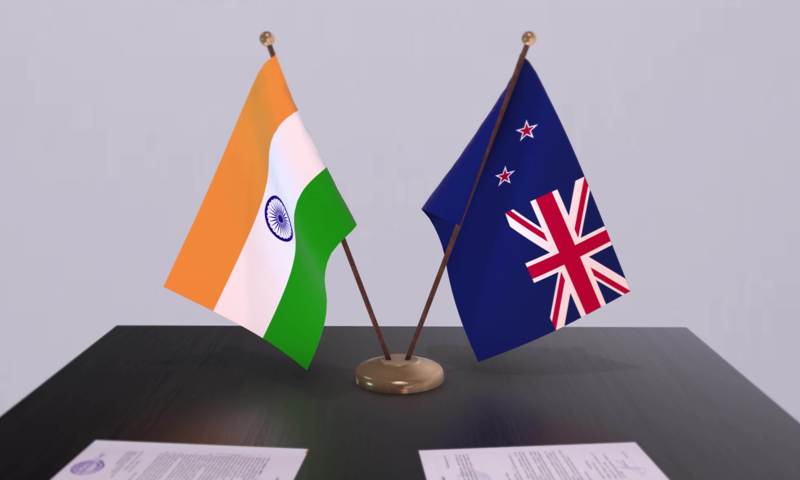
India-New Zealand FTA: A New Chapter in Bilateral Trade Relations

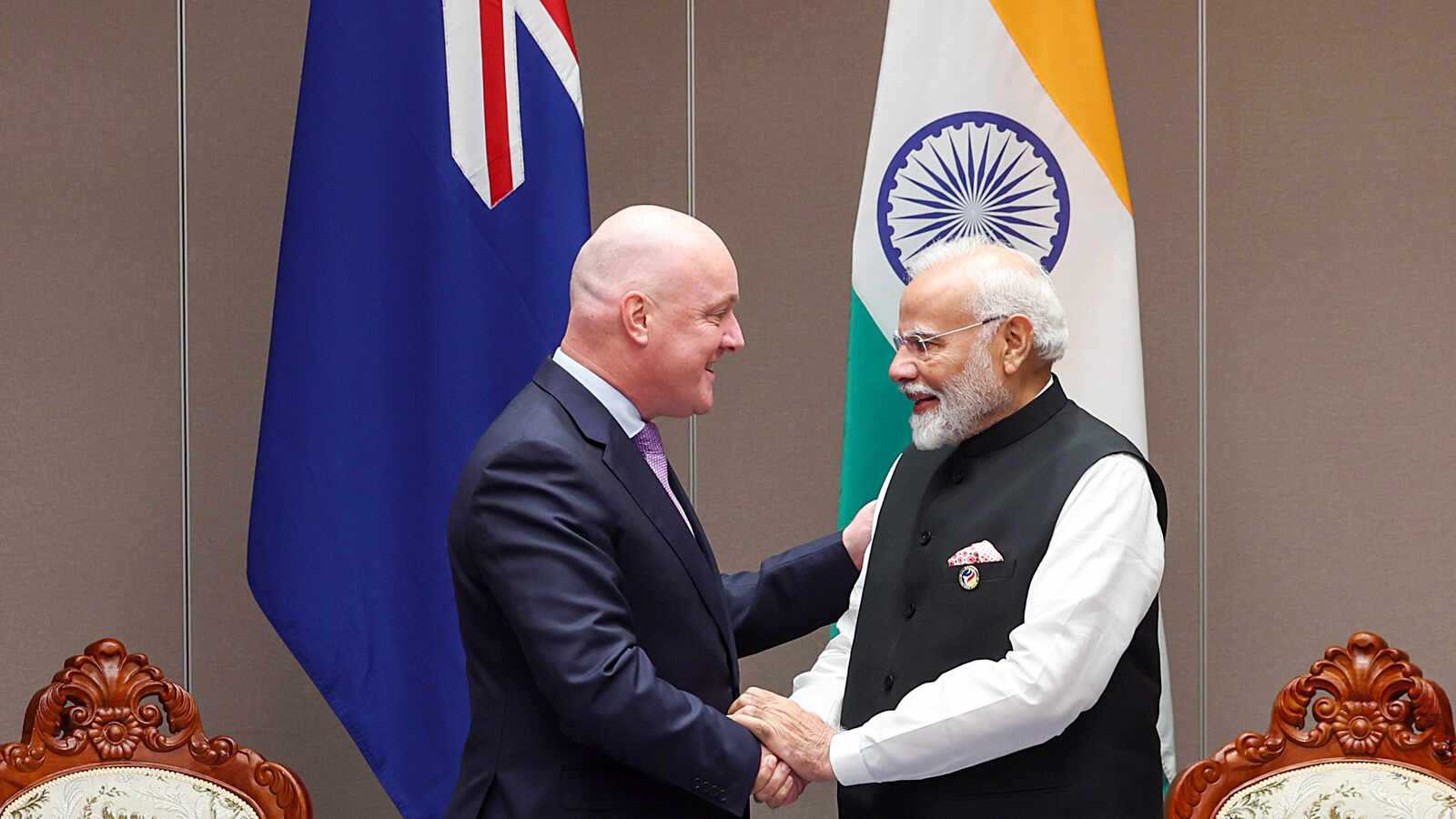
The India-New Zealand FTA announced on December 22, 2025, by Prime Minister Narendra Modi and New Zealand’s Prime Minister Christopher Luxon, represents more than a simple trade pact. It is a strategic step highlighting India’s emergence as a reliable economic partner and a growing influence in global trade. At a time when global commerce faces uncertainty, protectionism, and fractured supply chains, this agreement signals India’s commitment to a rules-based and balanced trading system.
Thank you for reading this post, don't forget to subscribe!Why the Timing Matters for the India-New Zealand FTA
The India–New Zealand FTA comes at a moment when countries around the world are reassessing trade partnerships. Developed and developing economies alike are diversifying trade partners to mitigate geopolitical risks, supply-chain disruptions, and trade weaponisation. India’s recent agreements with the UK, Oman, and now New Zealand, fit into this global recalibration of trade relations.
What makes this deal particularly notable is the speed of negotiations. Concluded in just nine months, the agreement demonstrates India’s strong political will to align trade diplomacy with national economic goals. The rapid pace also reflects India’s intention to play a constructive role in shaping global trade rules.
Services and Skilled Mobility Take the Lead in the India-New Zealand FTA
Unlike traditional trade agreements that focus primarily on goods, the India–New Zealand FTA puts services and skilled labour mobility at the forefront. India has a natural advantage in sectors such as IT, engineering, healthcare, education, and tourism, yet historically has struggled to secure deep access abroad.
New Zealand’s offer marks the most liberal services commitment it has ever provided to India. It covers IT services, fintech, telecom, education, tourism, and construction. Skilled professionals in these sectors can now access opportunities more freely, and Indian students will benefit from post-study work arrangements, opening new pathways for talent mobility.
In an era where policy unpredictability limits skilled migration in other advanced economies, these provisions provide India with stability and alternatives for its expanding workforce.
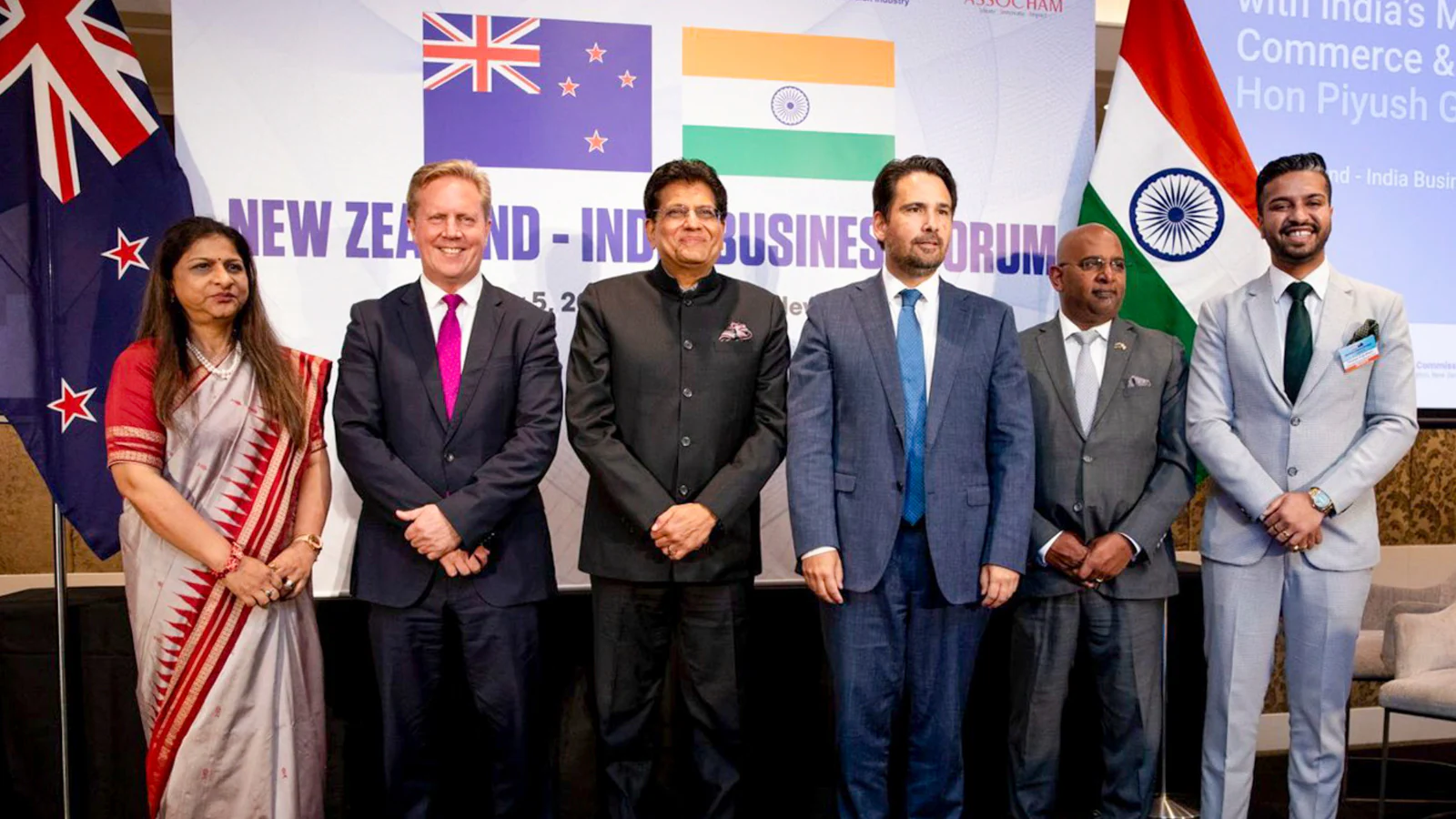
Balanced Market Access for Goods and Services in the India-New Zealand FTA
The goods component of the India–New Zealand FTA reflects careful planning. New Zealand has agreed to eliminate duties on all its tariff lines, providing Indian exporters with full duty-free access. India, in return, has opened approximately 70% of its tariff lines, protecting sensitive sectors such as dairy, sugar, spices, and edible oils.
This asymmetric liberalisation benefits India’s labour-intensive industries like textiles, apparel, leather, engineering goods, pharmaceuticals, and select agricultural products. At the same time, the deal ensures that farmer livelihoods remain protected from sudden import shocks.
Additionally, the agreement allows duty-free access to intermediate inputs like wooden logs, coking coal, and metal scrap. This is expected to reduce production costs for Indian manufacturers in steel, construction, and engineering industries.
India-New Zealand FTA: Agriculture and Health Cooperation
Agriculture is often the most complex part of trade negotiations, but the India–New Zealand FTA manages it with balance. Instead of heavy tariff cuts, the deal emphasizes cooperation through knowledge sharing and agri-technology development. Products like apples, kiwifruit, and honey will benefit from improved value chains rather than tariff concessions alone.
Healthcare and traditional medicine also receive dedicated attention in the agreement. India’s pharmaceutical and healthcare sectors gain new opportunities, enhancing its position as a global health partner. This reinforces India’s competitive edge in healthcare services alongside major players like China and the European Union.
India-New Zealand FTA: Ensuring Effective Use
Bilateral trade between India and New Zealand was about $2.4 billion in 2024–25. Once fully implemented, the FTA is expected to double trade by 2030. However, India faces a utilisation challenge. Historically, the country’s FTA utilisation rate has been around 25%, much lower than the 70–80% seen in developed economies.
The agreement includes measures to simplify customs procedures, enhance transparency, and improve regulatory cooperation to address these challenges. The success of the FTA will depend on active involvement by Indian industries, firms, and policymakers. Groups like the Confederation of Indian Industry emphasize that the real benefits will come from expanding services trade, deepening skill linkages, and leveraging diaspora networks.
India-New Zealand FTA: Strategic Global Positioning
Beyond trade numbers, the India–New Zealand FTA carries significant strategic importance. With this agreement, India has established partnerships with nearly all members of the Regional Comprehensive Economic Partnership, except China. This reflects India’s selective but growing integration into the global economy.
The depth of services access and mobility concessions from New Zealand also demonstrates growing trust in India’s trade policy stability. As India continues negotiations with partners such as the European Union, the FTA strengthens its position as a country capable of negotiating balanced agreements that protect domestic interests while promoting openness.
This deal marks a milestone not just in India’s trade diplomacy but in its evolving perception as a credible and influential player in a fragmented global economic order.