




India-NZ FTA Clears New Zealand Parliament

India-NZ FTA legislation has been passed by the New Zealand Parliament, moving the free trade agreement between India and New Zealand closer to implementation. The legislation was approved by 93 votes to 29 on September 16, 2026. The agreement was signed in New Delhi on April 27, 2026, and will take effect after the required domestic processes are completed by both countries.
Thank you for reading this post, don't forget to subscribe!New Zealand Parliament Approves the Agreement
The parliamentary approval is an important step in the implementation of the India-NZ FTA. New Zealand’s Trade and Investment Minister Todd McClay welcomed the vote and said the agreement would create new opportunities for exporters.
The legislation had earlier passed its first reading in June and was examined through New Zealand’s parliamentary process before the final vote. The government has been working towards ratification later in 2026.
The agreement was negotiated during 2025 and formally signed by India’s Commerce and Industry Minister Piyush Goyal and New Zealand Trade and Investment Minister Todd McClay in New Delhi on April 27, 2026.
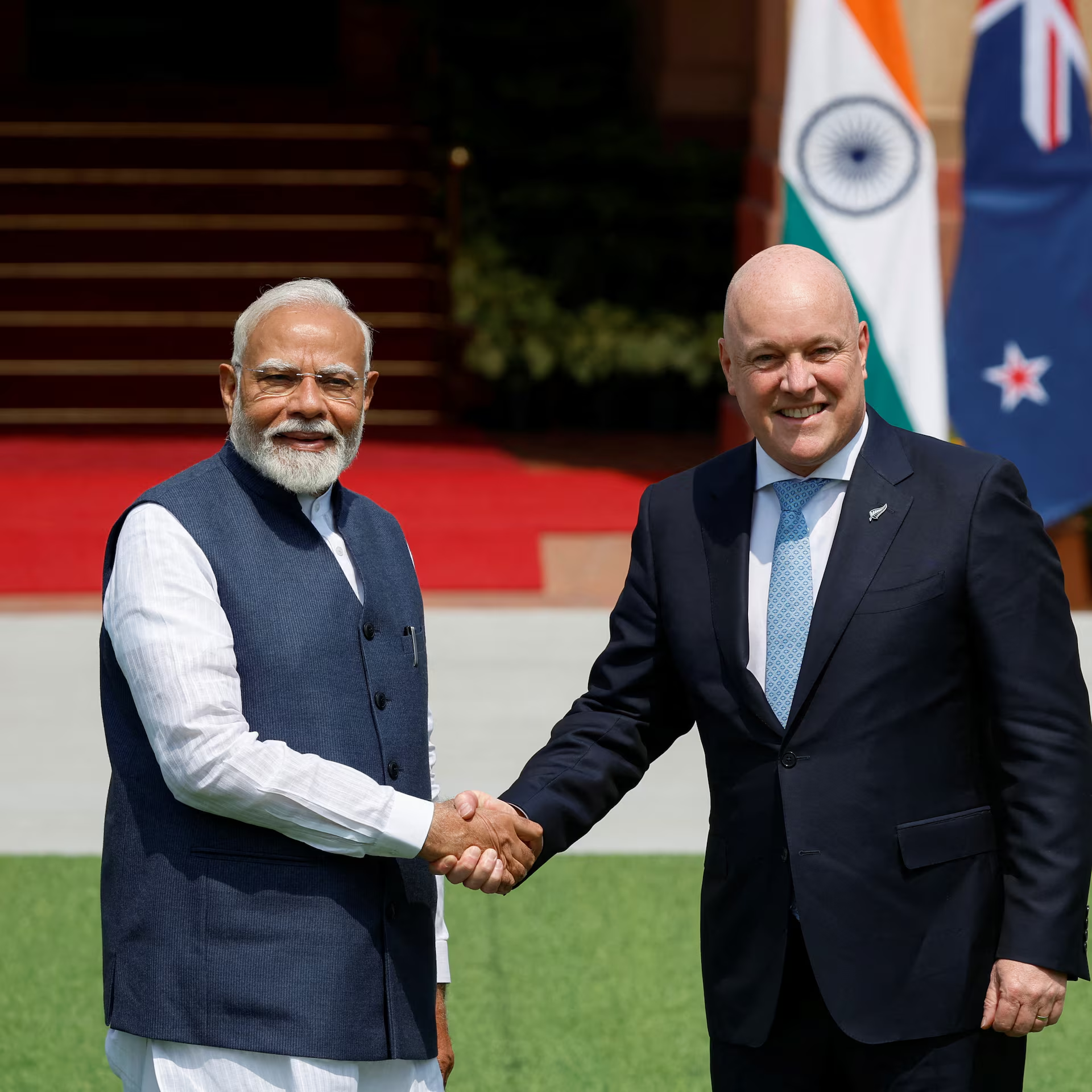
Tariffs on New Zealand Exports to India
A major part of the India-NZ FTA is the reduction and removal of tariffs. Under the agreement, tariffs on 95% of New Zealand’s exports to India will be eliminated or reduced when the agreement is fully implemented.
New Zealand’s government said 57% of its exports to India will become duty-free from the first day of the agreement’s operation. The share is expected to rise to 82% as implementation progresses, while tariffs on other covered products will be reduced.
The agreement covers products such as sheep meat, wool, forestry products, seafood, horticulture and industrial goods. Kiwifruit and apples will receive improved market access through specific arrangements and quotas.
New Zealand has also secured tariff reductions for products such as mānuka honey and wine.
Indian Products Get Wider Access to New Zealand
The agreement also provides significant market access for Indian exporters. India’s Ministry of Commerce said New Zealand will eliminate duties on all of its tariff lines for Indian goods from the agreement’s entry into force, with tariffs ranging from 0% to 10% being removed.
India’s export interests covered by the agreement include sectors such as textiles, apparel, engineering goods, chemicals, food processing and electronics.
However, India has kept several sensitive sectors outside its tariff concessions. According to the Ministry of Commerce, these include major dairy products, several agricultural products, sugar, edible oils and some other sensitive goods. India offered tariff concessions on about 70% of its tariff lines, while around 30% remained on the exclusion list.
Investment Commitment of USD 20 Billion
Investment is another major part of the India-NZ FTA. New Zealand has committed to facilitate USD 20 billion in investment in India over 15 years.
India’s Ministry of Commerce said the investment is expected to support areas including manufacturing, infrastructure, services, innovation and job creation. The agreement also includes a mechanism that can allow India to respond if the investment commitment falls short of the agreed framework.
The investment component adds a broader dimension to the trade agreement because the deal is not limited to reducing customs duties. It also seeks to encourage stronger business links between the two countries.
Services and Professional Mobility
The India-NZ FTA also covers services and movement of professionals. India’s Commerce Ministry said New Zealand has made commitments across 118 services sectors and sub-sectors, including areas such as information technology, professional services, telecommunications, construction, education, financial services and tourism.
The agreement also creates new mobility pathways for Indian professionals. A Temporary Employment Entry visa pathway provides for up to 5,000 Indian professionals at any given time, with eligible workers able to stay for up to three years.
A separate Working Holiday Visa arrangement will provide opportunities for 1,000 young Indians each year, while new post-study work arrangements provide longer work opportunities for eligible Indian graduates in New Zealand.
Trade Target Set for 2030
The agreement is part of a wider effort to expand economic relations between India and New Zealand. During Prime Minister Narendra Modi’s visit to New Zealand in July 2026, the two countries elevated their relationship to a Strategic Partnership and agreed on a Roadmap to 2030.
The roadmap includes an ambition to double two-way trade by 2030. It covers trade and investment as well as technology, education, tourism, agriculture, sport and maritime cooperation.
The trade agreement is expected to form an important part of that broader economic relationship.
Businesses Prepare for the FTA
Even before the agreement enters into force, New Zealand reported increased interest from exporters looking at the Indian market. In July, New Zealand’s government said exports of some products were already showing growth as businesses prepared for improved market access. Apple exports, for example, had increased compared with the 2024 season.
The India-NZ FTA is expected to create new opportunities for businesses in agriculture, food and beverages, manufacturing, technology and services once the agreement becomes operational.
The next stage is the completion of the domestic procedures required for the agreement to enter into force. Both countries will then move towards implementing the tariff, services, investment and market-access commitments included in the agreement.