New Reed Snake in Mizoram Highlights Hidden Biodiversity of Northeast India

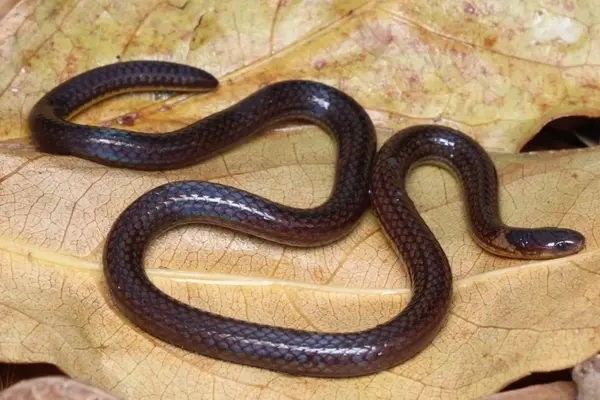
New Reed Snake in Mizoram has drawn national and international attention after researchers confirmed the discovery of a previously unknown snake species in the forested hills of the state. Named Calamaria mizoramensis, this non-venomous reed snake adds an important chapter to India’s biodiversity story and underlines how much of the Northeast’s wildlife still remains undocumented.
Thank you for reading this post, don't forget to subscribe!A discovery rooted in years of observation
The journey toward identifying this new species did not happen overnight. Specimens of the snake were first noticed as early as 2008, including within the Mizoram University campus. At that time, the snakes were believed to belong to a known species found across parts of Southeast Asia. Because reed snakes are small, secretive, and often look very similar to one another, they are easy to misidentify without detailed analysis.
Over the years, researchers continued to collect specimens from different locations in Mizoram. These repeated sightings raised questions about whether the snakes truly belonged to a widespread species or represented something unique to the region. This long-term attention finally led scientists to take a closer genetic look, which changed the understanding of the species completely.
Scientists behind the finding
The discovery of the New Reed Snake in Mizoram was led by Prof. H. T. Lalremsanga of Mizoram University. He worked alongside researcher Malsawmdawngliana Fanai and a team of collaborators from Russia, Germany, and Vietnam. The international nature of the team reflects how modern biodiversity research often crosses borders, combining local field knowledge with global scientific expertise.
Their findings were formally published on January 5, 2026, in the peer-reviewed journal Zootaxa, which is well known for research on animal taxonomy. Publication in such a journal confirms that the species description has passed strict scientific review and is now officially recognised by the global scientific community.

How genetics revealed a new species
For many years, the reed snake specimens from Mizoram were grouped with a similar Southeast Asian species. The turning point came with detailed DNA analysis. Scientists studied genetic samples collected over more than a decade and compared them with known species in the genus Calamaria.
The results showed more than 15 percent genetic divergence from the closest known relatives. In zoological research, this level of difference is considered strong evidence that the population represents a separate species. Based on this clear distinction, the researchers described the snake as a new species and named it Calamaria mizoramensis, honoring the state where it was found.
Understanding the genus Calamaria
The genus Calamaria, commonly known as reed snakes, includes 69 recognised species worldwide. These snakes are typically small, non-venomous, and adapted to life close to the ground or beneath it. Many species are poorly studied because they live underground or remain hidden in leaf litter and soil.
The addition of Calamaria mizoramensis increases India’s known reptile diversity and shows that even well-studied animal groups can still hold surprises. It also highlights the importance of combining field surveys with modern genetic tools to better understand wildlife.
Habitat and lifestyle of the snake
The New Reed Snake in Mizoram is described as nocturnal and semi-fossorial, meaning it is active mainly at night and spends much of its life below the surface. It prefers humid, forested hill environments where soil moisture and leaf litter provide ideal conditions for shelter and hunting small prey.
Researchers recorded the species at elevations ranging from about 670 to 1,295 metres above sea level. Interestingly, some sightings were made close to human settlements, including areas near the Mizoram University campus. This suggests that the snake may be more adaptable than previously thought, surviving even in landscapes influenced by human activity, as long as basic habitat conditions remain intact.
Possible wider distribution
So far, Calamaria mizoramensis has only been confirmed from Mizoram. However, scientists believe its range could extend beyond the state’s borders. Similar habitats exist in neighbouring regions such as Manipur, Nagaland, and Assam. There is also the possibility that the species may be found in parts of Bangladesh, particularly in the Chittagong Hill Tracts.
Future surveys and genetic studies will be needed to confirm whether populations outside Mizoram belong to the same species or represent additional, yet undiscovered, forms. This uncertainty once again points to how underexplored the region remains.
Mizoram’s growing list of reptiles and amphibians
Along with describing the New Reed Snake in Mizoram, the research team also presented an updated checklist of the state’s herpetofauna. The list now includes 169 species, made up of 52 amphibians and 117 reptiles. This updated record strengthens Mizoram’s reputation as a biodiversity hotspot within India.
The state’s varied terrain, high rainfall, and forest cover create ideal conditions for many unique species. However, scientists stress that documentation is only the first step. Continued research is essential to understand species population trends, threats, and conservation needs.
Why this discovery matters
The identification of Calamaria mizoramensis is not just about adding a new name to a scientific list. It carries wider meaning for conservation and environmental awareness. Discoveries like this remind us that many species may disappear before they are even known, especially in regions facing pressure from development, deforestation, and climate change.
The New Reed Snake in Mizoram also shows the value of local universities and long-term fieldwork. Without years of observation and sample collection, this species might have remained hidden in plain sight. The finding encourages further exploration of Northeast India’s forests and supports the argument for protecting these fragile ecosystems.
As scientists continue to study the region, Mizoram is likely to reveal more secrets from its hills and forests, strengthening India’s position as one of the world’s richest regions for biological diversity.