



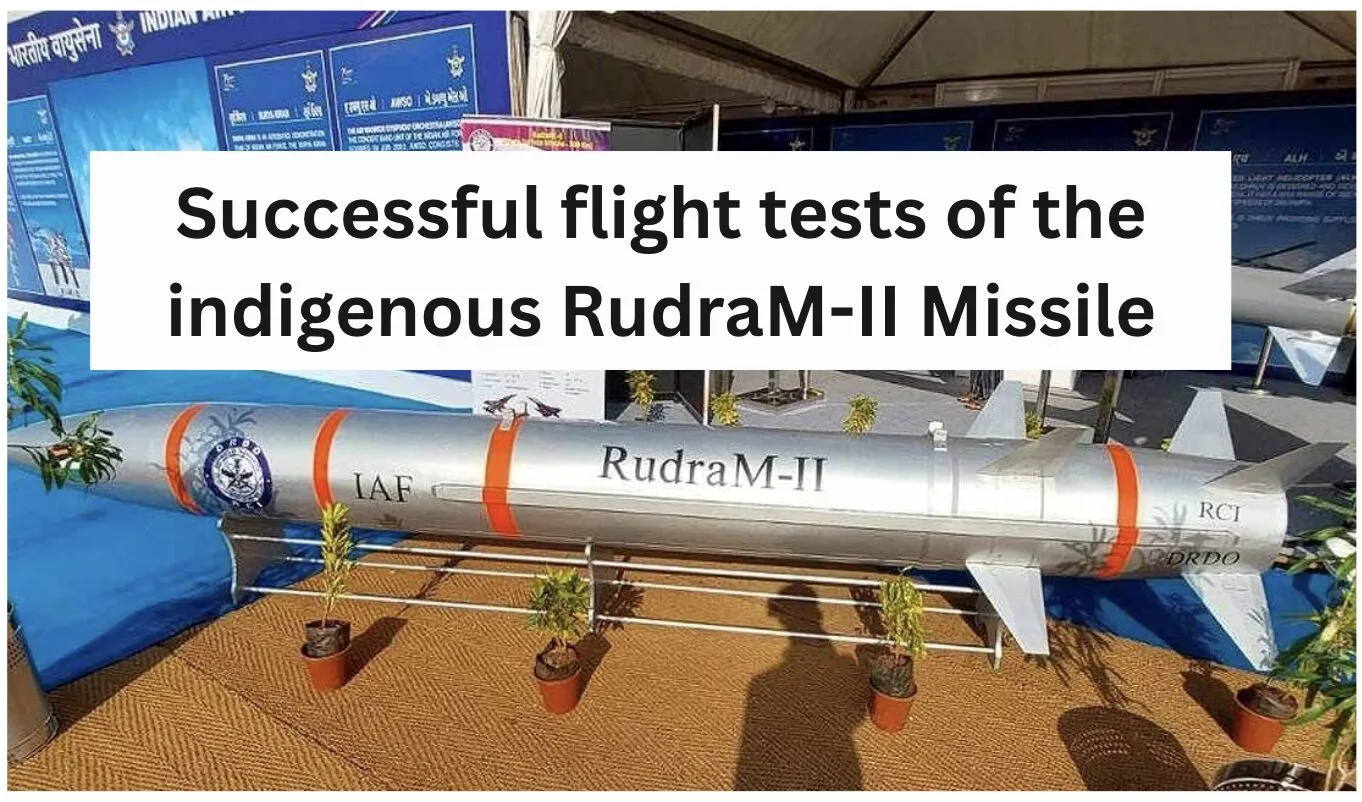
RudraM-II Missile Test Strengthens India’s Defence Power

RudraM-II Missile Test has marked another important achievement for India’s defence sector. On 2 June 2026, the Defence Research and Development Organisation (DRDO) and the Indian Air Force (IAF) successfully carried out a flight test of the indigenous RudraM-II missile. The missile was launched from a fighter aircraft and accurately struck its designated target, proving its advanced strike capability.
This successful test highlights India’s growing strength in developing modern defence technologies within the country. It also supports the government’s vision of increasing self-reliance in strategic and defence sectors.

Successful Missile Launch
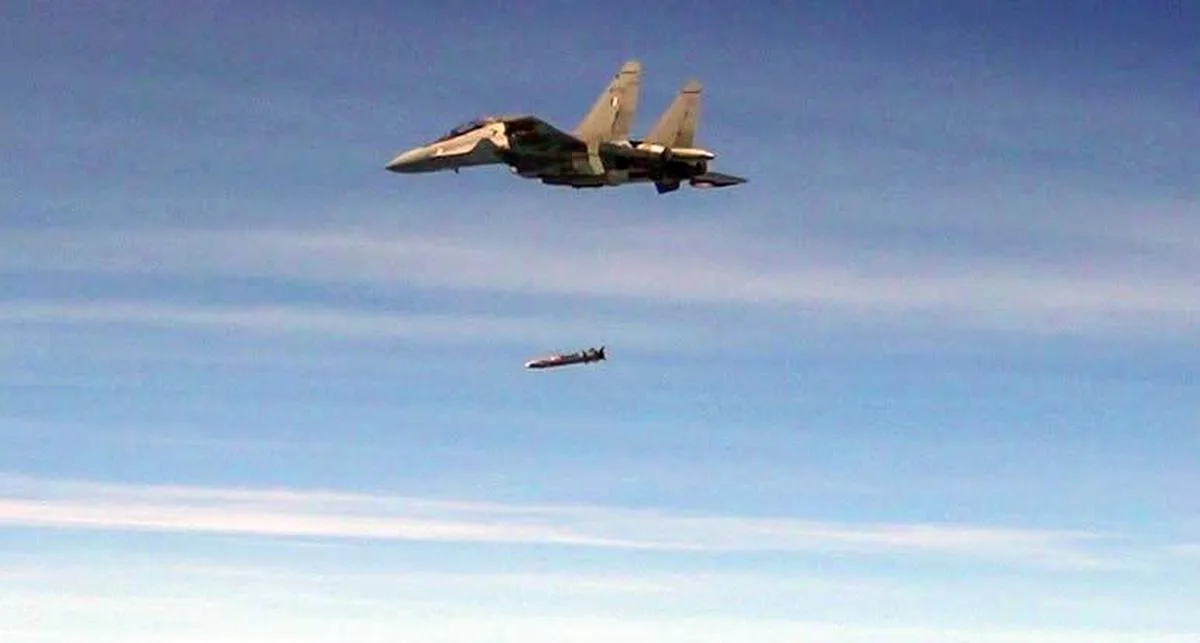
The RudraM-II missile was launched from a Su-30MKI fighter aircraft operated by the Indian Air Force. After being released from the aircraft, the missile followed its planned flight path and successfully engaged a predefined target.
The test was conducted under challenging conditions to evaluate the missile’s performance in real-world combat situations. According to officials, all mission objectives were achieved during the trial.
The success of this test demonstrates the missile’s ability to carry out precise strikes against important enemy targets, making it a valuable addition to India’s defence capabilities.
What is RudraM-II?
RudraM-II is a domestically developed air-to-surface missile. Air-to-surface missiles are launched from aircraft and are designed to attack targets located on land or at sea.
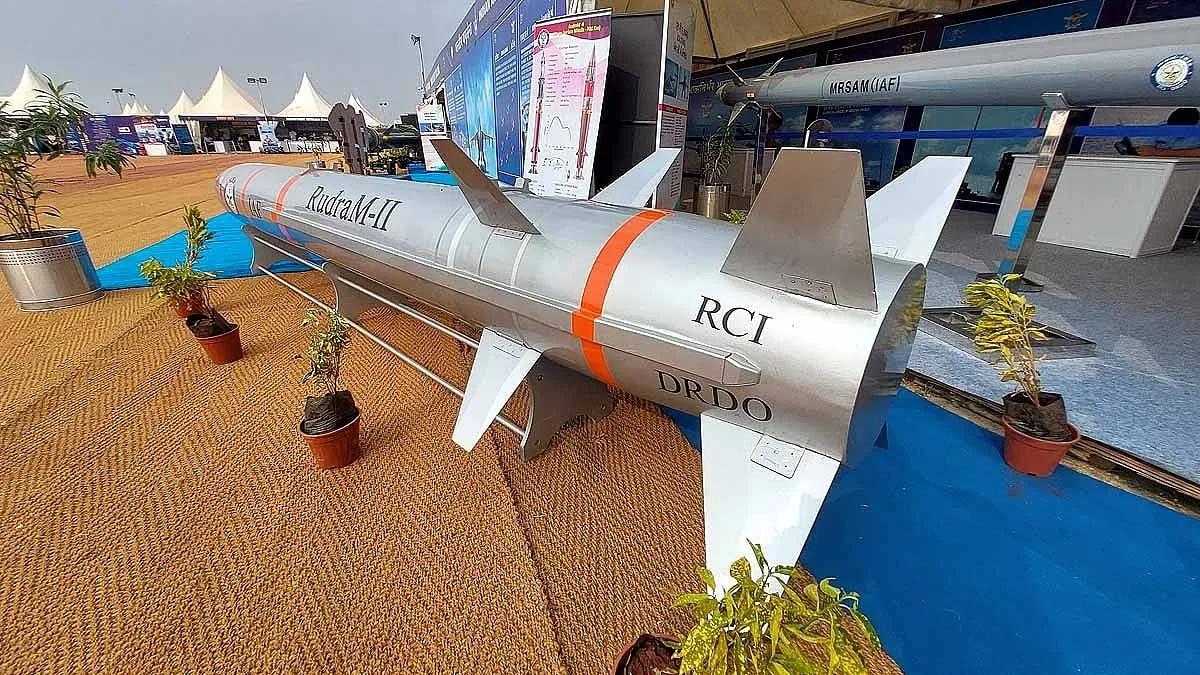
The missile uses a solid-propellant system that provides high speed and reliability during flight. It has been designed for precision attack missions and can be used against various enemy assets.
Some key features of the RudraM-II missile include:
| Feature | Details |
|---|---|
| Missile Type | Air-to-Surface Missile |
| Launch Platform | Su-30MKI Fighter Aircraft |
| Propulsion | Solid Propellant |
| Role | Precision Strike Missions |
| Developed By | DRDO |
| Tested On | 2 June 2026 |
The missile is expected to strengthen the Indian Air Force’s capability to carry out long-range precision attacks when required.
Test Conducted Under Extreme Conditions
One of the major highlights of the RudraM-II Missile Test was that it was carried out under extreme release conditions and along a critical flight trajectory.
Defence scientists wanted to ensure that the missile could perform effectively even in difficult operational environments. Data collected from various tracking systems confirmed that all major subsystems functioned as expected throughout the mission.
The test was monitored using advanced instruments placed at the Integrated Test Range in Chandipur, Odisha. These instruments recorded detailed flight information, allowing scientists to verify the missile’s performance.
Officials stated that the collected data matched the expected results, confirming the reliability of the missile system.
Role of DRDO and Industry Partners
The missile was developed under the leadership of Research Centre Imarat (RCI), Hyderabad, one of DRDO’s major research laboratories.
Several other DRDO laboratories and Indian defence industry partners also contributed to the development of the missile. Their combined efforts helped create a modern weapon system using indigenous technology.
This collaboration between research institutions and industry reflects the growing capability of India’s defence manufacturing ecosystem.
Over the past few years, India has significantly increased investment in indigenous defence projects. The success of the RudraM-II programme is another example of the country’s progress in advanced military technology.
Importance for India’s Defence Sector
Modern warfare increasingly depends on precision-guided weapons that can accurately strike targets while minimizing collateral damage.
The RudraM-II missile has been designed to meet these requirements. Its successful testing gives the Indian Air Force an additional tool for conducting precision strike operations.
The development of such advanced missiles reduces dependence on foreign technology and strengthens national security.
Experts believe that indigenous missile systems like RudraM-II will play a major role in enhancing India’s strategic capabilities in the coming years.
Support for Aatmanirbhar Bharat
The successful RudraM-II Missile Test also supports the government’s Aatmanirbhar Bharat initiative, which focuses on boosting domestic production and technological self-reliance.
India has been actively promoting indigenous defence manufacturing through research, innovation, and partnerships with private industry.
The development of advanced missile systems within the country helps create skilled jobs, encourages technological growth, and strengthens India’s position as an emerging defence technology power.
Defence Minister Congratulates Teams
Following the successful trial, Defence Minister Rajnath Singh congratulated the DRDO, Indian Air Force, defence public sector units, and industry partners involved in the project.
He praised the efforts of scientists, engineers, and military personnel whose contributions helped achieve this important milestone.
The successful test has been widely viewed as another step forward in India’s journey toward becoming a major centre for defence innovation and advanced military technology.
Growing Focus on Indigenous Defence Technology
In recent years, India has successfully developed several advanced missile systems, drones, radar systems, and electronic warfare technologies.
The RudraM-II Missile Test adds to this growing list of achievements and demonstrates the country’s capability to design and manufacture sophisticated defence equipment.
As global security challenges continue to evolve, investments in indigenous defence technology are becoming increasingly important. Successful projects like RudraM-II not only strengthen military preparedness but also promote technological advancement and economic growth.
With this achievement, India continues to move closer to its goal of building a strong, modern, and self-reliant defence ecosystem capable of meeting future security requirements.