
Sahakar Sarathi Launch: A New Era for Rural Cooperative Banks in India

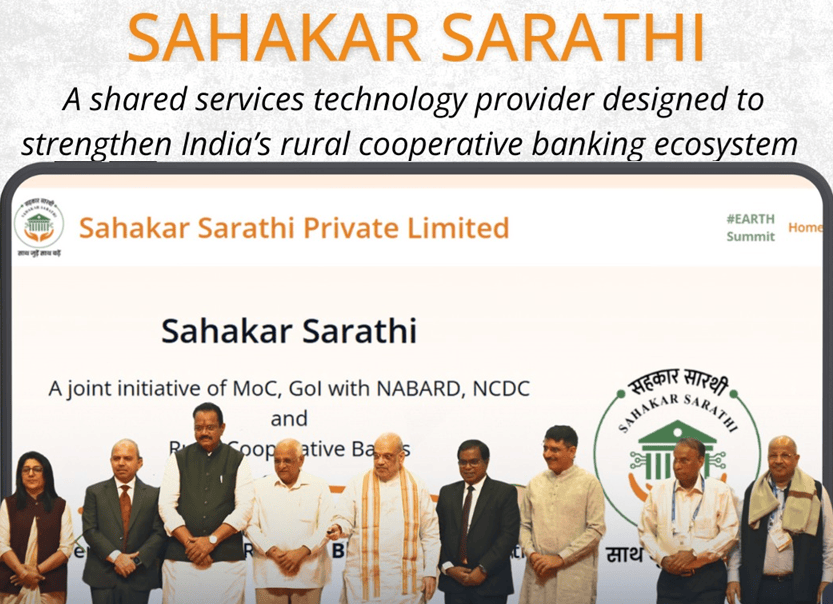
The Sahakar Sarathi Launch marks a significant milestone in the journey to modernise Rural Cooperative Banks (RCBs) across India. This initiative by the Government of India aims to strengthen the cooperative banking sector by providing technology-driven, standardised services, making RCBs more efficient and customer-friendly. With a shared service model, Sahakar Sarathi is poised to transform how rural banking operates, ensuring that banking services in villages and semi-urban areas are comparable to mainstream commercial banks.
Thank you for reading this post, don't forget to subscribe!Establishment and Regulatory Approval
Sahakar Sarathi was established with the approval of the Reserve Bank of India (RBI) and was formally registered on 21 July 2025. The entity is designed to act as a common service backbone for Rural Cooperative Banks. Historically, many RCBs faced challenges such as outdated technology, lack of digital platforms, and limited operational efficiency. Sahakar Sarathi addresses these gaps by providing a unified technological framework, helping RCBs deliver seamless banking experiences to their customers.
The creation of this shared service entity is a step toward modernising cooperative banking and ensuring that customers in rural areas have access to advanced banking facilities like those in urban centers.
Capital Structure and Shareholding
The Sahakar Sarathi entity has an authorised capital of ₹1,000 crore. Its ownership is structured equally among three main stakeholders: the National Bank for Agriculture and Rural Development (NABARD), the National Cooperative Development Corporation (NCDC), and participating Rural Cooperative Banks, each holding a 33.33% stake.
This equal shareholding ensures balanced decision-making and cooperative control. It also strengthens trust among stakeholders and encourages collaboration, making the governance of the entity transparent and participatory. The capital structure allows Sahakar Sarathi to invest in advanced banking technologies, cybersecurity, and capacity-building programs that directly benefit RCBs and their customers.
Technology and Digital Services Offered
A core focus of the Sahakar Sarathi initiative is to provide modern technology solutions to Rural Cooperative Banks. The entity offers a wide range of services, including:
- Core Banking Solutions (CBS): A unified platform for managing banking operations across multiple branches efficiently.
- Digital Payment Platforms: Services like AePS (Aadhaar-enabled Payment System) and UPI (Unified Payments Interface) are supported to ensure convenient and secure transactions.
- Digital Channels and Cybersecurity: The initiative provides secure digital channels and robust cybersecurity frameworks to protect customer data and transactions.
- IT Governance and Domain Migration: Sahakar Sarathi assists RCBs in maintaining IT governance standards and migrating domains like bank.in to strengthen digital presence.
- Capacity Building and Training: RCB staff receive training and follow standard operating procedures to enhance efficiency and ensure consistent service quality.
By offering these services, Sahakar Sarathi ensures that Rural Cooperative Banks can match the digital capabilities of other regulated banks, bridging the technology gap that has long existed in the cooperative banking sector.
Impact on Rural Cooperative Banking
The launch of Sahakar Sarathi is expected to bring significant benefits to both banks and customers. Standardised processes and shared digital infrastructure can improve operational efficiency, reduce errors, and provide faster services. Customers in rural areas will now enjoy better access to banking services, including online payments, digital fund transfers, and modern banking interfaces.
The initiative also promotes the adoption of contemporary financial technologies by Rural Cooperative Banks, encouraging them to innovate and expand their service offerings. This, in turn, strengthens financial inclusion and helps rural communities access credit, savings, and investment opportunities more effectively.
Government Focus on Cooperative Banking: Sahakar Sarathi Launch
Union Minister for Home and Cooperation, Amit Shah, highlighted the importance of Sahakar Sarathi in a written reply in the Lok Sabha. He emphasized that the government is committed to modernising the cooperative banking ecosystem and ensuring that Rural Cooperative Banks are technologically equipped to meet the growing needs of customers.
The Sahakar Sarathi Launch reflects a broader vision of strengthening rural banking infrastructure, promoting transparency, and improving the efficiency of cooperative institutions across the country. By providing a shared service model, the government aims to build a resilient and customer-centric cooperative banking system.
Training and Capacity Building: Sahakar Sarathi Launch
Alongside technology, Sahakar Sarathi prioritises human resource development. Staff members of Rural Cooperative Banks will undergo training programs focused on core banking operations, digital payment systems, and cybersecurity. These capacity-building initiatives ensure that employees are well-equipped to handle modern banking requirements and provide quality service to customers.
Training also promotes the adoption of standard operating procedures across all participating banks, leading to consistency, accountability, and better customer experiences.

Future Prospects of Sahakar Sarathi: Sahakar Sarathi Launch
With Sahakar Sarathi as a shared service backbone, Rural Cooperative Banks are poised to embrace digital transformation fully. The initiative is expected to enhance financial inclusion, reduce operational inefficiencies, and create a cooperative banking ecosystem that is more competitive and reliable.
The shared infrastructure model allows RCBs to pool resources, reduce costs, and focus on improving customer engagement. Over time, Sahakar Sarathi is likely to expand its services, adding new digital products and innovative banking solutions to meet evolving customer needs.