





Surajpur Child Marriage-Free Panchayats: A Milestone in Chhattisgarh’s Social Transformation

The Surajpur Child Marriage-Free Panchayats initiative has emerged as a shining example of community-driven change and effective governance in Chhattisgarh. In 2025, Surajpur district achieved a historic milestone by declaring 75 village panchayats as Child Marriage-Free Panchayats, marking a crucial step toward eradicating the deep-rooted social evil of child marriage. This recognition came during the launch of the Healthy Women, Empowered Families campaign and National Nutrition Month, symbolizing the convergence of health, empowerment, and gender equality efforts.
Thank you for reading this post, don't forget to subscribe!The declaration was based on the remarkable achievement that no cases of child marriage had been reported in these panchayats for over two years. This progress highlights how collective awareness, administrative commitment, and community action can bring tangible social transformation.
Background and Statewide Initiative
The journey toward the Surajpur Child Marriage-Free Panchayats began as part of a larger state mission launched in March 2024 under the leadership of Chief Minister Vishnu Deo Sai. Supported by UNICEF, this initiative aimed to make Chhattisgarh a Child Marriage-Free State, ensuring that no child is deprived of education or a healthy childhood due to early marriage.
Surajpur became the first district to achieve substantial success in this mission, setting a benchmark for others to follow. The district administration, in collaboration with the Women and Child Development Department, panchayati raj institutions, and local communities, adopted a systematic approach to monitor, prevent, and eliminate child marriage practices.
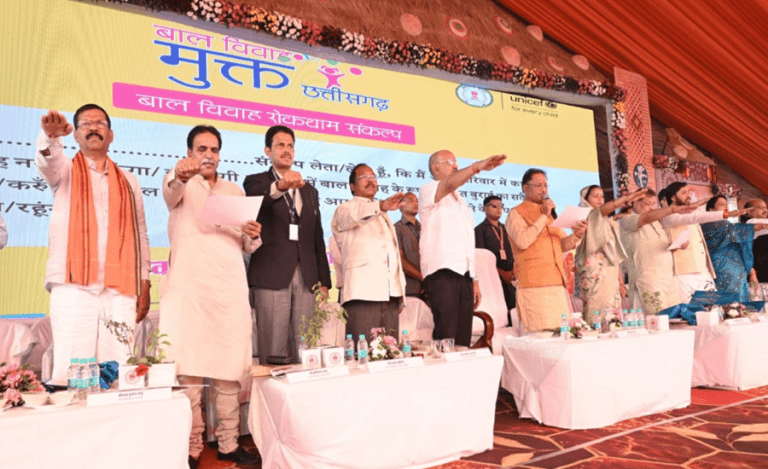
The achievement reflects not just policy implementation but also a cultural shift. The people of Surajpur embraced the message that protecting children’s rights is a shared responsibility. Other districts like Koriya, Jashpur, and Balrampur have now started replicating this model, inspired by Surajpur’s example of collective progress.
Surajpur Child Marriage-Free Panchayats: Role of Awareness and Community Participation
At the heart of the Surajpur Child Marriage-Free Panchayats initiative lies extensive community engagement. The Women and Child Development Department, along with Anganwadi workers, self-help groups, voluntary organizations, and panchayat representatives, conducted continuous awareness campaigns across rural areas.
These campaigns focused on educating communities about the dangers of early marriage, emphasizing how it hinders education, health, and overall social development. Awareness rallies, school-based sessions, village meetings, and wall writings became powerful tools for behavioral change.
The involvement of local leaders and youth volunteers ensured that the campaign resonated deeply at the grassroots level. Whenever reports of child marriage surfaced, immediate preventive action was taken in collaboration with law enforcement authorities. This active vigilance system helped sustain progress.
Gradually, the mindset of the community evolved. Parents started prioritizing education, career opportunities, and health for their daughters instead of early marriage. The district administration’s efforts not only curbed illegal practices but also inspired confidence and pride among citizens, reinforcing the belief that social reform is achievable through unity.
Surajpur Child Marriage-Free Panchayats: Health and Nutrition Linkages
The Surajpur Child Marriage-Free Panchayats initiative is not limited to social reform; it also strengthens public health and nutrition outcomes. Early marriages often lead to early pregnancies, which significantly increase the risks of malnutrition, anaemia, and maternal as well as infant mortality.
By eliminating child marriage, Surajpur has indirectly improved maternal and child health indicators. Delaying marriage allows girls to complete their education, which leads to better health awareness, delayed pregnancies, and healthier families. This approach directly supports the objectives of the Healthy Women, Empowered Families campaign.
Empowered women are central to healthy societies. Educated mothers are more likely to ensure proper nutrition, healthcare, and education for their children. Therefore, preventing child marriage contributes not only to gender equality but also to the long-term socio-economic stability of communities.
Implementation Strategy and Local Leadership
The remarkable achievement of the Surajpur Child Marriage-Free Panchayats was made possible through a well-coordinated strategy involving multiple stakeholders. The district administration formed task forces at the village level to identify vulnerable households and counsel families. Regular workshops were conducted for panchayat members, Anganwadi workers, and school teachers to strengthen vigilance mechanisms.
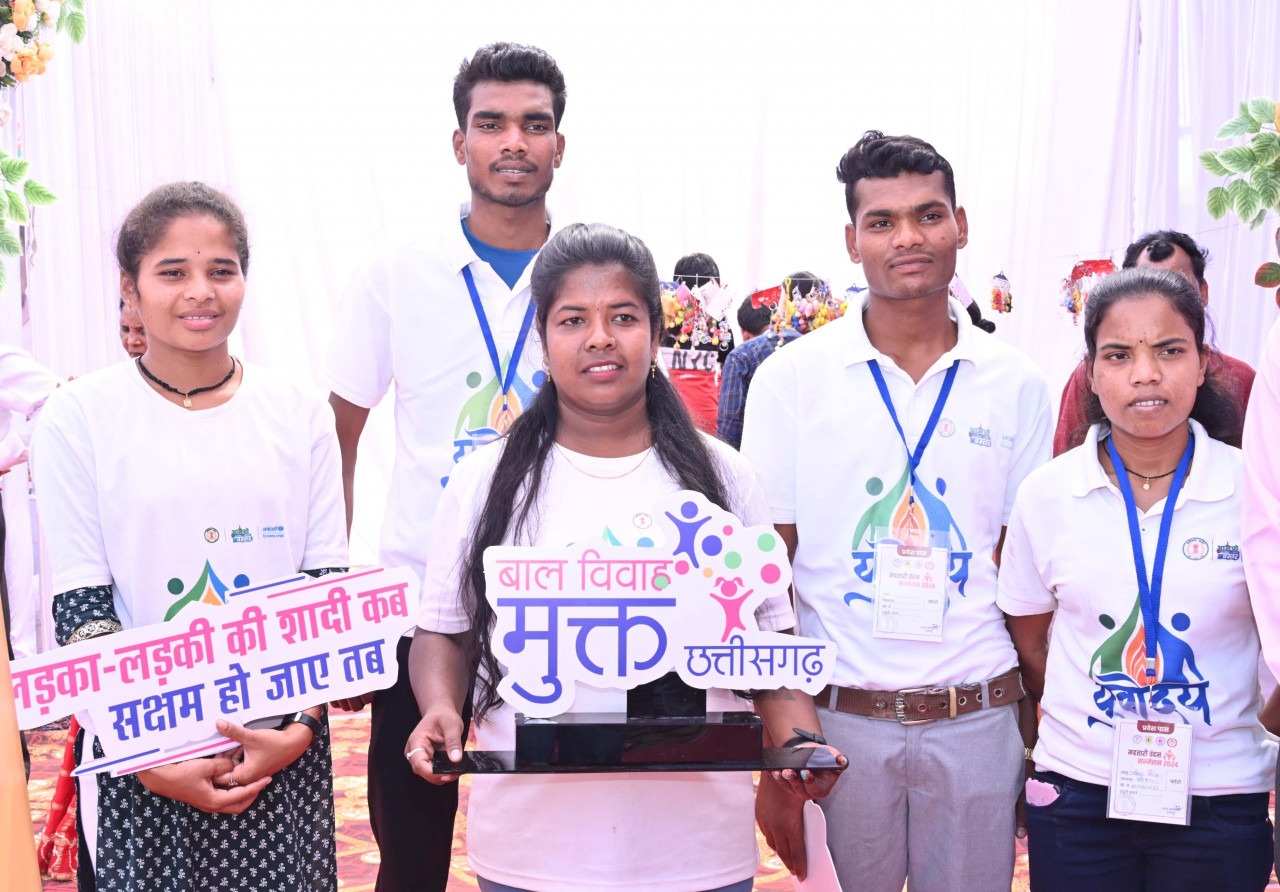
Information technology tools were also used to track adolescent girls and ensure their school attendance. The integration of educational institutions, health services, and social welfare departments created a holistic support system.
The local panchayat leaders played an instrumental role by taking public pledges against child marriage and inspiring neighboring villages to follow suit. Their leadership encouraged accountability and community pride, which ultimately transformed the campaign into a people’s movement.
Surajpur Child Marriage-Free Panchayats: Expansion and Future Prospects
Encouraged by the success of the Surajpur Child Marriage-Free Panchayats, the Chhattisgarh government has expanded efforts to recognize more panchayats and urban wards across the state. Districts are now identifying areas that have been free of child marriage for two consecutive years to grant them similar status.
The state government plans to further enhance the monitoring mechanisms and intensify awareness campaigns in collaboration with schools, NGOs, and community-based organizations. The education of girls remains a top priority, along with vocational training and health support programs.
Surajpur’s success has demonstrated that laws alone cannot end harmful social practices it takes an empowered society to make lasting change. The district’s experience stands as a testament to what can be achieved through collective commitment, empathy, and action. The recognition of 75 Surajpur Child Marriage-Free Panchayats is not just a local success story; it’s a beacon of hope for other regions striving for equality and progress.





