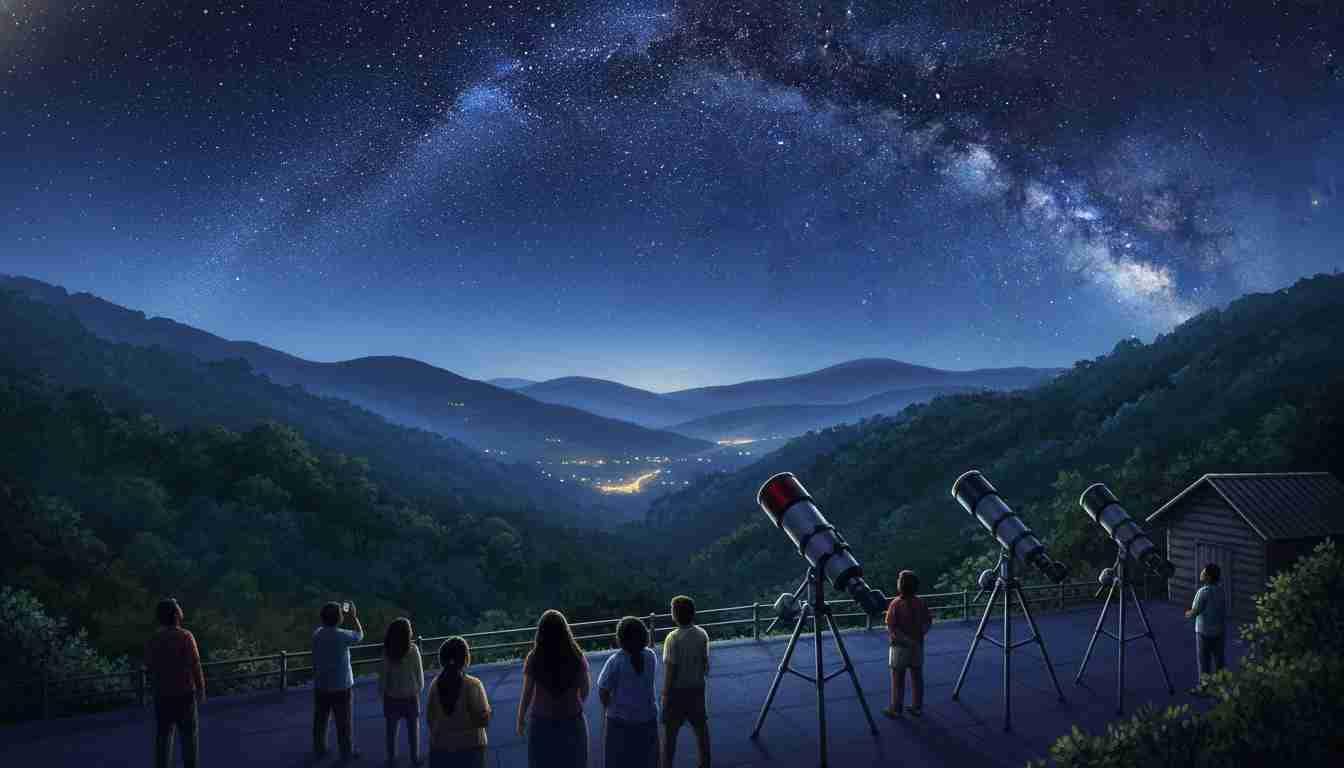
Tamil Nadu Dark Sky Park Inaugurated in Kolli Hills to Boost Astro-Tourism

Tamil Nadu Dark Sky Park has been inaugurated at the Ariyur Shola Reserve Forest in Kolli Hills, located in Namakkal district. The initiative marks an important step by the Tamil Nadu government to promote astro-tourism and scientific tourism in the state. The facility was launched by Forest Minister R. S. Rajakannappan from Chennai and aims to attract astronomy enthusiasts, researchers and tourists interested in observing the night sky.
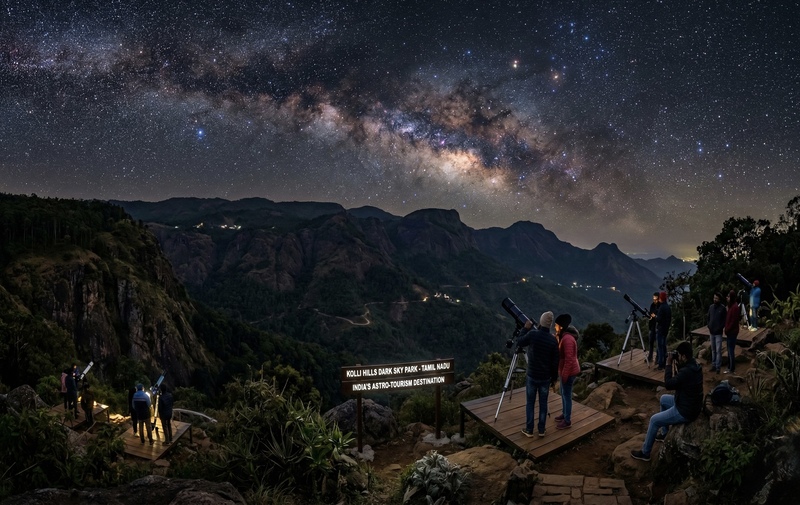
Thank you for reading this post, don't forget to subscribe!The new park has been developed in a forest landscape known for its minimal light pollution and clear atmospheric conditions. Visitors will be able to observe celestial bodies such as stars, planets, the moon and even the Milky Way galaxy. By creating this facility, Tamil Nadu is positioning itself as a growing destination for night-sky observation and space-related tourism.
Strategic Location and Infrastructure
Kolli Hills was selected as the site for the Tamil Nadu Dark Sky Park due to its high altitude, dense forest surroundings and very low levels of urban lighting. Nearly a 1.5-kilometre radius around the park remains free from artificial light, ensuring ideal conditions for astronomical observation.
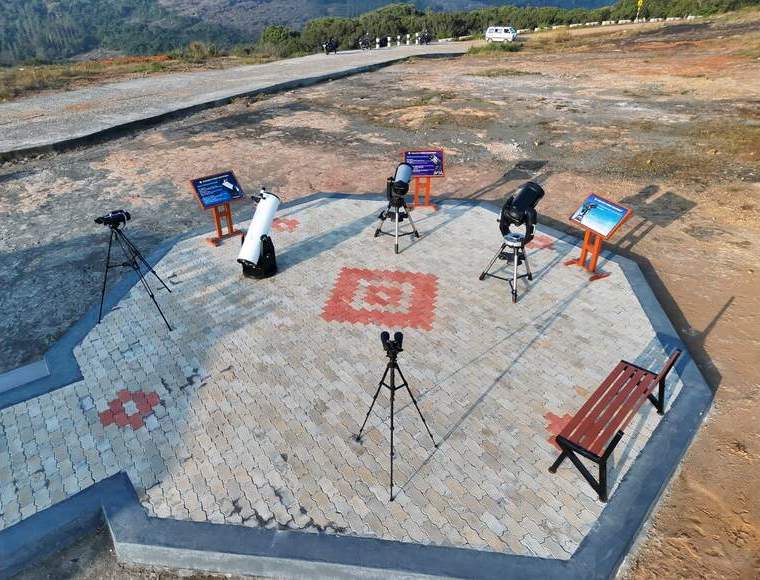
The park has been developed with an investment of about ₹1 crore. It features three advanced telescopes that allow visitors to observe distant celestial objects clearly. The infrastructure is also powered by solar energy, reflecting the state’s commitment to sustainable development and eco-friendly tourism.
Apart from nighttime stargazing, the facility will also be open during the day for educational activities. Students, science enthusiasts and researchers can visit the centre to learn more about astronomy, space science and environmental conservation.
Operational Plan and Visitor Management
The Tamil Nadu Dark Sky Park will operate mainly from January 15 to June 15 each year. During this period, skies remain clear for almost six months, providing ideal conditions for astronomical viewing. The park will remain closed during the monsoon season when cloud cover reduces visibility.
Authorities plan to organise structured stargazing sessions and overnight observation camps two to three times every month. These events will mainly take place during the new moon phase, when the night sky is darker and celestial objects become easier to observe.
To manage tourism activities, the Forest Department has partnered with Trek Tamil Nadu, which has signed a memorandum of understanding with Starvoirs to conduct astronomy programmes. Visitors will also have access to accommodation at Agaya Gangai eco-huts, while the department will arrange transportation facilities for participants.
Safety Measures and Sustainable Tourism
The authorities have introduced several safety measures at the Tamil Nadu Dark Sky Park to ensure secure and responsible tourism. A watchtower has been built about 20 metres from the park, and forest personnel will remain stationed there during nighttime activities.
CCTV cameras have been installed to monitor the area continuously. Additionally, two members from the Eco-Development Committee will assist with visitor management and operational support.
The park also reflects a sustainable tourism model. Solar-powered infrastructure reduces environmental impact, while the initiative encourages eco-friendly tourism in forest areas. Local communities will also benefit through employment and tourism-related opportunities.
Blending Conservation with Astro-Tourism
The establishment of the Tamil Nadu Dark Sky Park highlights the state’s efforts to combine environmental conservation with tourism development. By promoting responsible visitor access, scientific education and community participation, the project aims to protect the natural ecosystem while creating a new tourism attraction.
This initiative is expected to strengthen Tamil Nadu’s position as a destination for astro-tourism while raising awareness about the importance of preserving dark skies and reducing light pollution.