Carnatic Music – A Complete Guide to Its Origin, Evolution, Forms, and Features

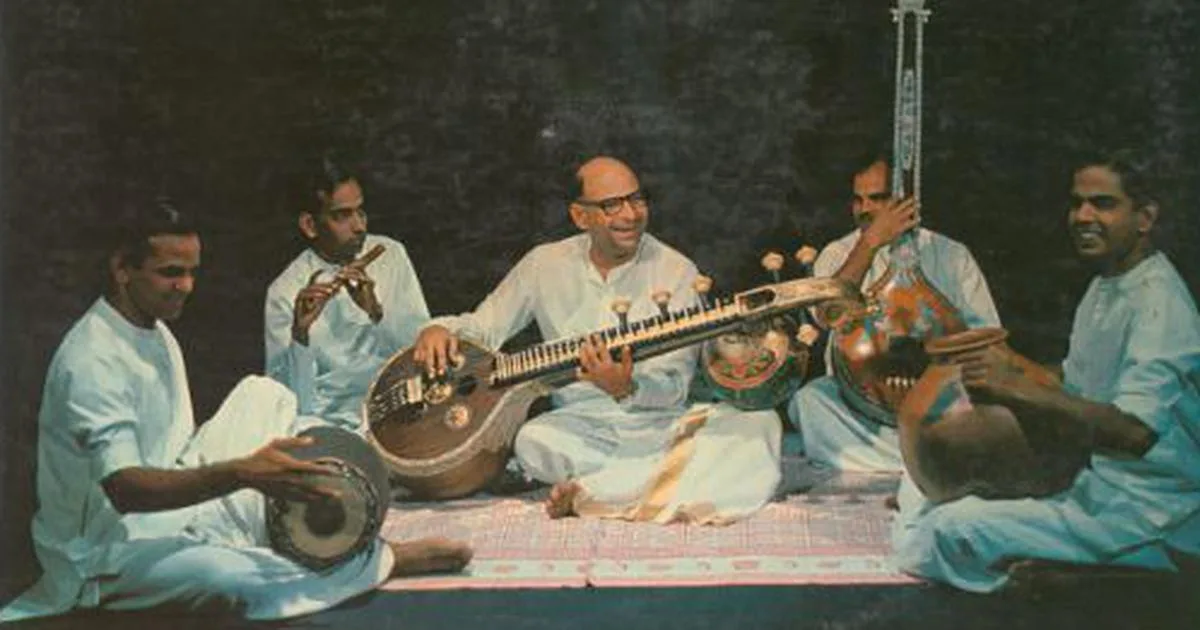
Carnatic Music is one of the most ancient and highly structured classical music traditions of India, deeply rooted in the cultural heritage of South India. Known for its spiritual depth, mathematical precision, and rich melodic beauty, Carnatic Music has evolved over centuries into a sophisticated system of musical expression. It is not just an art form but also a medium of devotion, philosophy, and cultural identity.
Thank you for reading this post, don't forget to subscribe!Introduction to Carnatic Music
Carnatic Music refers to the classical music tradition that developed in the southern part of India. The term “Carnatic” comes from the Sanskrit phrase Karnâtaka Sangîtam, which means “traditional” or “codified music.” This reflects the structured and rule-based nature of this musical system.
Unlike many other musical traditions, Carnatic Music is highly systematized. It is based on two main components:
- Raga (Ragam): The melodic framework
- Tala (Thalam): The rhythmic cycle
Together, these elements create a balanced and harmonious musical experience.
Carnatic Music is primarily practiced in the South Indian states of Tamil Nadu, Karnataka, Andhra Pradesh, Telangana, and Kerala. These regions have preserved and nurtured this art form as a core part of their Dravidian cultural identity.
Historical Origin of Carnatic Music
The roots of Carnatic Music can be traced back to ancient Indian traditions, particularly the Vedic period, where music was used as a form of chanting sacred hymns. Over time, these early musical forms evolved into more structured systems.
Initially, Indian classical music was uniform across the country. However, around the 13th–14th centuries, it began to split into two major traditions:
- Hindustani Music (North India)
- Carnatic Music (South India)
This division was influenced by historical events, especially the arrival of Islamic rulers in North India, which led to the blending of Persian and Indian musical elements. Meanwhile, South India remained relatively unaffected, allowing Carnatic Music to preserve its original structure and spiritual essence.
One of the earliest references to the distinction between these two systems is found in Sangeeta Sudhakara, a 14th-century text written by King Haripala.
Renaissance and Development of Carnatic Music
Carnatic Music experienced significant growth during the medieval period, particularly under the patronage of South Indian kingdoms like the Vijayanagara Empire.
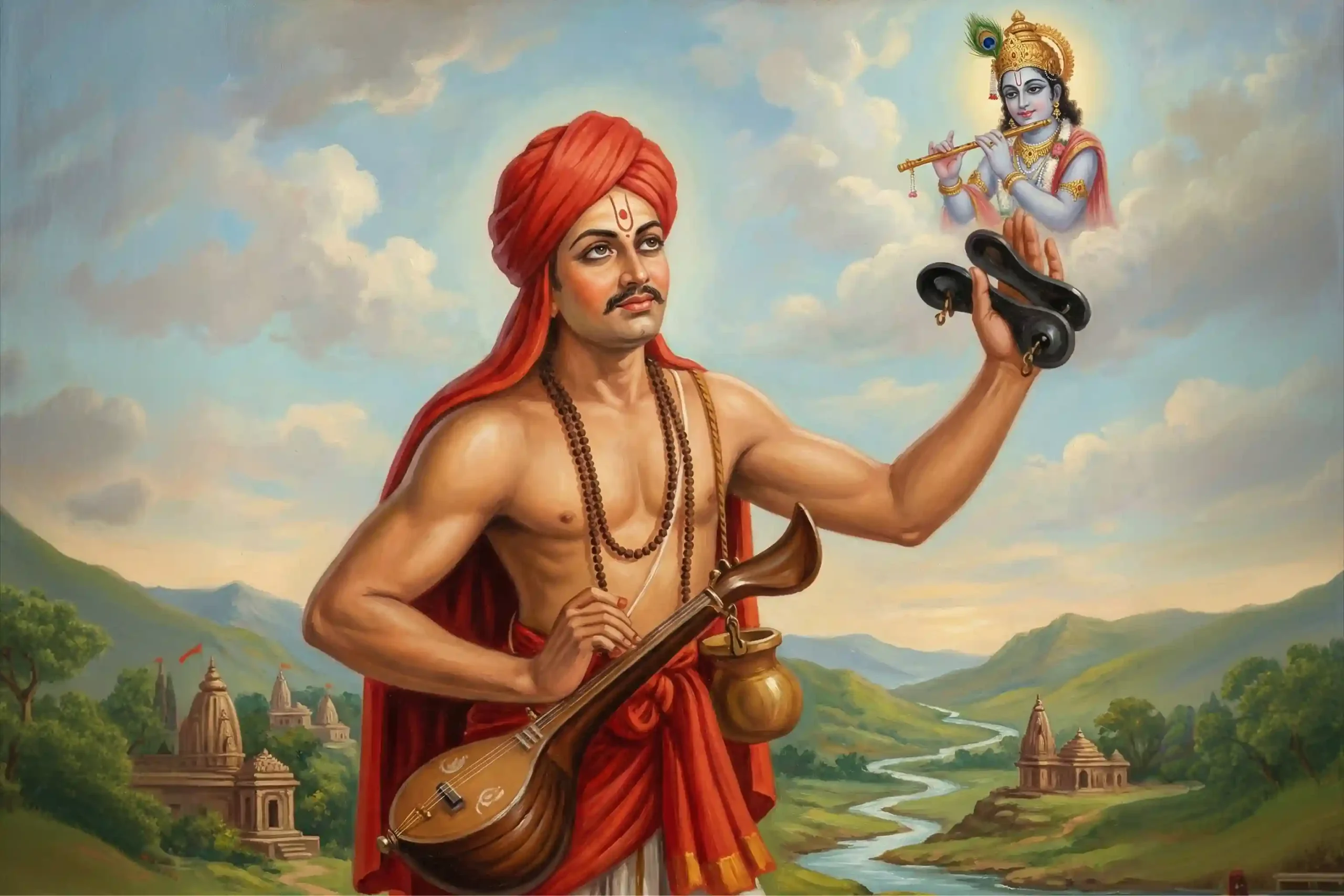
Purandara Dasa – The Father of Carnatic Music
Purandara Dasa is widely regarded as the “Pitamaha” (grandfather) of Carnatic Music. He lived between 1484 and 1564 and played a crucial role in shaping the teaching methods and structure of this music system.
His contributions include:
- Creating a graded learning system for beginners
- Composing thousands of devotional songs
- Standardizing musical exercises like Sarali Varisai and Alankaras
Because of his efforts, Carnatic Music became more accessible and systematic.
Venkatamakhi – The Music Theorist
Venkatamakhi was a 17th-century musicologist who developed the Melakarta system, which classifies ragas into a structured framework.
- There are 72 Melakarta ragas, which serve as parent scales.
- From these, numerous derived ragas (Janya ragas) are formed.
This classification remains the backbone of Carnatic Music theory even today.
The Trinity of Carnatic Music
The golden era of Carnatic Music is associated with three legendary composers, collectively known as the Trinity:
- Tyagaraja
- Syama Sastri
- Muttusvami Dikshitar
These composers lived during the 18th–19th centuries and made immense contributions through their compositions.
Tyagaraja
- Composed thousands of devotional songs, mainly in praise of Lord Rama
- Known for emotional depth and simplicity
Syama Sastri
- Focused on rhythmic complexity
- Composed mainly in praise of Goddess Kamakshi
Muttusvami Dikshitar
- Known for scholarly compositions
- Incorporated Sanskrit and complex ragas
Their works form the core repertoire of Carnatic Music performances even today.
Structure of Carnatic Music
Carnatic Music is based on a combination of melody, rhythm, and lyrics.
Raga (Melody)
A raga is not just a scale but a set of rules that defines how notes are used. Each raga has:
- A specific ascending and descending order
- Characteristic phrases
- Emotional expression (Rasa)
Tala (Rhythm)
Tala refers to the rhythmic cycle. It provides the timing structure for compositions.
Some common talas include:
- Adi Tala
- Rupaka Tala
- Misra Chapu
Carnatic Music is known for its mathematical precision in rhythm.
Musical Forms of Carnatic Music
Carnatic Music includes a wide variety of compositions, each serving a different purpose in learning and performance.
1. Gitam
- The simplest form of composition
- Easy and melodious
- Ideal for beginners
2. Suladi
- A complex composition with multiple talas
- Also called Talamalika
3. Svarajati
- Contains three sections:
- Pallavi
- Anupallavi
- Charanam
- Themes can be devotional, romantic, or heroic
4. Jatisvaram
- Focuses on rhythmic patterns
- No lyrics, only musical notes
5. Varnam
- Unique to Carnatic Music
- Combines melody and rhythm
- Used for practice and performance
6. Kirtanam
- Devotional composition
- Simple structure
- Emphasis on Bhakti (devotion)
7. Kriti
- Most important form in Carnatic Music
- Highly evolved structure
- Rich in both musical and lyrical content
8. Pallavi (Ragam-Tanam-Pallavi)
- The most advanced and creative form
- Allows improvisation
- Tests the artist’s skill and creativity
Improvisation in Carnatic Music
Improvisation is a key feature of Carnatic Music. Some important types include:
- Alapana: Free-flowing exploration of a raga
- Niraval: Improvisation on a single line of a composition
- Kalpana Swaram: Creative use of musical notes
- Ragam Tanam Pallavi: Advanced improvisation combining melody and rhythm
These techniques showcase the musician’s creativity and mastery.
Difference Between Carnatic and Hindustani Music
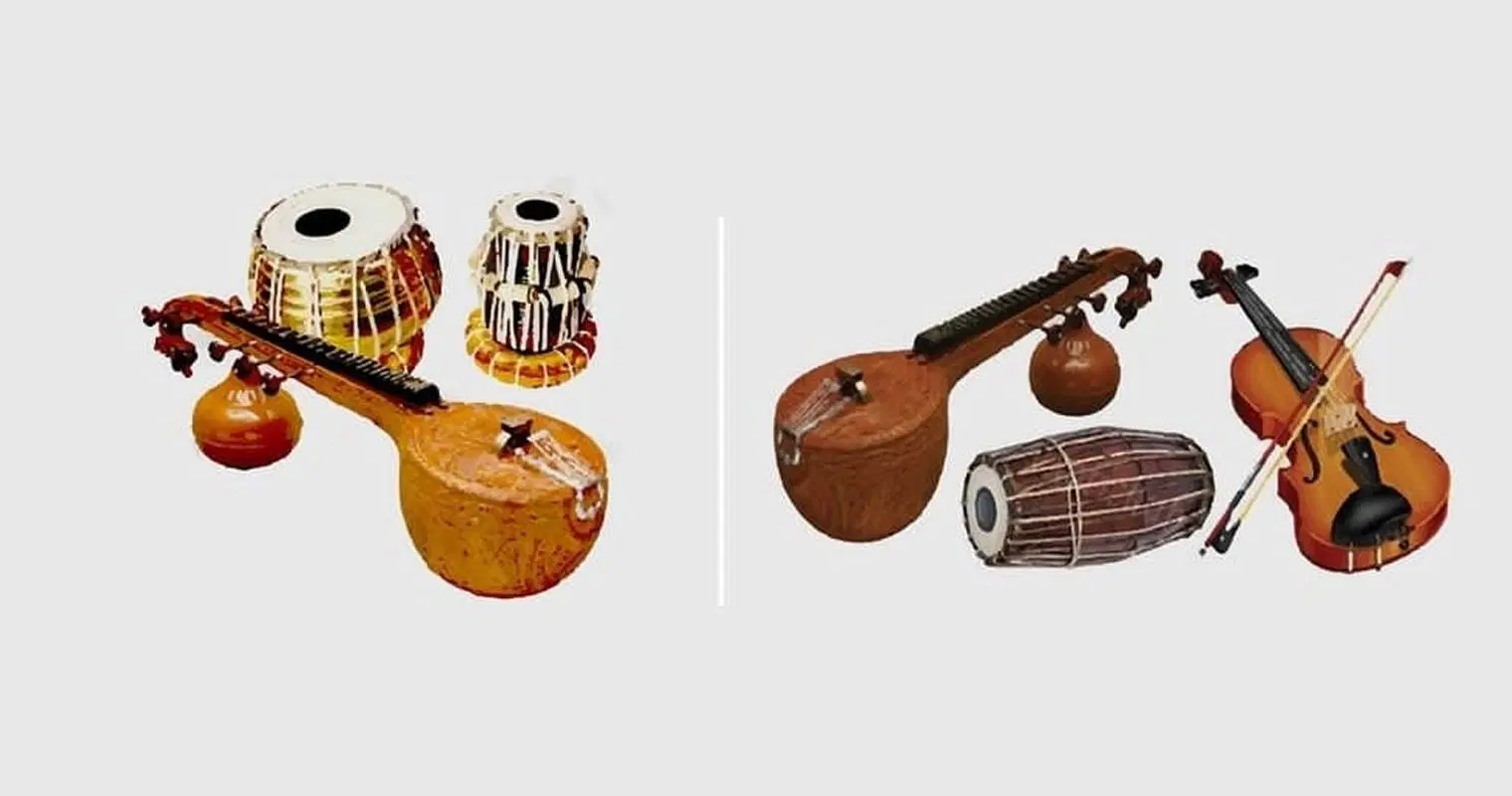
Though both are classical traditions of India, Carnatic and Hindustani music differ in several ways.
Origin
- Carnatic Music: South India
- Hindustani Music: North India
Historical Influence
- Hindustani Music was influenced by Persian and Islamic traditions
- Carnatic Music remained largely untouched and preserved its original form
Nature
- Carnatic Music: Structured and intellectual
- Hindustani Music: More flexible and expressive
Forms
Hindustani Music includes:
- Dhrupad
- Khayal
- Thumri
- Ghazal
Carnatic Music includes:
- Kriti
- Varnam
- Alapana
- Pallavi
Gharana System
- Hindustani Music has gharanas (schools like Jaipur, Lucknow, Kirana)
- Carnatic Music does not follow a gharana system
Modern Developments in Carnatic Music
Carnatic Music continues to evolve in modern times. Many artists have taken this classical form to global audiences through concerts, recordings, and digital platforms.
Recently, S. Sowmya was honored with the prestigious Sangita Kalanidhi Award, highlighting her immense contribution to the field.
Today, Carnatic Music is performed worldwide and has gained recognition as a global classical tradition.
Cultural and Spiritual Significance
Carnatic Music is deeply connected with spirituality. Most compositions are devotional in nature and are dedicated to Hindu deities like:
- Lord Rama
- Lord Krishna
- Goddess Devi
Music is seen as a path to attain divine connection (Nada Yoga).
Conclusion
Carnatic Music is not just a musical tradition but a complete system of art, science, and spirituality. From its ancient roots to its modern global presence, it has maintained its purity, structure, and emotional depth.
With contributions from legends like Purandara Dasa, Venkatamakhi, and the Trinity, Carnatic Music continues to inspire generations. Its rich compositions, complex rhythms, and spiritual essence make it one of the most respected classical music traditions in the world.
As it continues to evolve, Carnatic Music remains a timeless treasure of Indian culture, reflecting both discipline and devotion in every note.
FAQs on Carnatic Music
1. What is Carnatic Music?
Carnatic Music is a classical music tradition from South India based on raga (melody) and tala (rhythm), known for its devotional and structured style.
2. Who is known as the father of Carnatic Music?
Purandara Dasa is known as the father of Carnatic Music for creating a systematic learning method and composing devotional songs.
3. What are the main elements of Carnatic Music?
The two main elements are:
- Raga (melody)
- Tala (rhythm)
These form the foundation of all compositions.
4. What is the Melakarta system?
The Melakarta system, developed by Venkatamakhi, is a classification of 72 parent ragas in Carnatic Music.
5. Who are the Trinity of Carnatic Music?
The Trinity includes:
- Tyagaraja
- Syama Sastri
- Muttusvami Dikshitar
They made significant contributions through their compositions.