

Disaster Management Framework in India: Organizations, Policies, Challenges and Solutions(Part-II)

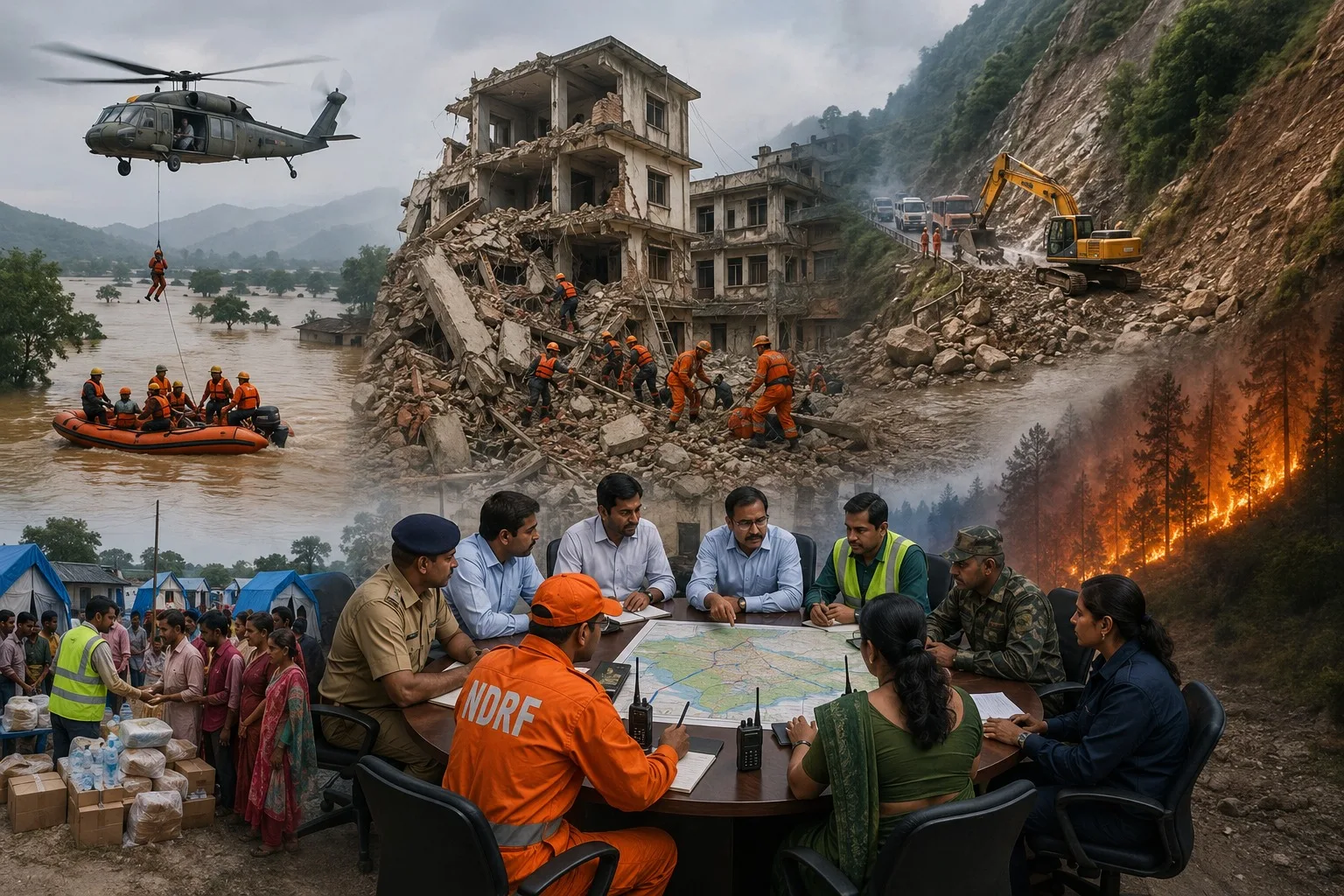
Disaster Management Framework in India is an important system that helps the country prepare for, respond to, and recover from natural and human-made disasters. India faces many disasters such as floods, earthquakes, cyclones, landslides, droughts, and industrial accidents. Due to its large population and diverse geography, disaster management has become a key part of national development and governance.
A strong disaster management system not only saves lives but also protects property, infrastructure, livelihoods, and the environment. Over the years, India has developed several institutions, policies, and plans to reduce disaster risks and improve preparedness.

Global Organizations and Frameworks for Disaster Management
The international community has taken several steps to reduce disaster risks around the world.
Yokohama Conference and Strategy
In 1994, the World Conference on Natural Disaster Reduction was held in Yokohama, Japan. The conference adopted the Yokohama Strategy for a Safer World. It also recognized the period from 1990 to 2000 as the International Decade for Natural Disaster Reduction (IDNDR).
The main objective was to encourage countries to reduce disaster losses through better planning, awareness, and preparedness.
United Nations Office for Disaster Risk Reduction (UNDRR)
The United Nations established the United Nations Office for Disaster Risk Reduction (formerly UNISDR) in 1999. This organization promotes global efforts to reduce disaster risks and improve resilience among nations.
Its major responsibilities include:
- Supporting disaster risk reduction policies
- Encouraging international cooperation
- Providing technical guidance
- Promoting awareness and education
Hyogo Framework for Action (2005–2015)
The Hyogo Framework for Action was a ten-year international plan designed to make the world safer from natural hazards.
Its major priorities included:
| Priority Area | Objective |
|---|---|
| Risk Identification | Understand disaster risks |
| Preparedness | Improve readiness for disasters |
| Policy Development | Strengthen legal and institutional systems |
| Innovation | Use technology and research |
| Community Awareness | Increase public participation |
The framework encouraged governments to make disaster risk reduction a national priority.
Sendai Framework for Disaster Risk Reduction (2015–2030)
The Sendai Framework replaced the Hyogo Framework in 2015.
It is a voluntary international agreement that focuses on reducing disaster risks and losses. India is one of the signatory countries committed to implementing its objectives.
Four Priorities of the Sendai Framework
- Understanding disaster risk.
- Strengthening disaster risk governance.
- Investing in disaster risk reduction.
- Enhancing disaster preparedness and recovery.
Other Important Global Agreements
The post-2015 development agenda includes three major international agreements:
| Agreement | Purpose |
| Sendai Framework | Disaster Risk Reduction |
| Sustainable Development Goals (SDGs) | Sustainable Development |
| Paris Agreement | Climate Change Action |
These agreements recognize that disaster risks are closely linked with economic growth, environmental protection, and social development.
Disaster Management Framework in India
India has developed a multi-level disaster management structure involving national, state, district, and local authorities.
National Disaster Management Authority (NDMA)
The National Disaster Management Authority (NDMA) was established under the Disaster Management Act, 2005.
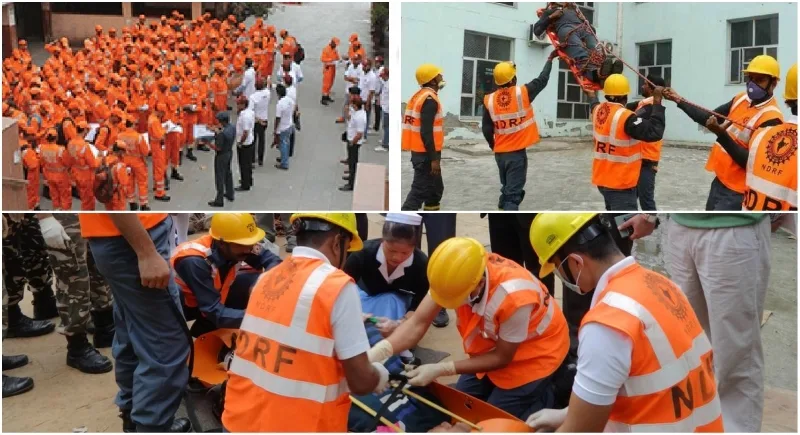
The main objective of NDMA is to create a safer and disaster-resilient India through proactive planning, technology, and sustainable development.
Structure of NDMA
| Position | Responsibility |
| Prime Minister | Chairperson |
| Vice-Chairperson | Cabinet Minister Rank |
| Members | Up to Eight Members |
| Secretary | Administrative Head |
Functions of NDMA
- Formulating disaster management policies.
- Issuing guidelines for disaster preparedness.
- Coordinating with state governments.
- Promoting community awareness.
- Supporting reconstruction and rehabilitation.
National Disaster Management Plan (NDMP)
The National Disaster Management Plan was released in 2016.
It is India’s first comprehensive national disaster management plan and aligns with the Sendai Framework.
Objectives of NDMP
- Reduce disaster risks.
- Protect lives and property.
- Strengthen preparedness.
- Improve response mechanisms.
- Promote resilient development.
- Enhance recovery and reconstruction efforts.
The plan focuses on reducing economic, social, cultural, and environmental losses caused by disasters.
State Disaster Management Authority (SDMA)
Every state has a State Disaster Management Authority under the Disaster Management Act, 2005.
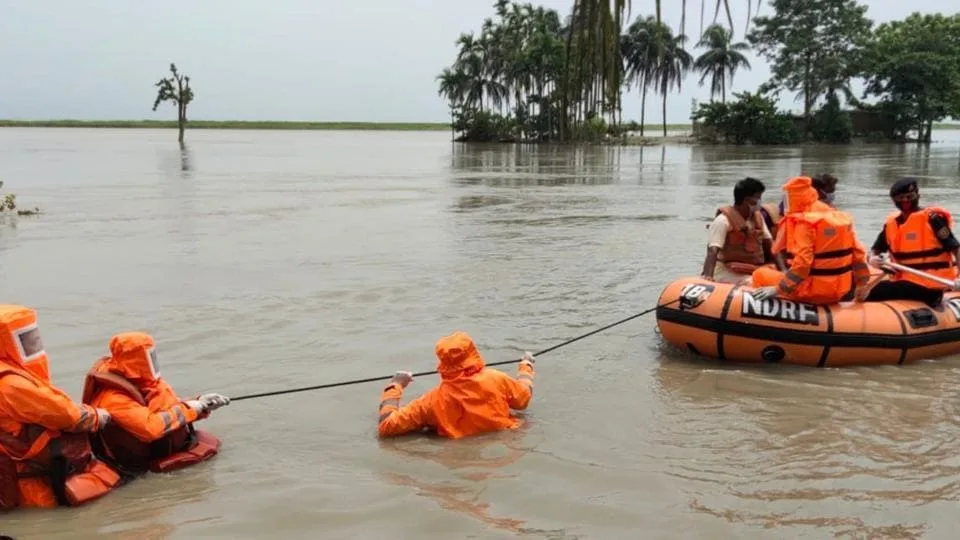
Structure
- Chief Minister acts as Chairperson.
- Up to eight members may be appointed.
Functions
- Prepare State Disaster Management Plans.
- Implement national guidelines.
- Coordinate with district authorities.
- Promote disaster preparedness within the state.
District Disaster Management Authority (DDMA)
Every district in India has a District Disaster Management Authority.
Composition
| Position | Role |
| District Collector / Deputy Commissioner | Chairperson |
| Local Elected Representative | Co-Chairperson |
| Other Members | Up to Seven |
Functions of DDMA
- Prepare district disaster management plans.
- Coordinate rescue and relief operations.
- Develop village-level disaster plans.
- Implement state disaster management policies.
- Promote local preparedness and awareness.
Major Government Initiatives
India has launched several initiatives to strengthen disaster management.
National Disaster Management Services (NDMS)
NDMS was introduced to create a secure communication network linking:
- Ministry of Home Affairs
- NDMA
- National Disaster Response Force (NDRF)
- Emergency Operation Centres
This system ensures communication remains functional during emergencies.
Earthquake Disaster Risk Indexing (EDRI)
NDMA launched Earthquake Disaster Risk Indexing for major cities located in earthquake-prone regions.
Benefits include:
- Identifying vulnerable areas.
- Comparing risks among cities.
- Prioritizing mitigation measures.
Earthquake Hazard Maps
NDMA and the Building Materials and Technology Promotion Council (BMTPC) developed upgraded earthquake hazard maps and atlases for better planning and safer construction.
GIS-Based Disaster Risk Management
Geographic Information System (GIS) technology is being used to:
- Collect disaster-related data.
- Monitor vulnerable areas.
- Improve damage assessment.
- Support relief operations.
National School Safety Programme (NSSP)
Thousands of schools located in earthquake-prone areas have been included under this programme.
Students and teachers receive training on:
- Disaster preparedness.
- Evacuation procedures.
- Safety measures during emergencies.
Aapda Mitra Scheme
The Aapda Mitra Scheme trains community volunteers in flood-prone districts.
The objectives include:
- Building local response teams.
- Enhancing community resilience.
- Supporting rescue operations.
Crisis Management Mechanisms
The Government of India has established:
- National Crisis Management Committee
- Crisis Management Group
States have also formed crisis management groups under Chief Secretaries.
Mobile Radiation Detection Systems
The government is deploying Mobile Radiation Detection Systems in major cities to detect radioactive materials and protect public safety.
Landslide Risk Mitigation Scheme
The scheme focuses on:
- Monitoring landslide-prone areas.
- Developing early warning systems.
- Supporting research and development.
- Building local capacity.
Success Stories of Disaster Management in India
Cyclone Fani
India’s early warning systems and evacuation measures significantly reduced casualties during Cyclone Fani in Odisha.
Cyclone Phailin
During Cyclone Phailin in 2013, effective evacuation and preparedness efforts kept the death toll extremely low despite the cyclone’s intensity.
Leh Flash Floods
In 2010, flash floods caused by a cloudburst struck Leh in Ladakh.
The Indian Army conducted rapid rescue, relief, and recovery operations, helping restore normal life quickly.
Bihar Flood Management
Bihar experiences frequent floods during the monsoon season. Since 2011, the state has improved preparedness, mitigation measures, and community participation, reducing disaster impacts.
Challenges in Disaster Management in India
Despite progress, several challenges remain.
Lack of Preparedness
Many regions still lack adequate preparedness for major disasters such as earthquakes and floods.
Weak Infrastructure
Emergency operation centres, communication systems, and rescue facilities require further strengthening.
Governance Issues
Disaster management is often treated as a response activity rather than an essential component of development planning.
Poor Coordination
Overlapping responsibilities among agencies can lead to confusion and delays during emergencies.
Vulnerability of Northeast India
The Northeast region faces multiple hazards:
- Earthquakes
- Landslides
- Floods
- Riverbank erosion
Many buildings are not earthquake-resistant, increasing risk.
Climate Change
Rising temperatures and extreme weather events are increasing disaster frequency and intensity across India.
Limited Community Participation
Disaster preparedness programmes are not always people-centered, reducing local involvement and effectiveness.
Focus on Relief Rather Than Prevention
Public attention often increases after disasters occur, leading governments to prioritize response activities instead of long-term risk reduction.
Suggestions for Improving Disaster Management
Clear Distribution of Responsibilities
National, state, and district authorities should have clearly defined roles to avoid confusion.
Strengthen District Authorities
District Disaster Management Authorities need continuous training and capacity building.
Focus on Risk Reduction
State Disaster Management Plans should prioritize prevention and mitigation rather than only emergency response.
Improve Accountability
Departments should be held responsible for implementing disaster risk reduction measures.
Promote Public-Private Partnerships
Private sector participation can provide additional funding, technology, and expertise.
Expand Insurance Coverage
Insurance and risk-transfer mechanisms can help communities recover more quickly after disasters.
Use Climate Projections
Future climate risks should be included in planning and development policies.
Better Use of Data
Government data platforms can improve risk assessment and vulnerability analysis.
Inclusive Disaster Management
Special attention should be given to:
- Women
- Children
- Elderly people
- Persons with disabilities
- Economically weaker groups
Strengthen Scientific Collaboration
Partnerships with research institutions can improve forecasting, risk modeling, and early warning systems.
Future of Disaster Management in India
The future of disaster management depends on prevention, preparedness, and resilience. Disasters should not be viewed only as emergency events but as challenges that require long-term planning.
India needs a people-centered approach where communities actively participate in planning and decision-making. Disaster risk reduction must become a part of development projects, urban planning, infrastructure design, and environmental protection.
Greater use of technology, stronger governance, scientific planning, community awareness, and cooperation among all stakeholders can significantly reduce disaster losses.
Building resilient communities, protecting vulnerable populations, and integrating disaster management with sustainable development goals will help India create a safer and more secure future for all citizens.
FAQs on Disaster Management Framework in India
Q1. What is Disaster Management Framework in India?
Disaster Management Framework in India is a system of policies, organizations, and plans that help prevent, prepare for, respond to, and recover from disasters.
Q2. When was the National Disaster Management Authority (NDMA) established?
NDMA was established in 2005 under the Disaster Management Act, 2005.
Q3. Who is the Chairperson of NDMA?
The Prime Minister of India serves as the Chairperson of NDMA.
Q4. What is the National Disaster Management Plan (NDMP)?
NDMP is India’s national disaster management plan launched in 2016 to reduce disaster risks and improve preparedness and response.
Q5. What is the Sendai Framework for Disaster Risk Reduction?
The Sendai Framework is a global agreement for 2015–2030 that aims to reduce disaster risks and disaster losses worldwide.
Q6. What are the major disasters faced by India?
India faces floods, earthquakes, cyclones, droughts, landslides, heatwaves, and industrial accidents.
Q7. What is the role of State Disaster Management Authority (SDMA)?
SDMA prepares state disaster management plans and implements disaster management policies at the state level.
Q8. What is District Disaster Management Authority (DDMA)?
DDMA is a district-level authority responsible for planning and implementing disaster management activities within a district.