
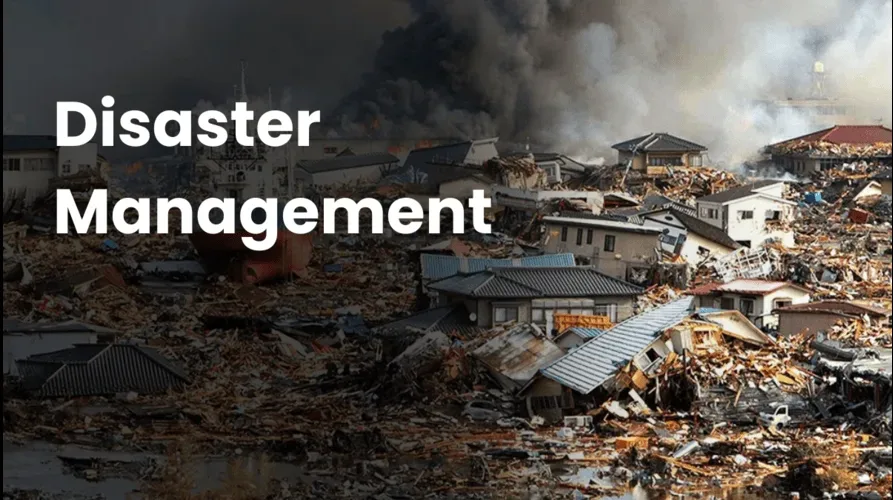
Disaster Management in India: Understanding Disasters, Risks, and Solutions(Part-I)

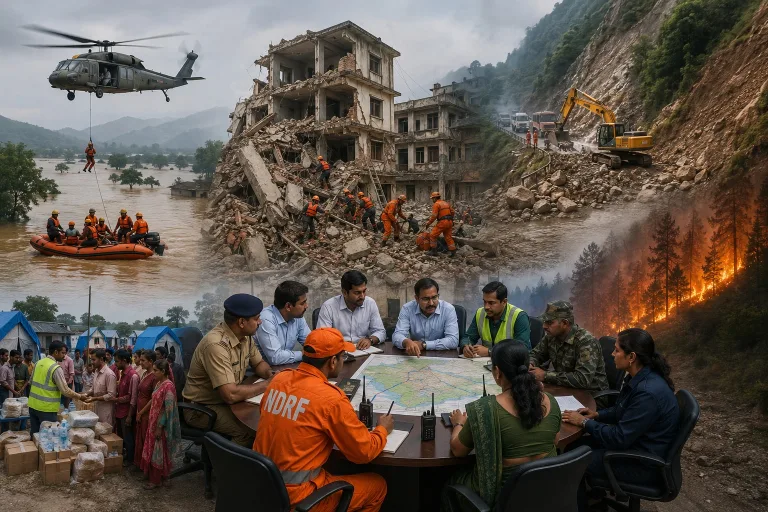
Disaster Management in India is an important subject because the country faces many natural and man-made disasters every year. Floods, earthquakes, cyclones, landslides, droughts, industrial accidents, fires, and pandemics affect millions of people across the country. Effective disaster management helps save lives, protect property, reduce economic losses, and ensure quick recovery after disasters.
Recent incidents such as major fires in hospitals, coaching centers, residential buildings, and industrial units have highlighted the need for stronger disaster preparedness and safety measures. As India’s population grows and urbanization increases, the importance of disaster management has become greater than ever before.

What is a Disaster?
A disaster is a sudden event caused by natural or human-made factors that seriously disrupts normal life. It causes damage to people, property, infrastructure, and the environment beyond the ability of the affected community to cope using its own resources.
A disaster often occurs with little warning and requires immediate action from government agencies, emergency services, and communities.
Main Features of a Disaster
- Causes loss of life and property.
- Disrupts normal social and economic activities.
- Requires emergency response and relief.
- Creates long-term challenges for recovery.
- Affects communities physically, economically, and emotionally.
Classification of Disasters
Disasters can be divided into two major categories:
1. Natural Disasters
Natural disasters occur due to natural processes of the Earth.
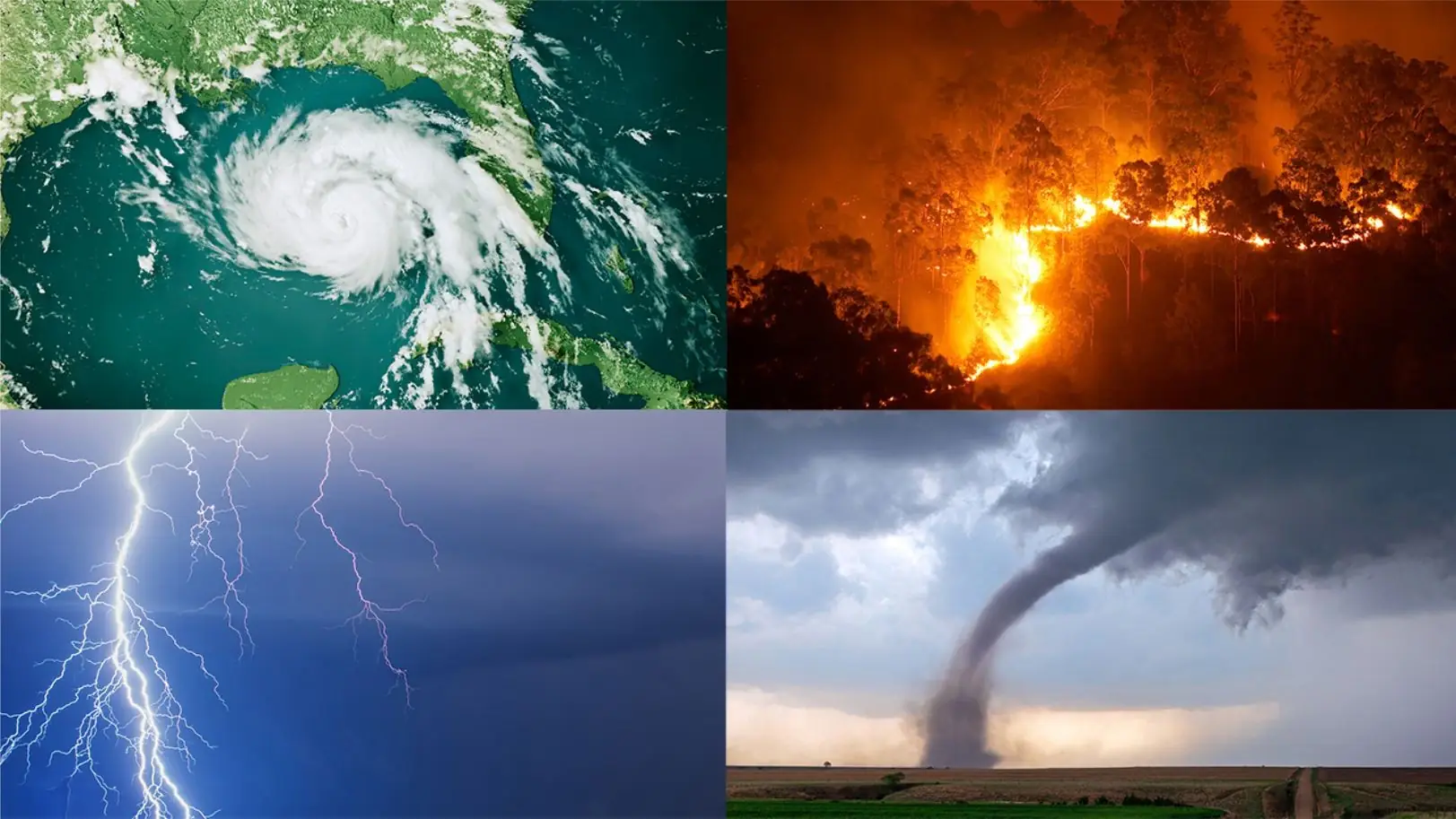
Types of Natural Disasters
| Category | Examples |
|---|---|
| Geophysical | Earthquakes, volcanic eruptions |
| Hydrological | Floods, flash floods |
| Meteorological | Cyclones, storms, hurricanes |
| Climatological | Droughts, heat waves, cold waves |
| Biological | Epidemics, pandemics, disease outbreaks |
Examples
- Earthquakes in Himalayan regions
- Floods in Assam and Bihar
- Cyclones on eastern and western coasts
- Droughts in Rajasthan and central India
- Disease outbreaks such as COVID-19
2. Man-Made Disasters
These disasters occur because of human activities, negligence, or technological failures.
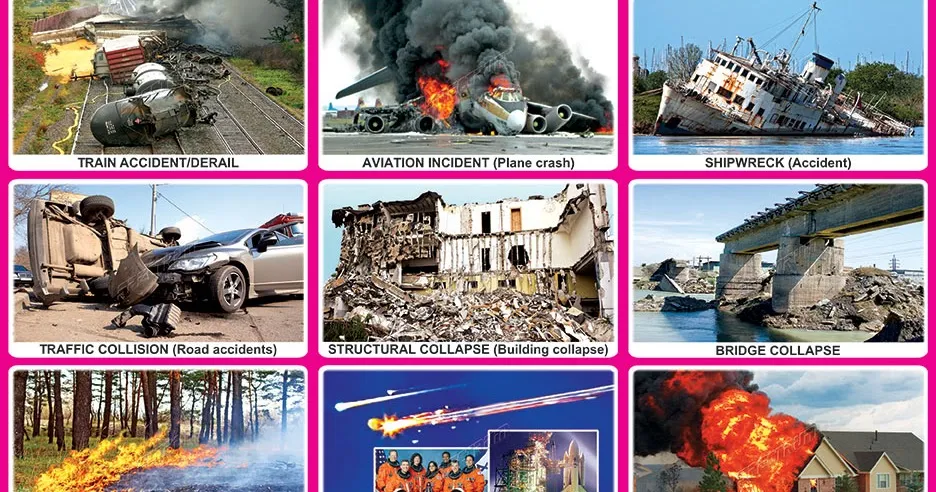
Examples
- Industrial accidents
- Chemical leaks
- Building collapses
- Fire accidents
- Nuclear accidents
- Transportation accidents
- Terrorist attacks
- Oil spills
Common Man-Made Disasters in India
| Disaster Type | Example |
|---|---|
| Industrial Accident | Bhopal Gas Tragedy |
| Fire Accident | Hospital and market fires |
| Transportation Accident | Train and air crashes |
| Structural Failure | Bridge and building collapse |
| Chemical Disaster | Toxic gas leakage |
Causes of Disasters
Many factors contribute to the occurrence and severity of disasters.
Environmental Degradation
Deforestation, destruction of wetlands, and excessive use of natural resources increase disaster risks.
Effects include:
- Soil erosion
- Flooding
- Reduced groundwater levels
- Loss of biodiversity
Rapid Urbanization
Unplanned cities often lack proper drainage systems and safety standards.
Problems include:
- Urban flooding
- Traffic congestion during emergencies
- Unsafe buildings
- Overcrowding
Industrialization
Rapid industrial growth can lead to:
- Pollution
- Chemical accidents
- Global warming
- Extreme weather events
Climate Change
Climate change is increasing the frequency and intensity of disasters worldwide.
Its impacts include:
- Stronger cyclones
- Intense rainfall
- Heat waves
- Droughts
- Rising sea levels
Political and Social Factors
Conflicts, wars, and political instability can also create disasters by causing destruction and displacement of people.
Impacts of Disasters
Disasters affect society in many ways.
Physical Impact
- Deaths
- Injuries
- Disabilities
- Spread of diseases
Psychological Impact
People may suffer from:
- Stress
- Anxiety
- Depression
- Trauma
Children and elderly people are often more vulnerable.
Economic Impact
Disasters can destroy:
- Homes
- Industries
- Roads
- Bridges
- Agricultural fields
This leads to huge financial losses.
Environmental Impact
Disasters damage ecosystems by causing:
- Deforestation
- Water pollution
- Habitat destruction
- Biodiversity loss
Social Impact
Disasters often force people to leave their homes.
This leads to:
- Migration
- Unemployment
- Poverty
- Social instability
Vulnerability Profile of India
India is one of the most disaster-prone countries in the world.
Major Vulnerability Statistics
| Hazard | Vulnerability |
|---|---|
| Earthquakes | About 59% of land area |
| Floods and River Erosion | Around 12% of land area |
| Cyclones and Tsunamis | Nearly 5,700 km coastline |
| Droughts | About 68% cultivable land |
| Landslides | Himalayan and hilly regions |
India is also vulnerable to:
- Chemical disasters
- Biological disasters
- Radiological emergencies
- Nuclear emergencies
Why India Faces High Disaster Risk
Several factors increase disaster risks in India:
Large Population
A huge population means more people are exposed to hazards.
Unplanned Urban Growth
Many cities expand without proper planning.
Climate Change
Extreme weather events are becoming more frequent.
Environmental Damage
Loss of forests and wetlands reduces natural protection.
Development in High-Risk Areas
Construction in floodplains, coastal zones, and landslide-prone regions increases vulnerability.
Major Disasters in Indian History
Gujarat Earthquake (2001)
- Magnitude: 7.7
- Main affected area: Bhuj and Kutch
- Death toll: More than 20,000
Indian Ocean Tsunami (2004)
- Triggered by an undersea earthquake.
- Affected Tamil Nadu, Andhra Pradesh, Kerala, and Andaman and Nicobar Islands.
- Over 2 lakh deaths across several countries.
Uttarakhand Flash Floods (2013)
- Caused by heavy rainfall and cloudbursts.
- More than 5,000 people lost their lives.
Kashmir Floods (2014)
- Severe flooding in Srinagar and nearby regions.
- Hundreds of deaths and large-scale destruction.
Odisha Super Cyclone (1999)
- Wind speed exceeded 250 km/h.
- More than 10,000 people died.
Bhopal Gas Tragedy (1984)
One of the world’s worst industrial disasters.
Key Facts
| Detail | Information |
|---|---|
| Location | Bhopal, Madhya Pradesh |
| Cause | Methyl Isocyanate gas leak |
| Year | 1984 |
| Impact | Thousands of deaths and long-term health issues |
What is Disaster Management?
Disaster Management refers to the organized process of planning, preparing, responding, and recovering from disasters.
Its main objective is to reduce disaster risks and minimize losses.
Objectives of Disaster Management
- Save lives
- Reduce suffering
- Protect infrastructure
- Minimize economic losses
- Promote quick recovery
- Build resilient communities
Stages of Disaster Management
Disaster management works through three important stages.
1. Before Disaster
This stage focuses on preparedness and risk reduction.
Activities include:
- Risk assessment
- Public awareness
- Early warning systems
- Safety training
- Emergency planning
2. During Disaster
This stage involves emergency response.
Activities include:
- Search and rescue
- Evacuation
- Medical assistance
- Relief distribution
- Temporary shelter arrangements
3. After Disaster
This stage focuses on recovery and rebuilding.
Activities include:
- Rehabilitation
- Reconstruction
- Financial assistance
- Infrastructure repair
- Community recovery
Disaster Risk Reduction (DRR)
Disaster Risk Reduction means taking actions to reduce disaster-related losses before they happen.
It is a proactive approach that focuses on prevention and preparedness.
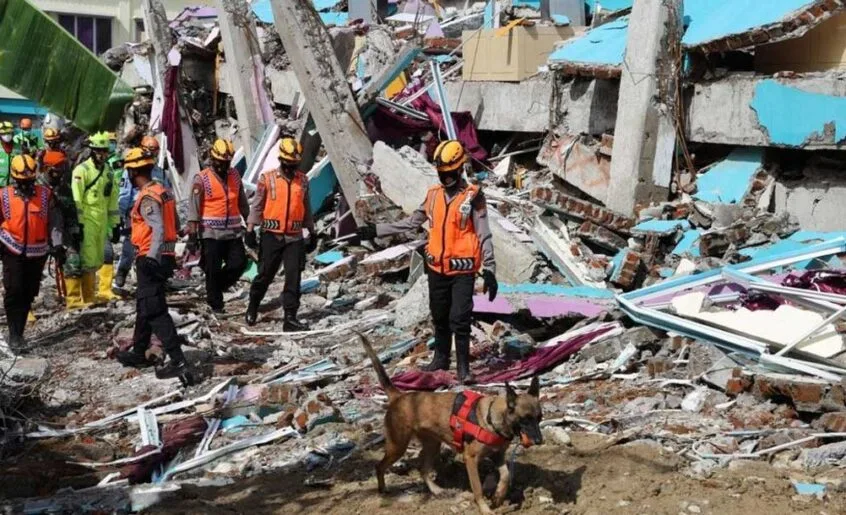
Components of Disaster Risk Reduction
Mitigation
Mitigation reduces the impact of disasters.
Examples:
- Earthquake-resistant buildings
- Flood control measures
- Coastal embankments
- Cyclone shelters
Preparedness
Preparedness helps communities respond effectively.
Examples:
- Mock drills
- Emergency kits
- Awareness campaigns
- Early warning systems
Response
Response includes immediate actions after a disaster.
Examples:
- Rescue operations
- Medical treatment
- Relief camps
- Food and water supply
Recovery
Recovery focuses on rebuilding communities.
Examples:
- Housing reconstruction
- Livelihood support
- Infrastructure restoration
Disaster Management and Sustainable Development Goals (SDGs)
Disaster Risk Reduction is closely connected with the United Nations Sustainable Development Goals.
Key SDGs Related to Disaster Management
| SDG | Contribution |
|---|---|
| Goal 1 | Reduce poverty and build resilience |
| Goal 2 | Promote food security and climate-resilient agriculture |
| Goal 3 | Strengthen health systems |
| Goal 4 | Safe and resilient educational facilities |
| Goal 6 | Protect water-related ecosystems |
| Goal 9 | Develop resilient infrastructure |
| Goal 11 | Create sustainable and safe cities |
| Goal 13 | Climate action and adaptation |
| Goal 14 | Protect marine ecosystems |
| Goal 15 | Conserve forests and biodiversity |
Challenges in Disaster Management in India
Despite significant progress, many challenges remain.
Weak Implementation
Many safety regulations exist on paper but are poorly enforced.
Lack of Public Awareness
People often do not know how to respond during emergencies.
Poor Local Capacity
Local authorities sometimes lack equipment, training, and resources.
Inadequate Coordination
Different agencies may fail to coordinate effectively during disasters.
Climate Change
Changing weather patterns are creating new risks.
Limited Investment
Insufficient funding delays disaster-resilient infrastructure development.
Rapid Urbanization
Growing cities face increasing pressure on resources and infrastructure.
Technology Gaps
Many rural areas still lack effective early warning systems.
Measures to Strengthen Disaster Management in India
India can improve disaster resilience through several important steps.
Strengthening Early Warning Systems
Advanced forecasting can provide timely alerts for cyclones, floods, and heat waves.
Strict Enforcement of Safety Rules
Building codes, fire safety regulations, and industrial standards must be implemented properly.
Community Participation
Local communities should actively participate in disaster preparedness programs.
Capacity Building
Training government officials, volunteers, and citizens improves disaster response.
Climate-Resilient Infrastructure
Roads, bridges, schools, and hospitals should be designed to withstand disasters.
Technology and Innovation
Use of:
- Artificial Intelligence
- Drones
- Satellite monitoring
- Geographic Information Systems (GIS)
can improve disaster management.
Environmental Protection
Protecting forests, wetlands, rivers, and coastal ecosystems can reduce disaster risks naturally.
Role of Citizens in Disaster Management
Every citizen can contribute to disaster preparedness.
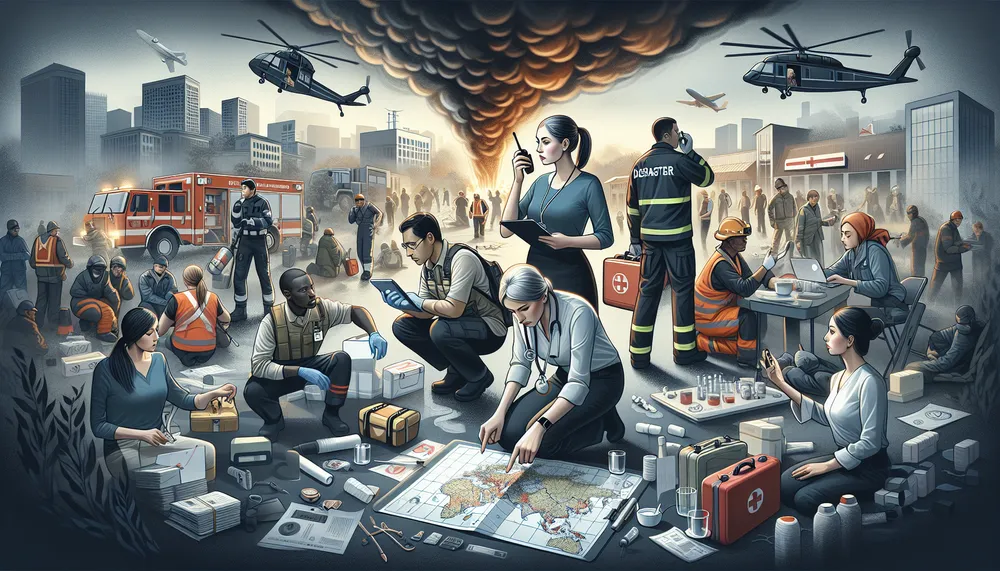
Important actions include:
- Learning emergency procedures.
- Following official warnings.
- Participating in mock drills.
- Keeping emergency supplies ready.
- Helping vulnerable groups during emergencies.
- Avoiding panic and spreading misinformation.
Conclusion
Disaster Management in India is essential for protecting lives, property, and sustainable development. The country faces numerous natural and man-made hazards due to its geography, population size, climate conditions, and rapid urbanization. Effective disaster management requires strong policies, public awareness, technological innovation, environmental conservation, and community participation. By focusing on preparedness, mitigation, response, and recovery, India can build safer and more resilient communities capable of facing future disasters.
FAQs
1. What is disaster management?
Disaster management is the process of preparing for, responding to, and recovering from disasters to reduce losses.
2. What are the main types of disasters?
Disasters are mainly classified as natural disasters and man-made disasters.
3. Why is India vulnerable to disasters?
India faces earthquakes, floods, cyclones, droughts, landslides, and other hazards due to its geographical and climatic conditions.
4. What is Disaster Risk Reduction (DRR)?
DRR refers to efforts aimed at reducing disaster risks through preparedness, mitigation, and resilience-building measures.
5. What was the Bhopal Gas Tragedy?
It was a major industrial disaster in 1984 caused by a toxic gas leak in Bhopal, Madhya Pradesh.
6. What role does climate change play in disasters?
Climate change increases the frequency and intensity of floods, cyclones, droughts, and heat waves.
7. What are the stages of disaster management?
The stages include preparedness before disaster, response during disaster, and recovery after disaster.