



Hellenistic Philosophy: Schools of Greek Moral Thought

Hellenistic Philosophy refers to the ideas and teachings that developed in Greece after the death of Alexander the Great in 323 BCE. This period brought major political and social changes. After Alexander’s death, his empire broke into smaller kingdoms, leading to wars and instability. Later, these regions came under the control of Roman Empire.
Thank you for reading this post, don't forget to subscribe!Because of these changes, people became less focused on understanding the universe and more interested in learning how to live peacefully in a difficult world. Earlier Greek thinkers like Socrates, Plato, and Aristotle had explored topics such as truth, justice, ethics, and the nature of reality. But in the Hellenistic Age, philosophy became more practical. It was seen as an art of living a way to find peace, happiness, and mental strength.
The three major schools of Hellenistic Philosophy were:
- Epicureanism
- Stoicism
- Skepticism
Each school offered a different path for dealing with pain, uncertainty, and human suffering.
Epicureanism
Epicureanism was founded by Epicurus around 307 BCE in Athens. He taught his students in a place called The Garden, which became famous as a center of learning.
Epicurus believed that the goal of life is happiness. But happiness, according to him, did not mean luxury or endless pleasure. Instead, true happiness meant:
- Freedom from fear
- Freedom from pain
- Peace of mind
He used two important ideas:
- Ataraxia – Mental peace and freedom from anxiety
- Aponia – Freedom from physical pain
Freedom from Fear
Epicurus believed many people suffer because of fear. The biggest fears are:
- Fear of death
- Fear of gods
- Fear of punishment in the afterlife
These fears create stress and prevent people from living peacefully.
No Fear of Gods
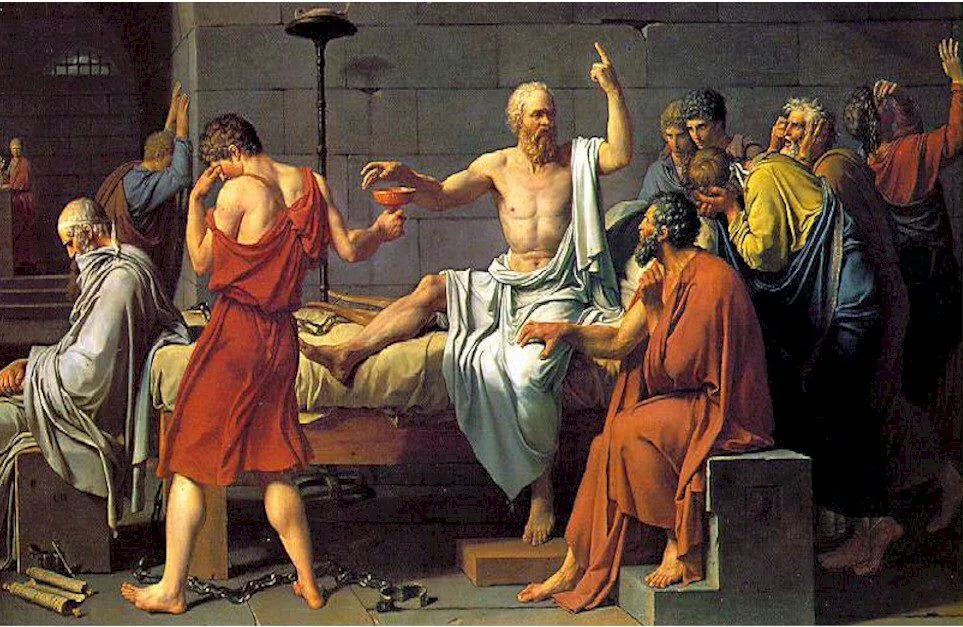
Epicurus questioned traditional beliefs about gods controlling human life. He raised an important argument called the problem of evil:
If God wants to stop evil but cannot, then God is not all-powerful.
If God can stop evil but does not want to, then God is not good.
If God is both powerful and good, then why does evil exist?
This idea encouraged people to think logically instead of blindly following fear.
No Fear of Death
Epicurus taught that the human soul is made of tiny particles called atoms. At death, these atoms scatter and the soul ends. That means there is no pain after death.
He said:
“When we exist, death is not present. When death comes, we no longer exist.”
So, there is no reason to fear death.
Avoid Superstition
Epicureans believed superstition slows down human progress. If people explain every unknown event as supernatural, they stop searching for real scientific answers.
Simple Living
Epicurus supported a simple life. He believed basic needs are enough for happiness. Expensive desires often create stress and disappointment.
He advised people to enjoy simple pleasures such as:
- Friendship
- Food in moderation
- Peaceful living
- Freedom from unnecessary desires
He discouraged excessive wealth, power, and political involvement because they often create anxiety.
Justice in Society
Epicurus also discussed justice. He said justice is like a social agreement where people promise:
“Neither harm others nor be harmed.”
Laws and punishments are useful when they protect peace and help people live happily.
Epicureanism vs Hedonism
Epicureanism is often confused with Hedonism.
Hedonism says pleasure is the highest good.
Epicureanism says happiness comes from avoiding pain and living simply.
So, Epicureanism is more balanced and disciplined.
Stoicism
Stoicism began in Athens around 300 BCE and was founded by Zeno of Citium.
Stoicism teaches people to control emotions and remain calm in all situations. Stoics believed suffering increases when we react emotionally to events beyond our control.
Their goal was to develop:
- Self-control
- Discipline
- Inner strength
- Clear thinking
Controlling Emotions
Stoics believed destructive emotions like anger, greed, fear, and jealousy disturb the mind. A wise person should control these emotions using reason.
They aimed for Apatheia, which means freedom from emotional suffering and clear judgment.
This does not mean becoming cold or heartless. It means staying balanced and rational.

Focus on What You Can Control
One of the most important Stoic teachings is:
Some things are under our control; others are not.
Things we can control:
- Thoughts
- Actions
- Decisions
- Character
Things we cannot control:
- Weather
- Other people’s behavior
- Death
- Luck
Stoics taught people to accept what they cannot change and focus energy on what they can improve.
Living According to Nature
Stoics believed the universe follows a natural order called Logos, meaning universal reason.
A wise person lives in harmony with this natural order by developing virtue.
The four main Stoic virtues are:
- Wisdom
- Courage
- Justice
- Temperance
These virtues help a person live morally and peacefully.
Equality of All People
Stoics believed all humans share the same reason and dignity. Therefore, everyone deserves respect.
They supported equality and even argued that slaves should be treated as human equals. This was a progressive idea for ancient times.
They also believed wealth, rank, and social status do not decide a person’s true value.
Universe as One Whole
Stoics believed everything in the universe is connected. This idea is called Pantheism, where divine reason exists in all things.
They saw the universe as one giant living system.
Similarity with Buddhism
Stoicism shares many ideas with Gautama Buddha and Buddhism:
- Life includes suffering
- Desire causes suffering
- Freedom comes from controlling desire
- Discipline leads to peace
Today, the word “stoic” describes someone who stays calm during pain or difficulty.
Cynicism and Stoicism
Stoicism was partly influenced by Cynicism, an earlier Greek philosophy.
Cynics believed the purpose of life is to live according to nature and virtue. They rejected:
- Wealth
- Fame
- Luxury
- Power
They believed many social customs are artificial and create suffering.
Cynics lived with very few possessions and promoted simplicity.
They also challenged society by exposing false values and hypocrisy.
Stoicism adopted some of these ideas but in a more practical and moderate way.
Skepticism
Skepticism, also called Pyrrhonism, was inspired by Pyrrho of Elis.
Skepticism teaches that humans should avoid making absolute truth claims because certainty is difficult to achieve.
Skeptics encouraged doubt, questioning, and careful examination.
They believed people should avoid blindly accepting beliefs.
Meaning of Skepticism
Skepticism is an attitude of doubt or questioning.
A skeptic asks:
- Is this really true?
- What proof supports this?
- Could there be another explanation?
This approach opposes Dogmatism, which says certain beliefs must be accepted without question.
Knowledge Through Doubt
Skeptics believed knowledge should come through continuous testing and questioning.
They rejected Foundationalism, which says some beliefs are naturally certain.
According to Skeptics, believing something does not automatically make it true.

Five Grounds of Doubt
In the 1st century CE, Agrippa the Skeptic explained five major reasons for doubt:
1. Dissent
People disagree about many things. Even philosophers have conflicting opinions.
2. Infinite Regress
Every proof needs another proof. This process can continue forever.
3. Relation
Things appear differently depending on perspective or conditions.
4. Assumption
Many beliefs are based only on assumptions, not solid evidence.
5. Circular Reasoning
Sometimes people use the conclusion itself to prove the conclusion.
These arguments showed why certainty is difficult.
Criticism of Skepticism
Skepticism has one major problem.
If skeptics doubt everything, should they also doubt Skepticism itself?
Thomas Reid criticized this idea. He argued that if human perception and reasoning are unreliable, then even the skeptic’s reasoning becomes unreliable.
This creates a logical challenge for Skepticism.
Influence of Hellenistic Philosophy
Hellenistic Philosophy greatly influenced later ethical thought.
After the fall of ancient Greece and the rise of Christianity, many Hellenistic ideas lost influence. Christian philosophy did not fully accept:
- Cynic rejection of social norms
- Epicurean pleasure-based ethics
- Stoic fatalism
- Skeptical doubt
Still, these ideas never disappeared completely.
Some philosophers combined ideas from multiple schools. This created Eclecticism, where thinkers selected useful ideas from different traditions.
In modern times:
- Epicurean ideas influenced Utilitarianism
- Stoicism became popular in psychology and self-improvement
- Skepticism influenced modern science and rational inquiry
Today, Hellenistic Philosophy remains important because it teaches practical life lessons.
Epicureanism teaches us to reduce fear and live simply.
Stoicism teaches emotional control and resilience.
Skepticism teaches critical thinking and questioning.
Together, these schools continue to help people understand how to live wisely in an uncertain world.
FAQs
Q1. What is Hellenistic Philosophy?
Hellenistic Philosophy refers to the schools of thought that developed in ancient Greece after the death of Alexander the Great. It mainly focused on how to live a peaceful and meaningful life.
Q2. What are the three main schools of Hellenistic Philosophy?
The three major schools are:
- Epicureanism
- Stoicism
- Skepticism
Q3. Who founded Epicureanism?
Epicurus founded Epicureanism in Athens around 307 BCE.
Q4. What is the main idea of Epicureanism?
Epicureanism teaches that true happiness comes from simple living, freedom from fear, and freedom from pain.
Q5. Who founded Stoicism?
Zeno of Citium founded Stoicism around 300 BCE in Athens.
Q6. What does Stoicism teach?
Stoicism teaches self-control, emotional balance, and focusing only on things within our control.
Q7. What is Skepticism in philosophy?
Skepticism is a philosophical approach that encourages doubt, questioning, and careful examination before accepting something as true.
Q8. Why is Hellenistic Philosophy important today?
Hellenistic Philosophy remains important because it helps people develop mental peace, emotional strength, and critical thinking in modern life.