


Gandhian Ideologies: Principles of Truth, Peace and Self-Rule

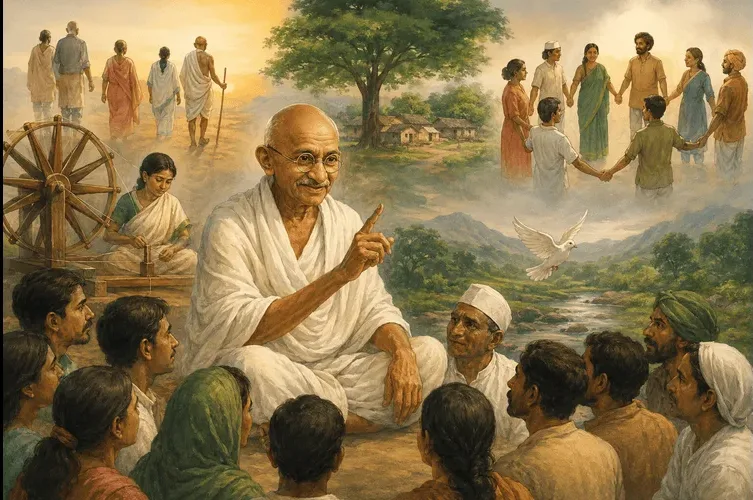
Gandhian Ideologies are the moral, social, political, and economic ideas developed by Mahatma Gandhi. These ideas guided India’s freedom movement and continue to inspire people across the world. Gandhi first developed many of these ideas during his stay in South Africa between 1893 and 1914. Later, he applied them in India during the struggle against British rule.
Thank you for reading this post, don't forget to subscribe!Gandhian philosophy is unique because it combines spiritual values with practical action. It is not only about politics but also about morality, religion, society, and personal discipline. His ideas were influenced by Indian culture and religious texts like the Bhagavad Gita, along with teachings of Jainism, Buddhism, the Bible, and thinkers like Leo Tolstoy and John Ruskin.
Gandhi believed that human beings are naturally good and capable of moral growth. According to him, every person can improve and become a better human through discipline, truth, and self-control. His ideology aimed to transform both the individual and society by using truth and nonviolence.
What is Gandhian Ideology?
Gandhian ideology is based on the belief that spiritual strength is more powerful than physical force. Gandhi believed that real progress happens when people live with honesty, compassion, and responsibility.
His philosophy works on different levels:
- Spiritual or religious
- Moral
- Political
- Economic
- Social
- Personal and collective
At the center of Gandhian thought is truth and God. Gandhi often said, “Truth is God.” For him, truth was the highest principle of life.
Major Gandhian Ideologies
1. Truth (Satya)
Truth was the foundation of Gandhi’s life. He believed truth means being honest in words, actions, and thoughts. According to Gandhi, truth is not just about speaking honestly; it is also about living honestly.
He believed that truth is directly connected with morality and justice. A person who follows truth gains inner strength and peace.
2. Nonviolence (Ahimsa)
Nonviolence is one of the most important Gandhian ideologies. Gandhi believed violence creates more violence, while peace creates understanding.
For Gandhi, nonviolence did not mean weakness or fear. Instead, it meant courage, patience, and love. He believed that even in difficult situations, people should avoid hatred and harm.
Nonviolence means:
- Not hurting others physically
- Avoiding hatred and anger
- Showing love and respect to all
Gandhi considered nonviolence the highest law of humanity.
3. Satyagraha
Satyagraha means “holding firmly to truth.” Gandhi used this method to fight injustice without violence.
Satyagraha teaches people to resist oppression through peaceful protest and personal sacrifice instead of using force. It focuses on changing the opponent’s heart rather than defeating them physically.
Important features of Satyagraha:
- Peaceful protest
- Moral courage
- Self-discipline
- Readiness to suffer for truth
Gandhi used Satyagraha successfully in many movements against British rule.
4. Sarvodaya
Sarvodaya means “welfare of all” or “progress of everyone.” Gandhi believed that real development should benefit every person, especially the poor and weak.
A society cannot be truly successful if only a few people become rich while others suffer. Sarvodaya promotes equality, justice, and shared growth.
Its main ideas include:
- Equal opportunities for all
- Welfare of poor people
- Social justice
- Community development
Gandhi wanted a society where no one is left behind.
5. Swaraj
Swaraj means self-rule. During India’s freedom struggle, Swaraj was mainly understood as freedom from British rule. But Gandhi gave it a deeper meaning.
For Gandhi, Swaraj was not only political freedom. It also meant self-control, self-discipline, and responsible citizenship.
A person who controls their desires and actions is practicing Swaraj. Gandhi believed true freedom begins within oneself.
Swaraj includes:
- Political freedom
- Personal discipline
- Social responsibility
- Self-respect
6. Trusteeship
Trusteeship is Gandhi’s economic philosophy. According to this idea, wealthy people should use their wealth for the welfare of society.
Gandhi did not support extreme greed or uncontrolled capitalism. He believed rich people should act as trustees, meaning caretakers of wealth, and use their resources for helping others.
This idea encourages:
- Social responsibility
- Fair distribution of wealth
- Helping poor communities
- Ethical business practices
Trusteeship promotes balance between wealth creation and social welfare.
7. Swadeshi
Swadeshi means using goods made in one’s own country and supporting local industries.
Gandhi believed India’s dependence on British goods weakened the country’s economy. He encouraged people to buy Indian-made products and support local workers.
The charkha (spinning wheel) became the symbol of Swadeshi. It represented self-reliance and economic independence.
Swadeshi promotes:
- Local production
- Self-sufficiency
- Support for small businesses
- Strong national economy
Even today, the idea of supporting local products remains important.
Relevance of Gandhian Ideologies Today
Gandhian ideologies remain highly relevant in today’s world. Modern society faces many challenges such as violence, greed, corruption, inequality, and environmental damage. Gandhi’s ideas offer meaningful solutions.
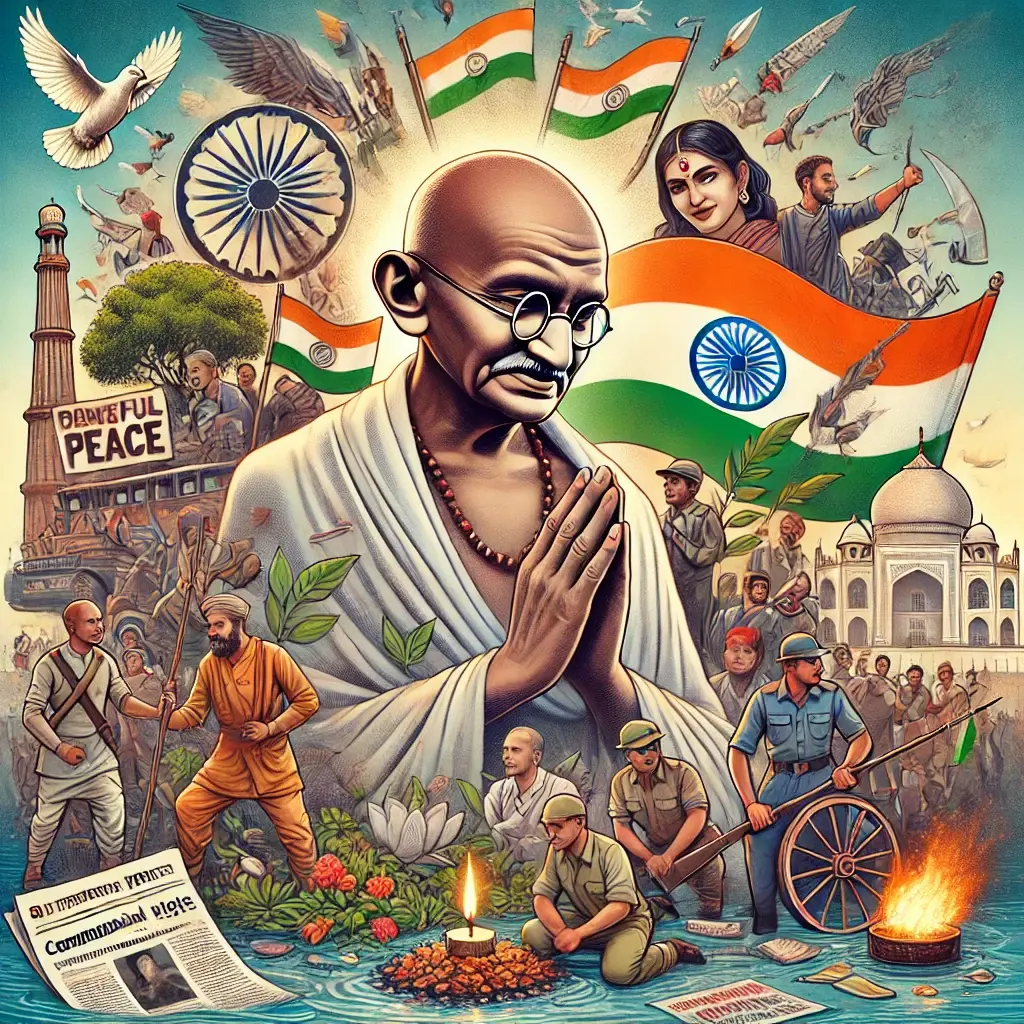
Truth is important in a world filled with misinformation and dishonesty. Nonviolence is essential in reducing conflicts and hatred. Sarvodaya reminds us to create inclusive development. Swadeshi encourages local production and sustainable living.
Many global leaders were inspired by Gandhi’s methods. Martin Luther King Jr. used nonviolence in the civil rights movement in the United States. Nelson Mandela fought against apartheid in South Africa with ideas influenced by Gandhi. Aung San Suu Kyi also used peaceful resistance in Myanmar.
Even today, Gandhi’s teachings inspire peace movements and social reforms across the world.
Gandhi also emphasized simple living and responsible consumption. This idea is especially important today because excessive consumption is harming the environment.
Final Thoughts
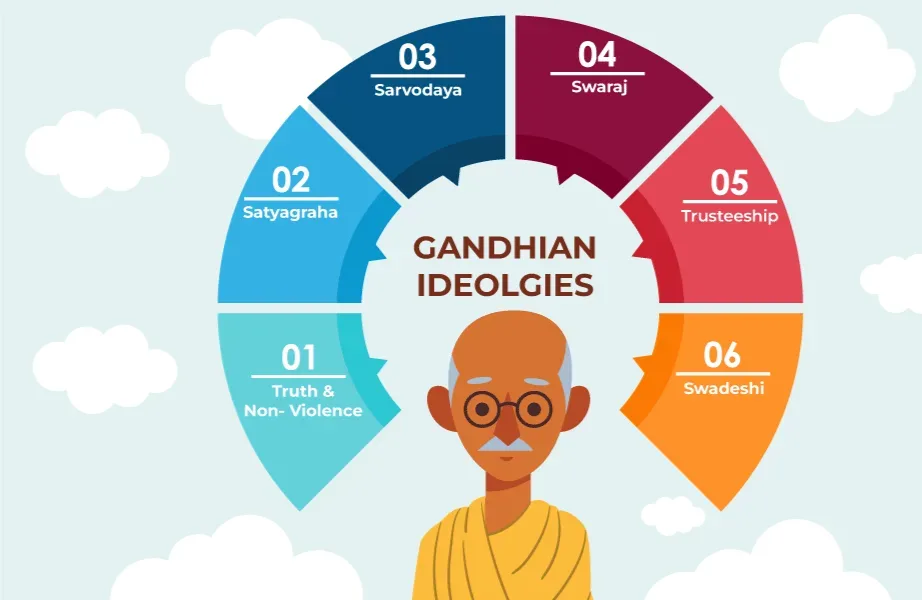
Gandhian Ideologies continue to inspire humanity with their timeless values. Truth, nonviolence, Satyagraha, Sarvodaya, Swaraj, Trusteeship, and Swadeshi are the main pillars of Gandhi’s philosophy.
These principles teach us that real progress comes through honesty, peace, discipline, and service to others. Gandhi showed that ordinary people can create extraordinary change through moral courage and unity.
In modern times, Gandhian ideologies remain a guiding light for building a peaceful, fair, and compassionate society.
FAQs on Gandhian Ideologies
Q1. What are Gandhian Ideologies?
Gandhian Ideologies are the principles and ideas developed by Mahatma Gandhi based on truth, nonviolence, self-rule, and social welfare.
Q2. What are the main principles of Gandhian Ideologies?
The main principles are Truth (Satya), Nonviolence (Ahimsa), Satyagraha, Sarvodaya, Swaraj, Trusteeship, and Swadeshi.
Q3. Why is nonviolence important in Gandhian philosophy?
Nonviolence is important because Gandhi believed peace, love, and patience are stronger than violence in solving conflicts.
Q4. What is Satyagraha?
Satyagraha is Gandhi’s method of fighting injustice through peaceful protest and moral strength without using violence.
Q5. What does Swaraj mean?
Swaraj means self-rule. It includes both political freedom and personal self-discipline.
Q6. What is the meaning of Swadeshi?
Swadeshi means using products made in one’s own country and supporting local industries.
Q7. Why are Gandhian Ideologies relevant today?
Gandhian Ideologies are relevant today because they help address modern problems like violence, corruption, inequality, and environmental issues.
Q8. Who was influenced by Mahatma Gandhi?
Many global leaders like Martin Luther King Jr. and Nelson Mandela were inspired by Gandhi’s ideas.