


India’s Defence System and Modern Military Developments

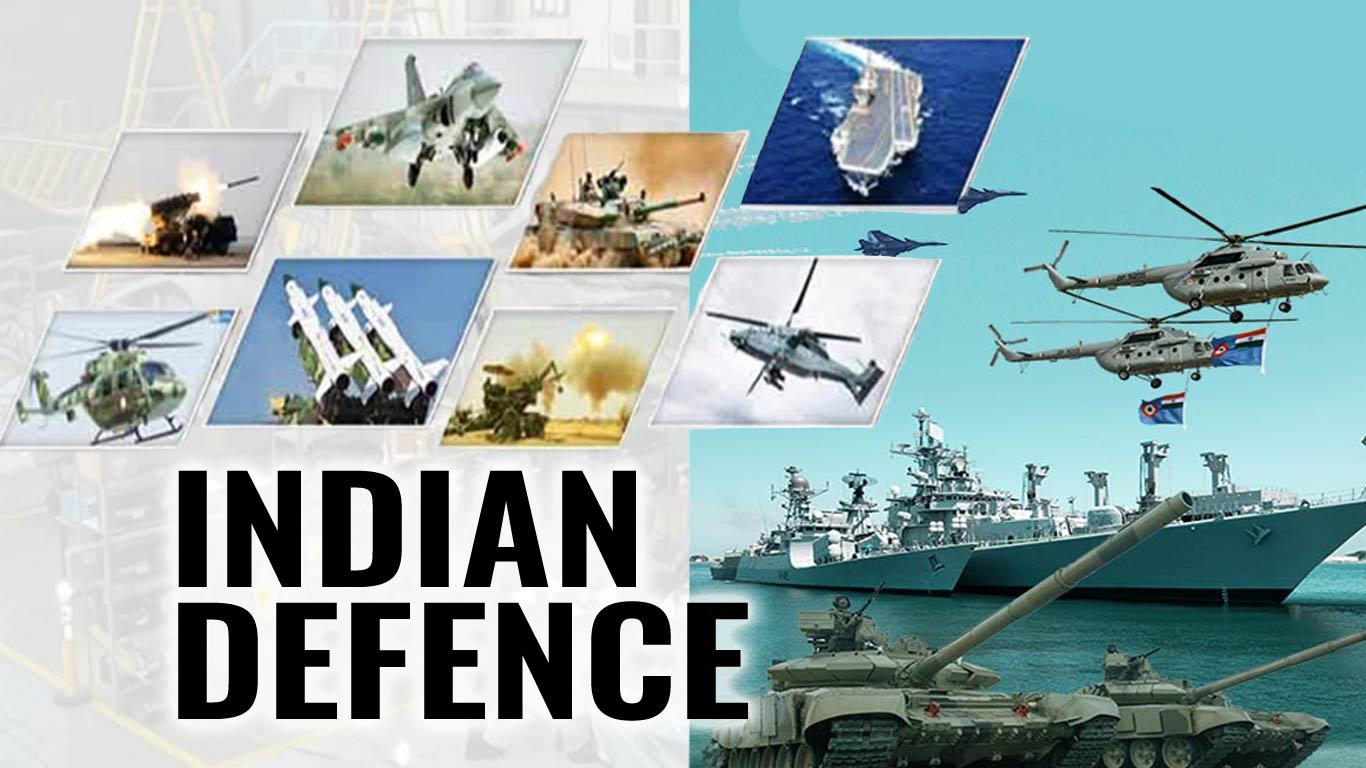
India’s defence system plays an important role in protecting the country from external threats and maintaining peace. Over the years, India has made strong progress in building its own defence equipment, improving military technology, and increasing the participation of women in the armed forces. The government has also introduced several policies and programmes to strengthen the defence sector.
Thank you for reading this post, don't forget to subscribe!Today, India is becoming one of the leading defence powers in the world. The country not only produces advanced military equipment but also exports many defence products to other countries.
Growth of India’s Defence Exports
India has become one of the top 25 defence exporters in the world. The country now sells different types of defence equipment to many nations. These exports help India strengthen its economy and improve its global position in the defence industry.
India exports several major defence platforms and weapons systems.
Major Defence Products Exported by India
| Defence Equipment | Description |
|---|---|
| Dornier-228 Aircraft | A small transport aircraft used for surveillance and transport |
| BrahMos Missile | One of the fastest cruise missiles in the world |
| PINAKA Rocket System | A multi-barrel rocket launcher used by the Indian Army |
| Artillery Guns | Heavy guns used in land warfare |
| Radars | Systems used to detect aircraft and missiles |
| Simulators | Training equipment used by defence personnel |
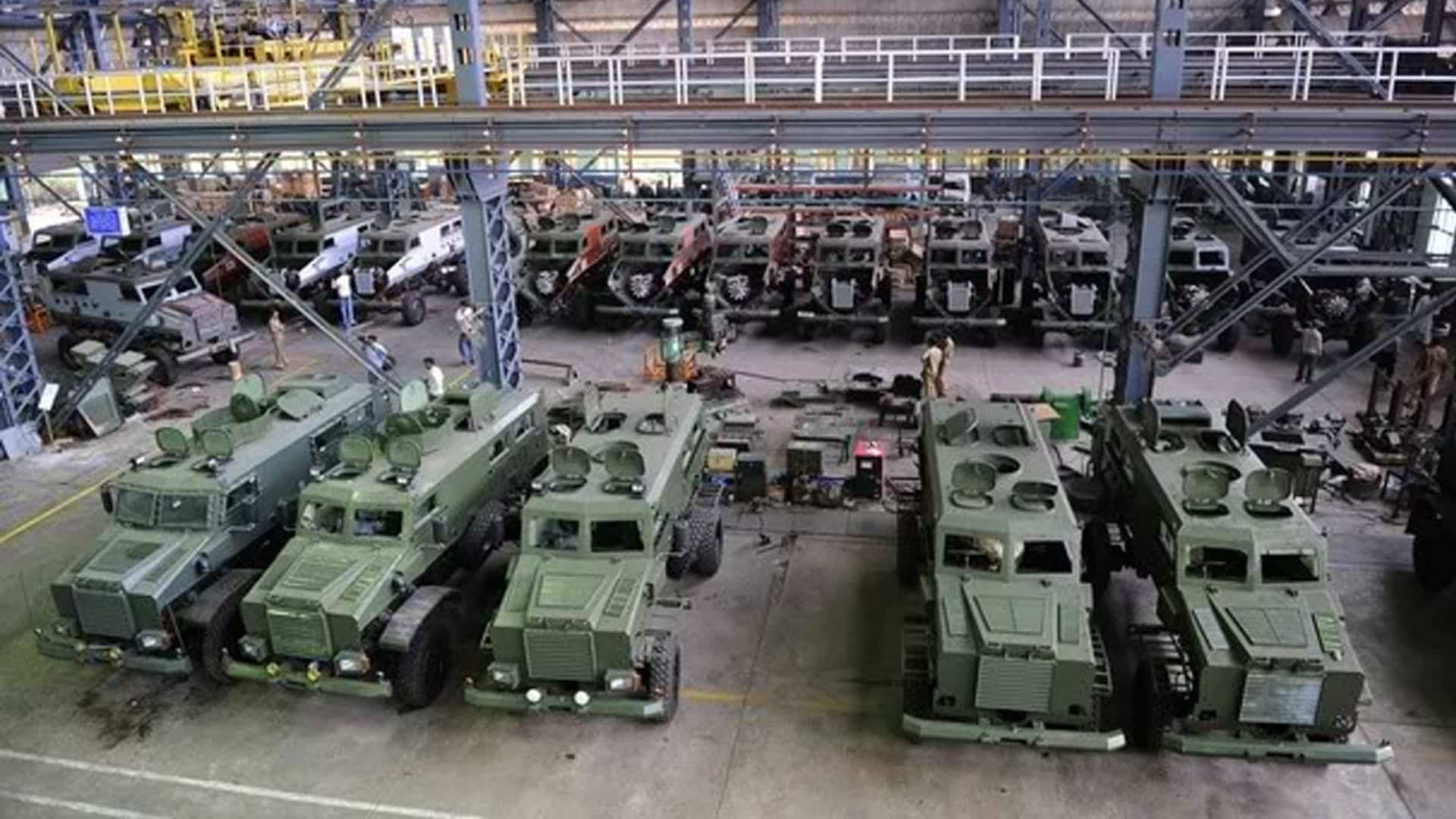
| Armored Vehicles | Protected vehicles used by soldiers in combat |
India is also receiving international interest in its indigenous defence products, such as:
- LCA Tejas fighter aircraft
- Light Combat Helicopters
- Aircraft carriers
- Maintenance, Repair and Overhaul (MRO) services
Government Support for Start-ups and MSMEs
The Indian government is encouraging Micro, Small, and Medium Enterprises (MSMEs) and start-ups to participate in defence manufacturing. Many schemes have been introduced to support innovation and research in defence technology.
Important Government Schemes
| Scheme | Purpose |
|---|---|
| iDEX (Innovations for Defence Excellence) | Encourages innovation by start-ups |
| TDF (Technology Development Fund) | Supports development of defence technologies |
| Make Procedure (DAP 2020) | Promotes manufacturing in India |
| Public Procurement Policy for MSEs | Gives price preference to small businesses |
Another important initiative is the SRIJAN Portal for Indigenization. More than 30,000 defence items have been uploaded on this portal. It allows MSMEs and industries to develop these items within India instead of importing them.
Promoting Gender Equality in the Armed Forces
India is taking major steps to increase the role of women in the armed forces.
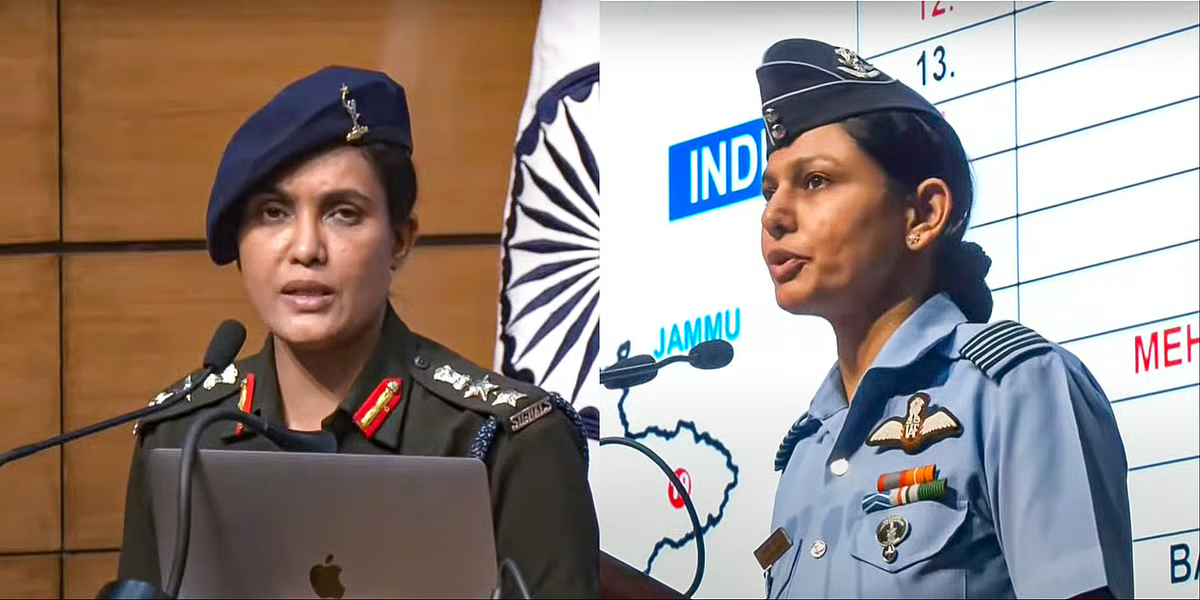
Women officers are now being recruited into many branches of the Indian Air Force. The government is also promoting a gender-neutral approach, which means men and women get equal opportunities.
A historic step was taken in July 2022, when the first batch of women cadets started training at the National Defence Academy (NDA).
This move will help increase women’s participation in leadership roles in the military.
New Areas of Modern Warfare
Modern warfare has changed a lot in recent years. Earlier, wars mainly happened on land, sea, and air. Today, new domains like cyber warfare and space warfare are becoming important.
To strengthen India’s capabilities in space defence, the government has created the Defence Space Research Agency (DSRA). This agency works on the development of space-based defence technologies and weapons.
Efforts to Promote Indigenous Defence Production
India is focusing strongly on self-reliance in defence production. The government wants most defence equipment to be designed and manufactured within the country.
Several steps have been taken to achieve this goal.
Key Measures for Defence Indigenization
| Initiative | Purpose |
|---|---|
| Defence Acquisition Procedure (DAP) 2020 | Encourages buying defence equipment from Indian companies |
| Industry-led development | 18 major defence platforms announced for private industry in 2022 |
| FDI Policy | Allows 74% Foreign Direct Investment under the automatic route |
| iDEX Scheme | Promotes innovation by start-ups and MSMEs |
| SRIJAN Portal | Helps Indian industries develop defence equipment locally |
These steps aim to reduce dependence on imports and make India a global defence manufacturing hub.
Chief of Defence Staff (CDS)
The position of Chief of Defence Staff (CDS) was created in 2019 to improve coordination between the three branches of the armed forces.
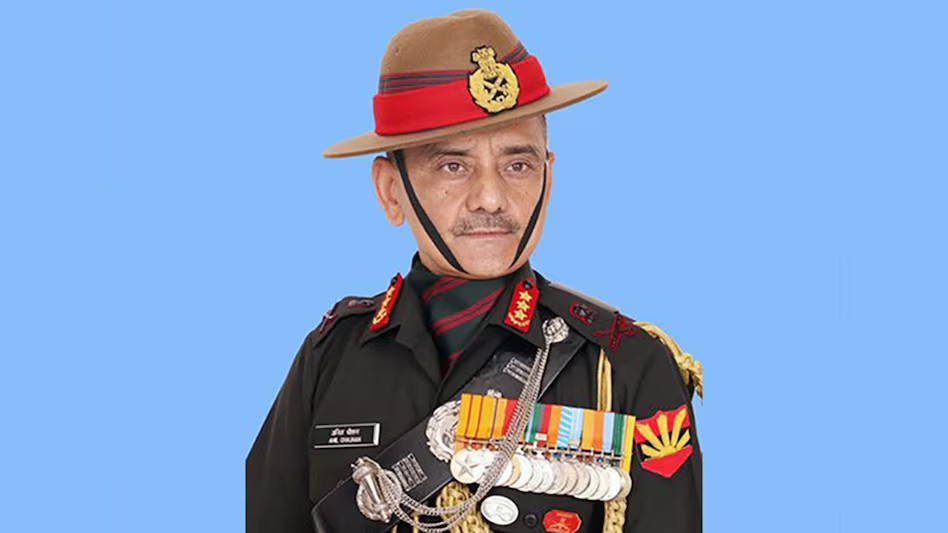
The CDS serves as the main military adviser to the Defence Minister on matters related to the Army, Navy, and Air Force.
Key Facts about the CDS
| Feature | Details |
|---|---|
| Established | 2019 |
| Role | Principal Military Adviser to the Defence Minister |
| Rank | Four-star General |
| Responsibility | Heads the Department of Military Affairs |
| Additional Role | Permanent Chairman of the Chiefs of Staff Committee |
The CDS is supported by the Headquarters of the Integrated Defence Staff.
Controller General of Defence Accounts
The Defence Accounts Department (DAD) manages financial matters related to the armed forces.
This department works under the Ministry of Defence and is led by the Controller General of Defence Accounts (CGDA).
Main Responsibilities
- Auditing defence expenses
- Managing payments and accounts
- Handling salaries and pensions of defence personnel
- Managing bills for supplies and construction work
Border Roads Organisation (BRO)
The Border Roads Organisation (BRO) was established on 7 May 1960.
Its main purpose is to build and maintain roads in border areas, especially in remote and difficult regions such as the North and North-Eastern states of India.
These roads help improve military movement, connectivity, and development in border areas.
Indian Coast Guard
The Indian Coast Guard protects India’s maritime interests and coastal areas.
In the 1970s, the United Nations Convention on the Law of the Sea (UNCLOS) introduced the concept of Exclusive Economic Zones (EEZ) for coastal countries.
After this, India passed the Maritime Zones of India Act, 1976 and gained rights over 2.01 million square kilometres of sea area.
The Coast Guard is responsible for protecting this area and preventing illegal activities at sea.
Directorate of Public Relations
The Directorate of Public Relations (DPR) is the media and communication wing of the Ministry of Defence.
Its main job is to provide information to the public and the media about:
- Defence programmes
- Military achievements
- Important events
- Government defence policies
Transformation of Defence Services
After the Kargil War, the government realised the need to improve coordination between the three armed forces.
The Kargil Review Committee and the Group of Ministers recommended reforms to strengthen the defence system.
One major reform is the creation of Integrated Theatre Commands. These commands will combine the resources of the Army, Navy, and Air Force for better coordination during military operations.
Tri-Services Agencies
India has also created several agencies that work jointly for all three armed forces.
Important Tri-Services Agencies
| Agency | Function |
|---|---|
| Armed Forces Special Operations Division | Coordinates special forces operations |
| Defence Space Agency | Handles defence-related space activities |
| Defence Cyber Agency | Deals with cyber security and cyber warfare |
The Defence Cyber Agency was established in 2018 to protect India from cyber threats.
India’s Contribution to UN Peacekeeping
India has a long history of participating in United Nations peacekeeping missions.
India is one of the largest troop contributors to these missions.
India’s Peacekeeping Contribution
| Contribution | Details |
|---|---|
| Total Troops Contributed | About 275,000 |
| Current Deployment | Around 5,900 troops |
| UN Missions | 12 missions worldwide |
India has also deployed Female Engagement Teams (FETs) in missions such as MONUSCO and UNISFA, helping support women and children in conflict areas.
Operation Sadbhavna
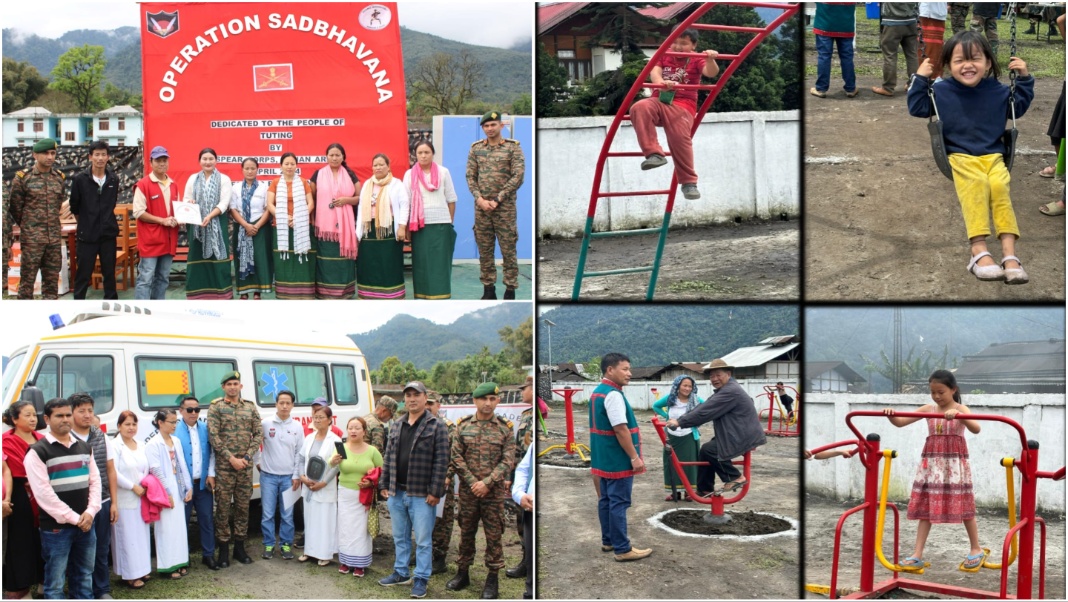
Operation Sadbhavna is a special programme conducted by the Indian Army.
It is mainly carried out in:
- Jammu and Kashmir
- Ladakh
- Northeastern states
The aim of this programme is to improve the lives of people in remote areas.
Focus Areas of Operation Sadbhavna
- Education
- Healthcare
- Women empowerment
- Youth development
- Infrastructure development
Operation Sankalp
Operation Sankalp was launched by the Indian Navy in 2019.
The mission aims to protect Indian merchant ships traveling through the Arabian Gulf, Gulf of Oman, and the Strait of Hormuz.
This operation ensures the safe movement of Indian ships in international waters.
Operation Samudra Setu
During the COVID-19 pandemic, the Indian Navy launched Operation Samudra Setu in 2020.
The mission had two main goals:
- Bring back Indians stranded in other countries.
- Transport medical supplies.
Around 4,000 Indian citizens were safely brought back to India during this operation.
Naval ships also carried liquid medical oxygen containers and medical equipment to support the fight against COVID-19.
INS Vikrant – India’s First Indigenous Aircraft Carrier
The Indian Navy inducted INS Vikrant in September 2022.
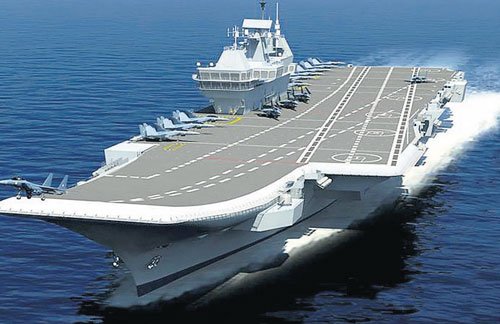
INS Vikrant is special because it is the first aircraft carrier built completely in India.
It was named Vikrant in honor of India’s first aircraft carrier, INS Vikrant (1961).
This ship is an important milestone for India’s self-reliance in defence technology.
Conclusion
India’s defence system is becoming stronger and more modern every year. The government is focusing on self-reliance, advanced technology, and better coordination between the armed forces. Programmes that support MSMEs, start-ups, and indigenous defence production are helping India reduce dependence on foreign equipment.
At the same time, the country is expanding the role of women in the armed forces, improving infrastructure through organisations like the BRO, and contributing actively to international peacekeeping missions. With new initiatives such as space defence, cyber security, and modern military equipment like INS Vikrant, India is preparing for future challenges.
Overall, these developments show that India is working towards building a strong, modern, and self-reliant defence system.
FAQs
1. What is the role of India’s defence system?
India’s defence system protects the country from external threats and maintains national security through the Army, Navy, and Air Force.
2. What is the Chief of Defence Staff (CDS)?
The Chief of Defence Staff is the main military adviser to the Defence Minister and coordinates the Army, Navy, and Air Force.
3. What is the Border Roads Organisation (BRO)?
The Border Roads Organisation builds and maintains roads in border areas and remote regions to support defence and development.
4. What is Operation Sankalp?
Operation Sankalp is a mission launched by the Indian Navy in 2019 to protect Indian merchant ships in the Arabian Gulf and nearby waters.
5. Why is INS Vikrant important for India?
INS Vikrant is India’s first indigenous aircraft carrier built in the country, showing India’s progress in defence technology and self-reliance.